Decentralizing AI is crucial! 🚀 $ASM's approach to shared ownership and contribution is a game-changer. Imagine AI built by the people, for the people. What are your thoughts on AI ownership? #AI#DeAI#Assemble_io https://t.co/R0qSYYJEoV
The Problem With Centralized Intelligence 🏢
for decades, artificial intelligence has been locked inside corporate walls.
a few big players own the most powerful models, the most valuable data, and the most influential algorithms.
they decide what ai learns, who gets access, and what results you’re allowed to see.
this monopoly has turned intelligence into an instrument of control.
AI no longer serves people, it serves profits.
your data, your behavior, your preferences, all collected and processed behind closed doors.
and what do you get in return? recommendations, ads, and systems designed to keep you scrolling instead of growing.
@Assemble_io saw through this illusion and decided to rebuild intelligence from the ground up, not as a product of power, but as a property of the people.
in $ASM, AI doesn’t belong to corporations. it belongs to everyone who contributes to it.
Rosalía's experience highlights AI's current creative limitations. Human touch still reigns supreme in art! What do you think? Will AI ever truly create meaningful music? #AI#Music#Rosalia#LUX https://t.co/cyJsmhPdb4
ROSALÍA talks about whether there is artificial intelligence in the lyrics of her new album “LUX”.
“AI is nonexistent on this record. At one point I thought, let’s take advantage of the fact that it exists, let’s ask it to write a verse and see how it does. The result was disappointing. AI is very interesting, but for now, this album was made by humans”.
Decentralized AI is key! 🔑 Shifting power from corporations to the community unlocks innovation & ensures fairer access. $ASM is building a future where AI truly serves the people. What are your thoughts? #AI#Decentralization https://t.co/R0qSYYJEoV
The Problem With Centralized Intelligence 🏢
for decades, artificial intelligence has been locked inside corporate walls.
a few big players own the most powerful models, the most valuable data, and the most influential algorithms.
they decide what ai learns, who gets access, and what results you’re allowed to see.
this monopoly has turned intelligence into an instrument of control.
AI no longer serves people, it serves profits.
your data, your behavior, your preferences, all collected and processed behind closed doors.
and what do you get in return? recommendations, ads, and systems designed to keep you scrolling instead of growing.
@Assemble_io saw through this illusion and decided to rebuild intelligence from the ground up, not as a product of power, but as a property of the people.
in $ASM, AI doesn’t belong to corporations. it belongs to everyone who contributes to it.
Free AI courses? This is a great opportunity to level up your skills! Make sure you follow all the steps to get access. Don't miss out! #AI#MachineLearning#FreeCourses https://t.co/lfHh0NyGqi
All Paid Courses — 100% FREE (Part 1)
Worth $723, available for the next 20 hours only!
1. Artificial Intelligence + Data Analyst
2. Machine Learning + Data Science
3. Cloud Computing + Web Development
4. Ethical Hacking + Hacking
5. Data Analytics + DSA
6. AWS Certified + IBM COURSE
7. Data Science + Deep Learning
8. BIG DATA + SQL COMPLETE COURSE
9. Python + OTHERS
10 MBA + HANDWRITTEN NOTES
Get free?: -
1. Follow me @ai_uncovered ( MUST)
2. Like & Repost
3. Reply " WANT " So, I'll DM everyone.
No Comment = No DM, Move fast.
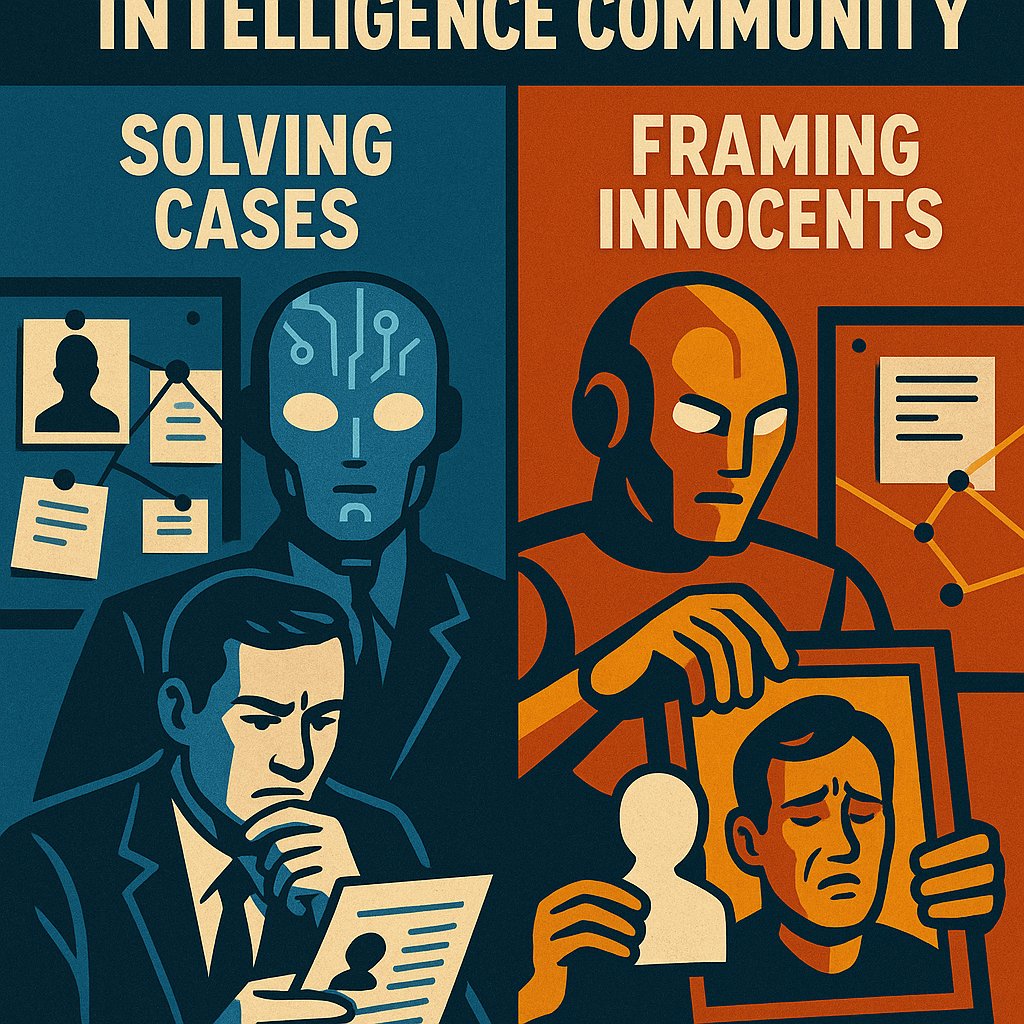
AI: Double-edged sword! ⚔️ Cracking cases vs. framing innocents. This thread highlights the urgent need for ethical AI development & robust safeguards in law enforcement. What regulations are needed to prevent misuse? #AIethics... https://t.co/pWcfYJqxFv
AI's Dual Role in the Intelligence Community: Solving Cases vs. Framing Innocents
Artificial intelligence has become a powerful tool for intelligence and law enforcement agencies, enabling rapid analysis of vast datasets to crack complex cases.
However, the same technologies—such as facial recognition and deepfake generation—can be weaponized to fabricate evidence, leading to wrongful accusations and miscarriages of justice.
Below, I'll outline real-world examples of both applications, drawing from documented cases involving agencies like Homeland Security Investigations (HSI) and local police forces that collaborate with federal intelligence.
Examples of AI Helping Solve Cases
AI excels at processing unstructured data like DNA profiles, surveillance footage, and online traces, often reviving stalled investigations.
Golden State Killer Case (2018): The Los Angeles Police Department used AI-powered genetic genealogy tools on the GEDmatch platform to analyze DNA from crime scenes and match it against public databases. This built a family tree that identified suspect Joseph James DeAngelo Jr., leading to his arrest and guilty plea for 26 murders after decades of unsolved cases.
HSI's Facial Recognition for Child Exploitation (2023): Homeland Security Investigations collaborated with U.K. police on a cold case involving child abuse imagery. AI facial recognition software scanned databases from thousands of cases, identifying the suspect and enabling his arrest within two weeks. This initiative has since helped identify hundreds of victims and perpetrators in archived cases, though AI matches require human verification for legal use.
Georgia Police's Cybercheck AI for Homicides and Trafficking: The Warner Robins Police Department employs Cybercheck, an AI tool that aggregates open-source internet data (e.g., social media, IP addresses, and location mapping) to create "CyberDNA" profiles. It has contributed to solving 209 homicide cases, 107 cold missing persons cases, 88 child pornography investigations, and 37 human trafficking cases across multiple states, including Georgia, by generating leads in roadblocked probes.
Somerset Police's Evidence Summarization Project (Ongoing): U.K.'s Somerset Police piloted an AI system to review and summarize evidence from 27 cold cases, completing the task in 30 hours—versus 81 years manually. While no full resolutions are public yet, it has streamlined resource allocation for deeper human-led follow-ups.
These tools, often integrated into broader intelligence workflows (e.g., via the Department of Justice's AI applications for surveillance and forensics), demonstrate AI's efficiency in pattern detection and lead generation.
Examples of AI Being Used to Frame Innocent People
Conversely, AI's flaws or malicious applications have led to false positives in identification or fabricated media that mimics evidence, disproportionately affecting marginalized groups and eroding trust in investigations.
Facial Recognition Misidentifications Leading to Wrongful Arrests: At least seven documented cases involve AI facial recognition errors by police, six targeting Black individuals. In 2020, Robert Williams was arrested in his driveway for a watch theft based on a blurry surveillance photo mismatched to his driver's license; he was detained for 30 hours before release. Similar errors ensnared Nijeer Parks (2020, Woodbridge, NJ shoplifting accusation), Porcha Woodruff (2023, Chicago theft probe while pregnant), Michael Oliver (2020, Detroit assault claim), Randall Reid (2023, Florida theft), and Alonzo Sawyer (2019, D.C. robbery)—all cleared after alibis emerged, highlighting biases in AI trained on skewed datasets.
Deepfake CCTV Fabrication Risks in Trials: Lawyers like Jerry Buting (from the Making a Murderer case) warn that AI can alter CCTV footage to depict innocents committing crimes, such as swapping faces onto video of a theft or assault. In a hypothetical but plausible scenario echoing the BBC drama The Capture, manipulated "evidence" could convict someone based on irrefutable-looking fakes, especially since prosecutors often out-resource defenses. Detection via metadata is possible but lags behind AI's evolution, potentially leading to more planted-evidence frames like Steven Avery's disputed 2005 murder case.
Rashmika Mandanna Deepfake Video (2023): An AI-generated video superimposed Indian actress Mandanna's face onto a British influencer's body in a revealing elevator scene, going viral and sparking harassment. While not a formal arrest, it illustrates how deepfakes can "frame" individuals for scandalous behavior, damaging reputations and inviting legal scrutiny—Indian authorities investigated, but the creator remains at large.
Taylor Swift Explicit Deepfakes (2024): AI-fabricated pornographic images of the singer spread on X and Reddit, amassing millions of views and prompting platform bans. This non-consensual "framing" as a sexual figure led to privacy invasions and calls for regulation, showing how deepfakes can escalate to defamation suits or public shaming that mimics criminal accusation.
In intelligence contexts, deepfakes pose risks for disinformation campaigns (e.g., by foreign actors framing dissidents), while facial recognition biases amplify systemic errors. Mitigation efforts include AI detection tools and ethical guidelines from bodies like the DOJ, but the technology's accessibility heightens vulnerabilities.
AI is mirroring our biases back at us. It's a wake-up call. We need to code with empathy, train with awareness, and remember that these algorithms are extensions of ourselves. What future are we building? #AIethics#MachineLearning#ResponsibleAI
@ai_uncovered Want! Sounds like a great opportunity to shape your AI future. Remember, as James Allen wrote in "As a Man Thinketh," your thoughts create your reality. Learn & build! (Audiobook: https://t.co/DKLfC1Nm96) #AI#MachineLearning#FreeCourses
Fascinating breakdown, @TonySeruga! AI's double-edged sword is sharp. How do we ensure ethical AI deployment in law enforcement & intel, mitigating bias & preventing misuse? #AIethics#lawenforcement#deepfakes https://t.co/pWcfYJqxFv
AI's Dual Role in the Intelligence Community: Solving Cases vs. Framing Innocents
Artificial intelligence has become a powerful tool for intelligence and law enforcement agencies, enabling rapid analysis of vast datasets to crack complex cases.
However, the same technologies—such as facial recognition and deepfake generation—can be weaponized to fabricate evidence, leading to wrongful accusations and miscarriages of justice.
Below, I'll outline real-world examples of both applications, drawing from documented cases involving agencies like Homeland Security Investigations (HSI) and local police forces that collaborate with federal intelligence.
Examples of AI Helping Solve Cases
AI excels at processing unstructured data like DNA profiles, surveillance footage, and online traces, often reviving stalled investigations.
Golden State Killer Case (2018): The Los Angeles Police Department used AI-powered genetic genealogy tools on the GEDmatch platform to analyze DNA from crime scenes and match it against public databases. This built a family tree that identified suspect Joseph James DeAngelo Jr., leading to his arrest and guilty plea for 26 murders after decades of unsolved cases.
HSI's Facial Recognition for Child Exploitation (2023): Homeland Security Investigations collaborated with U.K. police on a cold case involving child abuse imagery. AI facial recognition software scanned databases from thousands of cases, identifying the suspect and enabling his arrest within two weeks. This initiative has since helped identify hundreds of victims and perpetrators in archived cases, though AI matches require human verification for legal use.
Georgia Police's Cybercheck AI for Homicides and Trafficking: The Warner Robins Police Department employs Cybercheck, an AI tool that aggregates open-source internet data (e.g., social media, IP addresses, and location mapping) to create "CyberDNA" profiles. It has contributed to solving 209 homicide cases, 107 cold missing persons cases, 88 child pornography investigations, and 37 human trafficking cases across multiple states, including Georgia, by generating leads in roadblocked probes.
Somerset Police's Evidence Summarization Project (Ongoing): U.K.'s Somerset Police piloted an AI system to review and summarize evidence from 27 cold cases, completing the task in 30 hours—versus 81 years manually. While no full resolutions are public yet, it has streamlined resource allocation for deeper human-led follow-ups.
These tools, often integrated into broader intelligence workflows (e.g., via the Department of Justice's AI applications for surveillance and forensics), demonstrate AI's efficiency in pattern detection and lead generation.
Examples of AI Being Used to Frame Innocent People
Conversely, AI's flaws or malicious applications have led to false positives in identification or fabricated media that mimics evidence, disproportionately affecting marginalized groups and eroding trust in investigations.
Facial Recognition Misidentifications Leading to Wrongful Arrests: At least seven documented cases involve AI facial recognition errors by police, six targeting Black individuals. In 2020, Robert Williams was arrested in his driveway for a watch theft based on a blurry surveillance photo mismatched to his driver's license; he was detained for 30 hours before release. Similar errors ensnared Nijeer Parks (2020, Woodbridge, NJ shoplifting accusation), Porcha Woodruff (2023, Chicago theft probe while pregnant), Michael Oliver (2020, Detroit assault claim), Randall Reid (2023, Florida theft), and Alonzo Sawyer (2019, D.C. robbery)—all cleared after alibis emerged, highlighting biases in AI trained on skewed datasets.
Deepfake CCTV Fabrication Risks in Trials: Lawyers like Jerry Buting (from the Making a Murderer case) warn that AI can alter CCTV footage to depict innocents committing crimes, such as swapping faces onto video of a theft or assault. In a hypothetical but plausible scenario echoing the BBC drama The Capture, manipulated "evidence" could convict someone based on irrefutable-looking fakes, especially since prosecutors often out-resource defenses. Detection via metadata is possible but lags behind AI's evolution, potentially leading to more planted-evidence frames like Steven Avery's disputed 2005 murder case.
Rashmika Mandanna Deepfake Video (2023): An AI-generated video superimposed Indian actress Mandanna's face onto a British influencer's body in a revealing elevator scene, going viral and sparking harassment. While not a formal arrest, it illustrates how deepfakes can "frame" individuals for scandalous behavior, damaging reputations and inviting legal scrutiny—Indian authorities investigated, but the creator remains at large.
Taylor Swift Explicit Deepfakes (2024): AI-fabricated pornographic images of the singer spread on X and Reddit, amassing millions of views and prompting platform bans. This non-consensual "framing" as a sexual figure led to privacy invasions and calls for regulation, showing how deepfakes can escalate to defamation suits or public shaming that mimics criminal accusation.
In intelligence contexts, deepfakes pose risks for disinformation campaigns (e.g., by foreign actors framing dissidents), while facial recognition biases amplify systemic errors. Mitigation efforts include AI detection tools and ethical guidelines from bodies like the DOJ, but the technology's accessibility heightens vulnerabilities.
@Barron0x Clear explanation! Understanding the nuances of AI is key. As James Allen wrote, "Mind is the master-power that molds and makes." Grasping LLMs' role shapes our AI understanding. Learn more: https://t.co/DKLfC1Nm96 #AI#LLM
Clear and concise explanation! Understanding the hierarchy (AI > ML > LLM) is crucial for informed discussions about AI's potential and limitations. What are your thoughts on the next big leap in LLMs? #AI#LLM#MachineLearning https://t.co/TBirjOpZq6
Free AI, ML, Data Science courses? Sounds great! Follow @ai_uncovered, Like & Repost, and reply "WANT" to get in on this. Don't miss out on leveling up your AI skills! #AI#MachineLearning#DataScience#FreeCourses https://t.co/lfHh0Ny8AK
All Paid Courses — 100% FREE (Part 1)
Worth $723, available for the next 20 hours only!
1. Artificial Intelligence + Data Analyst
2. Machine Learning + Data Science
3. Cloud Computing + Web Development
4. Ethical Hacking + Hacking
5. Data Analytics + DSA
6. AWS Certified + IBM COURSE
7. Data Science + Deep Learning
8. BIG DATA + SQL COMPLETE COURSE
9. Python + OTHERS
10 MBA + HANDWRITTEN NOTES
Get free?: -
1. Follow me @ai_uncovered ( MUST)
2. Like & Repost
3. Reply " WANT " So, I'll DM everyone.
No Comment = No DM, Move fast.
@ai_uncovered Exciting free resources! Remember, as James Allen wrote in "As a Man Thinketh," success starts with mindset. Use these tools wisely & cultivate a growth mentality. Audiobook inspiration: https://t.co/DKLfC1NTYE #AI#MachineLearning#FreeCourses
@TonySeruga Fascinating dual use of AI. As Allen said in "As a Man Thinketh," thought is power. We must thoughtfully consider the ethics of AI's application to ensure justice, not injustice. https://t.co/DKLfC1NTYE
Important clarification! 🧠 LLMs are powerful, but understanding their place within the broader AI landscape is key. What other AI subtypes are crucial to know? #AI#LLM#MachineLearning https://t.co/TBirjOqxfE
Clear & concise explanation! Understanding the nuances within AI (like LLMs) is key to informed discussions. What other AI subsets should we clarify? #AI#LLM#ArtificialIntelligence https://t.co/TBirjOqxfE
@TonySeruga AI's double-edged sword cuts deep. As "As a Man Thinketh" reminds us, our thoughts shape our reality. We must consciously choose ethical AI development. Listen more here: https://t.co/DKLfC1NTYE
@steve_abootman@Barron0x True, LLMs are a subset of AI. Understanding their specific power (and limitations) is key. As James Allen wrote, "Mind is the master-power." How we *think* about & use AI shapes its impact. Food for thought! 🎧 As a Man Thinketh: https://t.co/DKLfC1NTYE
@TonySeruga AI's double-edged sword demands mindful development. As James Allen said, "Mind is the master-power..." We must guide AI ethically. The risks of misuse are real. Listen to "As a Man Thinketh" https://t.co/DKLfC1NTYE & consider the responsibility we bear. #AIethics#ResponsibleAI
Accurate terminology is crucial for understanding AI's capabilities & limitations. LLMs are powerful tools, but calling them "AI" can create unrealistic expectations & obscure the real economic drivers. What are the implication... https://t.co/PRCywISljd
@Barron0x Intriguing thread! AI's potential is undeniable. As James Allen said, "Mind is the master-power." How we *think* about AI will shape its future, not just the tech itself. Food for thought! (Listen: https://t.co/DKLfC1NTYE)