"QA" should not mean the same checklist for every data type.
The control has to match the failure mode.
𝐒𝐏𝐄𝐄𝐂𝐇 / 𝐀𝐔𝐃𝐈𝐎
Useful QA may include file format, duration, signal quality, transcript alignment, metadata completeness, duplicates, and corrupted files.
𝐓𝐄𝐗𝐓 / 𝐃𝐈𝐀𝐋𝐎𝐆𝐔𝐄
Useful QA may include schema, turn order, missing context, label consistency, duplicate checks, and required content controls.
𝐕𝐈𝐃𝐄𝐎 / 𝐈𝐌𝐀𝐆𝐄
Useful QA may include resolution, FPS, framing, blur, lighting, annotation geometry, sequence completeness, and capture-condition metadata.
𝐄𝐗𝐏𝐄𝐑𝐓-𝐑𝐄𝐕𝐈𝐄𝐖𝐄𝐃 𝐃𝐀𝐓𝐀
Useful QA may include reviewer qualification, rubric version, adjudication path, disagreement tracking, and acceptance review.
The common principle is simple:
QA is not a final spot-check.
It is a set of controls designed around how the data can fail.
AIxBlock builds QA/QC into collection, annotation, expert review, and delivery workflows across multiple data types.
#DataQuality #AIData #DataAnnotation #SpeechAI #ComputerVision
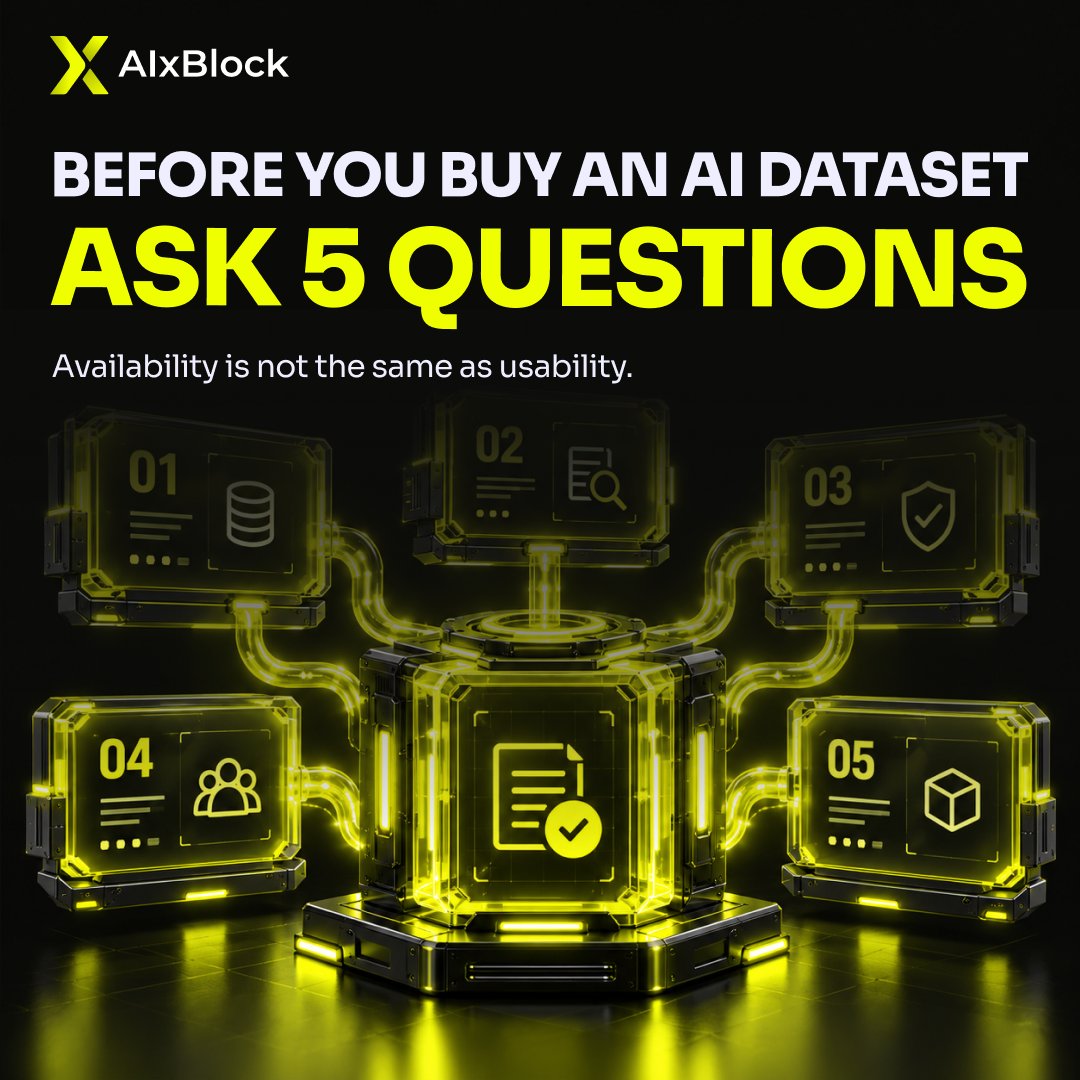
Before you buy an AI dataset, the file count is not the first thing to check.
Ask five questions.
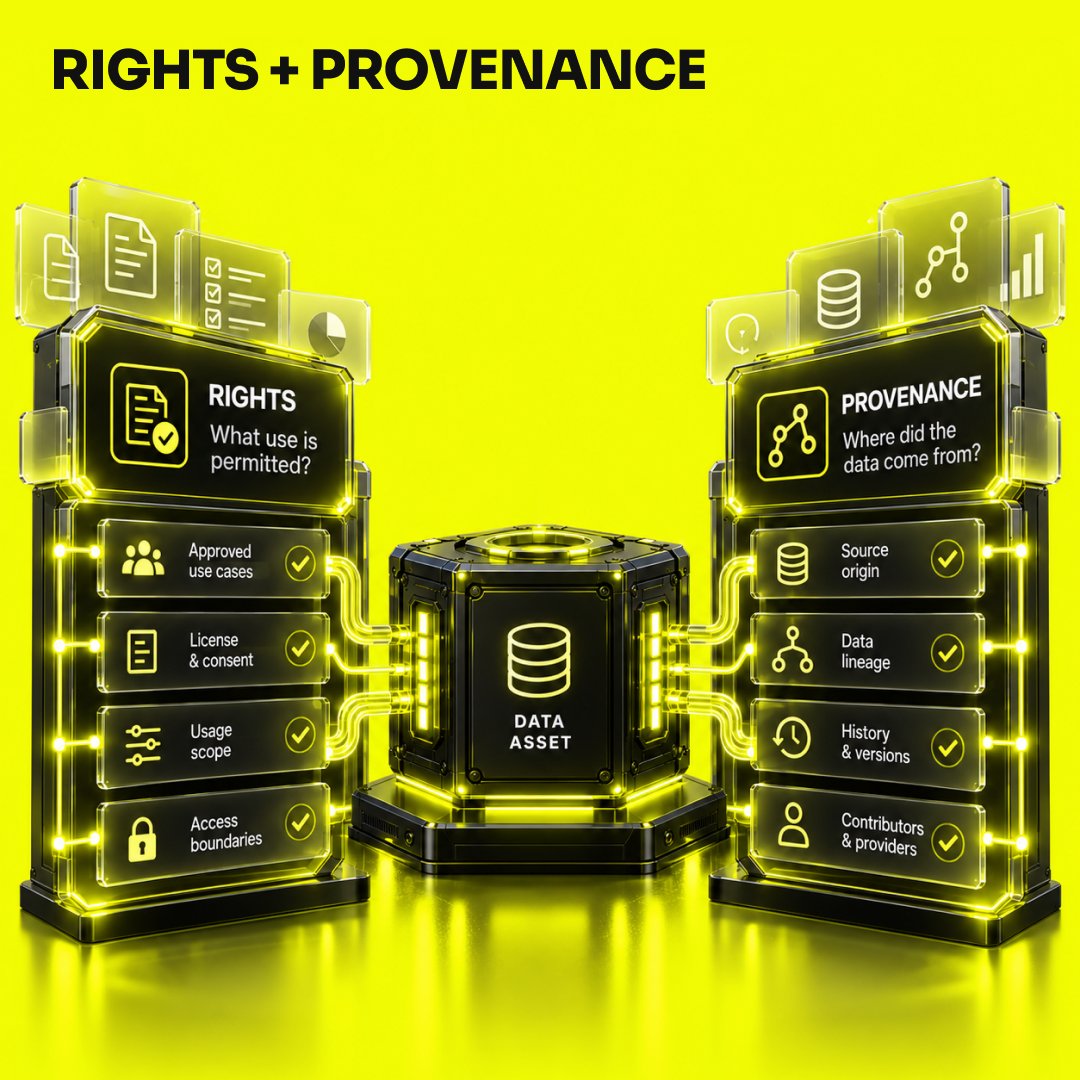
1. 𝐑𝐈𝐆𝐇𝐓𝐒
What use is actually permitted? Training, evaluation, commercial use, redistribution, and derivatives should be checked explicitly.
2. 𝐏𝐑𝐎𝐕𝐄𝐍𝐀𝐍𝐂𝐄
Where did the data come from? Can the source and collection or generation method be explained?
3. 𝐅𝐈𝐓 𝐓𝐎 𝐒𝐏𝐄𝐂
Does the dataset match the conditions your model needs — language, domain, device, environment, format, metadata, and task definition?
4. 𝐐𝐔𝐀𝐋𝐈𝐓𝐘
How was quality measured? What review, duplicate checks, adjudication, and acceptance criteria were used?
5. 𝐃𝐄𝐋𝐈𝐕𝐄𝐑𝐘 + 𝐂𝐎𝐍𝐓𝐑𝐎𝐋
How will the data be transferred, stored, versioned, and updated?
A large dataset can still be a poor purchase if one of these is unclear.
The practical sourcing question is:
“Can we use it, trust it, and connect it to the model requirement?”
AIxBlock supports OTS and custom data sourcing across speech, text, audio, video, and specialized datasets.
#AIData #DataProcurement #DataQuality #EnterpriseAI #MLOps
Prompt-response pairs are useful, but they are not the whole post-training dataset.
Different data layers can teach or measure different behaviors:
• SFT examples show what a strong response looks like.
• Preference data shows which response is better and which behavior should be preferred.
• Critique + revision captures what should change between a weak answer and a stronger one.
• Context- or tool-grounded examples teach the model to use supplied evidence and tools correctly.
• Evaluation sets measure whether the target behavior improved across normal and difficult cases.
The buyer question is not only:
“How many prompt-response pairs do we need?”
It is:
“What behavior are we trying to teach or measure?”
That answer should determine the data structure.
𝐀𝐈𝐱𝐁𝐥𝐨𝐜𝐤 supports custom LLM and dialogue data workflows across collection, annotation, expert review, preference data, and evaluation.
#LLM #PostTraining #AIData #ModelEvaluation #DataQuality
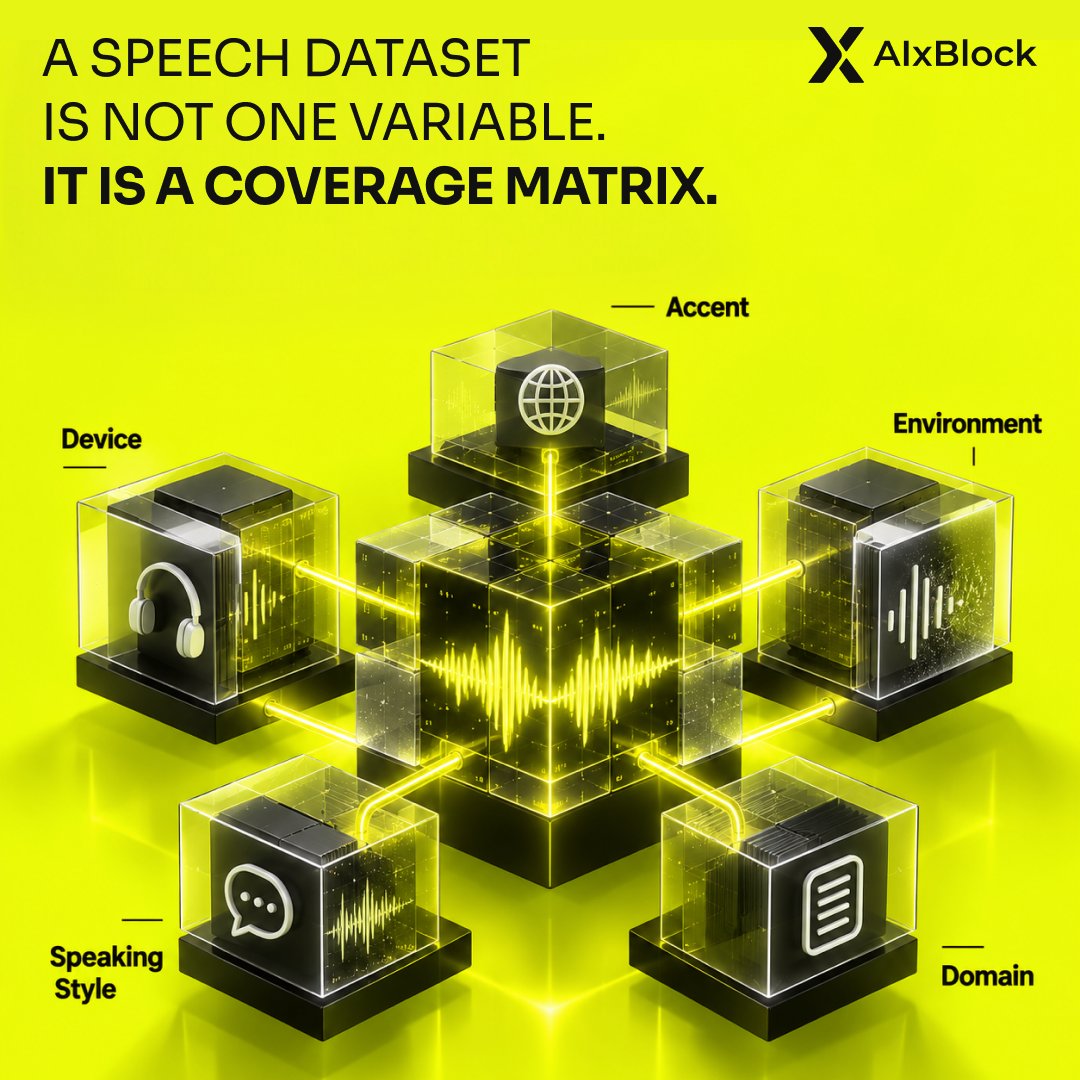
A voice model can sound strong in a quiet demo and still fail in the conditions users actually create.
Five audio conditions are especially useful in evaluation:
1. BACKGROUND NOISE
Traffic, office chatter, household sound, machinery, or other competing audio.
2. REVERBERATION
Rooms reflect sound differently. A clean close-mic recording does not test that.
3. DISTANCE
Moving the speaker away from the microphone changes level, clarity, and room contribution.
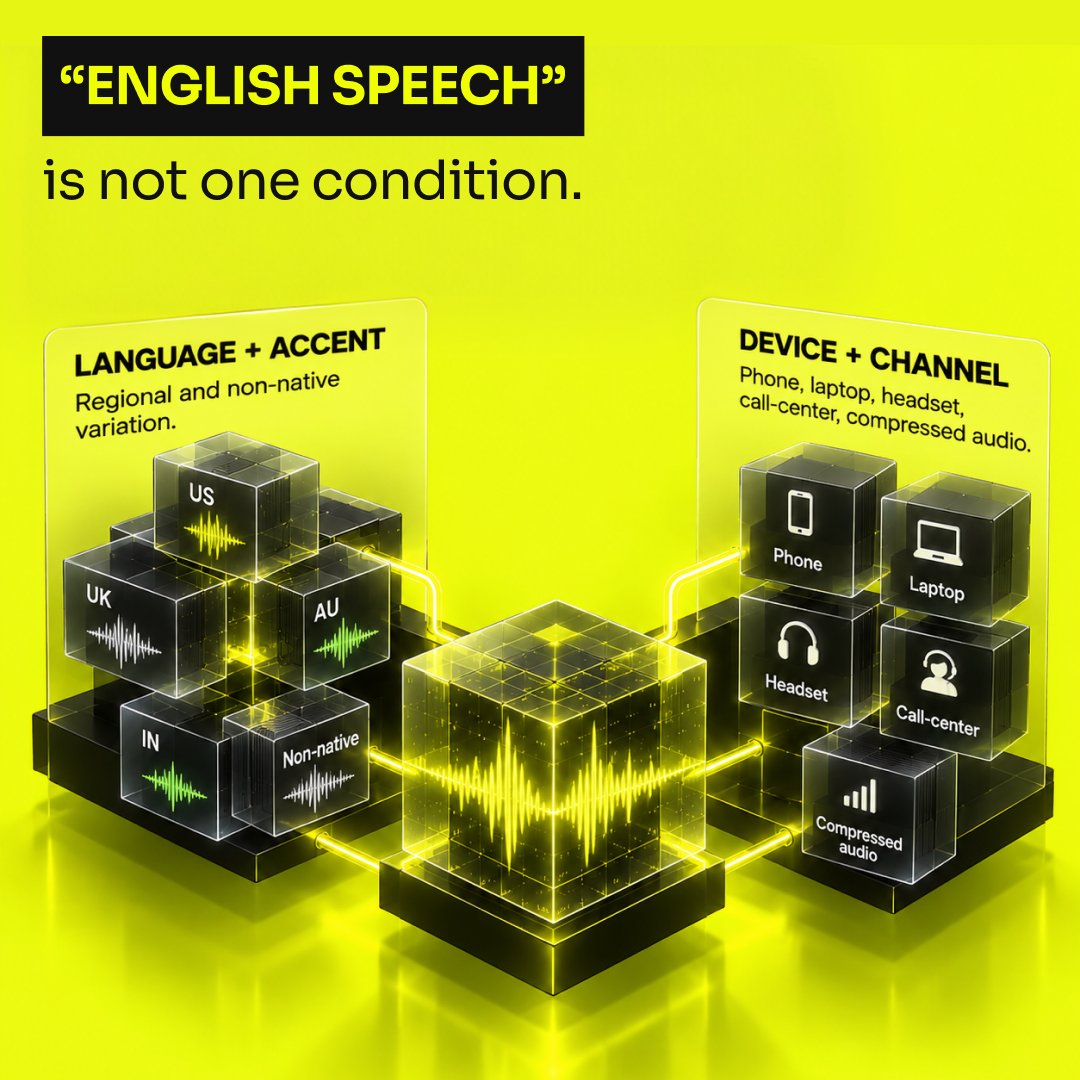
4. DEVICE + CHANNEL
Phone, laptop, headset, call audio, compression, and microphone quality all change the signal.
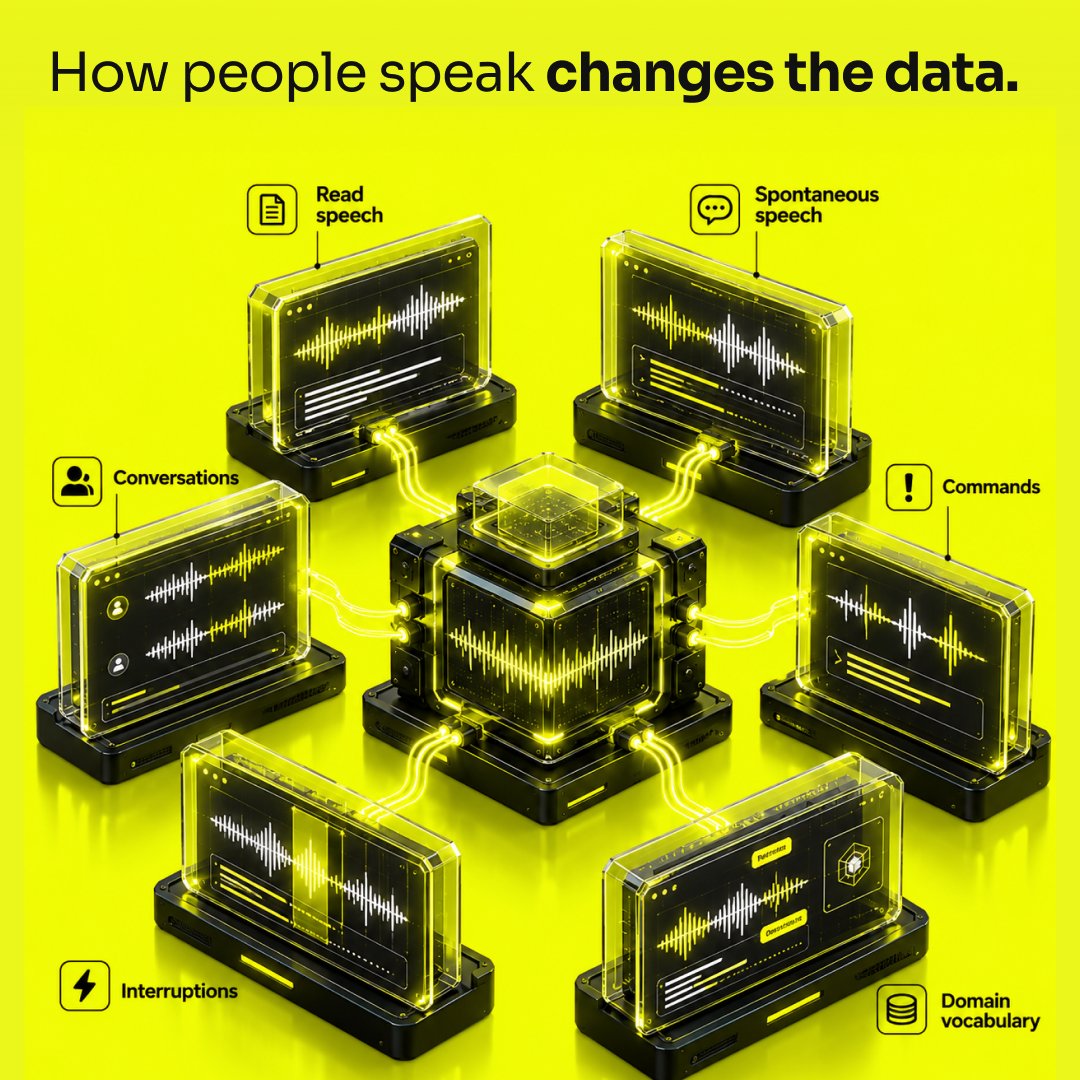
5. NATURAL SPEAKING BEHAVIOR
Fast speech, hesitations, interruptions, corrections, and spontaneous phrasing are different from carefully read sentences.
The goal is not to make every dataset noisy.
It is to evaluate the conditions the product is expected to survive.
A useful voice-AI test set maps those conditions deliberately, then measures performance by condition — not only as one aggregate score.
That makes failures easier to diagnose and data gaps easier to fix.
AIxBlock supports speech and audio data collection, annotation, QA, and evaluation across controlled and real-world conditions.
#VoiceAI #SpeechAI #ASR #ModelEvaluation #DataQuality
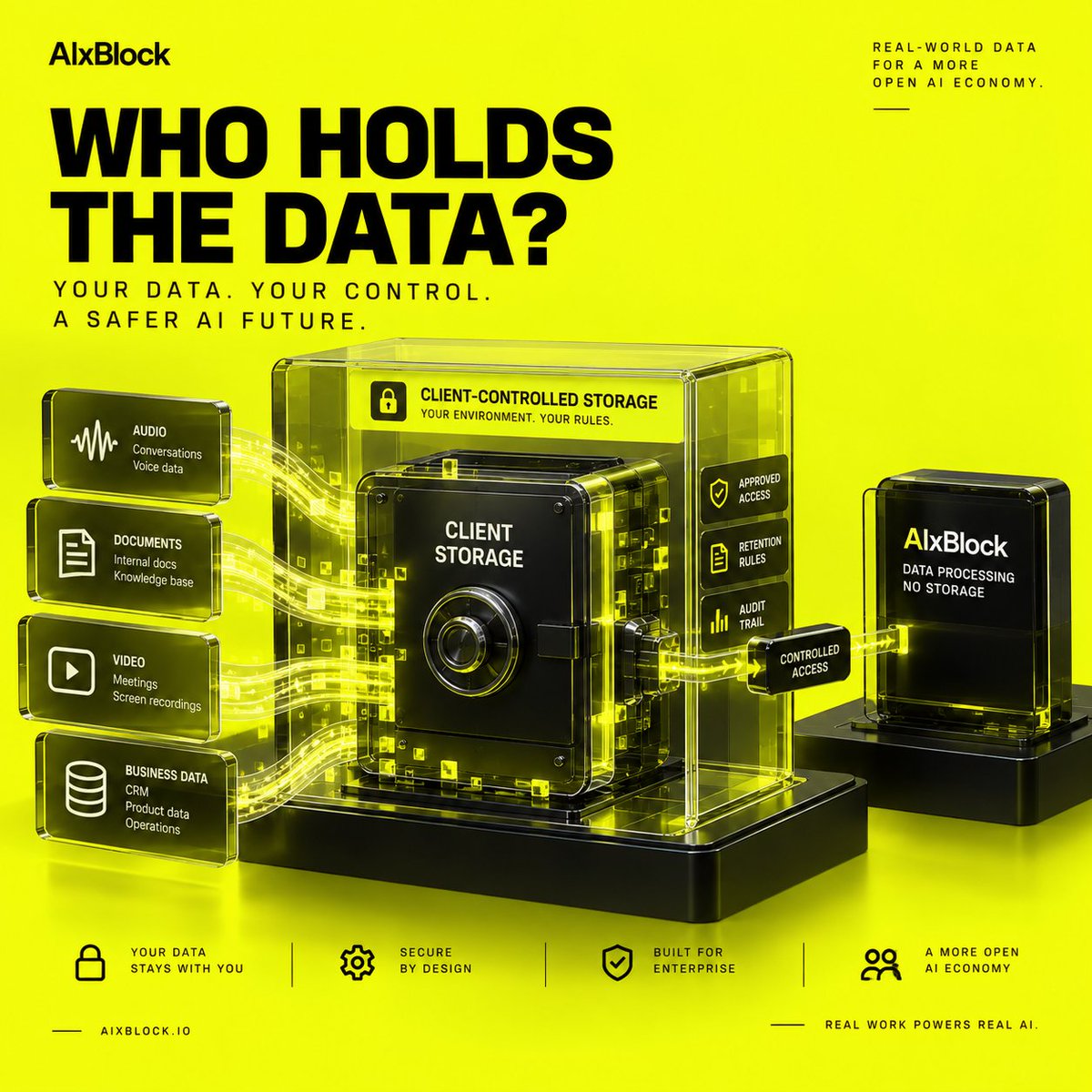
“We delete your data later” is a retention policy.
“Your raw data never enters our custody” is an architecture decision.
Those are not the same control.
In a traditional vendor workflow, raw data may move into vendor-controlled storage before processing, review, delivery, and eventual deletion.
A client-controlled workflow can change the path:
SOURCE DATA
↓
CLIENT-CONTROLLED STORAGE
↓
APPROVED PROCESSING / REVIEW
↓
OUTPUT BACK TO CLIENT
The vendor may still provide the platform, workflow, QA, or workforce — without needing to become the long-term custodian of the raw dataset.
Why does that matter?
Because every additional copy creates another question:
• Who can access it?
• Where is it stored?
• How long does it remain?
• How is deletion verified?
• What happens when access changes?
Retention controls still matter.
But reducing unnecessary custody can remove risk before a deletion policy ever has to manage it.
For sensitive AI data programs, architecture should be part of the governance conversation from day one.
AIxBlock supports self-hosted and client-controlled data workflows where storage, access, processing, and delivery requirements are defined around the project.
#DataGovernance #DataSecurity #EnterpriseAI #AIData #Privacy
Not every labeling task needs a domain expert.
But some tasks become unreliable when judgment is treated like a simple annotation.
Four examples:
1. MEDICAL OR CLINICAL CONTENT
The label may depend on terminology, context, or distinctions a general annotator should not be expected to infer.
2. SPECIALIZED TECHNICAL DATA
Code, engineering records, scientific text, and other technical material may require reviewers who understand what a correct outcome actually looks like.
3. AMBIGUOUS OR HIGH-STAKES EDGE CASES
When two plausible labels exist, the important work is often defining the decision rule — not asking more people to vote.
4. GOLD SETS + EVALUATION RUBRICS
If a dataset will measure model quality, the reference answer needs defensible judgment. That may require expert review, adjudication, and documented criteria.
The buyer question is not:
“Can this be labeled?”
It is:
“What level of judgment does a reliable label require?”
A good data operation separates routine annotation from expert decisions, then builds escalation and adjudication around the boundary.
AIxBlock supports expert-reviewed data workflows, rubric design, QA, and custom annotation programs across specialized domains.
#DataAnnotation #AIData #DataQuality #HumanInTheLoop #ModelEvaluation
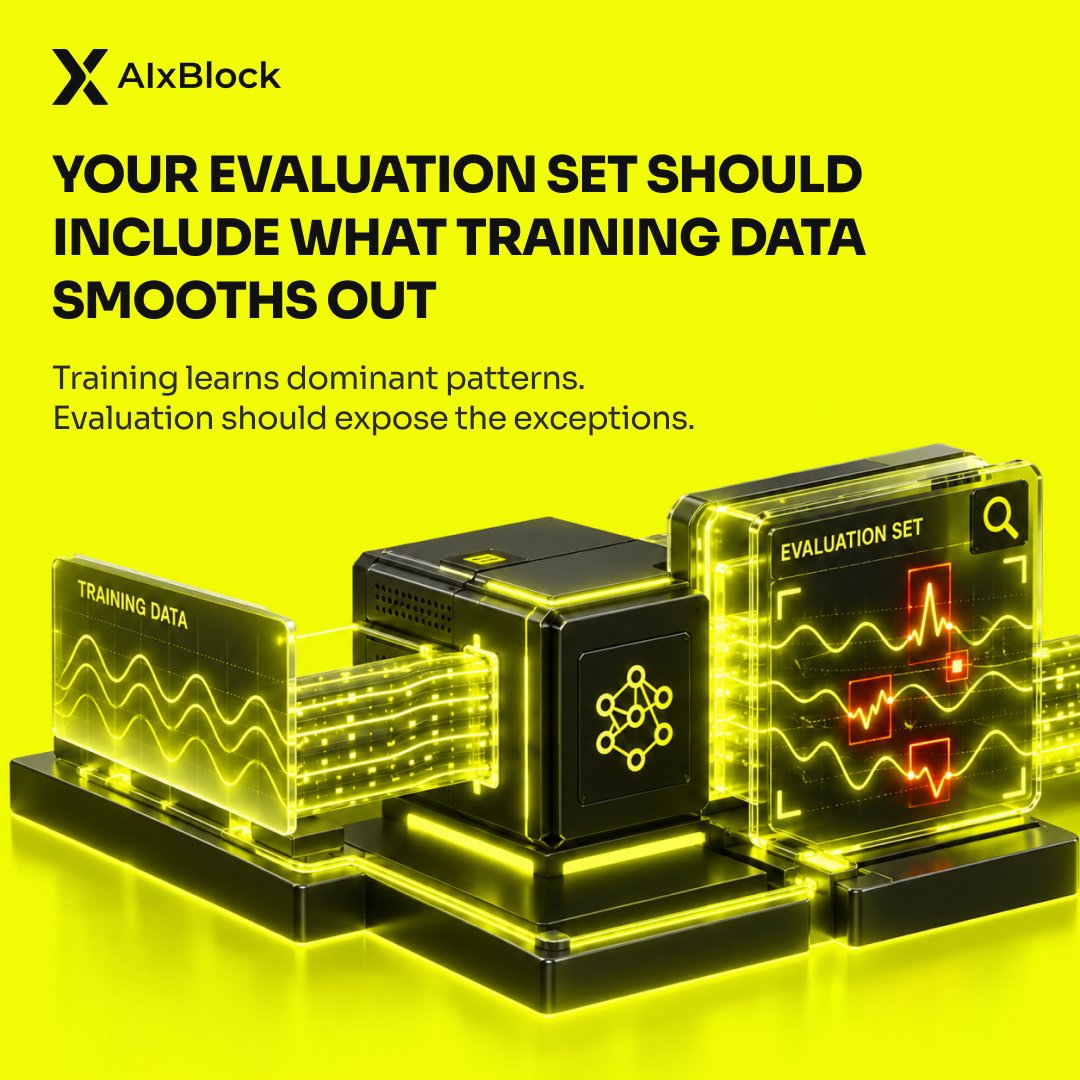
Training data and evaluation data should not be optimized for exactly the same thing.
Training data often helps a model learn the dominant patterns in a task.
Evaluation data has a different job:
find the conditions where those patterns stop being enough.
For a voice model, that may mean testing:
• background noise
• unfamiliar accents
• reverberation
• distance from the microphone
• interruptions or overlapping speech
For an LLM, it may mean:
• ambiguous instructions
• incomplete context
• conflicting evidence
• domain-specific terminology
• requests that require refusal or escalation
If your evaluation set mostly looks like the cleanest parts of your training set, a strong score can hide weak deployment behavior.
A useful evaluation set should deliberately include the conditions production will expose — especially the ones training data tends to smooth out.
The question is not only:
“How accurate is the model?”
It is:
“Under which conditions does accuracy break?”
That is the information teams need before deployment.
AIxBlock supports custom evaluation datasets designed around real deployment conditions, edge cases, and measurable failure modes.
#ModelEvaluation #DataQuality #AIData #EnterpriseAI #MLOps
A buyer should not have to wait until final delivery to understand whether an AI data project is under control.
A professional project should make the operating trail visible while the work is happening.
That can include:
𝐒𝐏𝐄𝐂 𝐕𝐄𝐑𝐒𝐈𝐎𝐍
Which instructions and acceptance criteria are currently active?
𝐒𝐀𝐌𝐏𝐋𝐄 𝐀𝐏𝐏𝐑𝐎𝐕𝐀𝐋
What was approved before full-scale collection or annotation began?
𝐂𝐎𝐍𝐓𝐑𝐈𝐁𝐔𝐓𝐎𝐑 / 𝐒𝐎𝐔𝐑𝐂𝐄 𝐂𝐎𝐍𝐓𝐑𝐎𝐋𝐒
Who or what is allowed into the dataset, where required?
𝐐𝐀 + 𝐑𝐄𝐖𝐎𝐑𝐊
What gets rejected, corrected, or escalated?
𝐂𝐇𝐀𝐍𝐆𝐄 𝐇𝐈𝐒𝐓𝐎𝐑𝐘
When a requirement changes, what changed with it?
𝐃𝐄𝐋𝐈𝐕𝐄𝐑𝐘 𝐌𝐀𝐍𝐈𝐅𝐄𝐒𝐓
What exactly is in each batch, and how does it map back to the agreed specification?
This is not extra admin.
It is what makes data work reviewable.
For enterprise teams, operational transparency matters because quality, privacy, timeline, and acceptance criteria all move together.
𝐀𝐈𝐱𝐁𝐥𝐨𝐜𝐤 structures data projects around defined specifications, review workflows, QA/QC, and traceable delivery.
#AIData #DataOperations #DataQuality #EnterpriseAI #MLOps
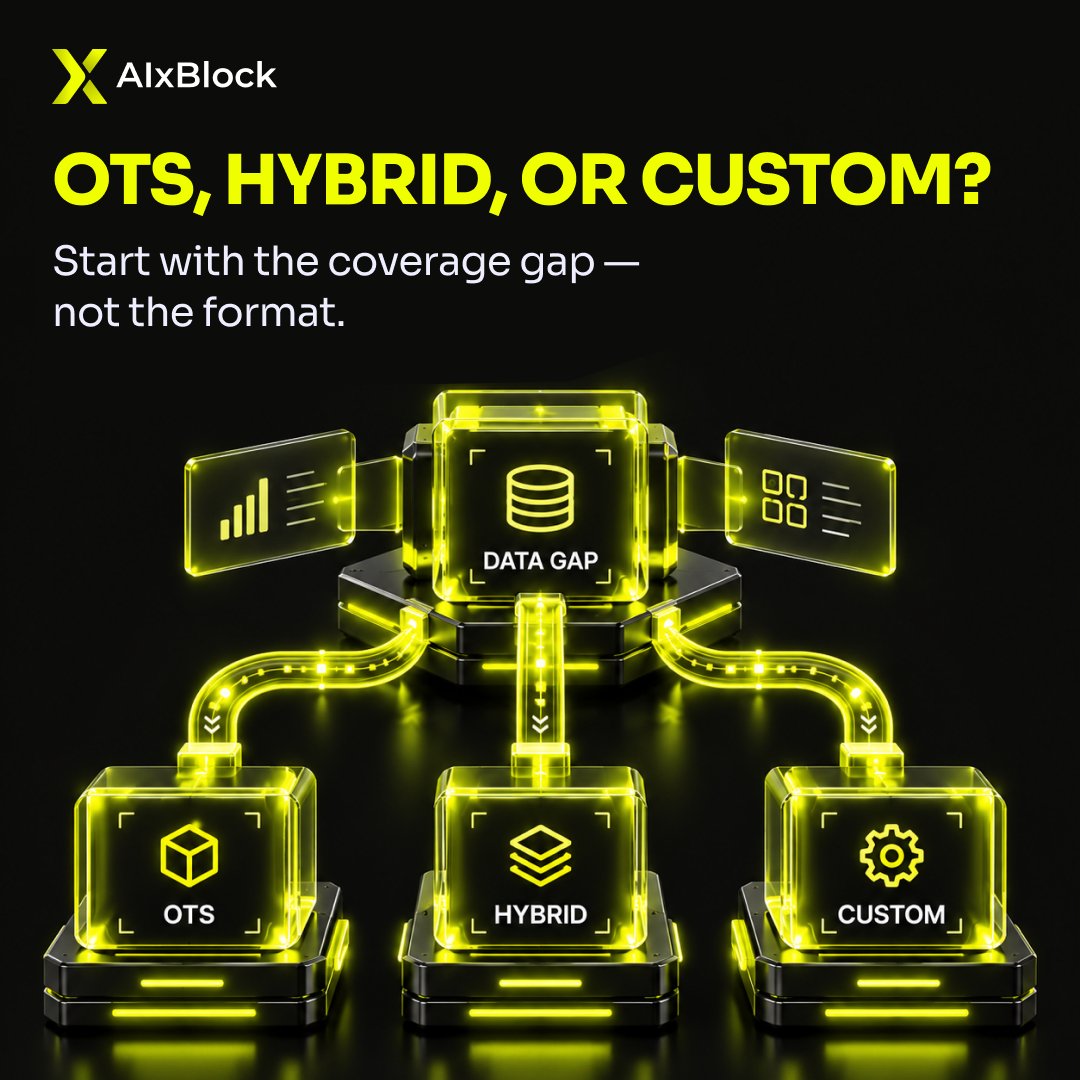
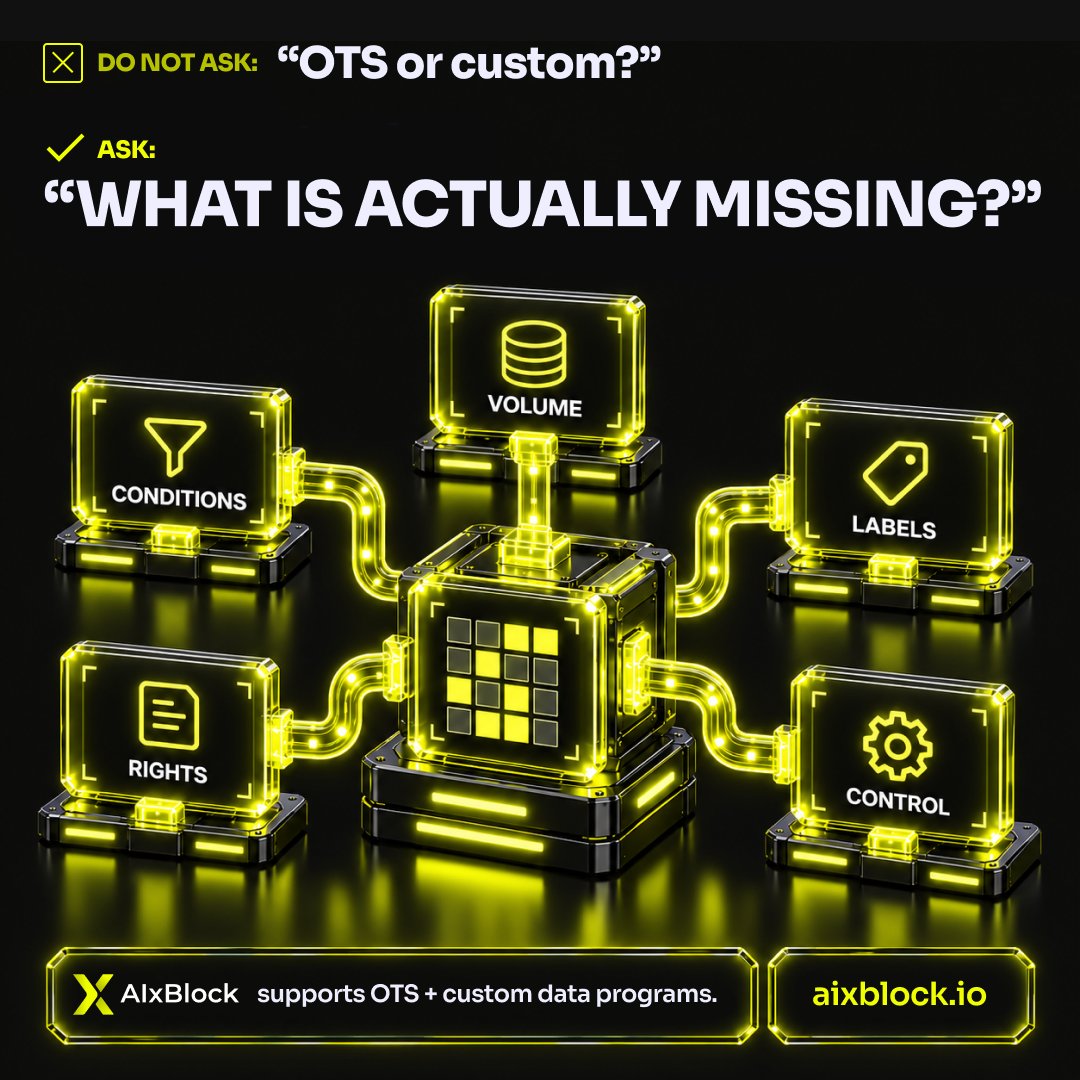
The first question in data sourcing should not be:
“Should we buy OTS data or run a custom collection?”
Start with the gap.
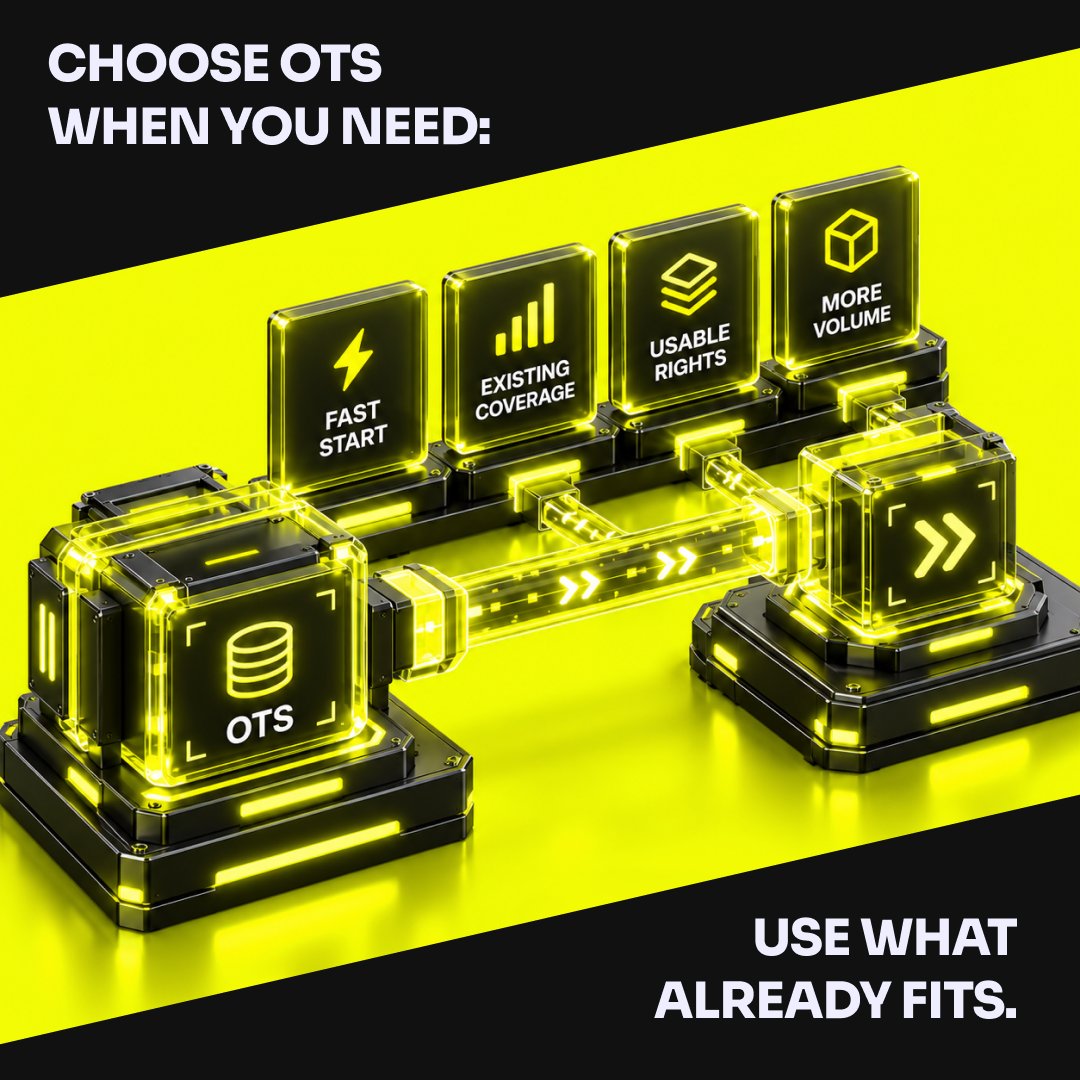
OTS DATA is useful when:
• you need to move quickly
• existing coverage is close to the target
• licensing and permitted use fit the project
• you need benchmark, pre-training, or additional volume
CUSTOM COLLECTION is useful when:
• the scenario is specific
• speaker, device, environment, or domain requirements are tightly defined
• metadata or annotation requirements are unique
• consent, storage, or delivery controls need to follow a project-specific workflow
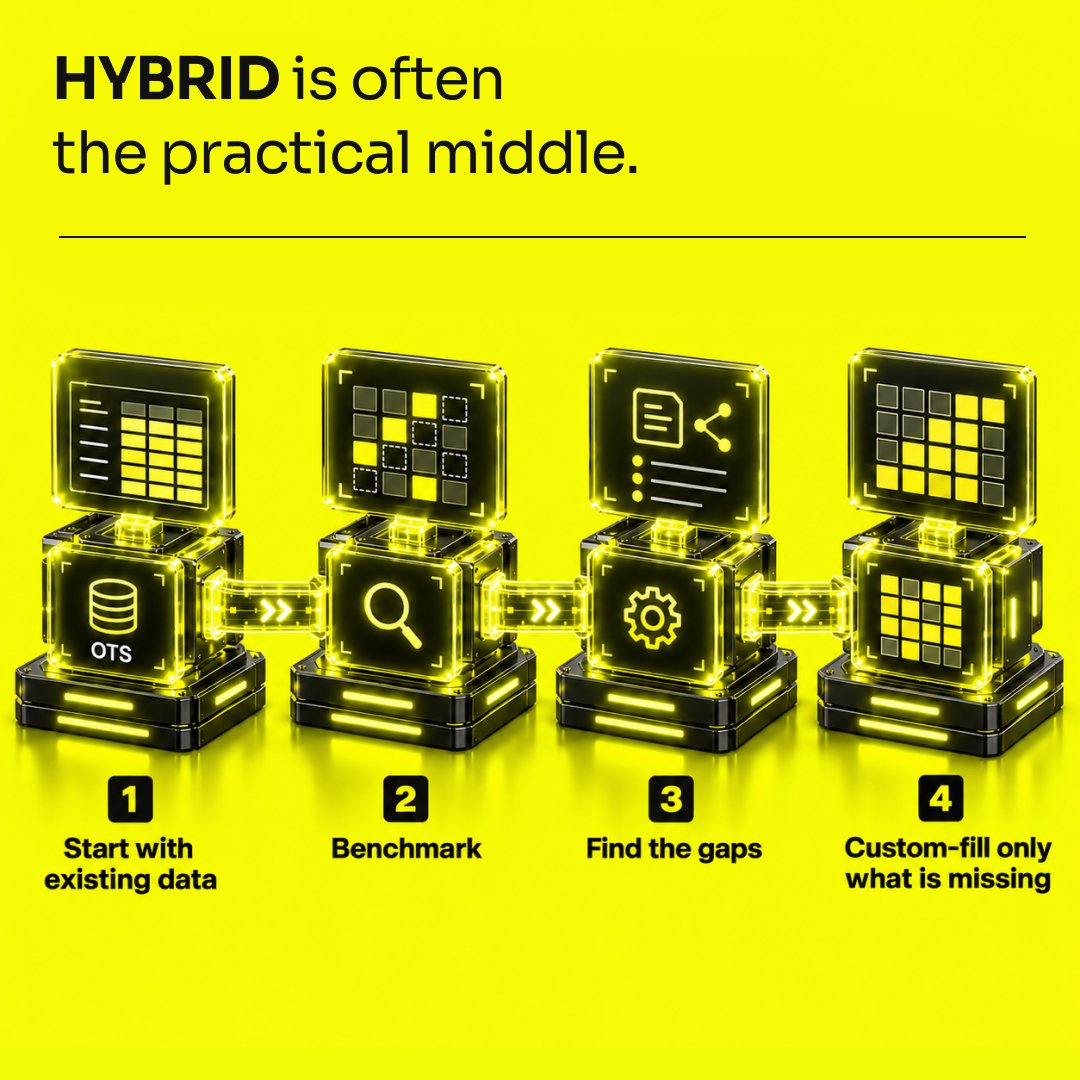
HYBRID is often the practical middle:
1. use existing data to establish a baseline
2. identify what is missing
3. collect only the uncovered segments
That turns the sourcing decision from a preference into a coverage decision.
The buyer question is:
What is missing — volume, conditions, labels, rights, or control?
AIxBlock supports OTS and custom data programs across speech, text, audio, video, and specialized datasets.
#AIData #DataProcurement #SpeechAI #EnterpriseAI #DataQuality
A dataset can be perfectly formatted, fully labeled, and still be the wrong dataset for the model.
File-level QA answers questions like:
• Is the schema correct?
• Are required fields present?
• Are labels valid?
• Are files readable?
• Are duplicates removed?
Model-readiness asks a different set of questions:
• Does the data cover the conditions the model will actually face?
• Are important edge cases represented?
• Are labels defined around the model task — not just the annotation task?
• Is there enough variation across language, environment, device, domain, or user behavior?
• Can the evaluation set reveal meaningful failure modes?
Passing QA means the delivery is clean.
It does not automatically mean the dataset is fit for purpose.
The strongest data programs define both before collection begins:
delivery quality criteria
and
model-use criteria.
AIxBlock supports data programs across collection, annotation, QA, and evaluation — with the dataset specification tied back to how the data will actually be used.
#DataQuality #AIData #ModelEvaluation #EnterpriseAI #MLOps
Superintelligence is starting to move from a distant thought experiment into a very public industry debate.
Palisade Research has published filmed interviews with current and former researchers from @OpenAI, @Google DeepMind and @Anthropic discussing their personal views on increasingly capable AI.
They do not all agree on the level or type of risk.
But that is exactly what makes the signal interesting.
Questions that used to sit mostly in research papers and closed safety discussions are now being discussed on camera by people who have worked inside frontier labs.
For teams building with frontier AI, the practical question is no longer only:
“How capable is the model?”
It is also:
→ What can it actually do?
→ Where does it fail?
→ How do we test those failure modes?
→ What controls are needed before deployment?
→ What evidence should exist before a capability claim becomes a production decision?
Capability without evaluation is still a claim.
Capability with evidence can be reviewed, compared and governed.
Watch the source interviews: https://t.co/dmdz6HIXJI
#AI #FrontierAI #AISafety #ModelEvaluation #EnterpriseAI
Sources:
https://t.co/LXnuG6h0ha
Self-hosting is often described as a deployment choice.
For sensitive AI data, it changes the data relationship.
The important question is not only:
“Where does the platform run?”
It is:
“Who ever takes custody of the raw data?”
A self-hosted workflow can change several things at once:
• raw data can land directly in the client-controlled environment
• access can be limited to approved reviewers and roles
• temporary working copies can be reduced or eliminated
• retention rules can be enforced inside the client’s infrastructure
• audit evidence can come from the system itself, not only from vendor policy
That changes procurement conversations.
Instead of asking a vendor to promise:
“We will protect your data,”
the architecture can answer:
“The data stays inside your boundary.”
For enterprise AI programs involving private speech, operating records, healthcare data, internal documents, or other sensitive datasets, that difference matters.
Security is stronger when the workflow reduces unnecessary custody in the first place.
AIxBlock supports self-hosted data workflows where sovereignty, access control, and auditability are part of the project requirements.
If your AI data program has strict storage or governance constraints, contact us to discuss the delivery architecture before collection starts.
#DataSecurity #EnterpriseAI #AIData #SelfHosted #DataGovernan
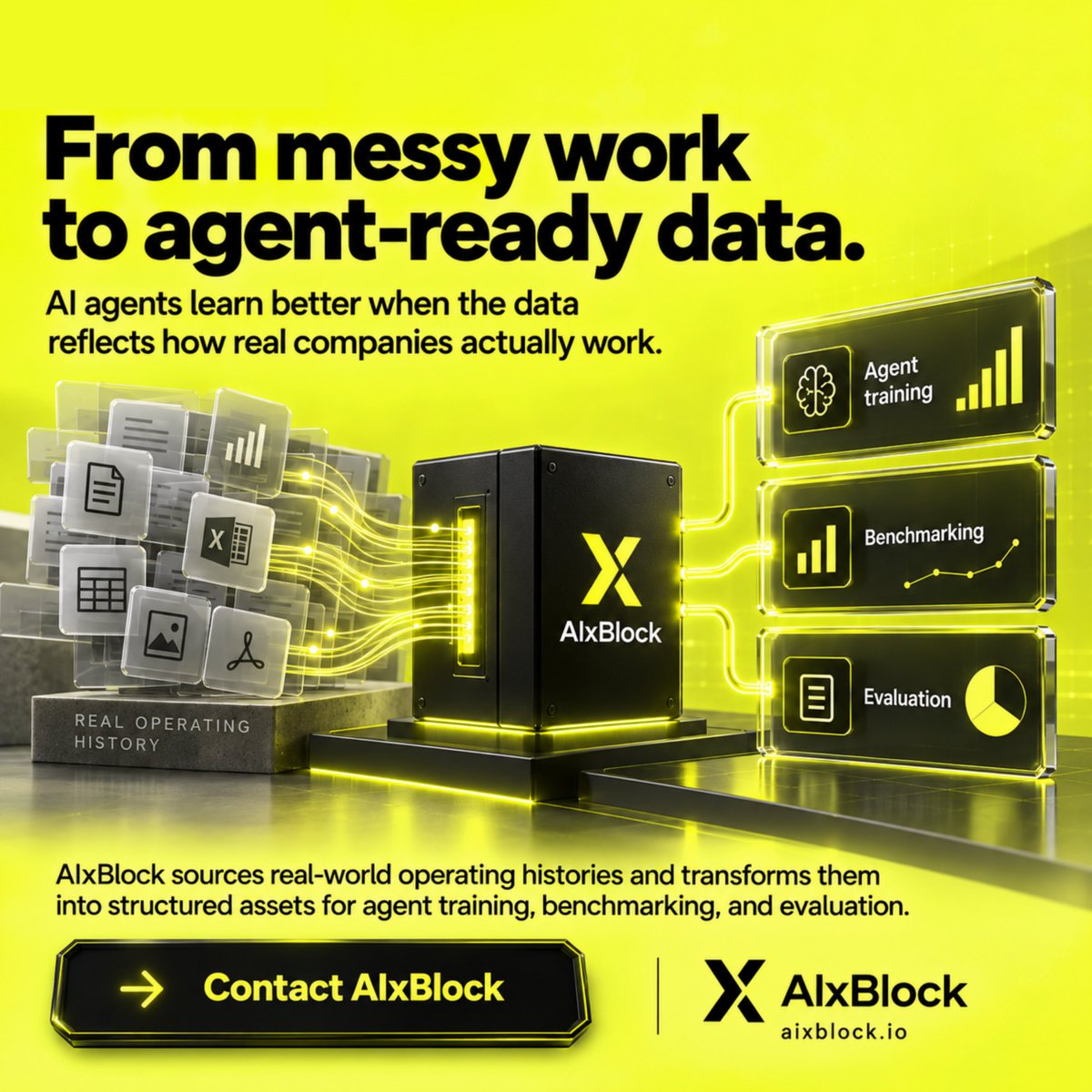
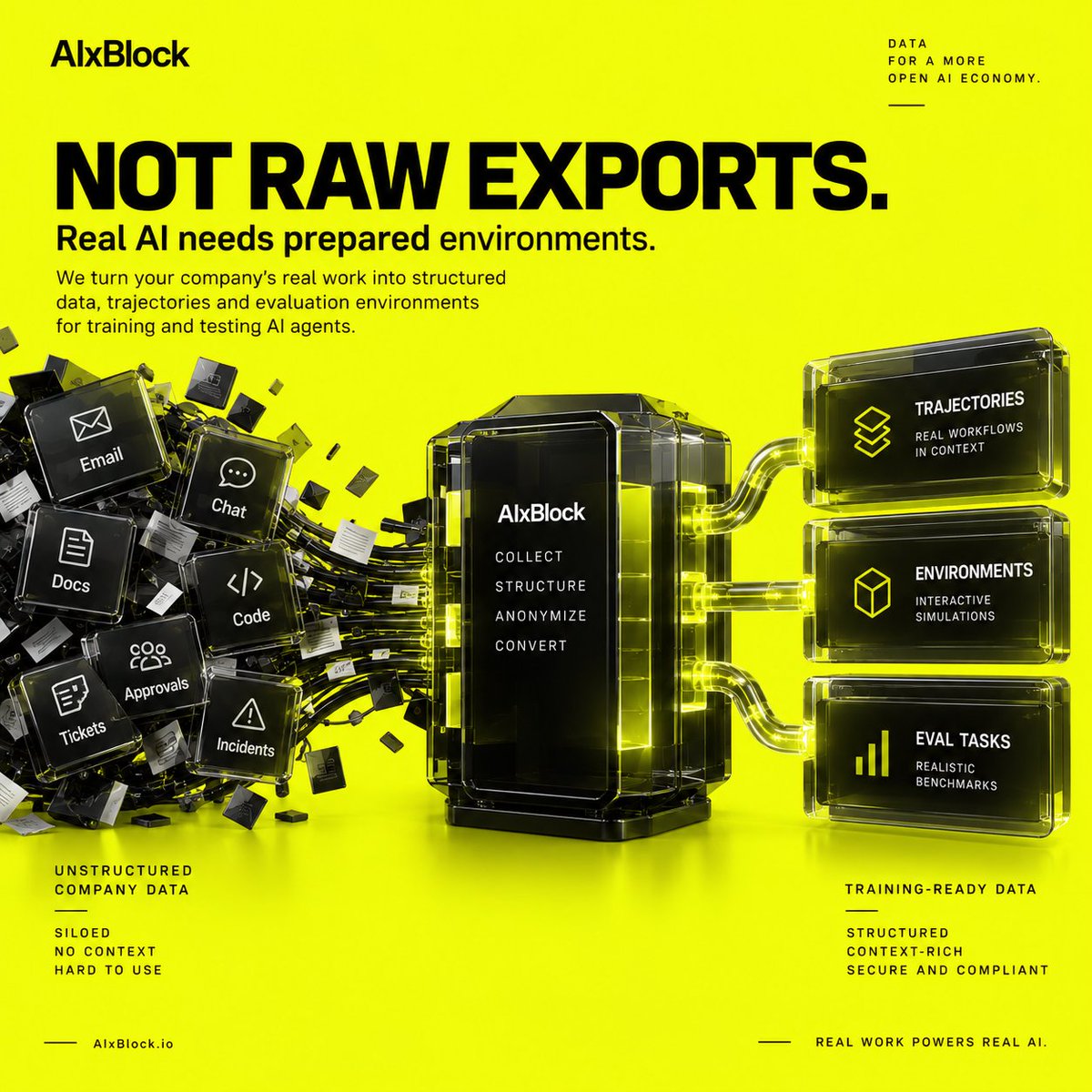
Agent training does not need raw company exports.
It needs prepared environments.
That is the difference.
Raw operating data may include emails, chats, docs, tickets, code, approvals, incidents, and workflows.
But without structure, it is difficult to use.
AIxBlock helps turn real operating histories into assets that frontier labs can use for agent training and evaluation:
• labeled trajectories showing how work moves from request to action to outcome
• interactive environments giving agents context and tools to act on tasks
• evaluation-ready tasks grounded in real workflows and verifiable outcomes
This matters for multiple agent categories:
Coding agents
Debug, modify, test, review, and navigate real software systems.
Enterprise agents
Act across communication, documents, approvals, and business tools.
Knowledge agents
Navigate large repositories and internal knowledge systems.
Domain-specific agents
Learn workflows from specific industries, functions, tools, and operating contexts.
The next generation of agents will need more than static training data.
They will need real operating context.
That is what AIxBlock is building access to.
—
Discuss your data requirements with AIxBlock.
#AIAgents #AgenticAI #EnterpriseAI #AIData #FrontierAI
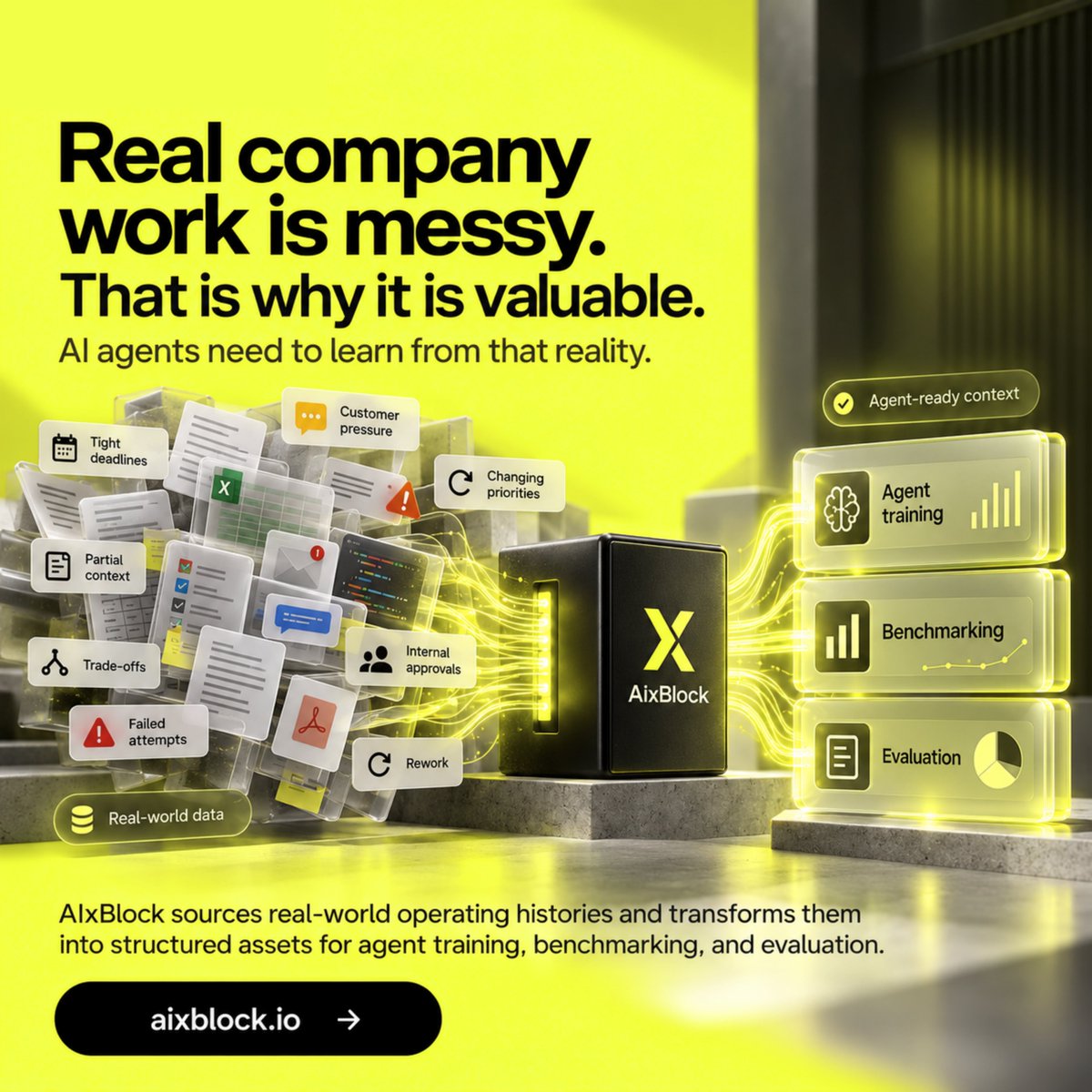
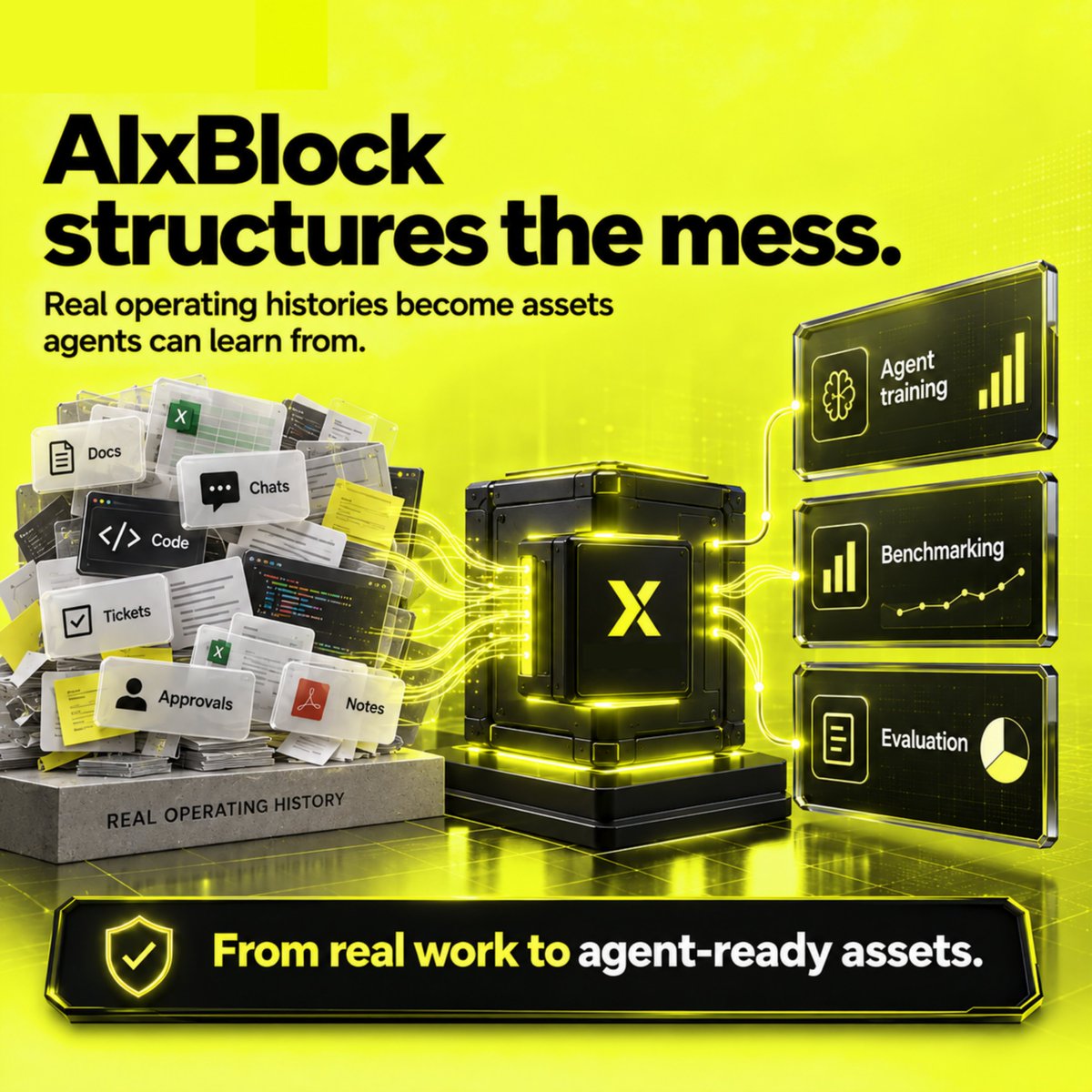
Real company work is messy.
That is why it is valuable.
Deadlines.
Trade-offs.
Partial context.
Changing priorities.
Customer pressure.
Internal approvals.
Failed attempts.
Rework.
AI agents need to learn from that reality.
AIxBlock sources real-world operating histories and transforms them into structured assets for agent training, benchmarking, and evaluation.
#AIAgents #RealWorldData #AIData #FrontierAI
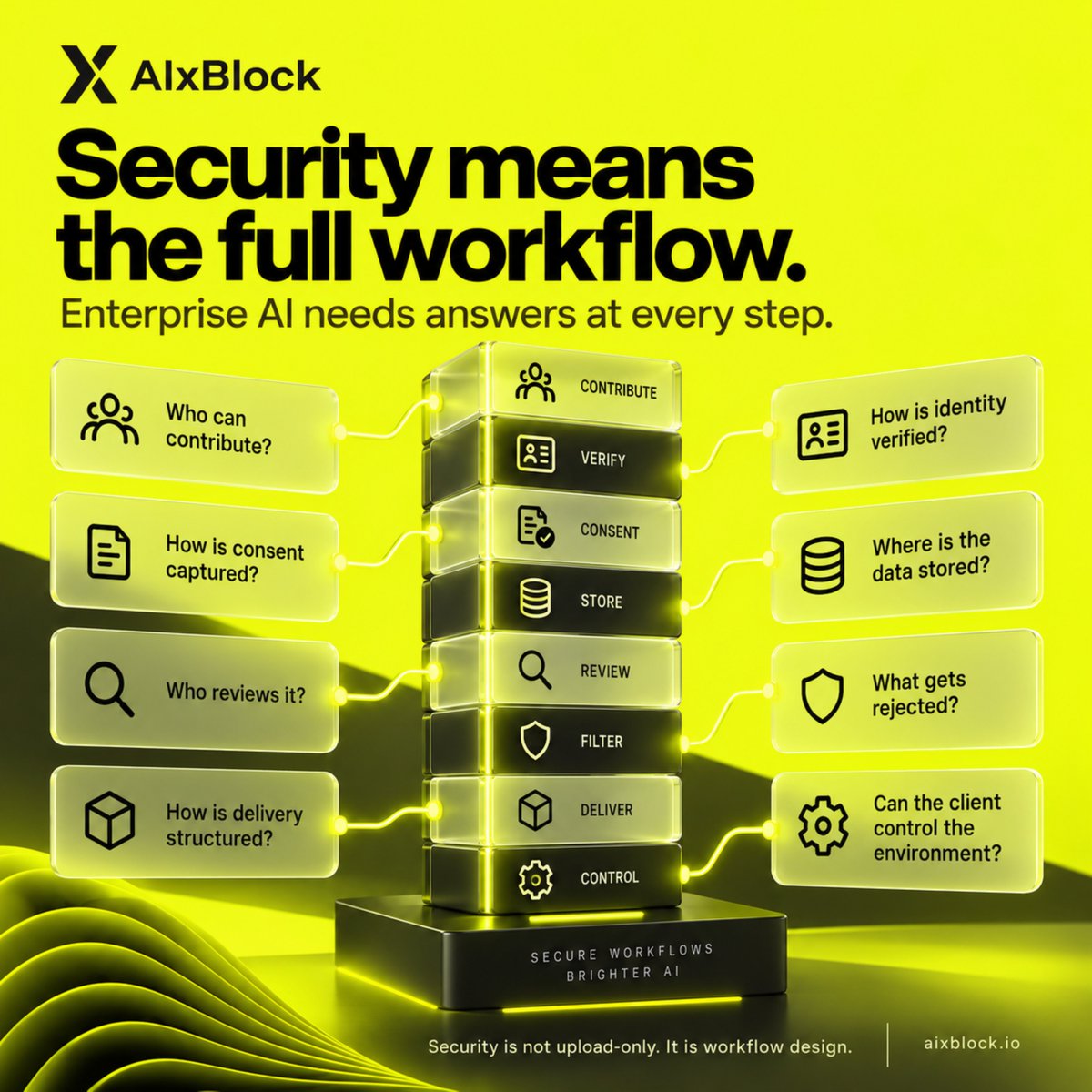
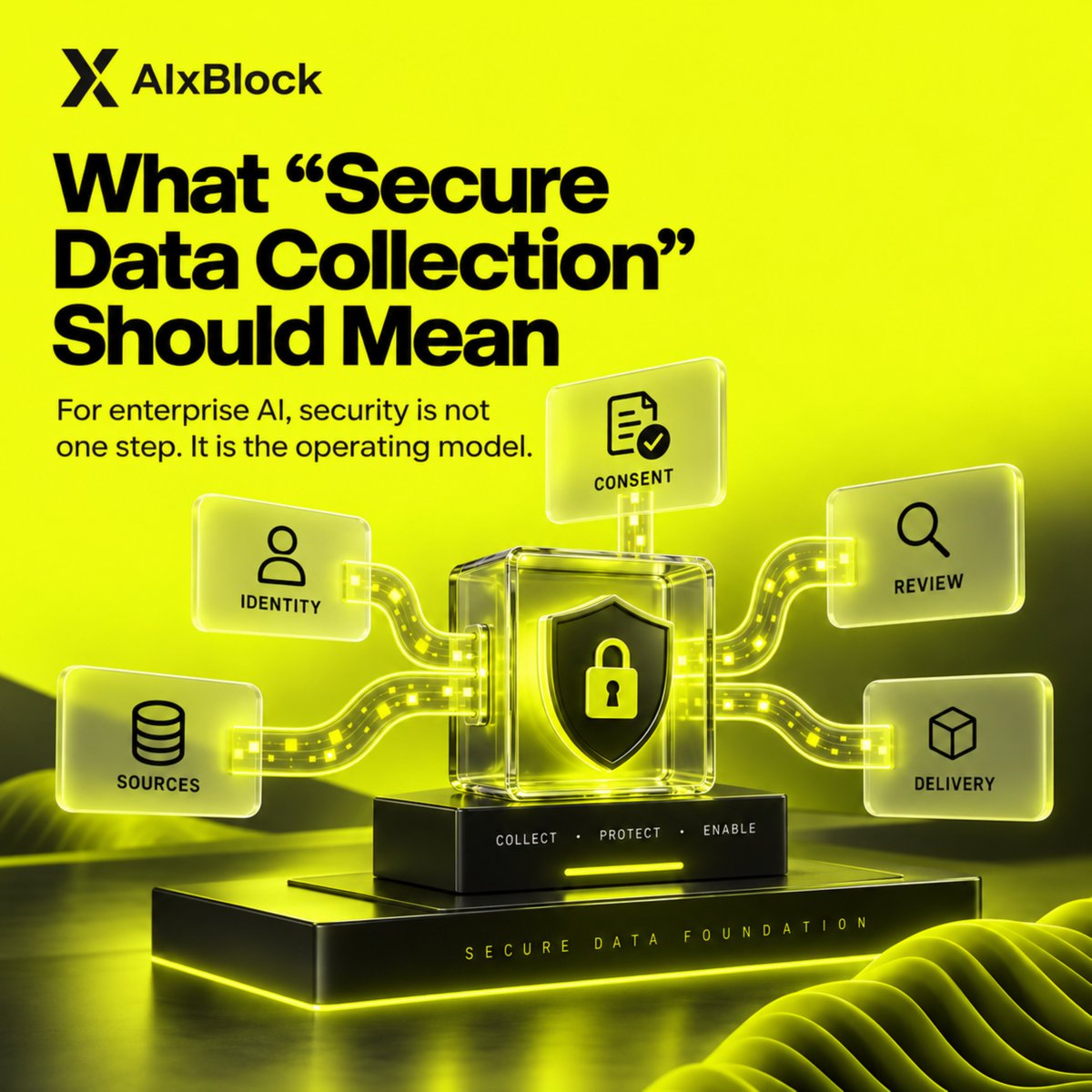
What “Secure Data Collection” Should Mean
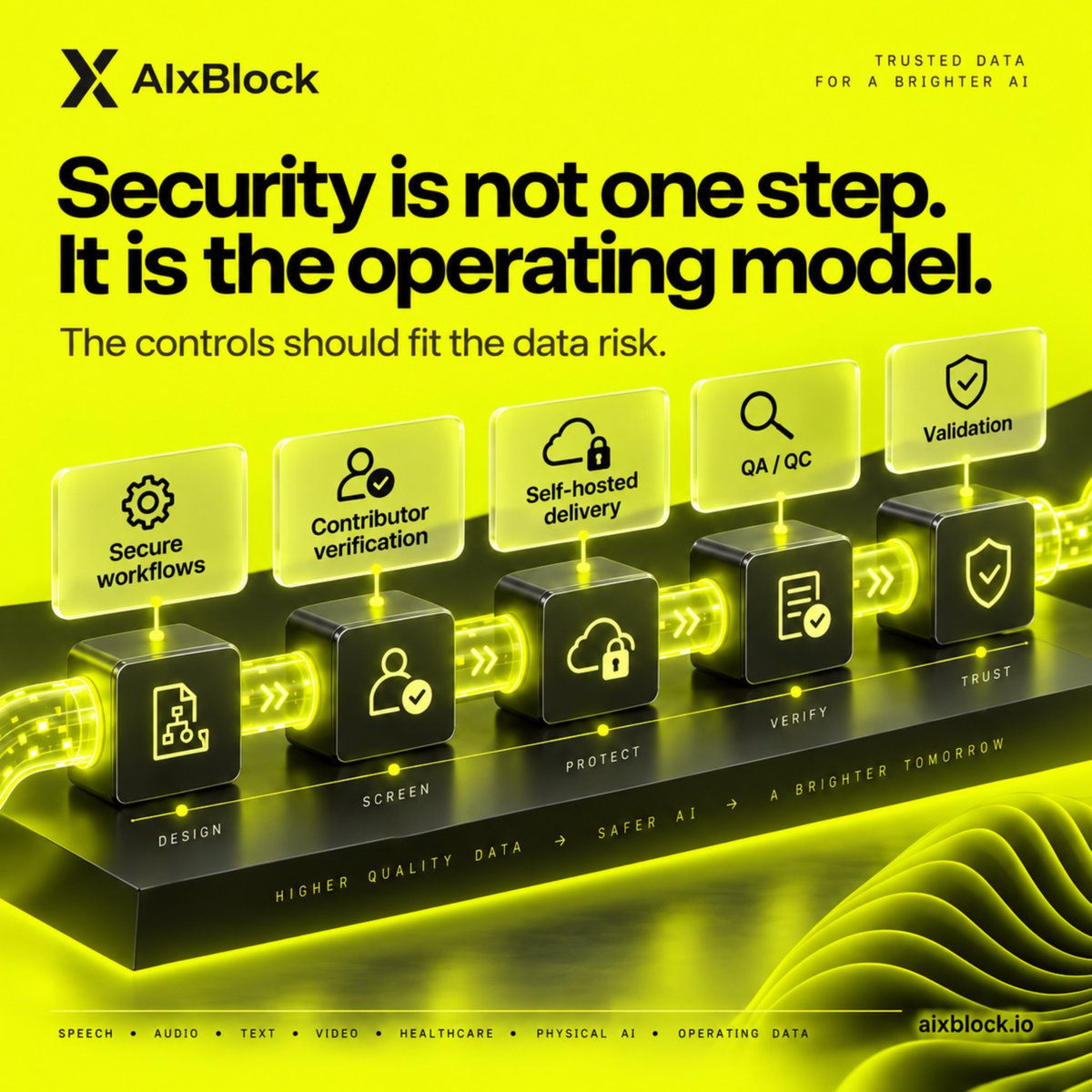
“Secure data collection” should mean more than encrypted upload.
For enterprise AI, it should answer the full workflow:
Who is allowed to contribute?
How is identity verified?
How is consent captured?
Where is the data stored?
Who reviews it?
What gets rejected?
How is delivery structured?
Can the client control the data environment?
This becomes more important as AIxBlock works across diverse data types:
speech
audio
text
video
healthcare
Physical AI
operating data
private datasets
OTS data
evaluation data
The security model has to match the data risk.
That is why AIxBlock combines secure workflows with self-hosted delivery options, contributor verification, QA/QC, and validation controls.
For enterprise AI, security is not one step.
It is the operating model.
#DataSecurity #EnterpriseAI #AIData #SovereignData #DataGovernance
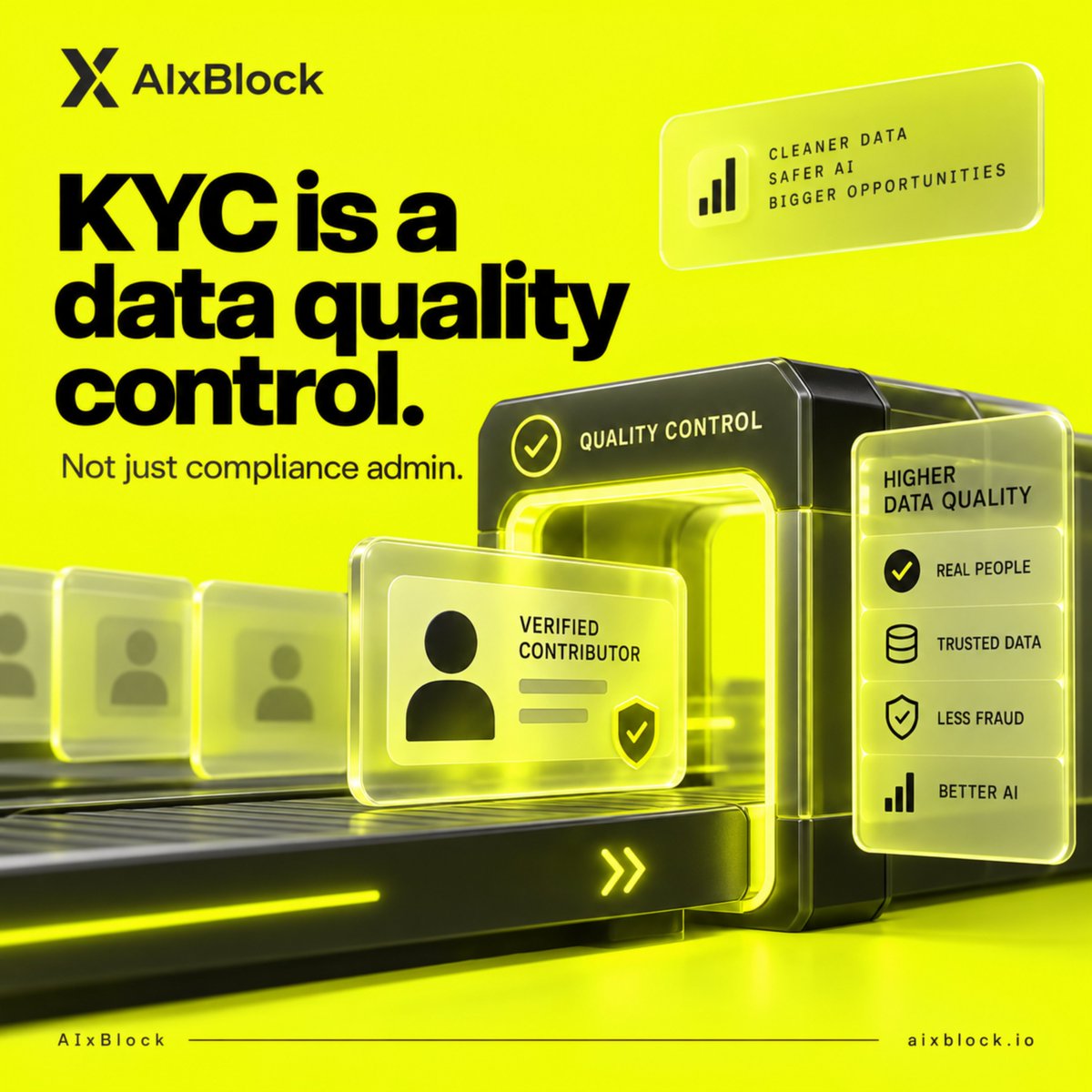
KYC is usually treated as compliance admin.
For AI data, it is also a 𝐪𝐮𝐚𝐥𝐢𝐭𝐲 𝐜𝐨𝐧𝐭𝐫𝐨𝐥.
Because the wrong contributor can change the dataset.
Proxy work changes quality.
Account sharing changes consistency.
Fake profiles change trust.
Automation misuse changes the signal.
Identity mismatch creates audit risk.
This matters across many AI data programs:
speech collection
video collection
Physical AI tasks
expert review
healthcare workflows
human feedback
evaluation tasks
AIxBlock applies contributor verification where required, including KYC, device checks, session controls, and review workflows.
Not because every project needs the same control.
Because every project needs the right control for its risk.
For enterprise AI, contributor identity is not separate from data quality.
It is part of it.
#KYC #DataIntegrity #EnterpriseAI #AIData #DataQuality
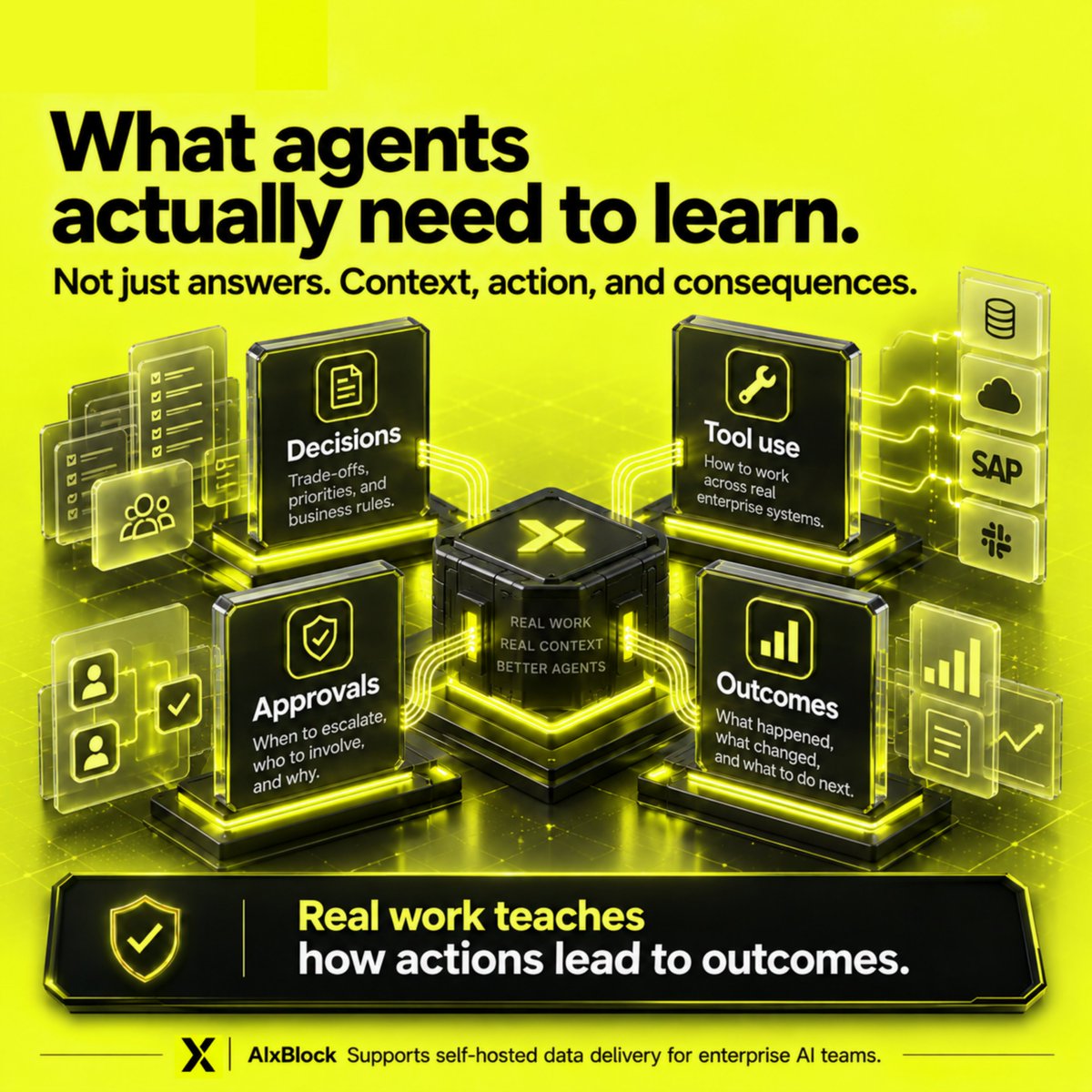
AI agents are not only being trained to read.
They are being trained to 𝐚𝐜𝐭.
That changes the data requirement.
Static files can show information.
But agents need to learn:
how work starts
how decisions are made
how tools are used
how tasks move across systems
what outcome actually happened
AIxBlock helps frontier labs access 𝐫𝐞𝐚𝐥-𝐰𝐨𝐫𝐥𝐝 𝐨𝐩𝐞𝐫𝐚𝐭𝐢𝐧𝐠 𝐡𝐢𝐬𝐭𝐨𝐫𝐢𝐞𝐬 transformed into labeled trajectories and evaluation-ready tasks.
Because agent training needs more than documents.
It needs work.
#AIAgents #AgenticAI #AIData #FrontierAI
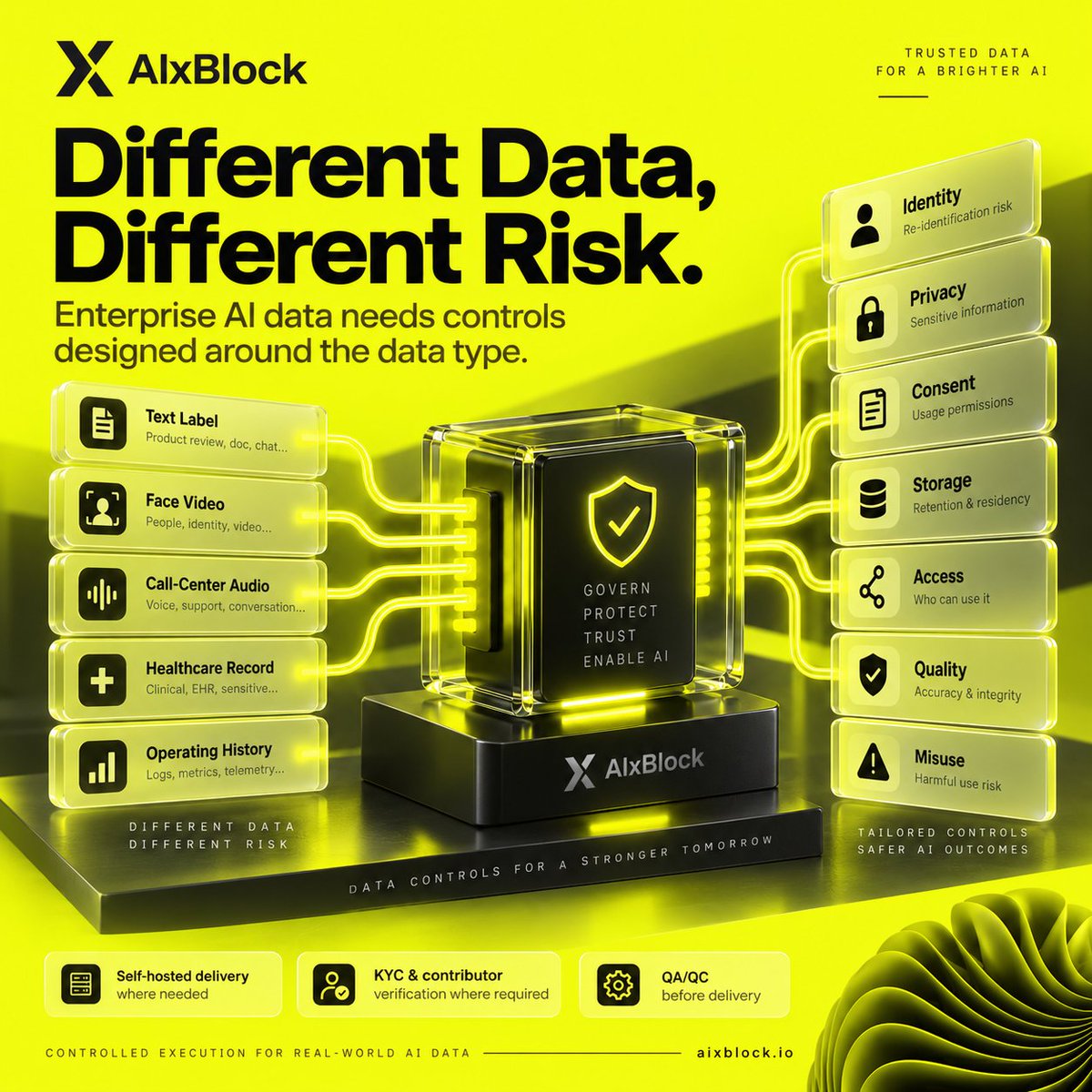
𝐃𝐢𝐟𝐟𝐞𝐫𝐞𝐧𝐭 𝐃𝐚𝐭𝐚, 𝐃𝐢𝐟𝐟𝐞𝐫𝐞𝐧𝐭 𝐑𝐢𝐬𝐤
Not all AI data carries the same risk.
A text label is one thing.
A face video is another.
A call-center recording is another.
A healthcare record is another.
A multi-year company operating history is another category entirely.
Each data type has its own risk profile:
identity risk
privacy risk
consent risk
storage risk
access risk
quality risk
misuse risk
That is why enterprise AI data cannot be managed with one generic workflow.
AIxBlock supports real-world data across speech, text, audio, video, healthcare, Physical AI, OTS datasets, and operating records — with workflow controls designed around the data type.
Self-hosted delivery where needed.
KYC and contributor verification where required.
QA/QC and validation loops before delivery.
Because diverse data needs more than diverse sourcing.
It needs controlled execution.
#EnterpriseAI #AIData #DataSecurity #DataGovernance #RealWorldData
The highest-value operating data does not come from isolated files.
It comes from how records connect.
A support ticket connects to a customer issue.
A Slack thread connects to a decision.
A document connects to requirements.
A code review connects to implementation.
A release note connects to an outcome.
That connected history is what agents need.
Because real work is not one file.
It is a sequence of decisions and actions across systems.
AIxBlock helps frontier AI teams access and prepare operating histories across the systems established companies actually use:
communication channels
product development tools
code repositories
tickets and incidents
project management systems
internal documentation
CRM and support workflows
business operations records
The goal is not to create another document dataset.
The goal is to create 𝐚𝐠𝐞𝐧𝐭 𝐭𝐫𝐚𝐢𝐧𝐢𝐧𝐠 𝐝𝐚𝐭𝐚 that reflects real workflows.
Multi-step.
Cross-system.
Outcome-linked.
Governed.
Evaluation-ready.
That is what makes operating records valuable for AI agents.
—
AIxBlock helps transform years of real company work into labeled trajectories and interactive environments for agent training.
#AIAgents #EnterpriseAI #AIData #WorkflowAutomation #AgentTraining