Atacama Large Millimeter/submillimeter Array, is an international partnership of @ESO, @TheNRAO and @prcnaoj_en in cooperation with the Republic of Chile.
📡 We reveal planet-forming structures in small disks.
📷: 11 compact disks of planet formation in the Lupus region. The comparison illustrates planet formation at distances comparable to those of our own solar system.
https://t.co/8kweqwXYLN
☄️Fragments of Comet Halley falling like a “meteor shower.”
✨The Orionids at the ALMA observatory. October 20–23, 2026.
📹: Asashi Shimbun. ALMA Team. @ALMA_Japan
🙌🏻Together with ESO, we joined @oh_stgo ! We welcomed visitors and led tours of the @ESO and ALMA facilities in Santiago, Chile. We talked about architecture and astronomy 📡🔭✨
Using @almaobs 's sharpest observations, astronomers have uncovered rings and gaps in compact disks, raising new questions about how planets form close to young stars.
https://t.co/RTKwElby8S
📡First date of the "ALMA Open House in San Pedro de Atacama" was incredible!!
See you next time?
✅October 24
🔰Tickets opening on October 19 at 12pm, Chile time.
➡️ All the info here: https://t.co/RobyHrDtRR
🧑🏫👩🏫Happy Teacher's Day in Chile! Just as ALMA's antennas capture the invisible light of the cosmos, revealing the hidden secrets of the stars, teachers illuminate the path of knowledge for thousands of students every day. 📡💫
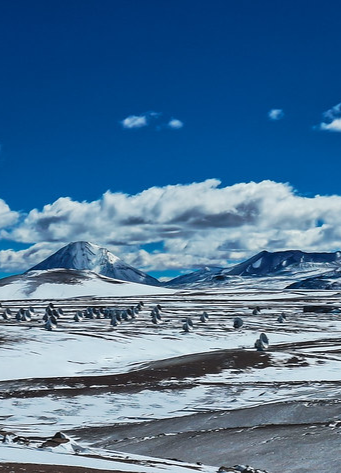
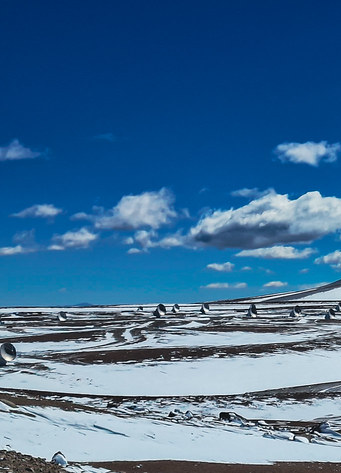
📡Giants after a spring storm🌩️
The ALMA antenna array, at an altitude of 5,050m, deployed on the Chajnantor Plateau, Chile
📷: @jcrojas819 ALMA Photo-ambassador.
📡Let's work together!📡 #ALMAJobs
✅Open position for: "Engineer II - Mechanical", San Pedro de Atacama, Chile.
🗓️Apply by October 30th here: https://t.co/Ll3UjobkNb
📡"A swirling galaxy".
Like a portal to another dimension, a hypnotising swirl features in today’s Picture of the Week.
This is the spiral galaxy M83, also known as the Southern Pinwheel, located approximately 15 million light-years away.
By @ESO
https://t.co/wyoTsE9luP
Radio #ImageoftheWeek
Meet NGC 253, aka the Sculptor Galaxy! 🌌 At ~11.5 million light-years from Earth, it is one of the closest starburst galaxies to the Milky Way. Starburst galaxies transmute gas into new stars up to 1,000 times faster than typical spiral galaxies!
More ⤵️
📡ATTENTION!📡
Registration is now open for the October 17th "ALMA Open House, San Pedro de Atacama."
➡️Register here: https://t.co/RobyHrDtRR
✅Free admission.
📡ATTENTION!📡
Registration is now open for the October 17th "ALMA Open House, San Pedro de Atacama."
➡️Register here: https://t.co/RobyHrDtRR
✅Free admission.
👏Seven projects developed by students at ALMA to solve everyday problems.
✨"ALMA Atacama Makers"📡 has concluded, and we thank the Toconao Educational Complex and the Likan Antai Bicentennial High School of San Pedro de Atacama for their participation.
“We had to find a way and we did. Looking back, we were the luckiest people in the world; there was no choice but to be pioneers.” —Margaret Hamilton
Rest in peace, Margaret. Your trailblazing work leading the development of the on-board flight software for the Apollo spacecraft will forever be remembered. 🫡
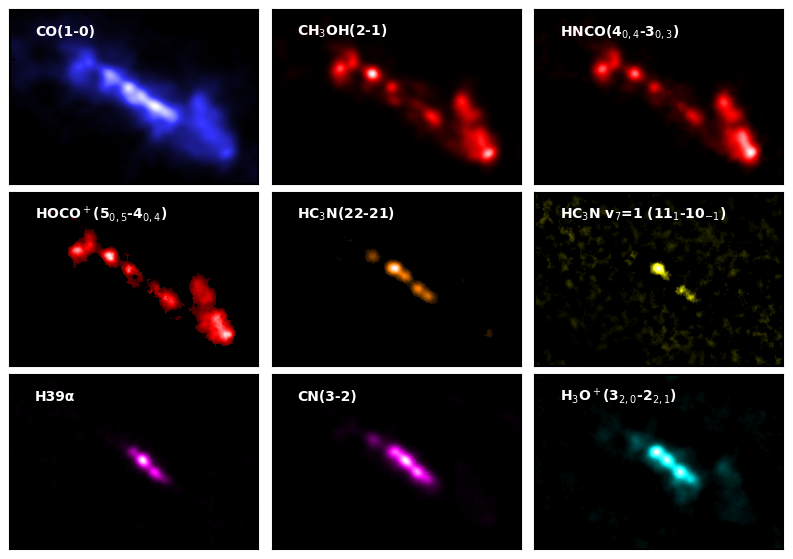
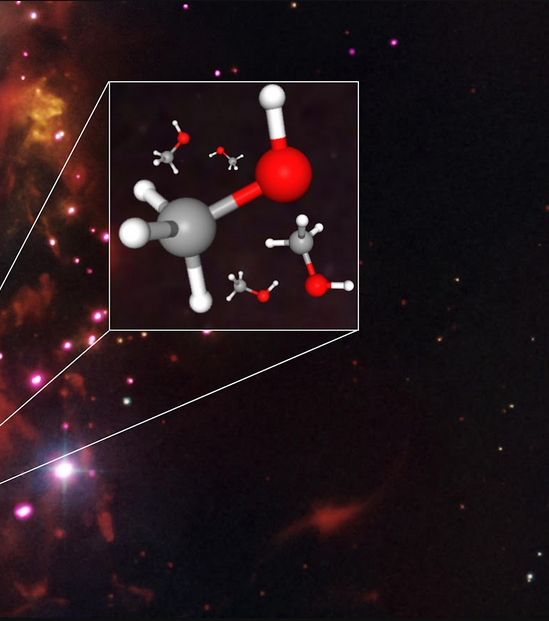
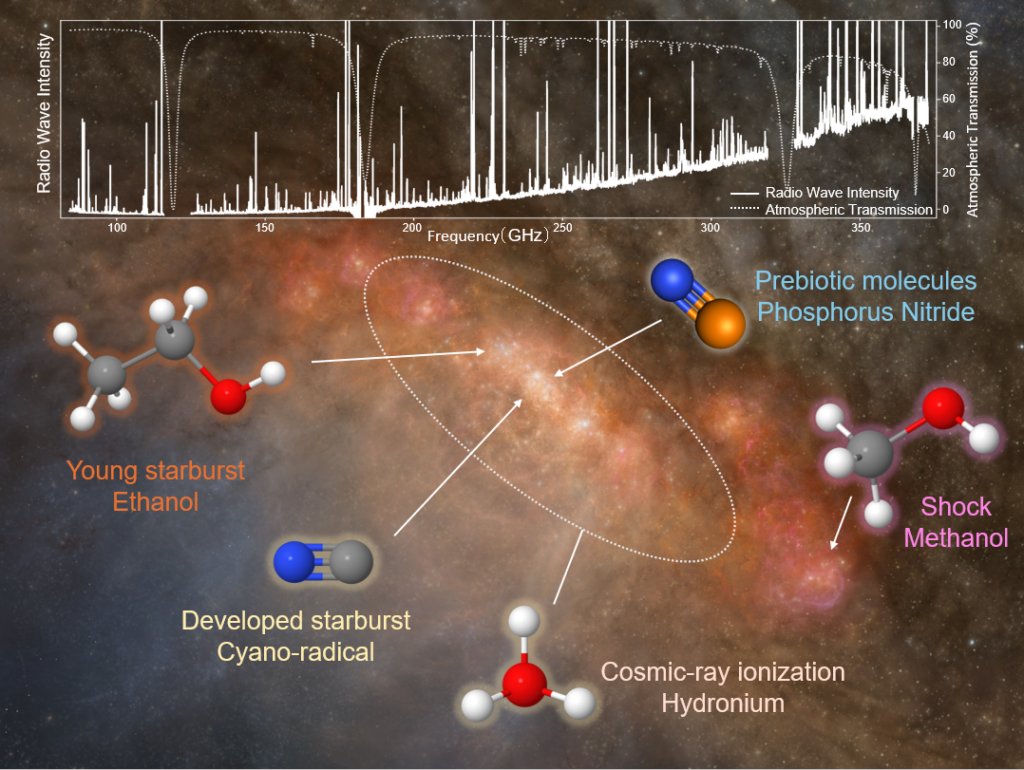
📡Space alcohol test? We detected exotic methanol around young stars.
New results from the "ALMA COMPASS". Large Program 🧪Complex Organic Molecules in Protostars through Spectral Surveys with ALMA.
https://t.co/k4r9uFz8jJ