This July was our 4th science anniversary, and the results have been fascinating! Bringing us previously unseen details from all throughout the universe to right here in our own solar system, Webb has given scientists, and the world, a powerful new set of tools.
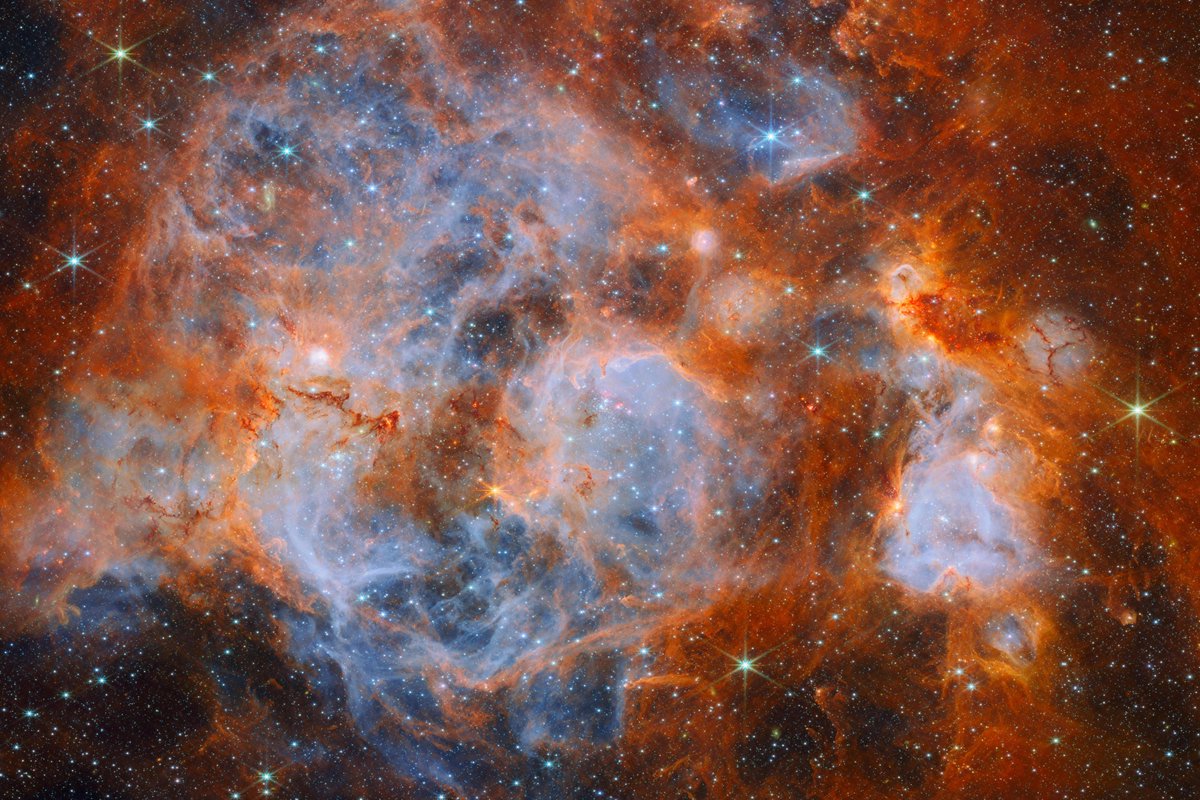
This region has a lower metallicity (proportion of elements that are heavier than helium and hydrogen) than our Milky Way, revealing more about how stars formed in the conditions of the early universe.
Double, double toil and trouble; Fire burn and cauldron bubble ��♀️
This turbulent cauldron of star formation, N159, resides about 161,000 light years away in the Large Magellanic Cloud, one of the satellite galaxies orbiting our Milky Way.
https://t.co/qJTDi5noN0
With its quick reflexes, flexible scheduling, and multiwavelength vision, our Neil Gehrels Swift Observatory has made discoveries with nearly every NASA space telescope during its 22 years in space.
As the mission winds down, let’s see how Swift’s collaborations have helped us unravel the mysteries of the cosmos.
🔽
Fast radio bursts (FRBs) - enigmatic, millisecond-long flashes of radio emission from the distant universe - were first discovered in 2007.
Their origins are difficult to pinpoint, but Webb found the host galaxy to the most distant FRB seen to date.
https://t.co/nd2NQqrRdX
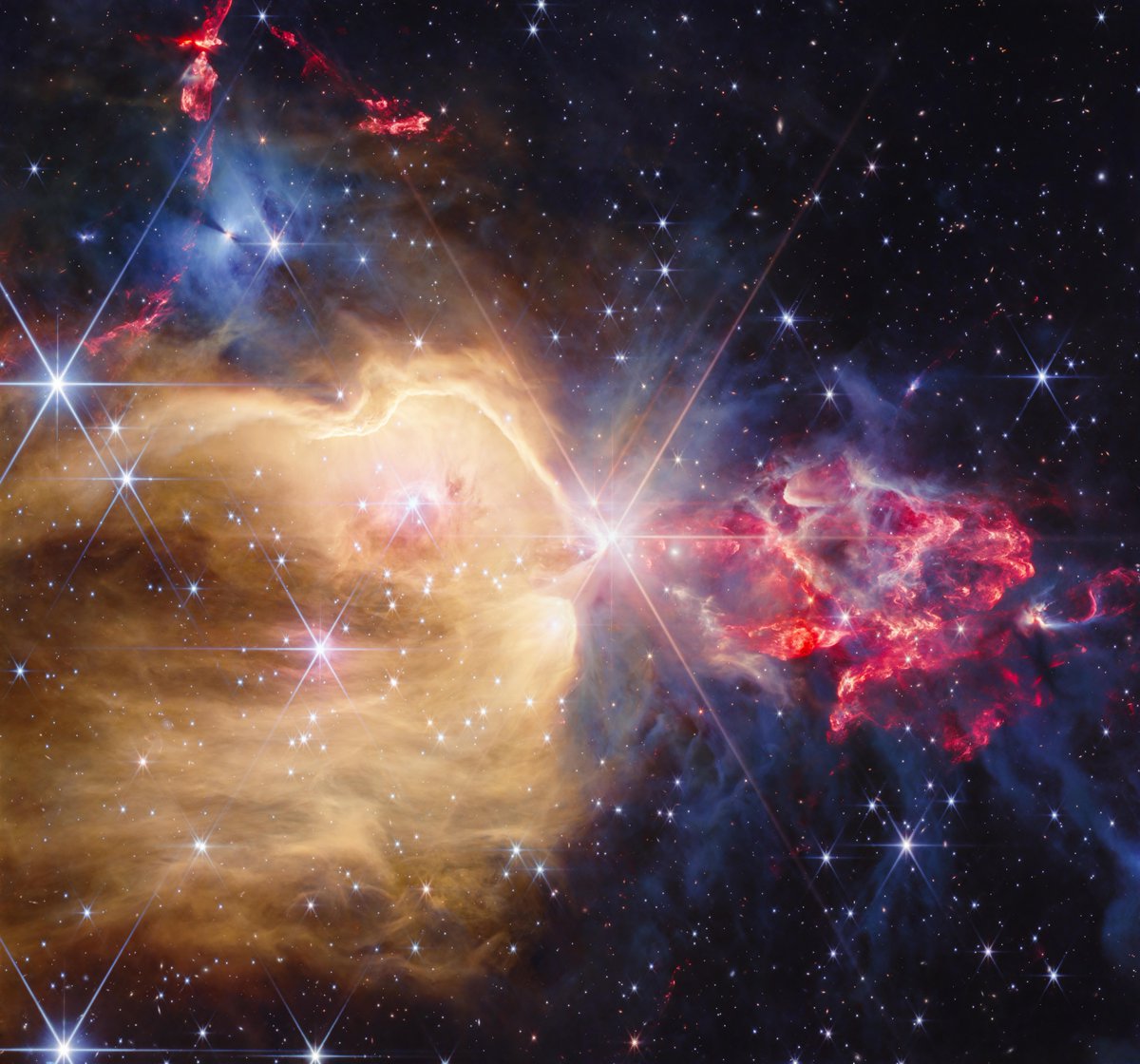
Brewing up new stars 🪄
Webb’s unique view of the stellar nursery known as NGC 7129 reveals numerous stars formerly hidden in this cosmic cauldron, helping astronomers study the star lifecycle in more depth.
https://t.co/JZwya3QLUR
Brewing up new stars 🪄
Webb’s unique view of the stellar nursery known as NGC 7129 reveals numerous stars formerly hidden in this cosmic cauldron, helping astronomers study the star lifecycle in more depth.
https://t.co/JZwya3QLUR
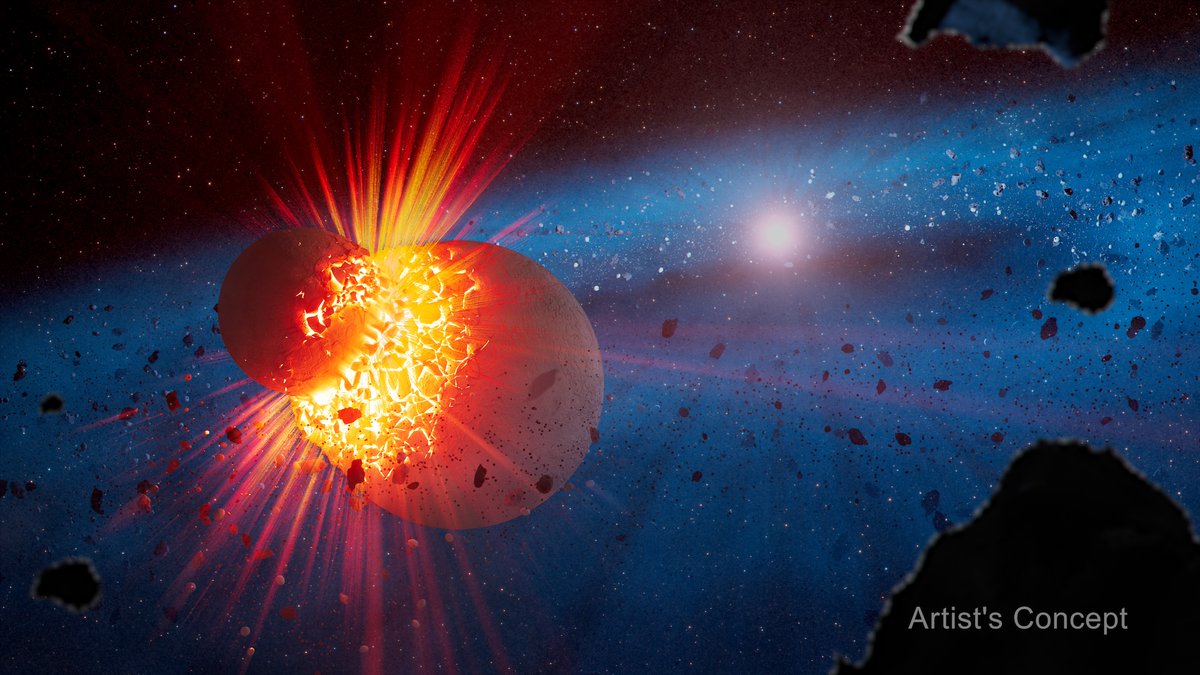
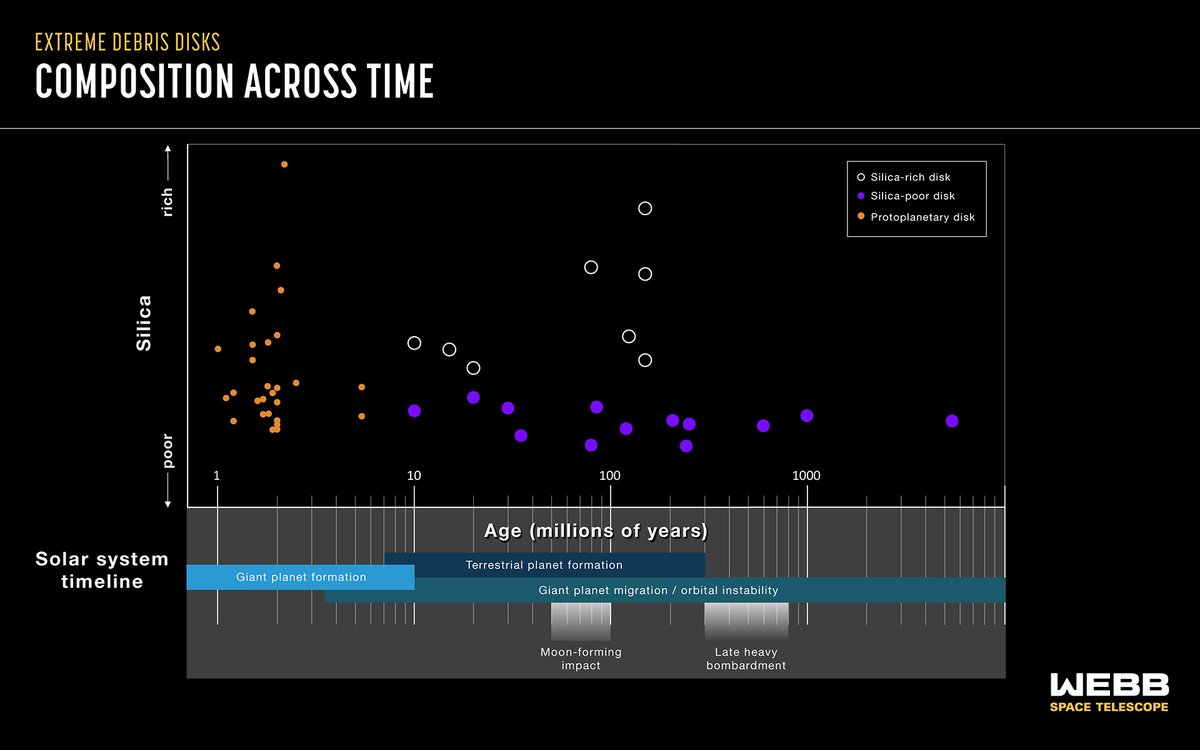
Our solar system might have experienced more than one extreme debris disk phase, like when the Earth, with its silica-rich crust, was formed by a giant collision. The gas giants migrating outward may have disrupted smaller bodies, generating dust-rich conditions.
They say planet formation’s a cruel endeavor
Violent collisions, like that between a proto-Earth and a Mars-sized object named Theia 4.5 billion years ago, shaped our home planet. Webb is helping compare other young stellar systems to our own. https://t.co/Chc49miHrh
Silica-rich debris disks seem to be produced by high-energy impacts between Mars-sized bodies around younger stars. Silica-poor ones might be formed by smaller scale collisions across a range of ages, which is likely why they vary in brightness.
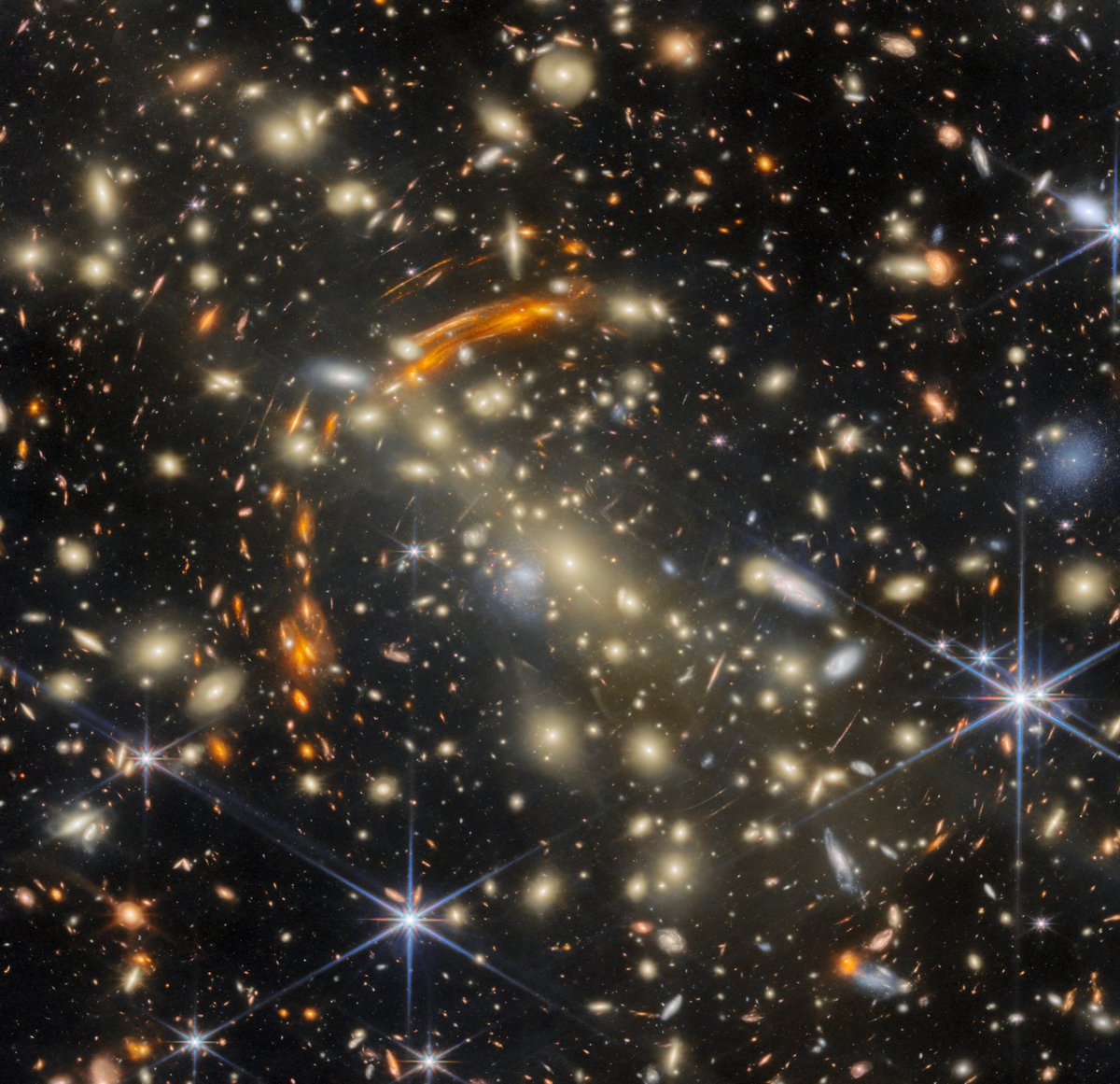
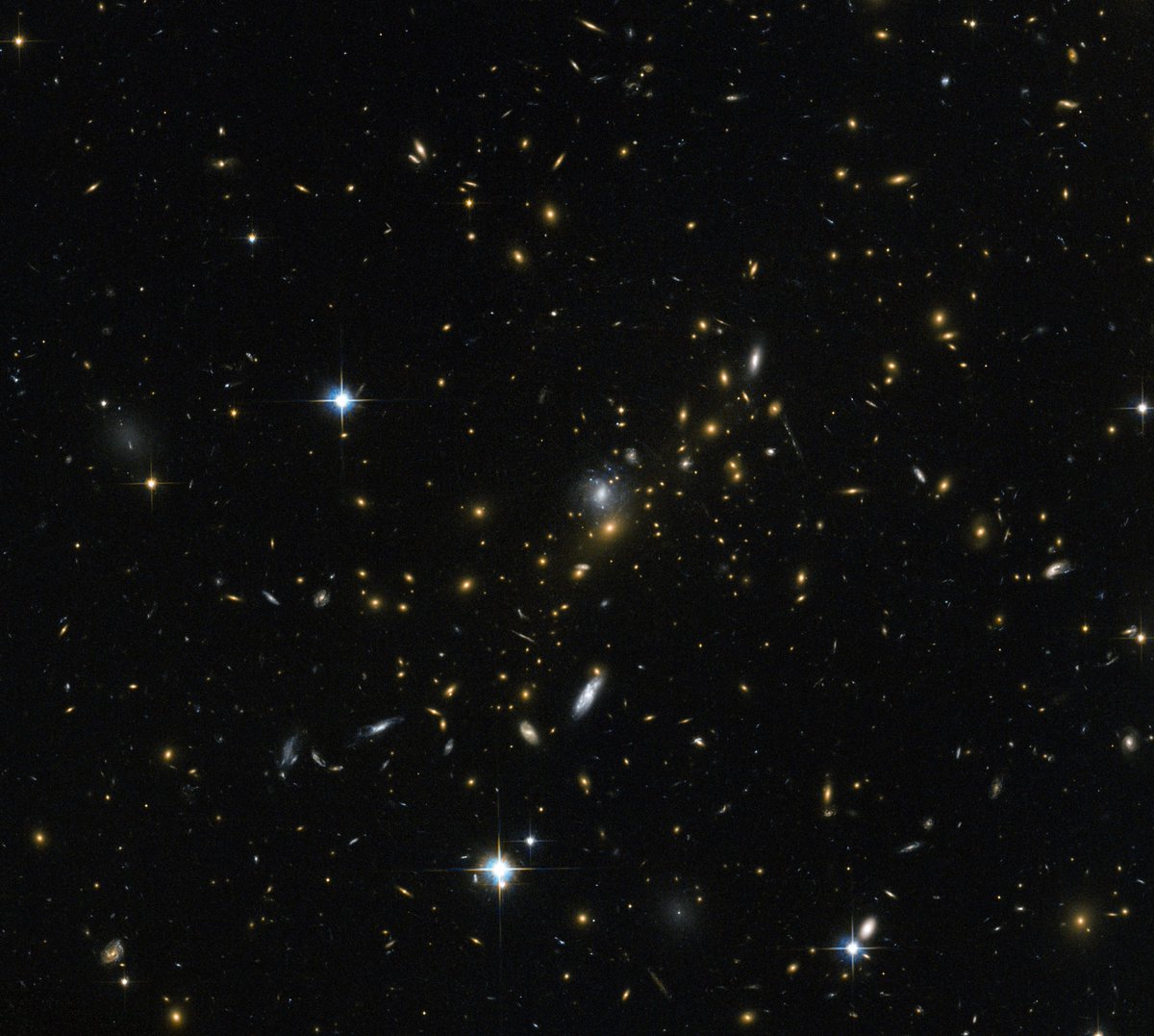
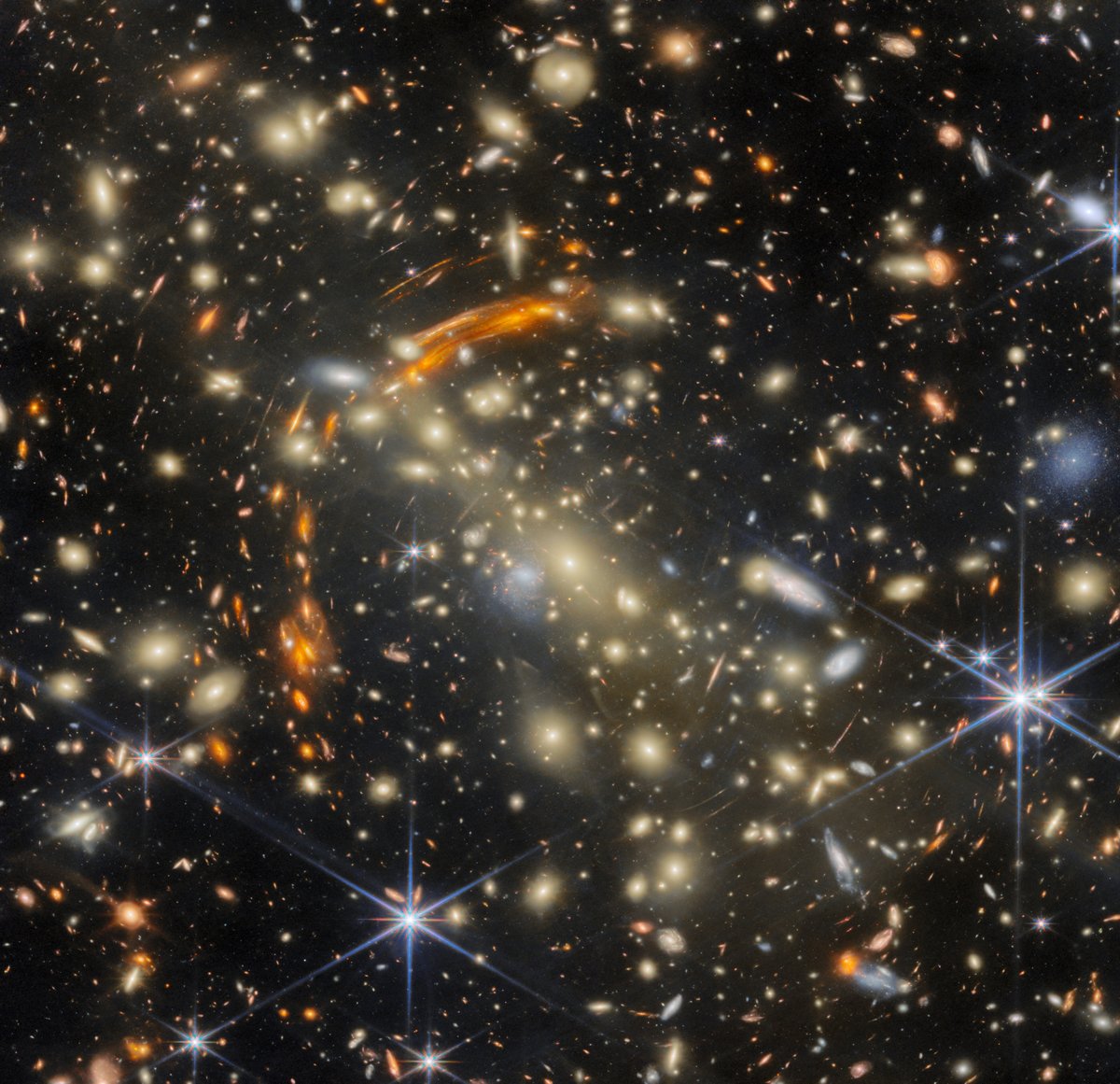
On the left here is @NASAHubble’s 2014 image of galaxy cluster MACS J0454.1-0300. It shows quite a different scene. Because Webb is more sensitive to redder light, we are able to see hundreds more galaxies in the same scene.
Seeing double… or quadruple! 👀
In this Webb image of galaxy cluster MACS J0454.1-0300, gravitational lensing shows us 4 or more images of the same galaxy. This is the first time researchers have spotted this more than once in the same galaxy cluster!
https://t.co/5K4uMGDoSw
The brilliant golden galaxies visible in this image make up galaxy cluster MACS J0454.1-0300, but the orange galaxies are much farther away. Gravitational lensing occurs in this image due to the enormous mass of those golden galaxies. They bend and magnify the flight of the more distant orange galaxies.
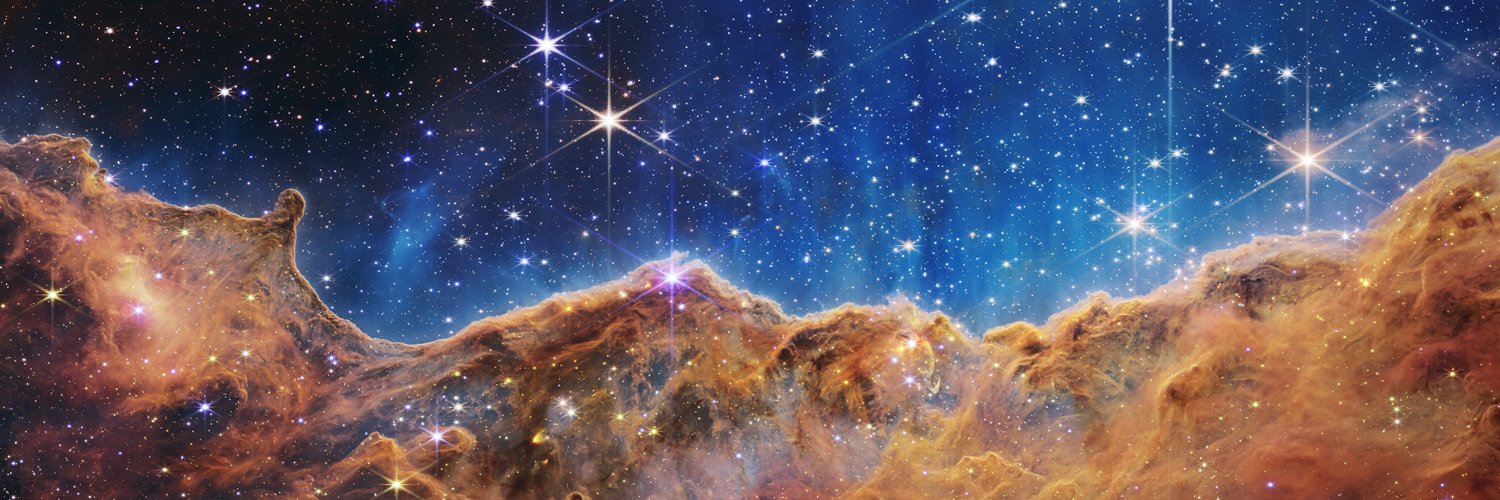
Within this star-forming nebula (captured by Webb) are the smallest brown dwarfs ever detected. Neither planet nor star, these objects are formed like stars, raising questions about the star formation process. https://t.co/s58sxdx1dl
Within is also a unique perspective on protostars, a few of which can be seen in the upper-right. They are ejecting powerful jets that have crashed into the gas and dust surrounding them, creating luminous regions called Herbig-Haro objects.
Scientists used Webb and @NASAHubble to study some of the most far-flung bodies in our solar system, Trans-Neptunian Objects, unexpectedly finding that the number and colors followed the same relationships as their larger family members.
More: https://t.co/Z1GtQHZ2SP