Scams are going on in the name of Hdfc @HDFC_Bank. Asking to download the apk file of hdfc app. Be careful
Look into this and take action @HDFCBank_Cares
@EpicCmntsTelugu It's fucking horrible in AMD stadium, I was charged 100 rupees for 1 litre water bottle. The shocking part is that it's a used bottle filled with some normal water🫠
Seriously???. I just used only 682 MB of data, but why does it say 0MB left?? @airtelindia don't scam people like this. Not the first time that happened to me.
Day by day our telecom services are looting people.
The Vaishnavas of Srirangam – The Night Ranganatha Refused to Be Taken
The year was 1311 CE.
Malik Kafur’s banners were already drinking blood in the south.
Madurai had fallen.
Chidambaram trembled.
Srirangam stood next — the living heart of Sri Vaishnavism.
The Kaveri flowed quietly that night.
Too quietly.
Inside the vast corridors of the Ranganathaswamy Temple, lamps burned low.
Not in panic.
In preparation.
The priests of Srirangam knew the pattern.
Invaders did not come for stone.
They came to humiliate faith.
And Ranganatha was not a symbol.
He was seva itself — daily rituals, living presence, unbroken worship.
No army would defend Him.
No walls would stop fire.
So the Vaishnavas chose movement.
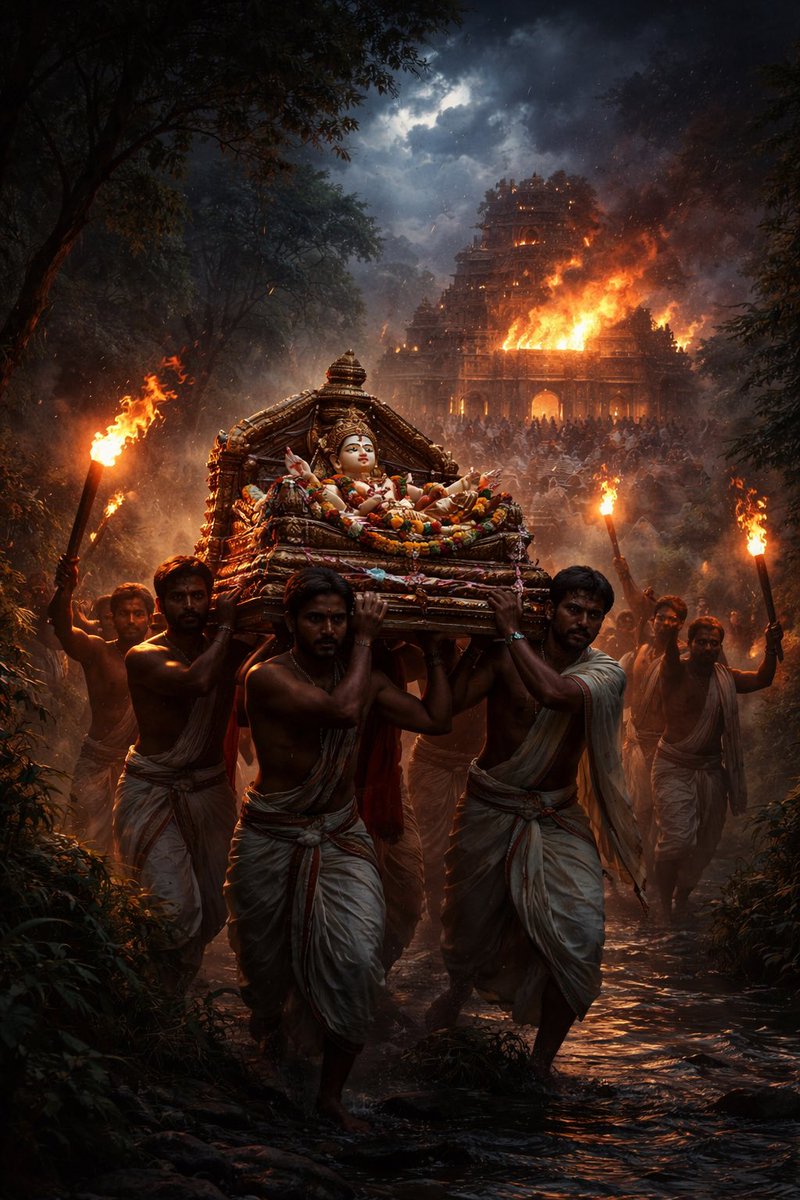
Under cover of darkness, the utsava murti — the walking form of Ranganatha — was lifted.
Silk replaced gold.
Mantras replaced music.
No conch was blown.
Because survival does not announce itself.
Through river crossings, forest paths, and villages that spoke only whispers,
Ranganatha moved south.
Away from records.
Away from conquest.
Away from the satisfaction of destruction.
By morning, Malik Kafur’s men entered Srirangam.
They broke pillars.
They shattered halls.
They proclaimed victory.
Imperial chroniclers recorded a temple “defeated.”
But the deity was gone.
Not stolen.
Not destroyed.
Withdrawn.
For decades, Ranganatha lived on the move —
in Tirupati,
in Kerala,
in hidden sanctums where lamps never went out.
Seva continued.
Not reduced.
Not altered.
Not afraid.
When the storm passed, Ranganatha returned.
The temple was repaired.
Rituals resumed as if no interruption had ever occurred.
Because for Bhakti, time pauses — it does not break.
History remembers Malik Kafur’s raids.
Bhakti remembers something else:
That the god they came to conquer
was never there to be conquered.
The Vaishnavas of Srirangam did not resist with swords.
They resisted with continuity.
They did not fight history.
They outlived it.
That is why Ranganatha still reclines on Adisesha today.
Empires collapse.
Seva remains.
Om Namo Narayanaya