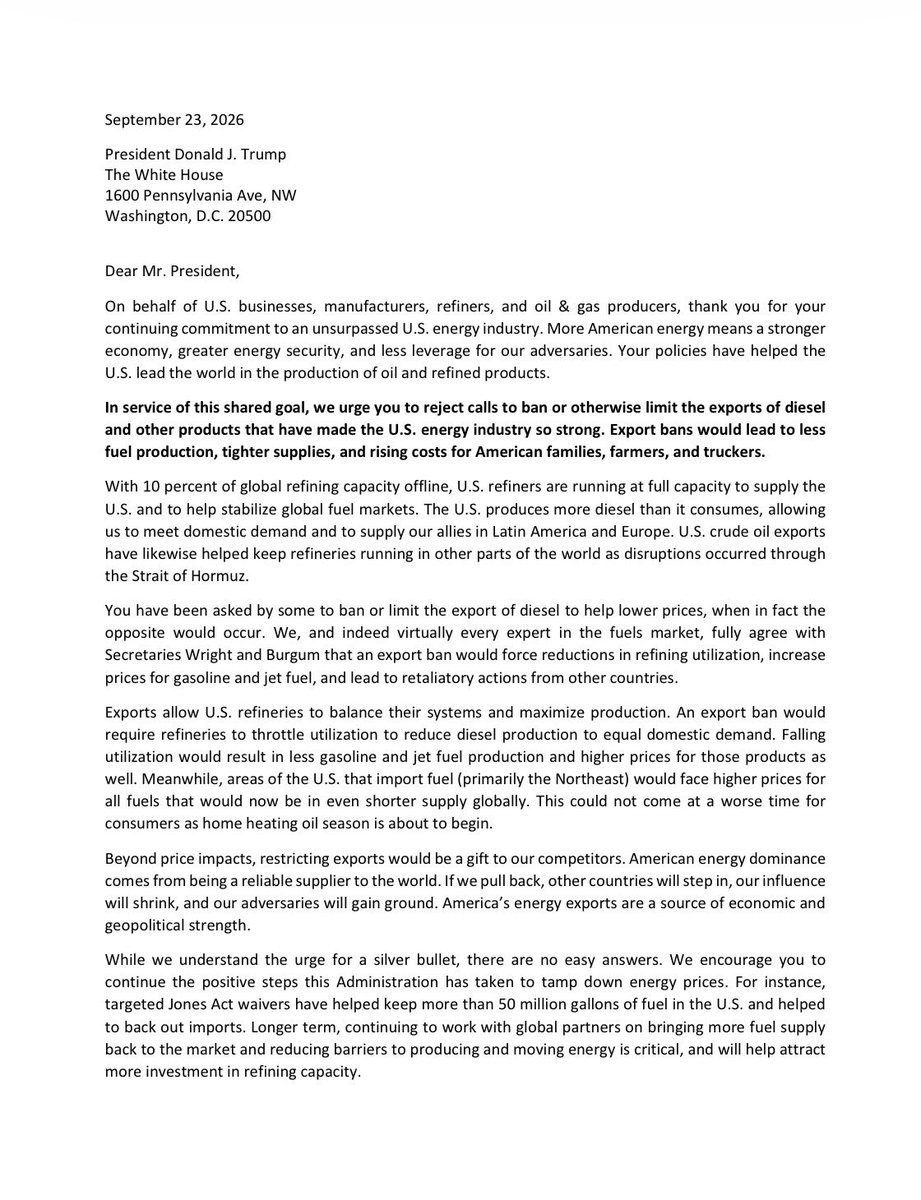
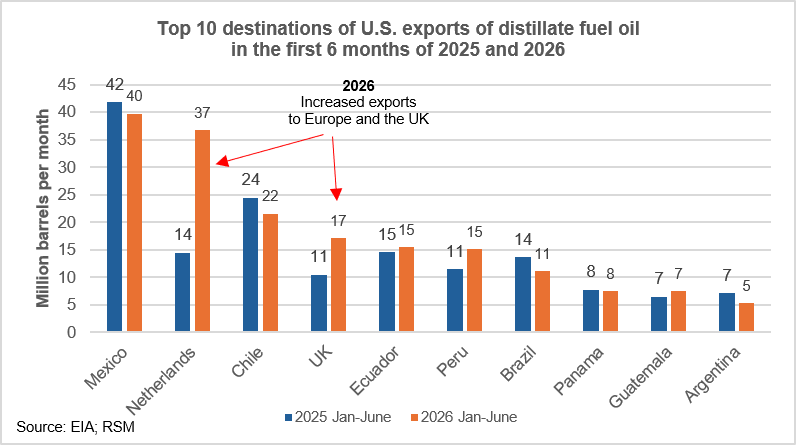
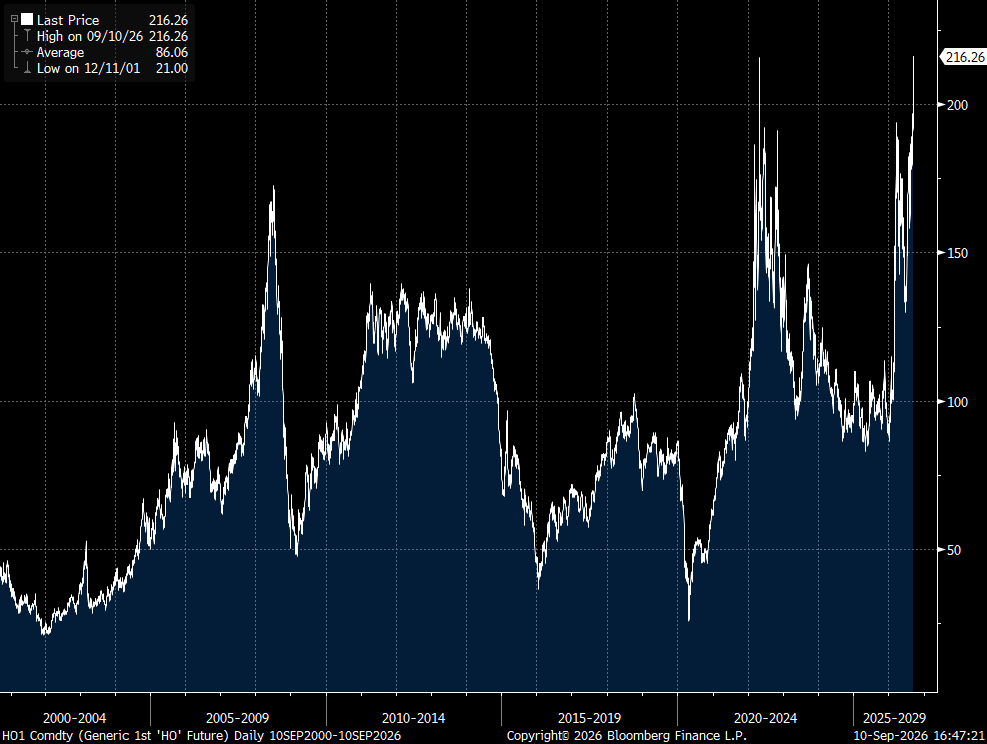
The whole U.S. energy industry plus two key businesses associations (the U.S. Chamber of Commerce and the National Association of Manufacturers) have sent a joint letter to President Trump urging him against limits of diesels exports.
Unprecedented for a Republican White House.
A WH official says Trump is "evaluating all the options on the table" to bring down fuel prices.
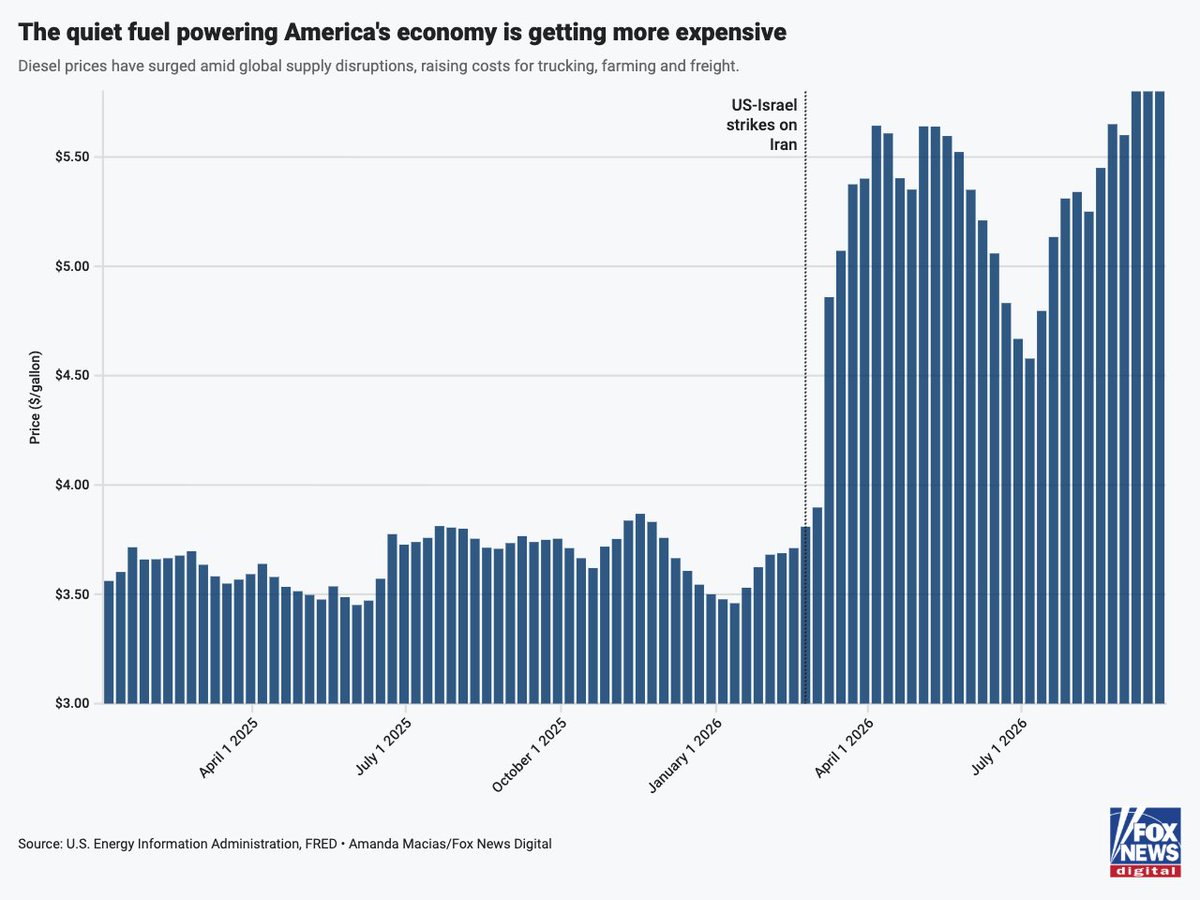
The national average for diesel climbed to $6.53 per gallon for the week of Sept. 21, 2026, up from $3.75 during the comparable week a year prior.
U.S. Diesel Export Ban
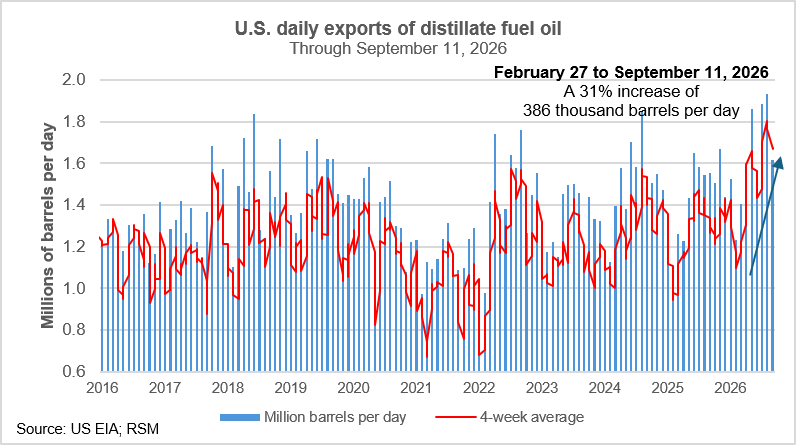
The elimination of 1.67 million barrels per day of diesel exports will create a short-term domestic surplus which will have to then be sold at a discount thus providing short-term pricing relief for U.S. households and talking points for policy actors to claim that they are addressing a growing affordability crisis.
However, once one examines such a policy approach the ill-logic of a diesel export ban is all too easy to spot: a temporary increase in supply following such an export ban will quickly turn into a supply shortage and rising prices.
Because the U.S. exports it surplus production-total production is roughly 5.3 million barrels per day which is above the approximately 3.6 million barrels per day of domestic demand-once that inventory is absorbed by the domestic energy firms would then pull back on production until it reaches the new and lower equilibrium level which of course would result in lost revenues and a probable increase in industry unemployment on the back of that intervention into the marketplace.
An export ban intending to increase supply results in a shortage of not just diesel but also likely gasoline as the crude that was previously dedicated to the production of diesel then needs to be sold resulting in increased exports of raw crude at higher prices.
As a result a bifurcated price structure domestically that would ensue-there are multiple markets within the U.S. with the Gulf Coast seeing a lower price versus higher prices on the West Coast and prices remaining closer to the internationally set price on the East Coast-creating further uncertainty across the economy.
Even with the logistics constraint-the Jones Act-which required all goods transported by water between U.S. ports to be on American owned and staffed ships-being temporarily lifted this will not eliminate the bifurcated price structure that would ensure in the aftermath of such an energy export ban.
Increasing complexity within an antiquated energy infrastructure is in no one’s economic or policy interest.
Second, such a ban would result in the elimination of that 1.67 million in U.S. diesel exports reducing the total global supply by just over 18%.
That will send global prices higher creating conditions in which those costs will be passed along to the production of other goods which the U.S. imports.
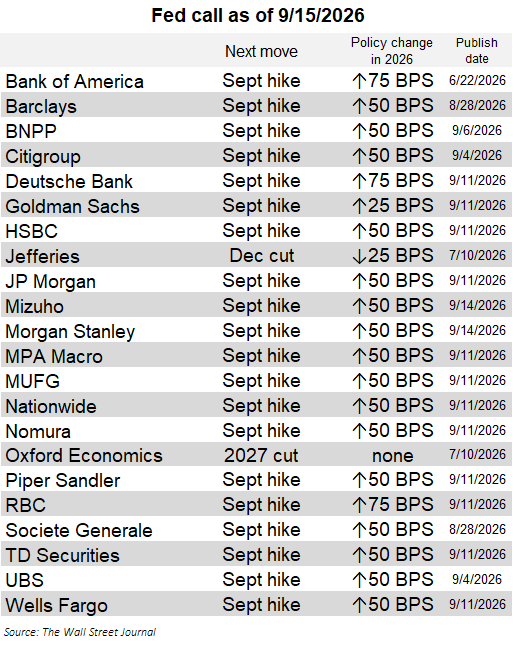
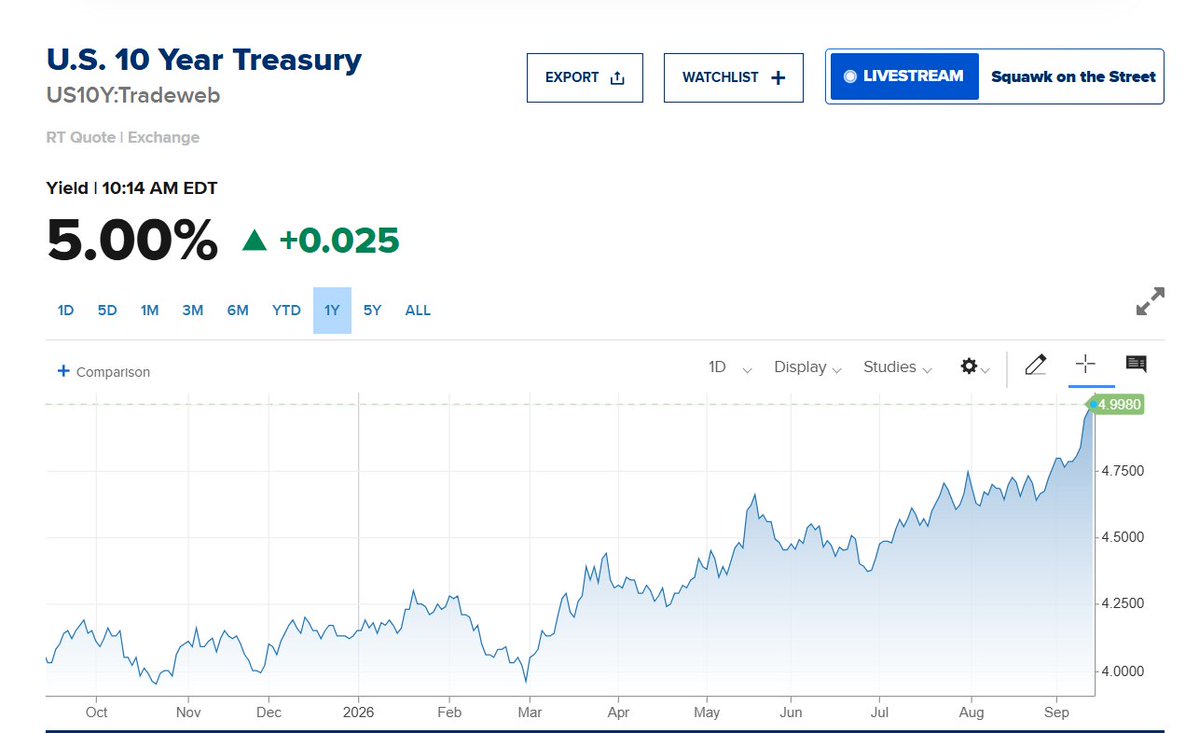
Given global supply and inflation dynamics this would result in a negative feedback loop that would result in an already deteriorating international pricing environment that would likely cause global central banks to send policy rates higher than they already are prepared to do.
(WSJ) - American oil executives warned for months that the prolonged closure of the Strait of Hormuz was bound to cause a fuel crisis. Now, they say it is here.
@WSJ
https://t.co/pwe5IpCqCM
At more than $216 per barrel, US diesel futures are now at their highest level in history.
We just busted through the prior record set at the height of the 2022 crisis.
There are something like 269 million American adults. Sending all of them a check for $5000, as the President just proposed, would cost the US government $1.35 trillion dollars... I've asked the White House where they think that money would come from.
One of Mamdani's proposed city-backed grocery stores is set to open two blocks from Josefina Aguirre's
The city is expected to spend roughly $30M to build the location, putting a taxpayer-backed competitor practically on her doorstep.
A first-generation American who has run her family's Spanish Harlem meat market for 30 years says Mayor Mamdani's plan to open city-backed grocery stores could destroy her livelihood.
Josefina Aguirre's shop, Little Mexico, sits just two blocks from a proposed $30 million taxpayer-funded store that would undercut her prices by 30%. She's now part of a lawsuit from independent grocers fighting the plan.
"If I'm selling a whole chicken for $13 and he's giving it for $7, they're gonna buy the $7 chicken," Aguirre said. "I pay my mortgage from here. I pay for my kid's tuition. Do I need to start over in a new career?"
Luana Lopes Lara co-founded Kalshi, arguably the most controversial startup in America right now.
The company is fighting legal battles across 19 states, has faced cease-and-desist orders in at least 11, and has even been hit with criminal wagering charges.
And yet, in eleven months, Kalshi went from a $2B valuation to $22B.
In August, Kalshi traded roughly 5x Polymarket’s volume, commanding more than 80% of the combined market.
With a marketing team of just 15 people, it outdid(!!) Nike at the World Cup and turned @RealChalamet into the face of the tournament’s #1-performing ad.
Building a company like Kalshi requires an extreme tolerance for pain and a degree of conviction that can look like delusion.
Or, as @mansourtarek_ puts it: you need to have the dawg in you.
@luanalopeslara has it.
No sane founder spends two years fighting for a company’s right to exist, only to turn around and sue the regulator that finally granted it.
Without Luana pushing Kalshi through that fight, it might have remained a licensed experiment without the capital, liquidity, or market power to pursue its real ambition: becoming the exchange where anything about the future can be traded.
I spent months researching Luana alongside @Anastasia_ELW, an early-stage investor building @jointhebridge: speaking with people who worked with and backed her, poring over every recorded interview and written account I could find, and tracing the CFTC’s paper trail.
Ana and I wanted to understand how Luana keeps pulling off things that look impossible from the outside.
Where did her appetite for impossible bets come from? Why does she keep choosing the steeper mountain? And why have the people around her learned not to bet against her?
This is the person behind one of America’s most audacious companies.
SideDoors presents Luana Lopes Lara: the founder behind Kalshi’s most impossible bets.
https://t.co/rWc0YnK5x0