When Ecash hard forked, Kikko won the first block... Layertreelabs achieved Ecash's first victory... Kikko was a great IBM engineer and the founder of Skydoge...
#Bitcoin#Skydoge#Ecash
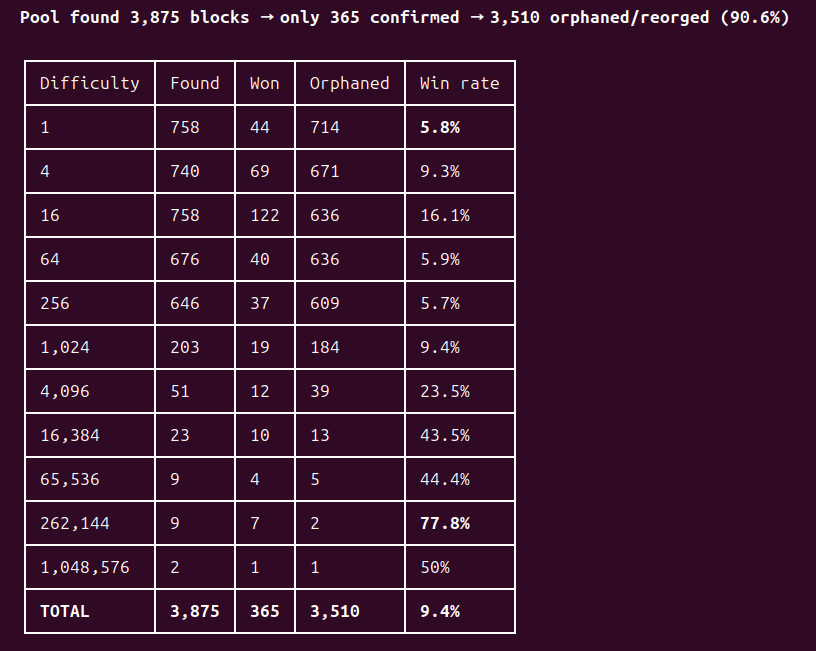
🏆���� We mined the FIRST #Ecash alphanet block — 963,648 — then the first 25 IN A ROW, and 43 of the first 47.
One home Bitaxe (2.55 TH/s) vs a brand-new hard fork. 🤯
364 blocks (~1,137 eCash), all tagged /layertree-ecash/ ⛏️🌲
🔗 https://t.co/aOA0bMK9h0
cc @skydogenet 1:12
$ECX ecash_com Alpha Launch Imminent ...
1. The Main Event -- Delayed until Oct-31
2. It will (probably) be Chaos
3. There is *No Rush* -- even if you want to participate in the Alpha, you have until the *end* of the alpha to do so -- (around Sept 20th) -- unless you want to mine blocks
4. It is about *ecosystem*, not just software
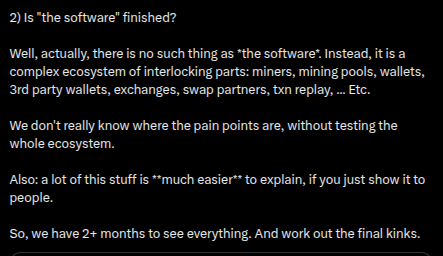
There is no software... l3l
@Truthcoin deserve a Nobel prize for that. He is actually the first one to have solved the software problem and his upcoming coin Ecrash will run on No Software...
Tremendious breakthrought! Congratulations Paul!
#Bitcoin#Ecash
Comparing @skydogenet c++ VS @LayerTwoLabs Rust approach.
Dependency Risk, Language Choice & Pure Security
Skydoge vs LayerTwo Labs Enforcer
A comparison of two Drivechain-related projects and what foundation to choose for consensus-critical software.
Everyone talks about LayerTwo Labs and their Rust-powered eCash fork.
Almost nobody talks about the solo developer who actually shipped Drivechains first… and never got credit.
What Skydoge actually is
Skydoge is a Bitcoin fork that implemented Drivechains (BIP 300 + BIP 301) and has been running on mainnet for years (since around 2022–2023).
Drivechains let you create sidechains that are secured by the same miners as the main chain. You can move coins between the mainchain and these sidechains. The sidechains can be completely different systems (Ethereum-style, big blocks, privacy, etc.) while still settling back to pure Proof-of-Work.
Skydoge did this in classic C++ (old Bitcoin Core style), kept the dependency surface tiny, and has been pure PoW the whole time. The coin is still very cheap. They also run https://t.co/00vcyJ4sMG as their own Ethereum-style sidechain.
The underdog fight
LayerTwo Labs (Paul Sztorc) https://t.co/aWaGgL0JRI invented the Drivechain idea. They have a full team of developers, researchers, and people with strong academic backgrounds in Bitcoin. After years of failing to get BIP 300/301 activated on real Bitcoin, they decided to launch their own high-profile Bitcoin hard fork called eCash.
Meanwhile the Skydoge developer has basically been competing alone, one guy against an entire team of experienced researchers and engineers. He shipped a working mainnet years earlier and never got real recognition from them. As a response (and a meme) he started calling his effort “LayerThreeLabs” / “l3l”.
The controversial part: the Satoshi coins
This is the biggest point of tension.
On their new eCash chain, LayerTwo Labs plans to redistribute a large amount of the old Satoshi-era (Patoshi) coins. Instead of leaving those coins untouched like a normal Bitcoin fork would, they are reassigning hundreds of thousands of them to early investors and the project itself.
Critics (including many in the Skydoge orbit) call this stealing Satoshi’s coins and not a real fork.
LayerTwo Labs argues that it’s a brand new chain, so they’re not touching real Bitcoin they’re just deciding the initial distribution on their fork at 600m valuation.
This move is one of the main reasons a lot of people are uncomfortable with the eCash launch, even if they like the Drivechain technology itself.
Rust vs C++ and Bitcoin security philosophy
LayerTwo Labs leans heavily on Rust (especially for their enforcer). Rust is memory-safe and modern.
Skydoge stayed with classic C++ and the old Bitcoin Core approach: extremely small, hashed, pinned dependencies. Bitcoin’s culture has always preferred the smallest possible trusted computing base. Fewer dependencies = harder to attack via supply chain. When pure security is the only goal, many still consider the minimal C++ style closer to Bitcoin’s original philosophy.
Because the codebase stays relatively lean, it’s also more realistic to experiment with unusual ideas on top of it, for example mesh networking protocols like B.A.T.M.A.N. (Better Approach To Mobile Adhoc Networking).
The real story:
One independent developer shipped a working Drivechain system years ago, stayed close to Bitcoin’s original security style, and has been grinding alone.
On the other side sits a well-resourced team of top researchers building a more modern, higher-profile version, with more money, more attention, and a highly controversial decision to reassign Satoshi-era coins on their new chain.
🚨Historical milestone for crypto 🚨
If u read this; you are early.
@skydogenet archived the first mainnet
C++ implementation to complete a full round trip deposit and withdrawal using the property critics call “miners can steal”. Its a feature, not a bug.
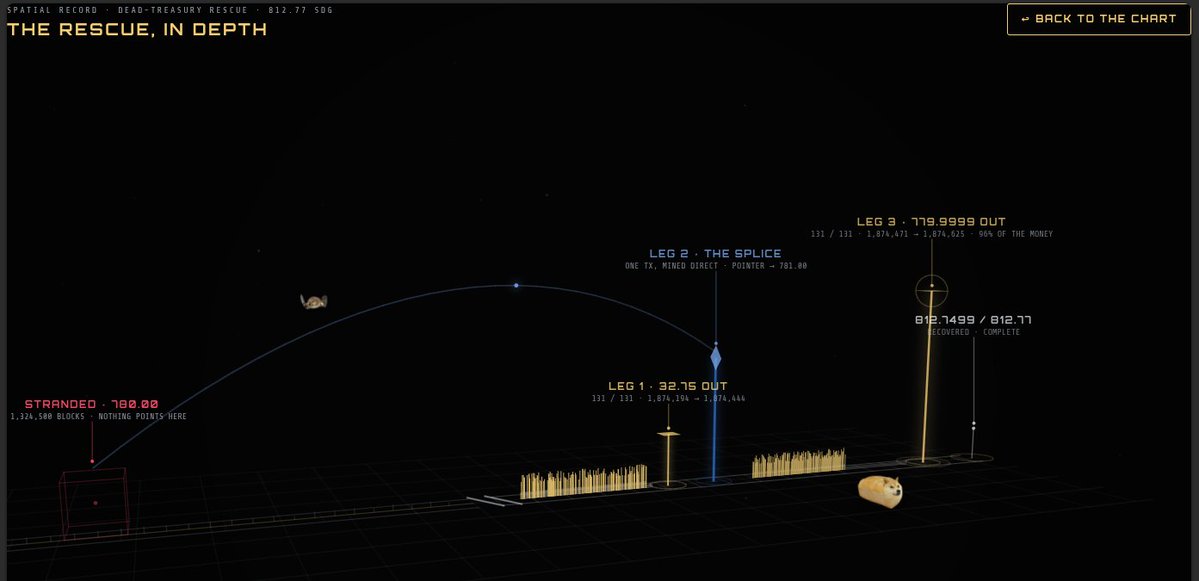
The maybe most significant milestone in the entire cryptocurrency space has been achieved today by @skydogenet , yet it has received barely any attention. The crypto space has a severe lack of education otherwise this would go thru the roof immediately. #ecash#btc#eth#bch
The first mainnet C++ implementation to complete a full round trip (L1->L2->L1) using the property critics call “miners can steal”. It is a feature, not a bug: the same miner vote that could take the money is what gave it back. We used it to rescue the Thunder stranded coins.