🔴 #Ghana: Still no law criminalizing witchcraft accusations 6 years after Akua Denteh’s fatal lynching
On 23 July 2020, 90-year-old Akua Denteh, accused of being a witch, was lynched to death in Northern Ghana. This tragic anniversary is a stark reminder of the urgent need to prevent further atrocities.
⚠️ Witchcraft accusations must be criminalized. #HumanRights @JDMahama
Read more:
https://t.co/D8LNz2nCsw
"Rien ne change. Chaque jour, des filles sont excisées, chaque jour, des filles meurent. C'est trop!"
Tala, 30 ans, a grandi en Gambie rurale. Elle-même survivante de l'excision, elle mène des actions de sensibilisation sur ses méfaits.
Lisez son histoire :
https://t.co/lnBH2QZaec
"Every day girls are being cut, every day girls are dying. It’s just too much!"
30-year-old Tala grew up in rural Gambia. A survivor herself, she raises awareness about the harm caused by female genital mutilation.
For her story:
https://t.co/8ttWsBxcUE
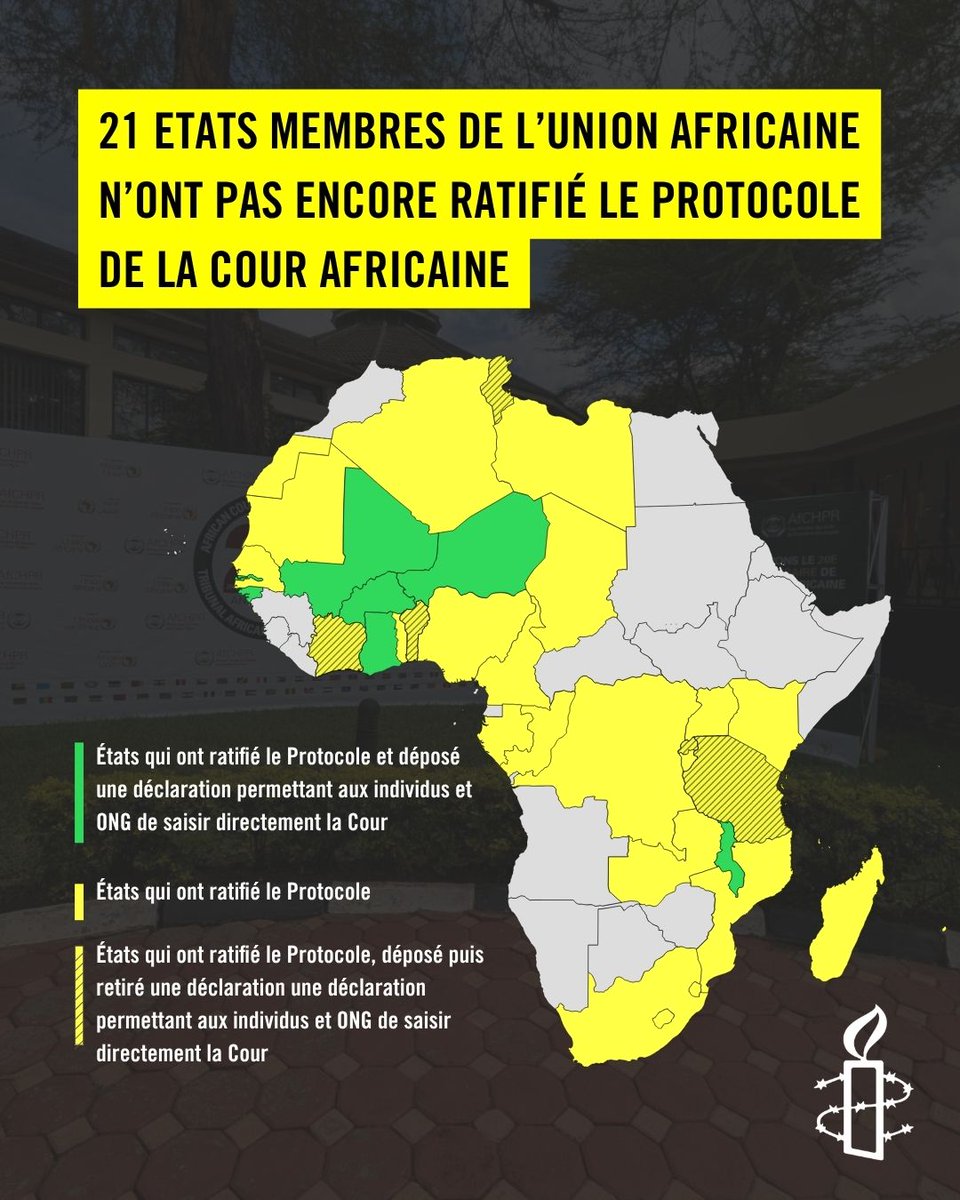
It is vital that every African Union member state ratifies the African Court Protocol and deposits the declaration allowing individuals and NGOs to access the Court directly, so that it can continue to protect human rights in a meaningful way.
PROTECT THE COURT, PROTECT THE PEOPLE
👉https://t.co/5YjLn3316u
#HumanRights
Il est impératif que chaque État membre de l’Union africaine ratifie le Protocole de la Cour africaine et dépose la déclaration permettant aux individus et aux ONG de saisir directement la Cour, afin que celle-ci puisse continuer à protéger véritablement les droits humains.
PROTÉGER LA COUR, PROTÉGER LES PERSONNES
👉https://t.co/ngyHyjI2iT
#DroitsHumains
African Union member states must ensure full political, legal and financial support for the African Court on Human and Peoples’ Rights, to enable it to effectively carry out its mandate: protecting human rights.
PROTECT THE COURT, PROTECT THE PEOPLE
👉https://t.co/J3nr0A1EPM
#HumanRights
Les États membres de l’Union africaine doivent apporter à la Cour africaine des droits de l’homme et des peuples un soutien politique, juridique et financier afin de lui permettre d’accomplir efficacement son mandat : protéger les droits humains.
PROTÉGER LA COUR, PROTÉGER LES PERSONNES
👉https://t.co/vA0DocnpML
#DroitsHumains
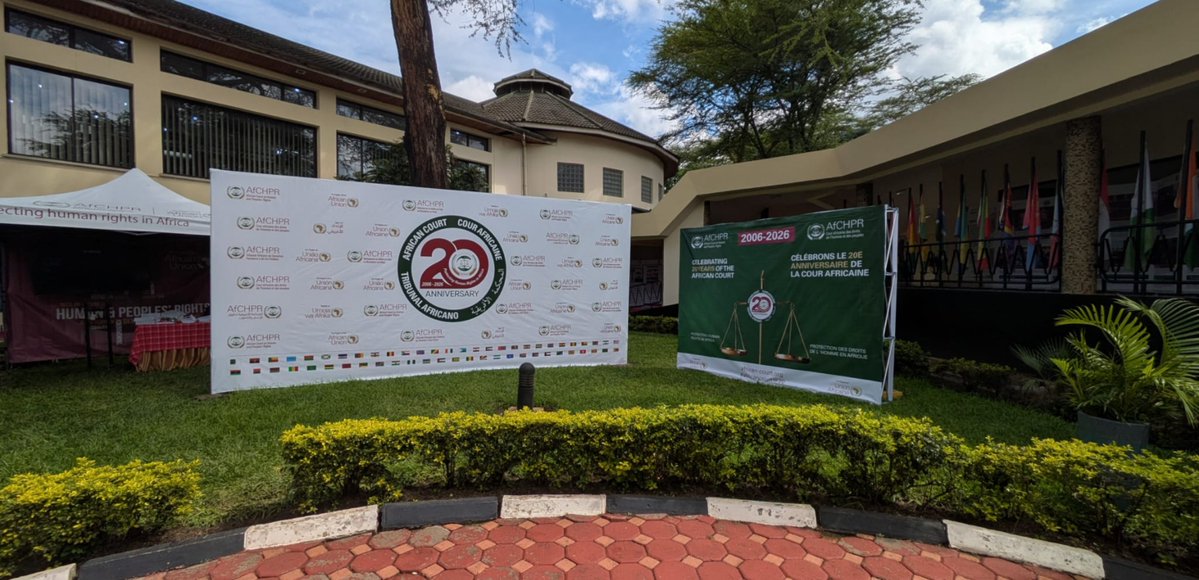
For International Justice, at a time when the USA steps up its war against the International Criminal Court, @amnesty publishes a report on the African Court for Human Rights which celebrates its twentieth anniversary. the report, ‘20 years of the African Court – Protect the Court, Protect the People’, examines the successes achieved and the challenges faced in two decades by the Court, which serves as an important regional judicial avenue for individuals and civil society organizations.
Our main calls:
➡️AU member states must do more to enable the African Court to fully live up to its promise.
➡️Every AU member state should ratify the African Court Protocol
➡️Every AU member state should make the declaration that would allow individuals and NGOs to directly access the Court, so that the African Court is able to continue to protect human rights in a meaningful way for decades to come.
Since becoming operational in 2006, the African Court has finalized over 250 cases, including almost 150 in which it determined whether one or several human rights violations had been committed. Many of the Court’s final judgments relate to the rights to a fair trial, to dignity and to be free from torture and other ill-treatment for detainees, and to election-related matters.
In addition, the African Court has issued several landmark decisions, including concerning the protection of the most vulnerable. Among them, the Zongo and Konaté judgments against Burkina Faso in 2014 strengthened media freedom in the law and the fight against impunity for attacks against journalists in the country. The Ogiek case against Kenya in 2017 affirmed the recognition of the rights of an indigenous community while the 2023 judgment against Côte d’Ivoire concerning the dumping of chemical waste by privately-owned Probo Koala cargo ship developed crucial jurisprudence for the protection of the environment and peoples’ right to health. Most recently in 2025, the Court issued an important decision related to combating discrimination and attacks against persons with albinism in Tanzania.
But African leaders themselves must do more to support the Court.
Twenty-one AU member states have yet to ratify the Protocol establishing the African Court. Only a dozen have ever made the requisite declaration allowing individuals and NGOs to petition the Court directly. Of these, five states (Benin, Côte d’Ivoire, Rwanda, Tanzania, and Tunisia) withdrew the declaration, depriving their people of an avenue for justice.
Other actors entitled to bring cases directly to the African Court such as African intergovernmental organizations and the African Commission on Human and Peoples’ Rights have rarely done so. The Commission, another AU body charged with promoting and protecting human rights, has only referred three cases to the African Court over the last 20 years.
The report also documents delays by states parties to the African Court Protocol and African Union member states in putting in place measures ordered by the Court to remedy human rights violations. The AU political bodies, particularly the Executive Council, have not been proactive enough in ensuring that the Court’s judgments, binding in nature, are promptly followed by state actions.
The full report: https://t.co/5Xd2XPTALa
Human rights are for everyone.
It's time to protect the African Court, so it can continue to protect us.
Learn more: https://t.co/anptPB7wPC
#HumanRights
Les droits humains sont pour tout le monde.
Il est temps de protéger la Cour africaine afin qu’elle puisse continuer à nous protéger.
En savoir plus : https://t.co/u3GRXQTHZy
#DroitsHumains
#Afrique : 20 ans de la Cour africaine des droits de l'homme et des peuples
A l’occasion de la Journée mondiale de la justice internationale, notre nouveau rapport revient sur les succès obtenus et les difficultés rencontrées pendant deux décennies par la Cour, cette importante voie judiciaire régionale pour les individus et les organisations de la société civile.
@court_afchpr #DroitsHumains
https://t.co/SUWw15udwM
New report out: the African Court on Human and Peoples’ Rights turns 20.
Our report takes stock of the Court’s first two decades. Limited access to the Court remains one of the biggest challenges. Low implementation of its decisions is another one. Nevertheless, the Court has established itself as an important regional court for the protection and promotion of #humanrights.
#Africa
https://t.co/zDVk6nRhsp
Nouveau rapport : la Cour africaine des droits de l’homme et des peuples a 20 ans.
Notre rapport dresse un bilan de ces deux décennies d’existence. L’accès limité à la Cour demeure l’un des principaux défis. La faible mise en œuvre de ses décisions en est un autre. Mais la Cour s’est établie comme une importante juridiction régionale pour la protection et la promotion des droits humains.
https://t.co/OiY6LzxL1h
📢Tomorrow Amnesty International will launch a new report on the African Court on Human and Peoples’ Rights, taking stock of the Court’s first two decades of existence.
⚠️Media: write to [email protected] for a copy.
#HumanRights#Africa
#Guinée : L'interdiction, le 9 juillet, par les autorités sénégalaises de la tenue d’une table ronde à Dakar organisée par TLP sur les disparitions forcées en Guinée est une atteinte aux droits à la liberté d'expression et d’association.
Partout, la société civile doit pouvoir s’exprimer sur la situation des droits humains en Guinée, y compris sur les disparitions et les enlèvements.
#DroitsHumains
Guinée : où sont Oumar Sylla et Mamadou Billo Bah?
Deux ans après la disparition forcée des deux activistes du FNDC, les enlèvements et disparitions se poursuivent dans l’impunité.
Amnesty International, la Coordination des Organisations de Défense des Droits de l’Homme de Guinée et le Réseau Ouest-Africain des Défenseurs des Droits Humains demandent aux autorités guinéennes de révéler le sort de toutes les victimes d’enlèvements et de disparitions forcées.
A lire sur notre site Internet
https://t.co/slBBeFpBco
RAPPEL :
Le journalisme n'est pas un crime.
Solidarité avec les journalistes et les militant·e·s persécuté·e·s au Sahel : https://t.co/zHIjeHIAHR
#DroitHumains
En octobre et novembre 2025, des chercheuses d’Amnesty se sont rendues dans le nord-est du Tchad, près de la frontière avec le Soudan. Elles y ont documenté ce que les civils ont vécu depuis le début de la guerre.
Parmi les personnes interrogées se trouvaient de nombreux enfants. Des enfants qui ont fui sous le feu des attaques, qui ont été délibérément visés par des tirs, séparés de leur famille ou contraints de survivre seuls. Voici leurs histoires.
Passez à l’action pour les enfants du Soudan : https://t.co/aBOFDkNCpS
🔴 #BurkinaFaso, #Mali and #Niger: Withdrawal from the International Criminal Court consecrates impunity and threatens to deny victims of war crimes justice and reparations.
#Sahel@IntlCrimCourt#HumanRights
Read our full reaction
https://t.co/lpekEPzPQg