MEDIA BRIEF
NIGERIA POSITIONS HEALTHCARE AS THE NEXT BIG INVESTMENT FRONTIER AT WHX LAGOS 2026
Says Tinubu Administration Driving Historic Shift from Import Dependency to Health Sector Industrialisation
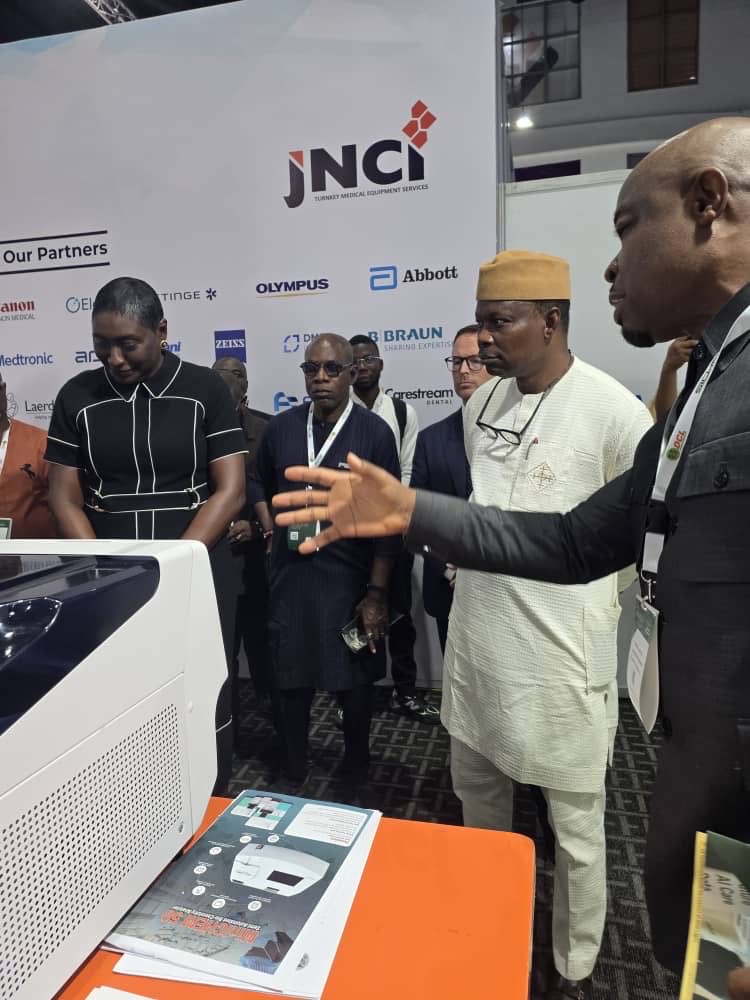
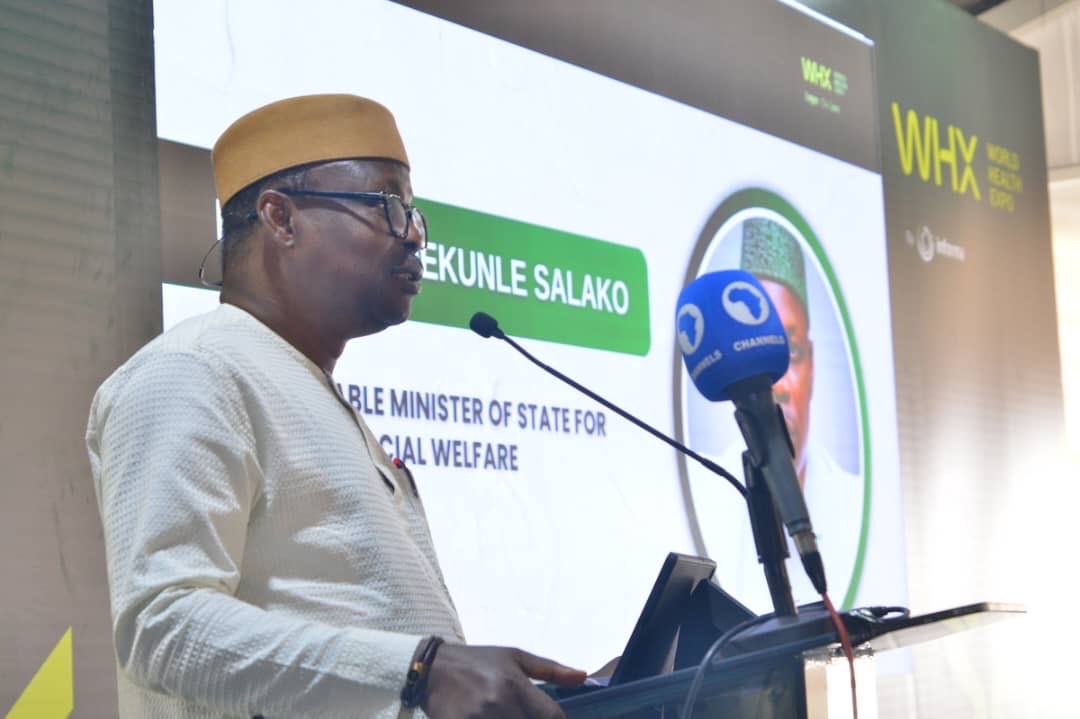
Lagos, Nigeria | 02 June 2026 — The Federal Government has declared healthcare technology, diagnostics, pharmaceutical manufacturing, and medical infrastructure as strategic pillars of Nigeria’s economic transformation agenda, as the Honourable Minister of State for Health and Social Welfare, Dr. Iziaq Adekunle Salako, officially declared open the World Health Expo (WHX Lagos 2026) in Lagos.
Speaking at the opening ceremony of the three-day international healthcare gathering, Dr. Salako described WHX as “a strategic convergence point where global healthcare innovation meets Nigeria’s urgent demand for accessible, modern, and resilient healthcare systems.”
The event, formerly known as Medic West Africa, has evolved into West Africa’s largest healthcare trade and innovation platform, attracting over 8,000 healthcare professionals, more than 500 exhibitors from over 40 countries, alongside policymakers, investors, manufacturers, innovators, and frontline health experts.
The Minister stated that the President Bola Ahmed Tinubu administration, is implementing one of the most ambitious healthcare infrastructure and industrial transformation programmes in Nigeria’s history, with deliberate investments in diagnostics, oncology, cardiac care, local pharmaceutical production, digital health systems, and healthcare value chain development.
According to him, Nigeria can no longer afford overwhelming dependence on imported medical equipment and diagnostics at a time when global supply chain disruptions continue to expose vulnerabilities across African health systems.
“Across West Africa, between 85 and 99 percent of medical equipment and in vitro diagnostics are imported. Nigeria must move from being primarily a consumer market to becoming a strategic hub for healthcare manufacturing, diagnostics, innovation, and medical technology deployment,” the Minister said.
Dr. Salako noted that ongoing reforms are designed not only to improve patient outcomes, but also to unlock economic opportunities, create jobs, attract investments, and strengthen Nigeria’s position as a healthcare leader on the African continent. Highlighting major reforms already underway, the Minister referenced the Presidential Initiative to Unlock Healthcare Value Chains (PVAC), the Presidential Executive Order for the Pharmaceutical and Allied Sectors, and the implementation of a Sector-Wide Approach (SWAp) as key pillars of Nigeria’s healthcare transformation strategy.
He further disclosed that President Tinubu had approved an extensive health infrastructure upgrade programme in partnership with the Nigeria Sovereign Investment Authority (NSIA), including the establishment of 22 modern medical diagnostic centres, six oncology and nuclear medicine centres, and seven cardiac catheterisation laboratories across Nigeria’s six geopolitical zones. The Minister also reaffirmed government’s commitment to the $1.2 billion SWAp health reform initiative, alongside the ₦402 billion earmarked for healthcare infrastructure investments.
Describing healthcare as both a social necessity and an economic growth sector, Dr. Salako stressed that Nigeria is actively opening its healthcare ecosystem to strategic private sector participation, public-private partnerships, global manufacturers, innovators, and long-term investors.
“Nigeria is open for healthcare investment. Our hospitals require modern technologies, diagnostic systems, therapeutic equipment, digital infrastructure, and scalable innovations capable of improving care delivery for millions of Nigerians,” he said.
The Minister commended Informa Markets, organisers of WHX Lagos, and the Healthcare Federation of Nigeria (HFN) for sustaining a platform that continues to shape conversations around healthcare financing,
As families across Nigeria prepare to mark Eid-el-Kabir, the Federal Ministry of Health and Social Welfare extends warm wishes to all Muslim faithful.
Eid reminds us of sacrifice, compassion, obedience, and care for one another, values that remain essential not only in our homes and communities, but also in building a healthier and stronger nation.
As we celebrate, we encourage Nigerians to prioritise safety, hygiene, moderation, and kindness:
• Handle food and meat properly to prevent foodborne illnesses
• Stay hydrated, especially during travel and outdoor activities
• Drive carefully and avoid unsafe road practices
• Check in on the elderly, children, and vulnerable persons around you
May this season bring peace to our communities, comfort to families, and renewed hope to our nation.
Eid Mubarak from all of us at the Federal Ministry of Health and Social Welfare.
If children ran the Federal Ministry of Health… things would definitely be a lot more dramatic !!!
Swipe through to see the new “policies” ➡️
⭐ Vaccines would come with mandatory reward stickers.
⚽ Doctors would prescribe playtime.
🚨 And bedtime? A highly controversial policy.
But behind the humour is a serious reminder:
Every child deserves the opportunity to grow up healthy, protected, supported, and cared for. 💚
Happy Children’s Day from the Federal Ministry of Health & Social Welfare!
#ChildrensDay
#HealthyChildrenHealthyNation
#ChildHealth
#MinistryOfHealthNG
MEDIA BRIEF
FG SCALES MATERNAL MORTALITY REDUCTION PROGRAMME TO 32 STATES, RECORDS NEARLY 79,000 EMERGENCY RESPONSES NATIONWIDE
Abuja, Nigeria | April 14, 2026 — The Federal Government has expanded its maternal and newborn health response to 32 states, delivering nearly 79,000 emergency medical transports nationwide, as part of intensified efforts to reduce preventable deaths among Nigerian women and newborns.
Speaking at a ministerial press briefing to mark Safe Motherhood Day 2026, the Coordinating Minister of Health and Social Welfare, Prof. Muhammad Ali Pate, said that while Nigeria has made measurable progress in expanding access to maternal health services, gaps remain — particularly in ensuring that every woman receives timely, high-quality, and respectful care when and where she needs it.
He noted that this year’s theme, “Closing the Gap: From Coverage to Quality Care for Every Mother,” reflects a national shift toward prioritising quality, timeliness, and equity of care, stressing that better outcomes depend on how effectively the system responds at critical moments.
At the centre of these efforts is the Maternal and Neonatal Mortality Reduction Innovation and Initiative (MAMII), now operational in 32 states. The programme targets the leading causes of maternal and neonatal mortality through data-driven interventions that strengthen service delivery, emergency obstetric care, and referral systems — marking a shift toward a more coordinated, systems-based approach to saving lives.
The Minister, represented by the Permanent Secretary, Daju Kachollom S. mni, also highlighted progress under the National Emergency Medical Services and Ambulance System (NEMSAS/RESMAT). Emergency services are now operational in 136 MAMII LGAs, supported by 612 ambulances deployed across 340 LGAs and Emergency Medical Teams nationwide. To date, 78,962 beneficiaries have been transported, with pregnant women accounting for about 60 per cent of cases.
To reduce financial barriers , the Federal Government , through the National Health Insurance Authority (NHIA), is expanding access to Comprehensive Emergency Obstetric and Newborn Care services. More than 32,000 women and 1,700 newborns have benefitted across over 250 health facilities, with additional facilities at various stages of readiness.
At the primary healthcare level, the Executive Director @NphcdaNG , Dr. Muyi Aina, said ongoing investments in frontline services are improving access and continuity of care, with increasing antenatal attendance reflecting growing confidence in the health system.
Recent data shows a 20 per cent increase in antenatal care attendance (ANC4) in programme areas, alongside the identification and linkage of 166,463 previously unregistered pregnant women to care across eight states. To support service delivery, over 111,000 mama kits have been distributed nationwide, while essential maternal and newborn commodities have reached 968 primary healthcare centres, benefiting an estimated 1.2 million women and newborns. Additional support includes the distribution of 243,198 family planning commodities, over 10,000 reproductive health equipment units, and the recruitment of more than 5,000 health workers.
As part of efforts to strengthen quality of care, the Federal Government has introduced new clinical protocols, updated antenatal care guidelines, and life-saving skills training packages to improve consistency in service delivery nationwide.
Development partners, including the World Health Organization (WHO), commended Nigeria’s progress and reaffirmed their support for ongoing reforms, particularly in strengthening quality and system coordination.
The Federal Government emphasised the need for sustained collaboration across all levels, calling on state governments, health workers, communities, and partners to scale efforts and ensure that ongoing reforms translate into improved outcomes for every Nigerian mother and newborn.
MEDIA BRIEF
NIGERIA JOINS AFRICA-LED PUSH TO REDEFINE GLOBAL HEALTH GOVERNANCE
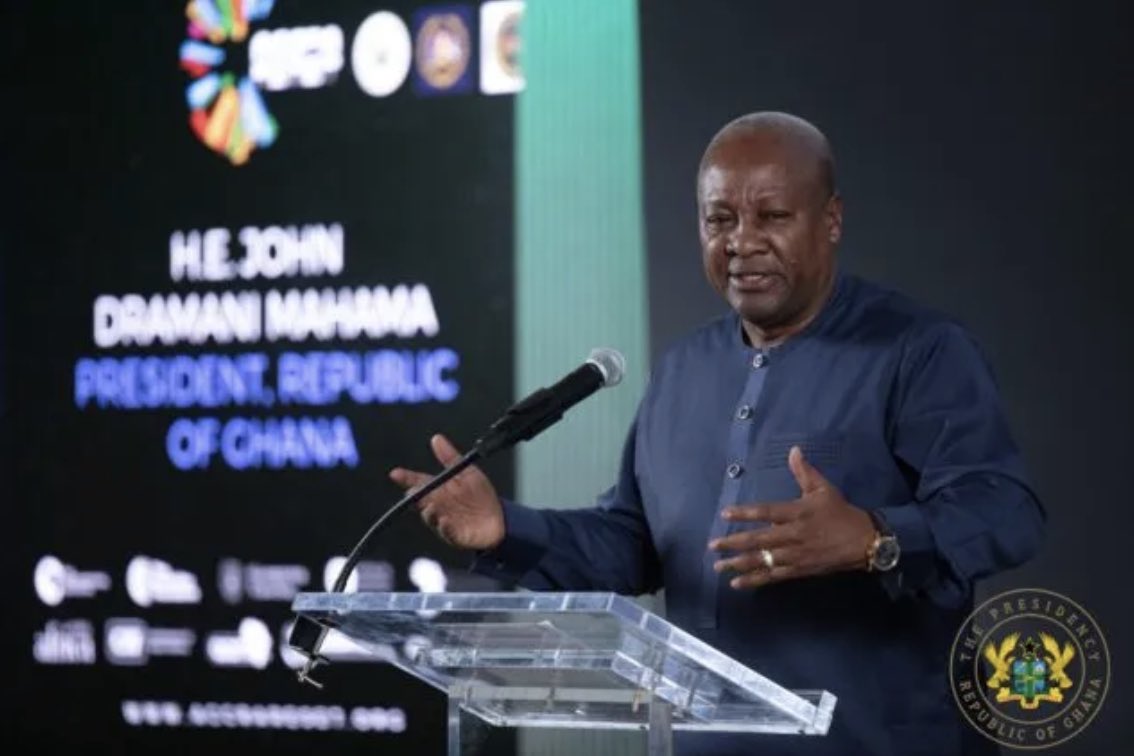
Abuja, Nigeria | 04 April 2026 — Nigeria has reaffirmed its leadership in advancing equitable and sovereign health systems as the Coordinating Minister of Health and Social Welfare, Muhammad Ali Pate, joins the High-Level Panel of the Accra Reset Initiative, an Africa-driven effort to reshape global health governance.
Led by the President of Ghana, John Dramani Mahama, the Accra Reset represents a decisive shift toward a more inclusive global health architecture, one where countries of the Global South are not just participants, but co-authors of the policies that affect their populations.
The 18-member panel brings together global leaders across policy, academia, finance, and innovation to develop actionable reforms that will strengthen equity, promote national ownership, and rebalance decision-making power within international health systems.
Nigeria’s participation reflects both its reform trajectory and its long-standing commitment to shaping continental and global health priorities. Under the leadership of President Bola Ahmed Tinubu, ongoing reforms in the health sector are anchored on strengthening governance, improving health outcomes, unlocking healthcare value chains, and enhancing health security, priorities that align closely with the objectives of the Accra Reset.
Speaking on the significance of the initiative, Prof. Pate noted:
“The Accra Reset signals a necessary evolution in global health governance, one that recognises the leadership, agency, and lived realities of countries across Africa and the Global South. Nigeria is committed to working with partners to ensure that global systems better reflect local priorities and deliver equitable outcomes.”
The panel will engage with key global institutions, including the World Health Organization, World Trade Organization, and the Global Fund to Fight AIDS, Tuberculosis and Malaria, alongside regional bodies such as the Africa Centres for Disease Control and Prevention, to advance reforms that prioritise equity, resilience, and sustainability.
For Nigeria, this moment reinforces a broader strategic direction, transitioning from dependency-driven models toward increased domestic ownership, sustainable financing, and stronger regional collaboration.
As Africa continues to assert its place in shaping global systems, Nigeria’s role within the Accra Reset underscores its position not only as a beneficiary of global health policies, but as a key architect of their future.
@muhammadpate
MEDIA BRIEF
FG EXPANDS EYE HEALTH INTERVENTIONS TO CURB NIGERIA’S GROWING GLAUCOMA BURDEN
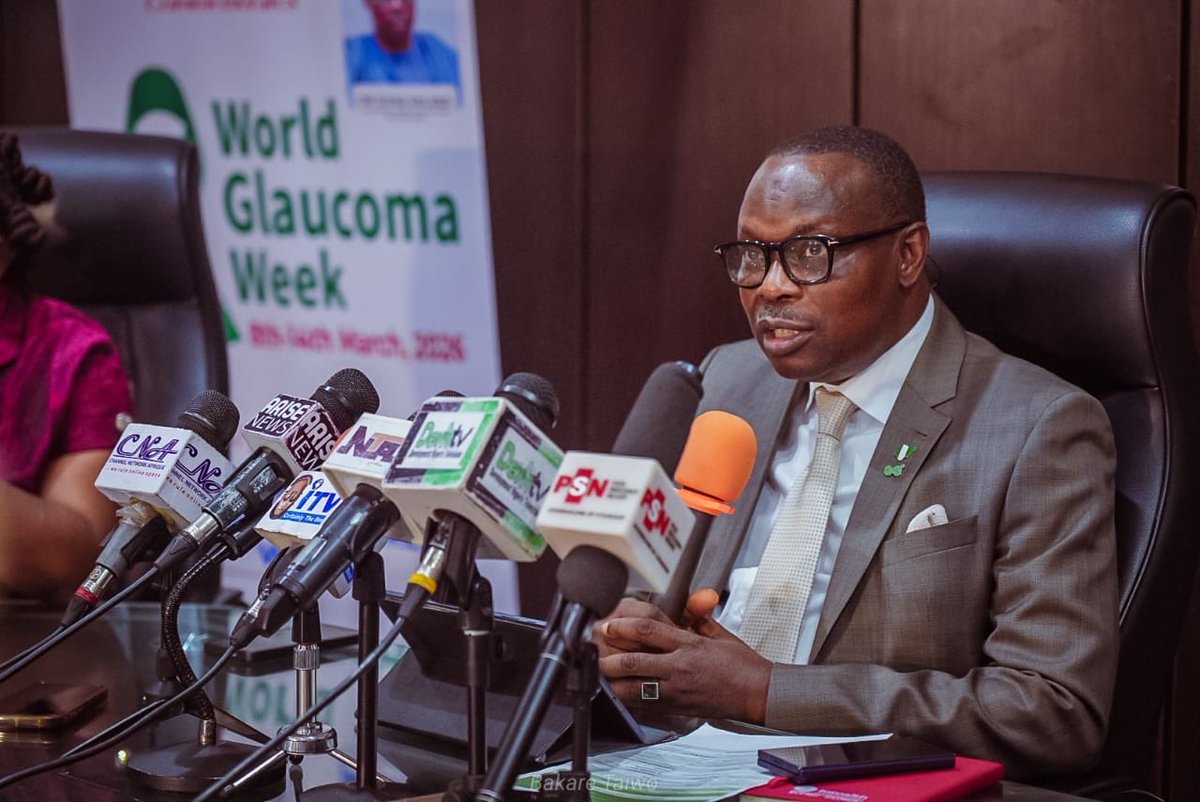
Abuja, Nigeria | 11 March 2026 — The Federal Government has intensified efforts to address glaucoma as a major public health challenge, rolling out expanded screening activities, strengthening eye care services, and increasing nationwide awareness to promote early detection and treatment.
Speaking during a press briefing in Abuja, the Honourable Minister of State for Health and Social Welfare, Dr. Iziaq Adekunle Salako, described glaucoma as a “silent thief of sight” that continues to threaten the vision of millions of Nigerians if not detected early.
Glaucoma remains a major cause of avoidable blindness in Nigeria, accounting for approximately 16.7 percent of all blindness nationwide. Surveys indicate that about 5 percent of Nigerians aged 40 years and above are living with the condition, representing an estimated 1.1 to 1.4 million people. Alarmingly, 90–94 percent of affected individuals remain undiagnosed or untreated, largely because the disease progresses silently until significant vision loss has occurred.
Dr. Salako highlighted several ongoing government interventions under the National Eye Health Strategic Development Plan (2024–2028) aimed at strengthening integrated eye care services across primary, secondary, and tertiary healthcare levels.
As part of these efforts, the Federal Ministry of Health and Social Welfare has developed and launched the Nigeria Glaucoma Guidelines and Toolkit to standardise diagnosis, treatment, and referral protocols nationwide. Ophthalmologists from all 36 states and the Federal Capital Territory have already been trained on the guidelines and are expected to cascade the training across their respective states.
The Minister also noted progress under JigiBola 2.0, the Effective Spectacle Coverage Initiative, through which over 2,220 primary health care workers across 16 states have been trained and equipped with basic vision screening kits to identify visual impairment and refer patients appropriately.
As part of current nationwide activities, the Ministry, in collaboration with state governments, professional bodies, and partners, is coordinating free glaucoma examinations at 38 health facilities across 11 states and the Federal Capital Territory.
The initiative is being complemented by intensified public awareness campaigns across traditional and digital media platforms to educate Nigerians on key risk factors including age, family history, African ancestry, and high blood pressure, while encouraging regular eye examinations.
Dr. Salako also noted that the Ministry is strengthening efforts to integrate eye health into primary healthcare services nationwide, while assessing implementation progress to identify gaps and improve service delivery.
He urged Nigerians, particularly those aged 40 years and above, to prioritise routine eye examinations at least once every two years, stressing that glaucoma detection tests are simple, painless, and highly effective when conducted early.
“Early diagnosis and strict adherence to prescribed treatment can prevent disease progression and help preserve vision,” he said.
Dr. Salako emphasised that protecting the health and productivity of Nigerians remains central to the broader development vision of the Bola Ahmed Tinubu administration, noting that a healthy population is critical to national economic and social progress.
He called on healthcare workers, the media, civil society organisations, and citizens to work together to reduce the burden of glaucoma and eliminate avoidable visual impairment across the country.
“Together, we can protect the vision of our people and build a glaucoma-free future for Nigeria,” he said.
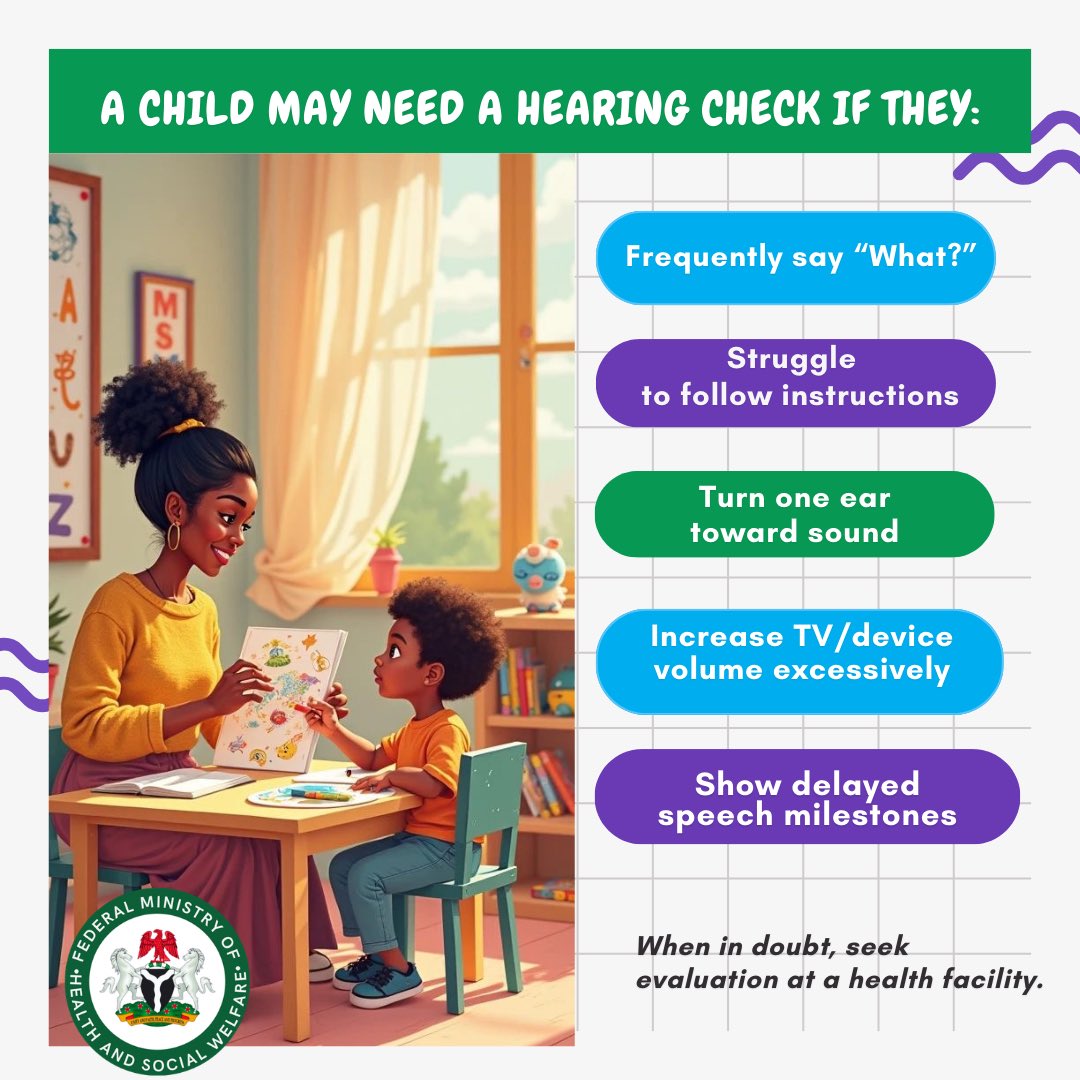
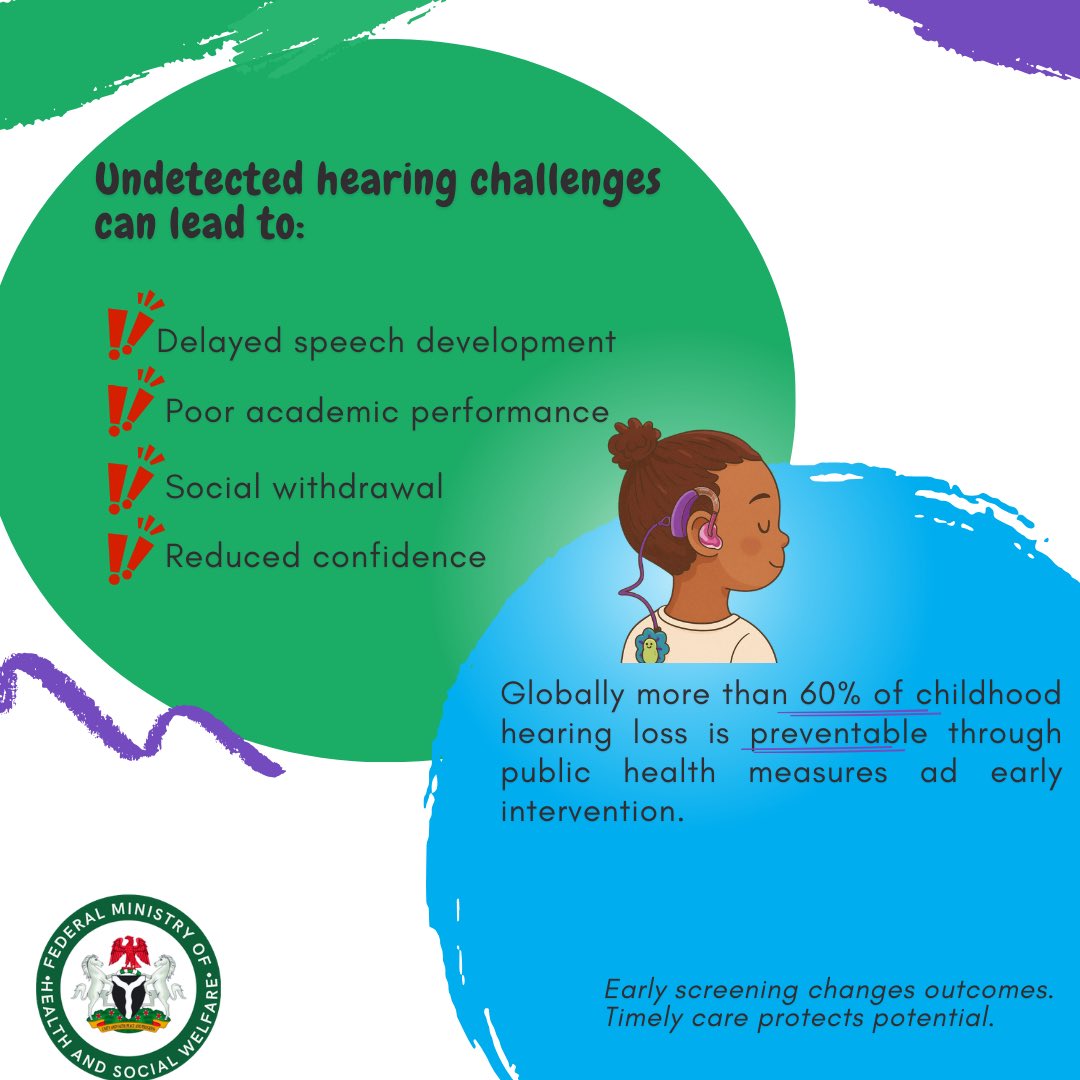
Hearing is foundational to learning, communication, and inclusion.
Globally, over 60% of childhood hearing loss is preventable through public health measures and early intervention.
On #WorldHearingDay2026, Nigeria strengthens hearing care from communities to classrooms by expanding screening, strengthening referral systems, and building frontline capacity for early detection.
Because education begins with listening.
#HealthyNaija
#HearingCareForAll
#HealthForAll
#MinistryOfHealthNG
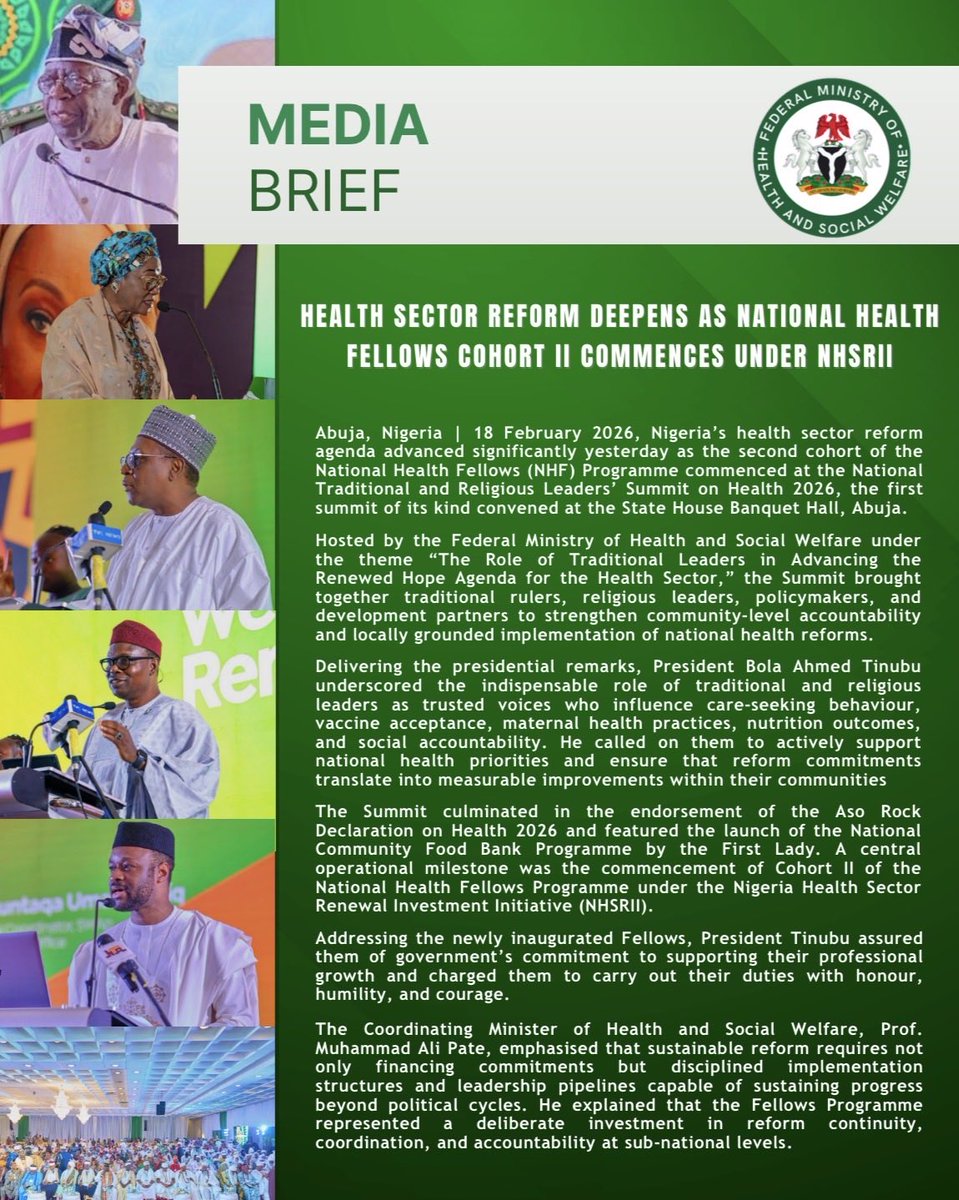
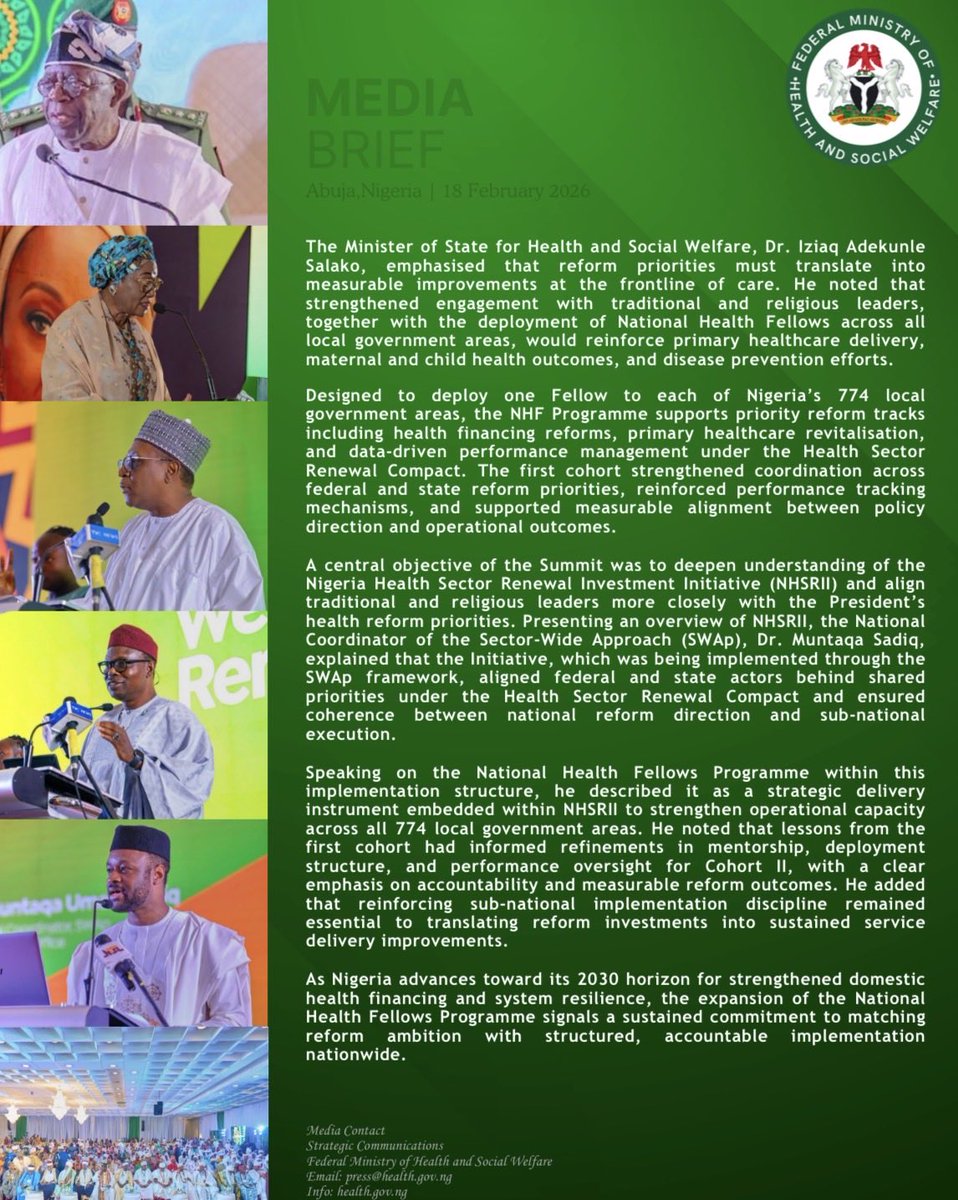
Health sector reform continues to move from commitment to execution.
At the National Traditional and Religious Leaders’ Summit on Health 2026, @Fmohnigeria, marked a key milestone with the commencement of Cohort II of the National Health Fellows Programme under the Nigeria Health Sector Renewal Investment Initiative (NHSRII).
With one Fellow deployed to each local government area, the programme strengthens implementation discipline, coordination, and accountability in delivering measurable health outcomes for Nigerians.
@muhammadpate@SalakoIziaq@MuntaqaSadiq
#HealthReform #NHSRII #SWAp #RenewedHope #MinistryOfHealthNG
Media Brief
Rewiring Government to Deliver Faster Care: Health and Public Service Reform Leaders Align to Accelerate Results for Nigerians
Abuja, Nigeria |18 February 2026
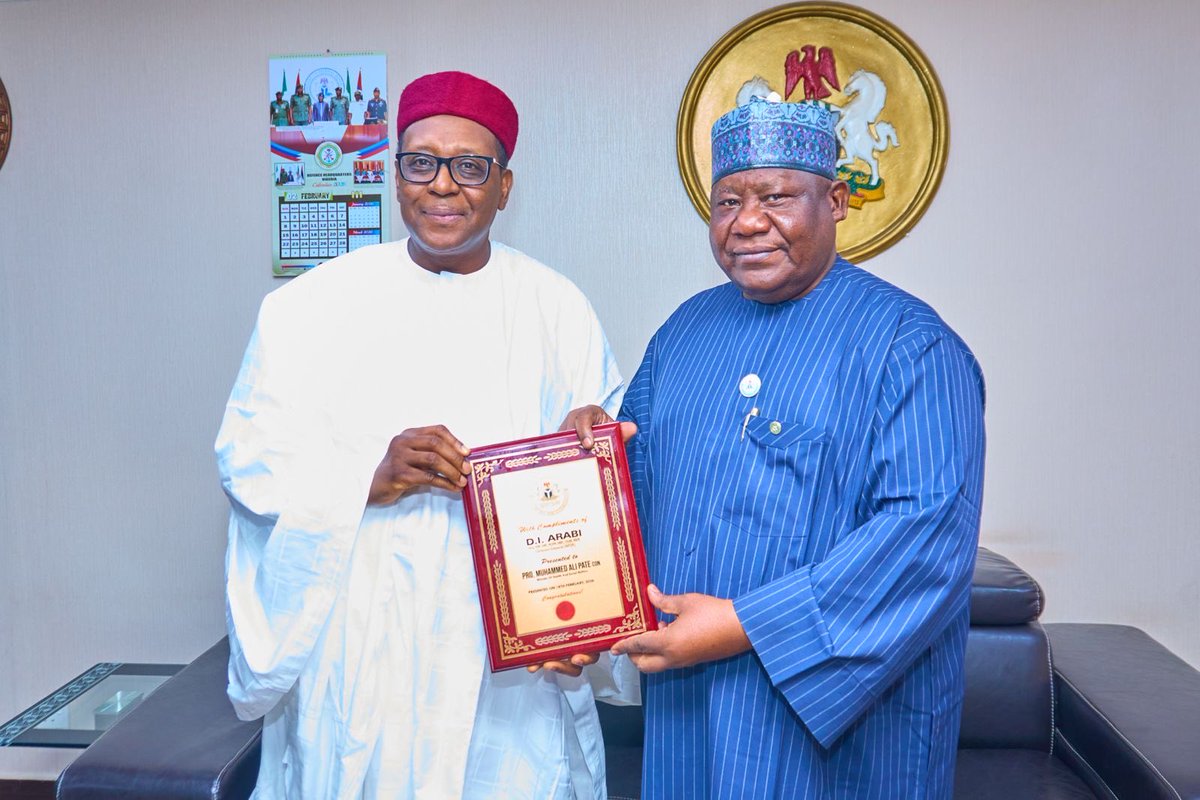
The Coordinating Minister of Health and Social Welfare, Prof. Muhammad Ali Pate, today met with the Director-General of the Bureau of Public Service Reform (BPSR), Dasuki Ibrahim Arabi, to strengthen collaboration between the health sector and Nigeria’s public service reform architecture in support of national development priorities service delivery priorities.
The objective of the engagement was to ensure that improvements in health outcomes are driven not only by medical interventions, but also by strong governance systems that enable faster, more efficient, and more citizen-responsive service delivery. Discussions therefore focused on reducing bureaucratic delays, strengthening policy-to-implementation alignment, improving performance management systems, and ensuring public service reforms directly support health system performance and patient experience across the country.
Both leaders emphasised the importance of intersectoral collaboration in delivering presidential priorities, noting that national development, human capital growth, and economic productivity depend on a health system supported by a modern, accountable, and performance-driven public service. The meeting also highlighted shared reform priorities including simplifying service delivery processes, strengthening accountability frameworks, expanding digital governance and data-driven decision-making, and improving workforce efficiency across public institutions.
The Coordinating Minister, noted that strengthening governance systems is essential to improving the everyday healthcare experience of Nigerians.
“Delivering better health outcomes requires systems that are efficient, predictable, and transparent. Strengthening collaboration with the Bureau of Public Service Reform will help ensure that health policies move faster from approval to implementation, improving the quality and accessibility of care available to citizens across the country.”
Earlier in his remarks, the Director-General, BPSR, commended the significant progress made in Nigeria’s health sector over the last two years and affirmed the Bureau’s commitment to supporting sector-specific reforms that directly improve citizens’ lives.
“The Bureau recognises the strong reform momentum within the health sector and the clear leadership driving this transformation. We commend the Honourable Coordinating Minister for prioritising governance, performance, and accountability as central pillars for improving health outcomes.
The BPSR is committed to working closely with the Federal Ministry of Health and Social Welfare to strengthen institutional frameworks, streamline processes, and ensure that public service reforms fully support the sector’s delivery priorities and national development goals.”
The engagement also reflects the Federal Government’s broader intent to build a modern public service that is responsive, accountable, and performance-driven, enabling institutions across government to deliver real and measurable impact in the lives of Nigerians.
𝐄𝐬𝐭𝐚𝐛𝐥𝐢𝐬𝐡𝐦𝐞𝐧𝐭 𝐨𝐟 𝐚 𝐍𝐚𝐭𝐢𝐨𝐧𝐚𝐥 𝐓𝐚𝐬𝐤𝐟𝐨𝐫𝐜𝐞 𝐟𝐨𝐫 𝐂𝐥𝐢𝐧𝐢𝐜𝐚𝐥 𝐆𝐨𝐯𝐞𝐫𝐧𝐚𝐧𝐜𝐞 𝐚𝐧𝐝 𝐏𝐚𝐭𝐢𝐞𝐧𝐭 𝐒𝐚𝐟𝐞𝐭𝐲 𝐢𝐧 𝐍𝐢𝐠𝐞𝐫𝐢𝐚
As part of the Nigeria Health Sector Renewal Investment Initiative #NHRSII and in furtherance of the Renewed Hope Agenda of His Excellency, President Bola Ahmed Tinubu, GCFR (@officialABAT), to improve quality health outcomes and strengthen health system performance, the Federal Ministry of Health and Social Welfare (@Fmohnigeria) has established a National Taskforce for Clinical Governance and Patient Safety.
The establishment of this Taskforce reflects a deliberate, system-wide effort to strengthen clinical standards, patient safety, accountability, and learning across public and private health facilities.
The Taskforce is oriented toward improvement, active learning, appropriate incentives, and capacity building across the health system, with emphasis on prevention and systems strengthening rather than blame or punitive action in the absence of proven negligence.
In this briefing from my desk, I outline the rationale, scope, and direction of the Taskforce, grounded in coordinated governance, prevention, and continuous improvement.
Fellow Nigerians and friends from around the world, good day to you all.
For decades, dedicated professionals in Nigeria’s health sector have risen early and returned home late, serving their fellow citizens with commitment and resilience, often in difficult conditions and with limited recognition.
Under the compassionate leadership of His Excellency President Bola Ahmed Tinubu @officialABAT, we acknowledge that successive governments did not always provide the enabling environment for our best talents to thrive. Longstanding commitments were poorly implemented, leading to dissatisfaction among health workers, particularly members of the Nigerian Medical Association (NMA), the Joint Health Sector Unions (JOHESU), and the National Association of Nigerian Nurses and Midwives.
This reality informed our deliberate approach over the past two and a half years, during which we proactively cultivated industrial harmony through constructive engagement with stakeholders, addressing both legacy and current challenges directly.
Despite recent disruptions by a small segment of health workers, notably resident doctors, the overwhelming majority of Nigeria’s capable health workforce have continued to report for duty, serving our people with dedication, care, and innovation.
While not all legacy challenges have been conclusively resolved, unprecedented progress has been achieved under President Tinubu’s leadership. Through transparent negotiations, the retirement age for clinically skilled health workers has been increased from 60 to 65 years. Outstanding arrears from 2023 to date have been paid, while the new hazard allowance is being processed.
Over ₦10 billion owed under the 2025 Medical Residency Training Fund has been fully paid. Salary relativity adjustments under CONHESS for health workers and CONMESS for doctors are being assured and institutionalized by the federal government.
All other major and longstanding demands of the three main health sector union blocs are being addressed through Collective Bargaining Agreement negotiations, statutorily convened by the Secretary to the Government of the Federation. This process, involving union leadership and relevant government officials, is well underway, and we remain committed to concluding it to the satisfaction of health workers and the citizens they serve.
Despite minor industrial distractions by a very small minority, with over 90% of demands already met, Nigerians continue to express confidence in the health workforce, and the data confirms this.
In the second quarter of 2024, Nigeria recorded an average of 10 million hospital visits across all levels of care. By the second quarter of 2025, this rose to nearly 40 million visits in a single quarter, representing almost a fourfold increase.
The Central Bank of Nigeria has reported a 52% reduction in foreign exchange accessed for external medical tourism since President Tinubu assumed office in 2023. At the same time, facilities nationwide are witnessing increased patronage by foreigners choosing to receive care in Nigeria.
Medical tourism is steadily being reversed, while citizen perception surveys from 2023 to 2025 show rising confidence in the health system. Overall system confidence stands at 55%, confidence in the government’s ability to manage health emergencies at 67%, and patient satisfaction at 74%.
As we continue building systems that serve all Nigerians regardless of status or income, we are healing a once-fractured ecosystem and restoring public trust. The progress of our health sector reflects what is possible for Nigeria: turning crisis into opportunity, transforming liabilities into assets, and placing every Nigerian at the center of our national renewal.
Thank you, and may God bless the Federal Republic of Nigeria.
The secretariat wishes everyone en route to Ondo State a safe travel Don't forget to come with your receipt of payments (conference, etc). You will meet us at the registration stand, with our smiling face.
FG Reaffirms Commitment to Quality Healthcare: Prof. Pate Commissions New Health Projects in Gombe
In a sustained push to strengthen Nigeria’s tertiary healthcare system, the Coordinating Minister of Health and Social Welfare, Prof. Muhammad Ali Pate, CON, over the weekend commissioned multiple state-of-the-art facilities at the Federal Teaching Hospital, Gombe (FTHG), alongside His Excellency, Governor Inuwa Yahaya of Gombe State.
The commissioning which is one in a series of hospital upgrades set to take place nationwide underscores the Federal Government’s unwavering commitment to improving healthcare delivery and aligning tertiary institutions with global standards.
Among the newly inaugurated projects are the National Health Insurance & Retainership Complex, 128-Slice Computerized Tomography (CT) Scan Machine, Anaesthesia and Critical Care Complex, Isolation and Molecular Laboratory, Full Electronic Medical Records Data System, Internal Road Network Linking All Departments, New Engineering Services Complex, and the Institute of Health Sciences and Technology Complex.
In addition, the hospital launched Free Ambulance and Emergency Healthcare Access as well as Free Emergency Obstetrics and Newborn Care Access, reaffirming the administration’s focus on equitable, lifesaving services for all Nigerians.
Speaking at the event, Prof. Pate noted that the Gombe projects demonstrate the Ministry’s resolve to translate President Bola Ahmed Tinubu’s Renewed Hope Agenda into tangible improvements in health outcomes, while advancing the Ministerial Four-Point Agenda—improving governance, enhancing population health, unlocking the health value chain, and strengthening health security.
“These facilities represent more than infrastructure; they embody our vision of a responsive, modern health system that puts patients first, supports health workers, and delivers care that meets global standards,” Prof. Pate stated.
Governor Yahaya commended the Federal Government for its continued investment in the state’s health sector, noting that the new facilities will significantly enhance healthcare access across the Northeast and further position Gombe as a regional medical hub.
As similar commissioning ceremonies unfold across the country, the Federal Ministry of Health and Social Welfare continues to drive reforms aimed at building resilient, people-centered, and technology-driven tertiary health institutions, ensuring that every Nigerian regardless of location — can access quality, affordable, and dependable healthcare.
@muhammadpate
Excited members of the Association of Medical Social Workers of Nigeria are en route to Ondo for our annual socio-scientific conference starting tomorrow! Join us in advancing healthcare through innovation and collaboration. #AMSWN#SocioScientificConf
The Alzheimer Society is pleased to celebrate Ngozi Iroanyah and colleagues at the CIHR Institute of Aging research showcase this week, as recipients of a CIHR Team Grant for their project: Advancing Equity in Dementia Care in Canada: An Intersectional and Participatory Approach.