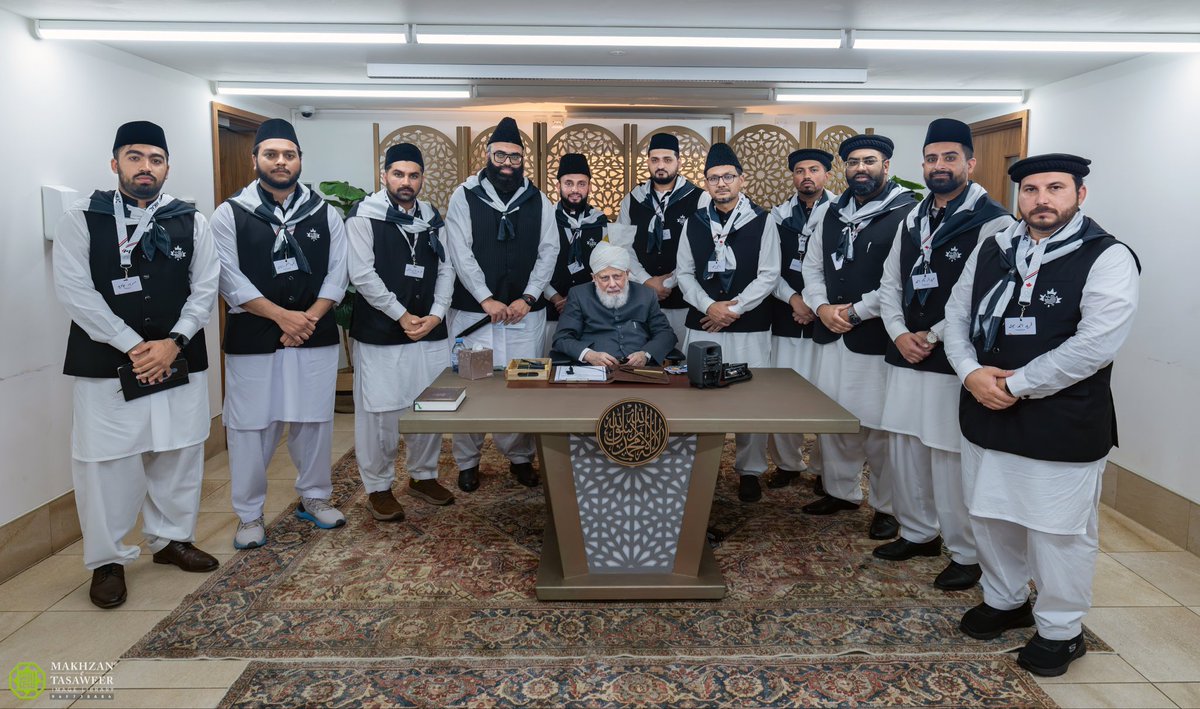
Calgary & BC Refresher Courses 2026-27
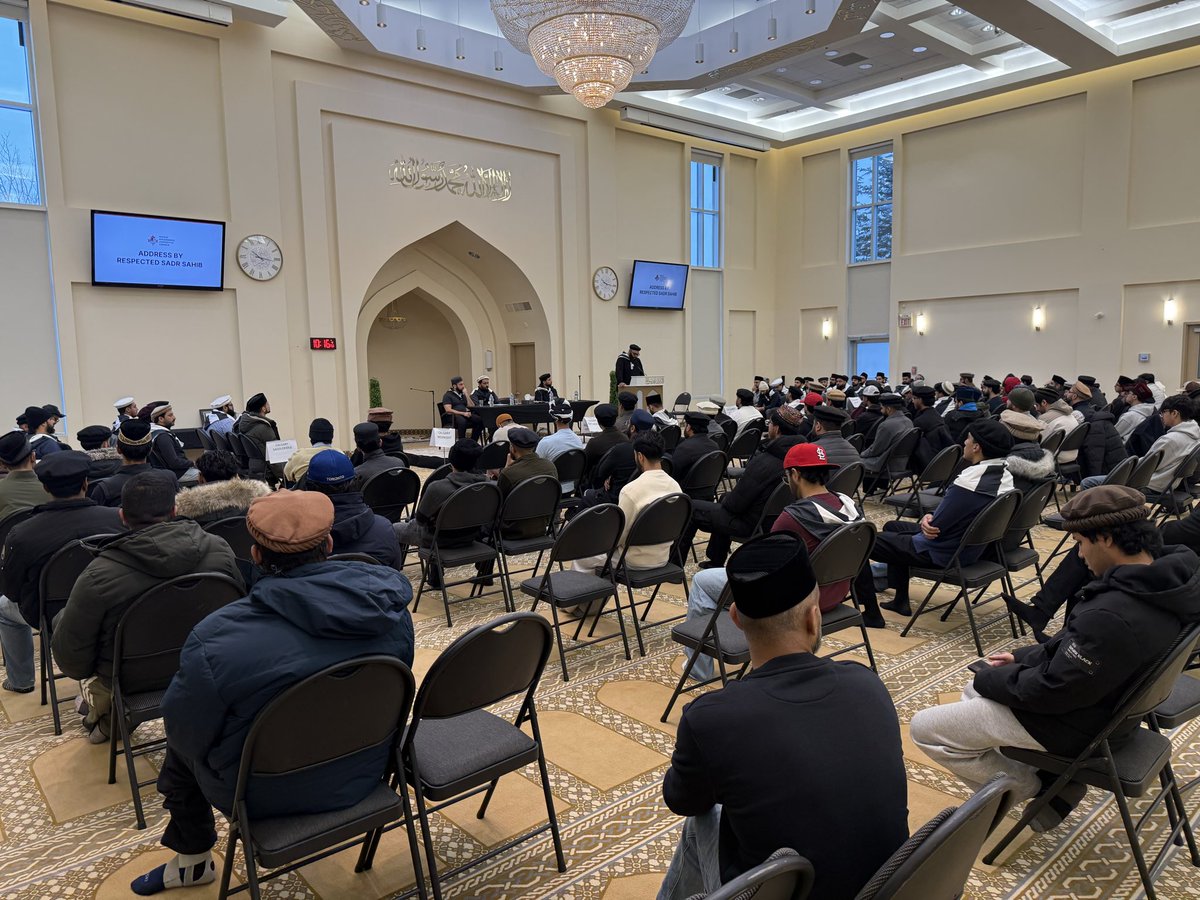
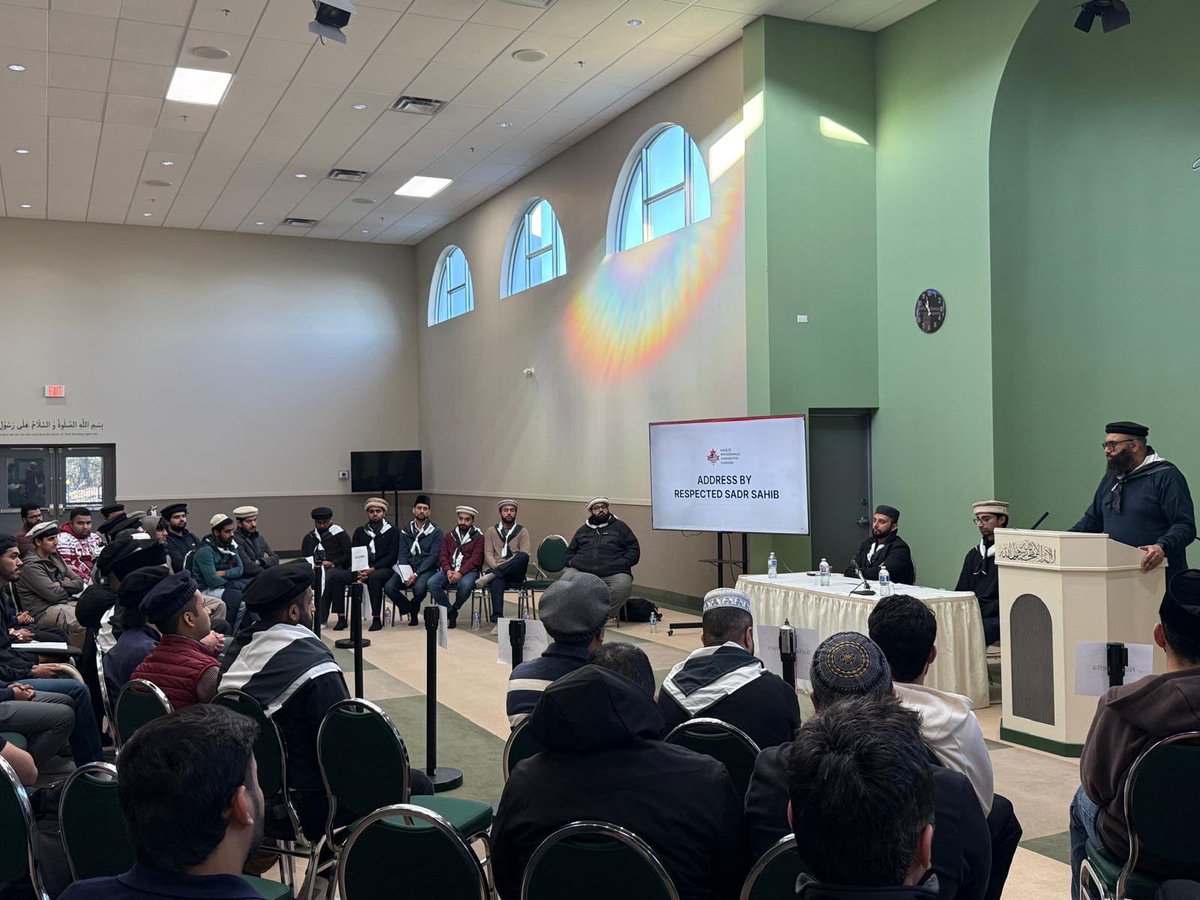
This past weekend, Majalis from across Calgary and British Columbia gathered for their refresher courses, Alhamdulillah!
May Allah bless all of these office bearers and their efforts. Ameen!
#Islam #Ahmadiyyat #Community #Muslim #service
Reaching out to Allah is always the answer 🤲
Watch this video to learn what a Prophet of God would do when feeling overcome or defeated. Perfect guidance for whenever you might feel like everything is against you.
#Muslim#Islam#Ahmadi#depression#hope
Majlis Khuddamul Ahmadiyya Canada Refresher Course 🕌🇨🇦
Here are some glimpses from last week’s refresher course. May Allah bless all of these young office bearers and their efforts. Ameen!
Every parent worries for their child’s Tarbiyyat (moral upbringing) 🤲🏽🧎♂️➡️
So what did the prophets rely on for the moral training of their children? Listen close and find out!
#Islam#prayer#Ahmadiyya#Ahmadi#Muslim
🎙️ THE FLOOR IS YOURS | EPISODE 1 OUT NOW!
@MTACanada, in collaboration with Majlis Khuddamul Ahmadiyya Canada, presents The Floor Is Yours — a new nationwide series where youth ask real, unfiltered questions about faith, life, and the challenges of modern society.
📍 Our first episode comes from Baitur Rahman Mosque, Vancouver, featuring insightful discussions with panelists from Canada and the UK.
▶️ Watch Episode 1 on: https://t.co/ne8vtVY8Hf
📅 New episodes every Friday!
Have questions? The Floor Is Yours.
MKAC THEME OF THE YEAR 2026-27
By the Grace of Allāh, Ḥaḍrat Khalīfatul-Masīḥ V (aa) has graciously approved the following theme for Majlis Khuddāmul Aḥmadiyya Canada for 2026–27:
*The Power of Salat*
“Surely, Prayer restrains one from indecency and manifest evil, and remembrance of Allah indeed is the greatest virtue.” (Holy Qur’an 29:46)
May Allāh enable us to establish a strong and lasting connection with Him through Salat, strengthen our faith, and make our prayers a means of protecting us from wrongdoing and transforming our lives.
Āmīn!
What is the solution to financial hardship?
The Qur’an tells us: seek forgiveness, recite Istighfar.
We’re only ever a moment’s notice away from financial hardship, so make sure to establish Istighfar as a core, daily habit.
#Islam#Ahmadiyyat#Ahmadi#Muslim#spirituality
Islam’s Role in Mathematics
What if the mathematics we use every day was shaped by Muslim scholars?
During the Islamic Golden Age, Muslim mathematicians made major contributions to algebra, arithmetic, geometry, trigonometry, and algorithms. Scholars such as Al-Khwarizmi helped develop systematic methods for solving mathematical problems, while Muslim scholars also preserved, expanded, and transmitted knowledge from earlier civilisations.
Many of these developments later influenced the growth of mathematics in Europe and beyond.
#MTAi #Islam #InsideAhmadiyya
Islam’s Charity & Welfare System
What if helping those in need was not just encouraged, but built into a society’s system?
Islam places strong emphasis on charity, social responsibility, and supporting vulnerable people. Through concepts such as Zakat and Sadqa, Islamic tradition developed mechanisms for wealth redistribution, community support, education, healthcare, and assistance for those in need.
A look at how Islamic principles approach poverty, welfare, and social responsibility.
#Islam #MTAi #InsideAhmadiyya
Islam's Contribution to Trade & Commerce
How did Islam shape trade, business, and commerce across the world?
Trade has played a major role in Islamic civilisation. Islamic teachings established principles around honest dealing, fair contracts, fulfilling agreements, and avoiding exploitation, while Muslim merchants connected markets across Africa, Asia, Europe, and the Middle East.
From bustling marketplaces to long-distance trade routes, commerce helped spread not only goods and wealth, but also ideas, knowledge, and culture.
#MTAi #InsideAhmadiyya #Islam
Islam’s Contribution to Physics
Did Muslim scholars help lay the foundations of modern physics?
During the Islamic Golden Age, Muslim scientists made important contributions to optics, mechanics, astronomy, and the study of motion. Ibn al-Haytham’s work on light and vision helped establish a more systematic approach to scientific investigation, while other scholars studied balance, motion, gravity, and the behaviour of physical objects.
Their work preserved, developed, and expanded earlier scientific knowledge and later influenced scholars in Europe.
#MTAi #InsideAhmadiyya #Islam
Islam’s Contribution to Architecture
How did Islam influence the way buildings, cities, and sacred spaces were designed?
Islamic civilisation developed distinctive architectural traditions that combined beauty, functionality, geometry, and craftsmanship. Mosques, madrasas, palaces, gardens, and public buildings featured innovations such as domes, arches, courtyards, geometric patterns, calligraphy, and intricate tilework.
From the Alhambra to the great mosques of Cairo, Istanbul, and Samarkand, Islamic architecture left a lasting influence across Europe, Africa, and Asia.
#MTAi #InsideAhmadiyya #Islam
Join us for a special Tabligh Q/A session where Khuddam will have the opportunity to ask questions, discuss challenges, and receive guidance related to Tabligh with Respected Murabbi Razi Qudrat Sb and Respected Murabbi Shahrukh Abid Sb, Sadr MKAC
https://t.co/tNFb55KR6H
Islam’s Impact on Astronomy
How did Muslim scholars help shape our understanding of the skies?
During the Islamic Golden Age, Muslim astronomers made significant advances in observing and calculating the movements of celestial bodies. They developed detailed star catalogues, improved astronomical instruments, built observatories, and refined methods for measuring time and position.
Astronomy also had practical importance in Muslim societies, including determining prayer times, the direction of the Kaaba, and the Islamic calendar.
#MTAi #InsideAhmadiyya #Islam
Islam’s Role in Healthcare
How has Islam influenced healthcare and medical knowledge? This video explores the contributions of Muslim scholars, physicians, and institutions to medicine, hospitals, pharmacy, and the pursuit of knowledge throughout history.
A look at the lasting impact of Islamic civilisation on healthcare and medical advancement.
#MTAi #InsideAhmadiyya
Are Muslims Backwards?
Are Muslims really “backwards,” or is this stereotype based on misconceptions and selective perceptions? This reel examines the claim, explores the diversity of Muslim societies, and looks at how culture, history, education, politics, and religion shape different communities.
#MTAi #InsideAhmadiyya
📢 Hazrat Mirza Masroor Ahmad (aba) instructs prayers for Ahmadi Muslims facing persecution in Pakistan and Malaysia.
His Holiness highlighted the injustices, unjust imprisonment, and restrictions they face, urging Ahmadis to recite Durood and Istighfar and offer voluntary prayers.
“May Allah the Almighty swiftly bring about the means to hold these wicked individuals and mischief-makers to account.”
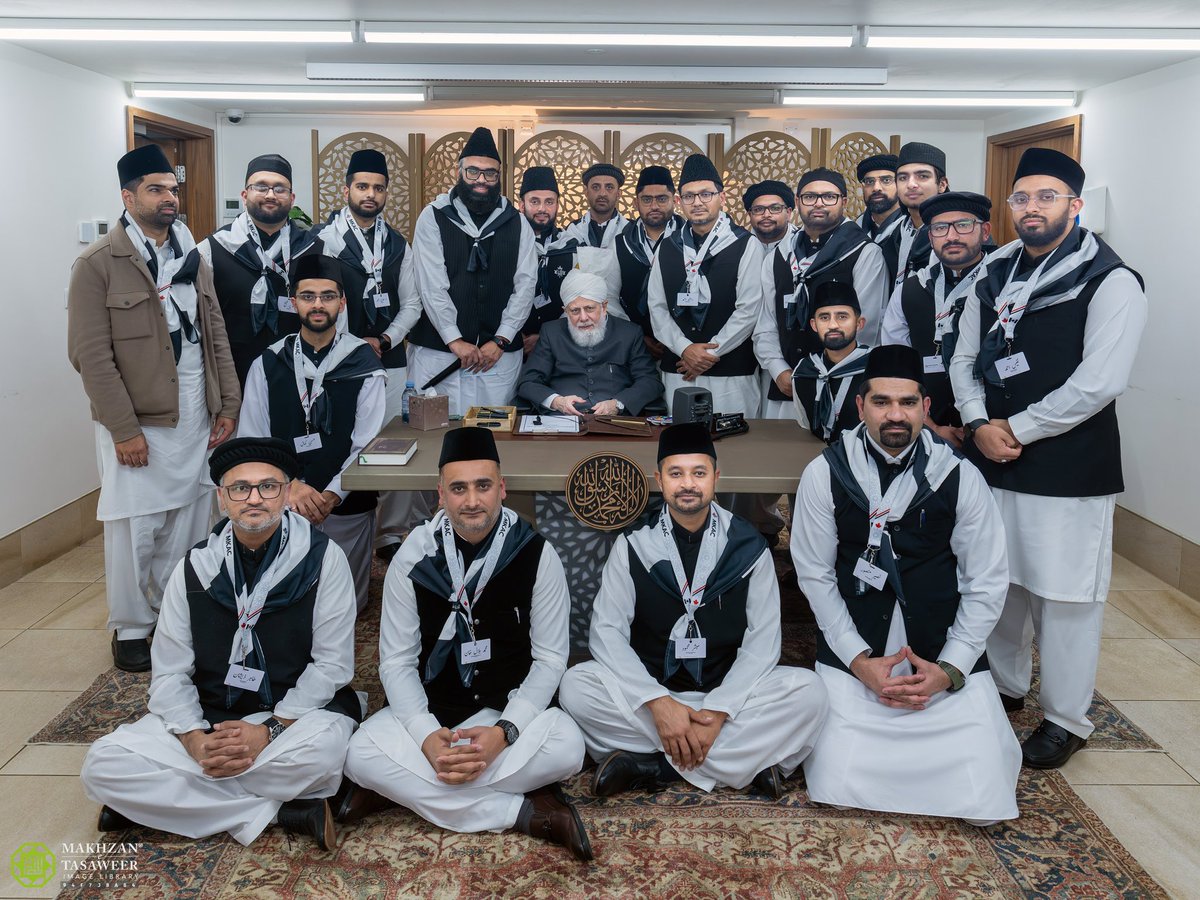
By the Sheer Grace of Allah Almighty, on Sunday October 11th, Syedna Hazrat Khalīfatul Masīh V (May Allah be his Helper!) graciously granted a Mulaqaat with Office Bearers from Prairie Region of Majlis Khuddamul Ahmadiyya Canada.
How do children learn whom not to like? A child does not come into this world knowing that one person is acceptable and another is not. They learn these things from us – through what we say, what we teach and sometimes through what we do not say at all.
For an Ahmadi Muslim who experienced bullying and exclusion because of their faith in Pakistan, even a simple greeting of peace could be met with silence because of who they were. Prejudice makes a person decide something about another before taking the time to know them.
Hatred can have much quieter beginnings: a joke that nobody challenges, a textbook that describes one community through stereotypes, a teacher who casually repeats something they themselves were taught, a parent who tells a child to stay away from “those people”, or a classroom where one child’s identity is treated as something shameful.
A textbook is not just a book. To a child, it is an authority. What a child absorbs about another human being can stay with them for years.
Yet children are not naturally hateful. They are remarkably curious. We can teach them that difference is frightening, or that difference is something to understand. We can teach them to inherit our suspicions, or teach them to question them.
Education should not merely tell children what to think. It should teach them how to think: how to question a stereotype, distinguish between faith and prejudice, disagree without humiliating another person, and hold firmly to their own beliefs without believing that someone else’s dignity has to be taken away.
Perhaps the greatest responsibility we have toward children is not to pass everything we inherited on to them. Some things deserve to be preserved, some questioned, and some – especially hatred – should end with us.