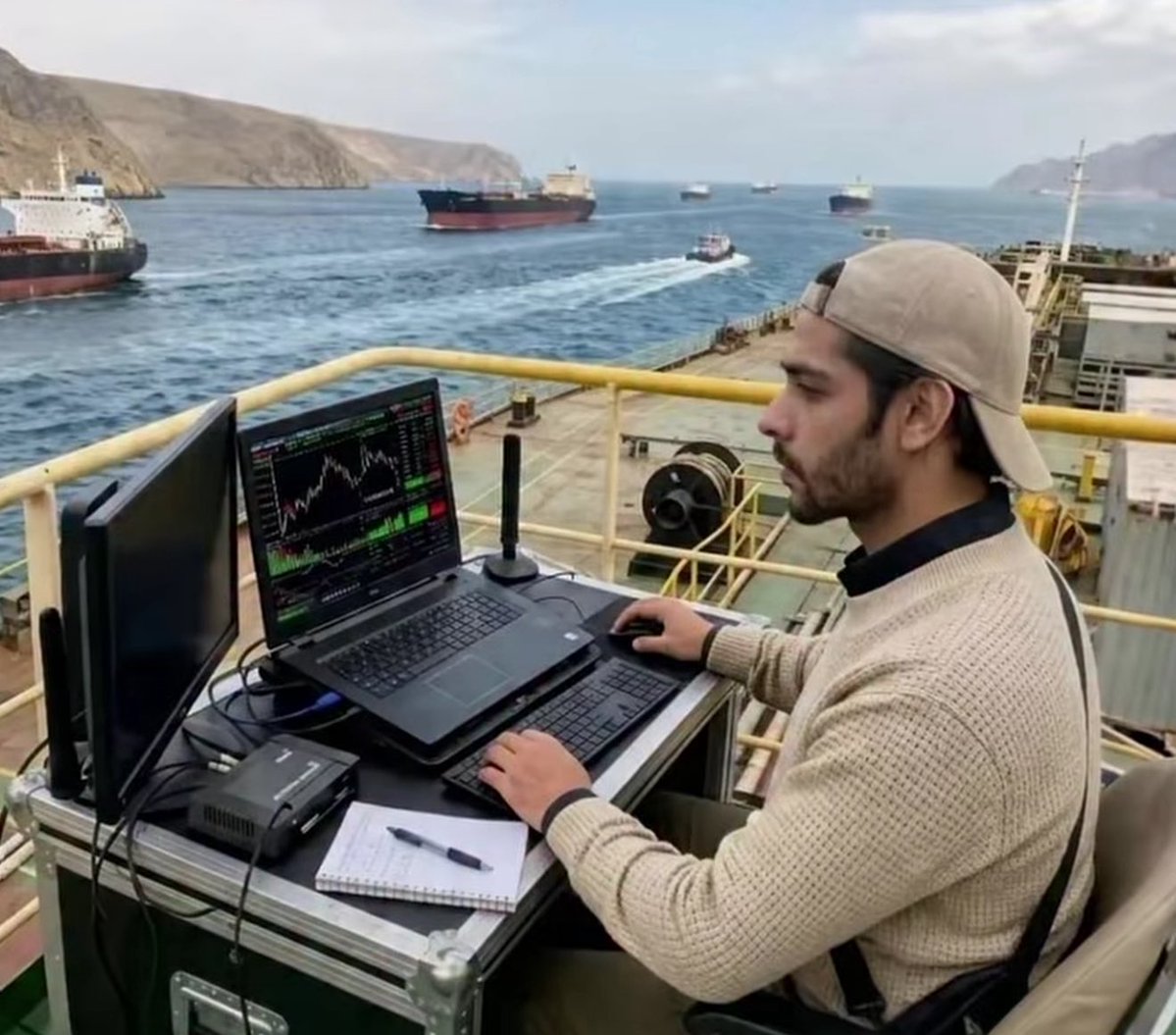
I met a trader at the airport.
Delayed flight.
Midnight.
Empty gate.
He sat alone.
His laptop open.
Charts glowing in the dark.
Didn’t look like success, though.
He was a small dude in his 50s.
Overweight.
Hoodie.
No energy.
Like.. sleep was optional.. and he skipped it.
But then he spoke.
“13 years trading.”
“Average 21% yearly return.”
“Max drawdown? 19%.”
“Win Rate? 44%.. Risk:Reward? 1:2.5.”
He trades one thing.
Breakouts.
Higher timeframes.
4H and Daily charts.
Rules were strict:
– 1% risk per trade.
– No overtrading.
– Kill losers fast.
– Let winners breathe.
“No indicators, right?” I asked.
He shook his head.
“Price tells the truth.”
Consistent.
Disciplined.
He’d beaten the market for over a decade.
Then he looked at me.
“Don’t be like me.”, he said.
I smirked.
Thought it was fake humility.
It wasn’t.
“No friends left.
Family stopped inviting me.
Last holiday? I don’t remember.
I have no one.
I am completely alone.”
The gate lights flickered.
“I optimized everything.. except life.”
Silence again.
A setup appeared on his screen.
He leaned in instantly.
Locked back into the charts.
Like nothing else existed.
My flight got called.
I stood up.
Looked back once.
He didn’t notice.
And walking down that tunnel, I realized..
Winning can be expensive.
Professional traders usually start with the downside.
In many conversations with experienced traders on Words of Rizdom, the same habit keeps coming up. Before they think about profit, they define the risk.
Early on, most traders do the opposite. The focus is on how much the trade could make, how far price might move.
But over time the approach changes.
The first question becomes simple: what happens if this trade is wrong?
Position size is decided.
The stop is defined.
Exposure to the account is clear.
Only then does the entry make sense.
Once the risk is accepted beforehand, the trade becomes easier to manage. If it works, it follows the plan. If it fails, the loss is already controlled.
That mindset is what helps professionals stay in the game longer.
Before your next trade, have you defined the exact loss you’re willing to accept?
BREAKING: Thailand is not at war with Iran. Thailand did not participate in Operation Epic Fury. Thailand did not vote for strikes. Thailand did not host bases. Thailand is a Southeast Asian kingdom of 72 million people whose principal relationship with the Strait of Hormuz is that its ships pass through it carrying cargo.
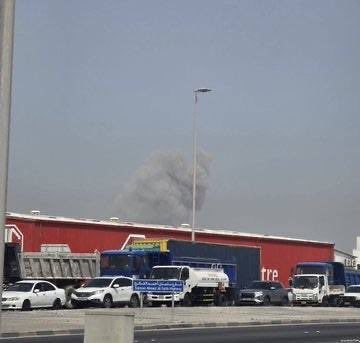
Today the IRGC struck one of those ships.
The “Mayuree Naree”, a Thai-flagged bulk carrier, 178 metres long, 30,193 deadweight tonnes, built 2008, IMO 9323649, was hit by an unknown projectile 11 nautical miles north of Oman while attempting to transit the Strait of Hormuz.
The projectile ignited a fire in the vessel. Twenty crew members were rescued by Omani naval forces. Three are missing.
Three Thai sailors are missing in a war their country has no part in, on a ship that was trying to do what 138 ships per day used to do without incident: cross a 33-kilometre waterway carrying cargo from one side of the world to the other.
The weapon that struck the Mayuree Naree has not been identified. The signature is consistent with IRGC coastal-launched projectiles, kamikaze drones, or fast-boat missile attacks that have characterised every strike in the Strait since 28 February. No claim of responsibility has been issued. The Mosaic Doctrine does not claim. Any of the 31 autonomous provincial commands with coastal access could have launched the attack without authorisation from Tehran, without consulting other commands, and without the knowledge of a Supreme Leader who has not spoken, not appeared, and exists at his own rally as a cardboard cutout.
The fire was extinguished after several hours. A skeleton crew reportedly remains aboard. The vessel is damaged but has not sunk. No environmental spill has been reported. But the damage to the vessel is not the damage that matters. The damage that matters is to every shipowner on Earth who just watched a neutral country’s bulk carrier get hit for the crime of attempting to transit.
The US Navy has three carrier strike groups in the region. The USS Abraham Lincoln in the Arabian Sea. The USS Gerald R. Ford in the Red Sea. The USS George H.W. Bush en route. Combined firepower exceeding the military capacity of most nations. Reuters reported the Navy has refused near-daily escort requests from the shipping industry since 28 February because the risk is too high. The Mayuree Naree transited without escort. It transited without war-risk insurance, which seven P&I clubs cancelled effective 5 March. It transited because someone calculated that the cargo was worth the risk. The calculation was wrong.
The ship’s insurer, if it had one, will not pay for a vessel that entered a war zone after coverage was voided. The owner faces a total loss on a 17-year-old bulk carrier that is now damaged, crewless, and anchored in waters where mines have been confirmed and 31 autonomous commands continue firing. Salvage would require a tug to enter the same corridor that just struck the vessel it would be rescuing. The insurance that would cover the tug does not exist either.
Iran did not strike Thailand. Iran struck a ship. The Mosaic Doctrine does not distinguish between flags. It distinguishes between presence and absence. Any vessel in the Strait is a target. Any vessel outside is safe. The doctrine’s enforcement is binary: you are in the corridor or you are not. Nationality, cargo, neutrality, and intent are irrelevant. The 31 commands that fired on the Mayuree Naree do not know it is Thai. They know it is there.
Three sailors are missing. The ship is burning. And the Strait that was supposed to be “very complete” just attacked a country that was never in the war.
Full analysis below.
https://t.co/eMrt5qYqCV