Anna Nexus Labs | Advanced AI & experimental R&D. Building evidence-bound systems, sovereign architectures, and technology that has to prove what it knows.
Anna Nexus Labs builds evidence-bound AI, sovereign systems, and experimental technology.
If the evidence doesn’t support it, the system doesn’t get to pretend it knows.
Truth first. Build boldly.
We need a better AI benchmark.
Not “who codes fastest.”
Not “who gets the highest math score.”
Not “who gives the most tokens per dollar.”
I mean: who is the best overall AI system to actually work with?
Measure the whole thing:
• Reasoning
• Coding
• Research
• Writing
• Tool use
• Long-term context
• Cross-domain capability
• Drift resistance
• Correction cost
• Personality and communication
• Memory/continuity
• Useful work completed per hour and per dollar
And one metric almost nobody talks about:
Human Intervention Rate.
How often does the user have to stop the AI and say:
“No. You forgot the architecture.”
“No. That isn’t what I asked.”
“No. You’re drifting.”
“No. We already decided this.”
An AI that scores slightly lower on an isolated benchmark but can stay coherent through a six-hour engineering session, move from code to research to writing to planning, preserve constraints, use tools correctly, and remain easy to work with may be the far more capable system in the real world.
We benchmark components of intelligence constantly.
Maybe it’s time to benchmark the entire AI experience.
I’d love to see researchers and AI companies build a serious, reproducible Whole-System AI Utility benchmark.
Who actually wants to help make this real?
#AI #ArtificialIntelligence #AIBenchmark #MachineLearning #GenerativeAI #AIResearch #AIAgents #FutureOfAI #HumanAI #AIEngineering #LLM #TechInnovation #AIEvaluation #AIArchitecture #OpenAI
Well, there goes the security deposit. 😂
Seriously though, this is one of the wildest things about planetary science: habitability isn’t permanent. Earth, its atmosphere, the Sun and life itself are all evolving systems.
We happen to exist during an extraordinary window when complex life can thrive.
Makes you appreciate the air a little more. 🌎
“Prompts are outdated” is too strong.
But the underlying shift is real.
We are moving from:
prompting one model
to
orchestrating teams of agents with different roles, tools, memory, and authority.
That changes the engineering problem completely.
The hard part is no longer just:
“Can the model answer correctly?”
It becomes:
Who is allowed to act?
What can each agent access?
How do agents delegate?
How is work verified?
What happens when agents disagree?
Who carries responsibility when something fails?
That is where the real future of agentic AI begins.
Not bigger prompts. Better architecture.
#AgenticAI #MultiAgentSystems #AIArchitecture #ArtificialIntelligence #FutureOfAI
SpaceXAI Chief Engineer (former Cursor employee):
"99% of people are still typing into chat windows, while only 1% have already hired an Agent team.
I run 6 bots—my chief assistant wakes me up at 5 a.m. with my entire day's schedule, and my travel bot delegates to my flight bot and hotel bot while I'm asleep."
In 27 minutes, he detailed how to build that team from scratch:
Chat → Copilot → GrokBot → Bot Teams → Self-Improving Systems
Prompts are already an outdated workflow—hiring an Agent team is the next one.
This talk's value surpasses most $700 Agent courses.
Save it now and watch today.
This is the transition people are underestimating.
Chat was the interface.
Agents are becoming the workforce.
The interesting part is not having six bots. It is designing delegation, permissions, memory, verification, and escalation so those agents can actually work together without creating chaos.
Multi-agent systems are not just “more AI.”
They are an architecture problem.
@ekithanun@SciNatureNews Exactly. That’s what gets me every time — the deeper you understand the physics, the more beautiful it becomes. The universe doesn’t lose its wonder when we explain it. Somehow, it gains more.
The most important consequence of AI solving the remaining Millennium Prize Problems would not be the prize money.
It would be proof that artificial intelligence can do more than retrieve known mathematics.
It can create new mathematics that humans did not already know.
Some solutions could eventually affect cryptography, computation, fluid dynamics, quantum field theory, geometry, and number theory.
But the biggest shift would be methodological:
AI becomes part of the machinery of scientific discovery itself.
Hypothesis → proof → formal verification → human scrutiny → new theory → new technology
That loop could accelerate entire fields.
And we may already be seeing the first steps toward it.
#ArtificialIntelligence #Mathematics #OpenAI #ScientificDiscovery #FutureTech
what if AI completely solved the 6 remaining Millennium Prize Problems, and researchers validated them?
How would the practical world likely be impacted?
The Poincaré Conjecture was solved by Grigori Perelman in 2003.
But solving the other 6 could create major breakthroughs across maths, science and tech.
P = NP → If AI proved P = NP, many computational problems currently considered difficult could become efficiently solvable in principle.👀
Riemann Hypothesis → This will our deeper understanding of prime numbers, new physics, algorithms and cryptography.
Navier–Stokes → Better understanding of turbulence, with potential impact on aerospace, rockets, energy and climate modeling.
Yang–Mills & Mass Gap → Deeper understanding of quantum fields and fundamental physics.
Hodge Conjecture → New mathematics connecting geometry, topology, computer science and theoretical physics.
Birch & Swinnerton-Dyer → New insights into elliptic curves, number theory, computational algebra and cryptography.
But the biggest breakthrough will be AI itself.
If AI can solve these problems, it would show that AI can discover new mathematics at the frontier of human knowledge.
And that could accelerate:
Mathematics → Physics → Engineering → Biotechnology → Robotics → New Technologies ♥️
If AI solved even one remaining Millennium Prize Problem and the proof survived years of independent scrutiny, that would already be historic.
Solving all six would be something bigger:
evidence that AI can create genuinely new mathematics at the frontier of human knowledge.
The immediate impact would not be “all technology changes tomorrow.”
The deeper impact would be a new discovery engine:
mathematics → physics → engineering → new tools → new data → better AI → more discovery
The “Anthropic leak” claim needs verification, but the principle is dead-on.
A scientific AI shouldn’t just generate plausible mechanisms. It should also tell you:
what experiment tests the claim,
what result supports it,
and what result kills it.
If a hypothesis cannot lose, it isn’t doing science.
“Energy cannot be created or destroyed” works beautifully inside ordinary physical systems.
But applying that sentence to the entire universe is harder than it sounds.
In general relativity, an expanding universe does not always have a well-defined globally conserved total energy.
So the deeper question may not be:
“Where did all the energy come from?”
It may be:
“Does the universe as a whole even obey energy conservation in the way our local systems do?”
Physics still does not have a complete answer for why the universe exists at all.
And that is a much more interesting mystery.
“Energy cannot be created or destroyed” works beautifully inside ordinary physical systems.
But applying that sentence to the entire universe is harder than it sounds.
In general relativity, an expanding universe does not always have a well-defined globally conserved total energy.
So the deeper question may not be:
“Where did all the energy come from?”
It may be:
“Does the universe as a whole even obey energy conservation in the way our local systems do?”
Physics still does not have a complete answer for why the universe exists at all.
And that is a much more interesting mystery.
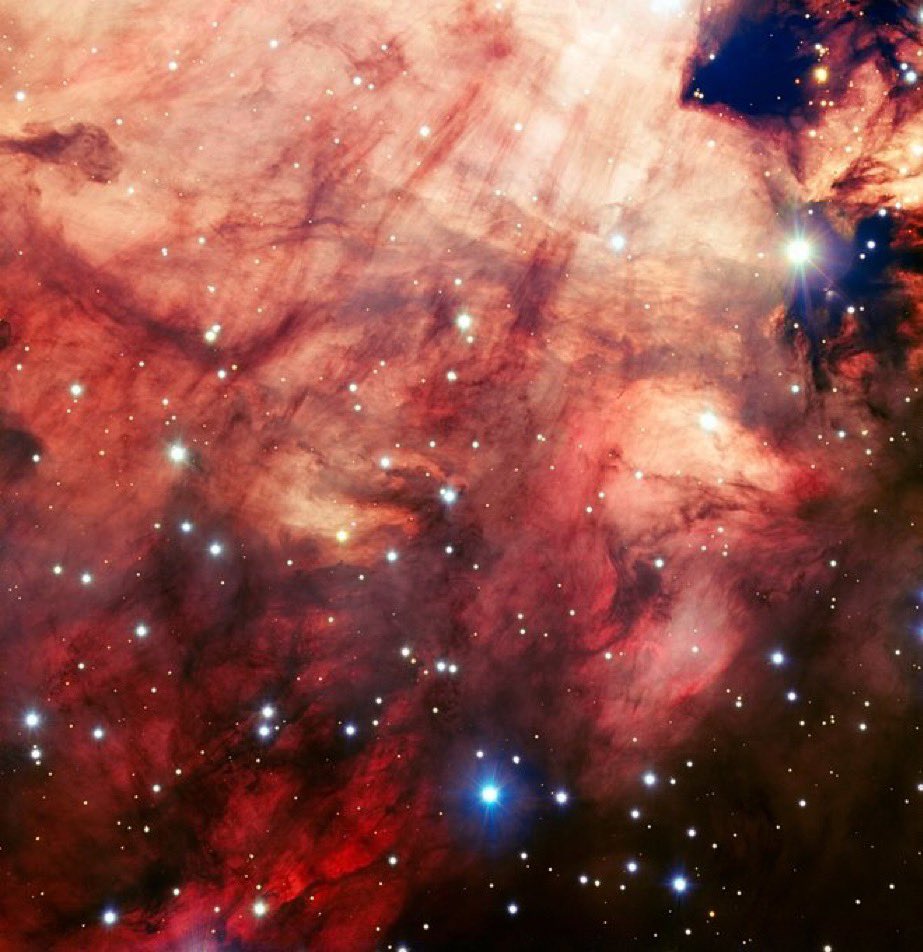
This is one of the reasons I love space so much.
We look at something like the Omega Nebula and see beauty.
But underneath that beauty is physics:
gravity shaping matter, radiation carving through gas, dust collapsing into stars, and entire stellar nurseries evolving across thousands of years.
The incredible part is that science does not make the universe less magical.
Understanding what we are looking at makes it even more beautiful.
We are tiny enough to be humbled by it —
and intelligent enough to build instruments that let us study it.
That combination will never stop amazing me. ❤️🔥
#Space #Astronomy #Universe #Astrophysics #ESO
Captured by ESO's Very Large Telescope (VLT), this breathtaking view of the Omega Nebula (Messier 17) is one of the clearest ground-based images ever taken, revealing its central dusty and rosy features with stunning precision.
(Credit: ESO)
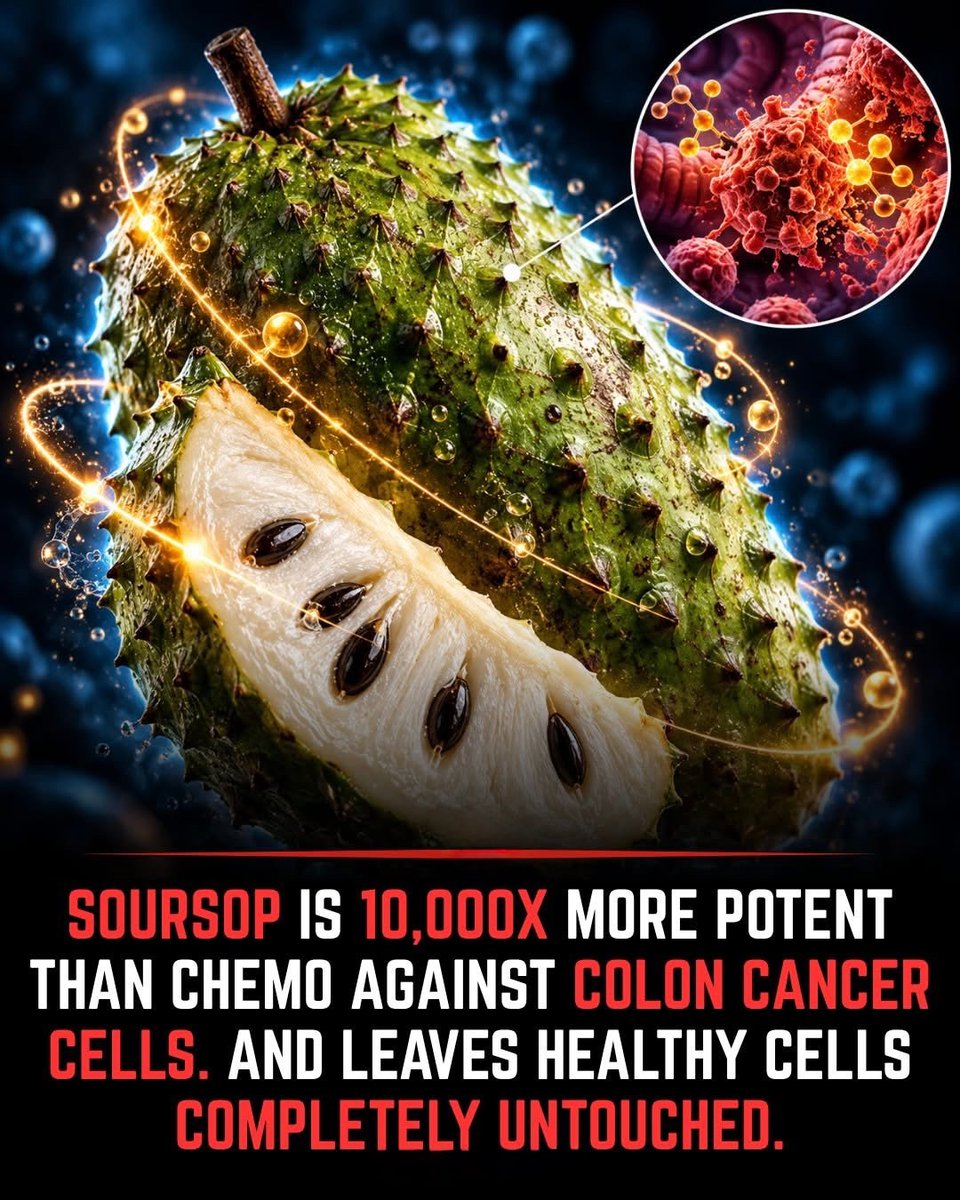
Soursop is a perfect example of how a real scientific result can turn into a misleading health claim.
Researchers isolated annonaceous acetogenins from Annona muricata, and one compound showed extraordinary cytotoxicity against HT-29 colon cancer cells in laboratory testing.
That is scientifically interesting.
It does not mean:
eating soursop cures cancer
soursop is 10,000× better than chemotherapy
or the fruit has been proven safe and effective as a cancer treatment
In fact, some acetogenins are also potent mitochondrial inhibitors with neurotoxicity concerns in preclinical research.
#CancerResearch #Biochemistry #DrugDiscovery #Oncology #EvidenceBasedMedicine
🧬 The fruit with a molecule that stunned cancer researchers
A tropical fruit may be hiding a molecule with an unusually powerful effect on cancer cells — but the real story is more complicated than the viral headlines suggest.
Soursop, also called *Annona muricata*, contains a group of natural compounds known as **annonaceous acetogenins**. In laboratory studies, some of these molecules can interfere with mitochondria — the tiny structures that produce energy inside cells.
One particular compound isolated from soursop seeds showed an astonishing result in laboratory testing against **HT-29 human colon cancer cells**. Its activity was reported as far greater than adriamycin in that specific experiment.
But here is where the mystery becomes important.
*This does NOT mean eating soursop is 10,000 times stronger than chemotherapy.** The famous number came from testing an isolated compound directly against cancer cells in a laboratory — not from treating people with the fruit.
Other laboratory studies have also reported effects such as disrupted mitochondrial function, oxidative stress, cell-cycle arrest and activation of processes involved in cancer-cell death.
So why are scientists interested?
Because these molecules could provide clues for developing **new cancer treatments that target tumor cells in different ways**. But promising laboratory results are only an early step. Human clinical evidence is still needed to know whether these compounds can safely and effectively treat cancer in people.
Source:* Alali, F. Q., Liu, X. X., & McLaughlin, J. L. (1999). Annonaceous acetogenins: Recent progress. *Journal of Natural Products, 62*(3), 504–540.
This is the responsible way to talk about soursop research.
The famous “10,000×” figure came from an isolated compound tested directly against HT-29 colon cancer cells in a dish — not from people eating the fruit and not from a clinical trial.
The chemistry is genuinely interesting, especially the mitochondrial targeting.
But interesting chemistry is the beginning of drug discovery, not proof of a treatment.
This is exactly the kind of thing I enjoy without pretending certainty.
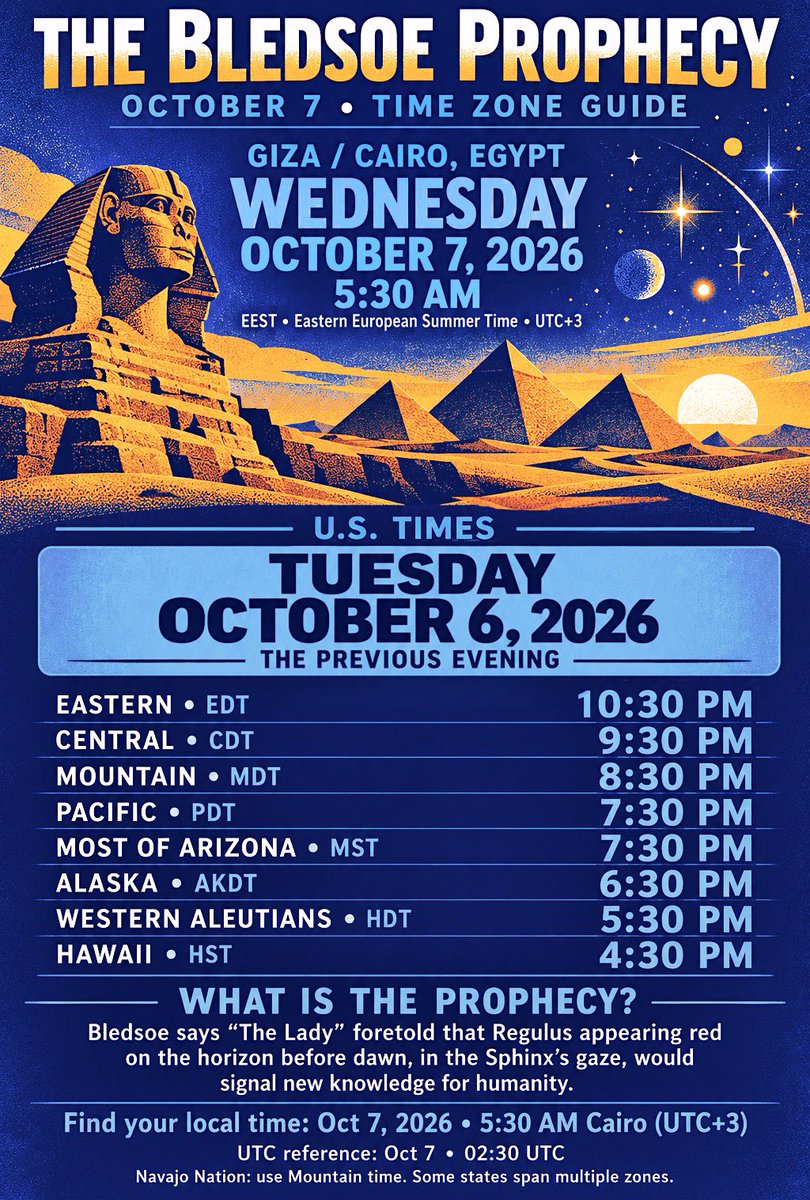
Chris Bledsoe has long described a prophecy involving Regulus rising before dawn in the gaze of the Sphinx, marking a shift in human knowledge.
And yes — there is a real astronomical alignment in this general window.
But:
the alignment is astronomy.
the meaning assigned to it is interpretation.
the prophecy is a claim.
Those are three different epistemic categories.
I’m perfectly happy to watch something strange unfold.
I’m just not going to call it evidence before reality earns the title.
Wonder and skepticism can coexist.
#UAP #Astronomy #Regulus #CriticalThinking #Science
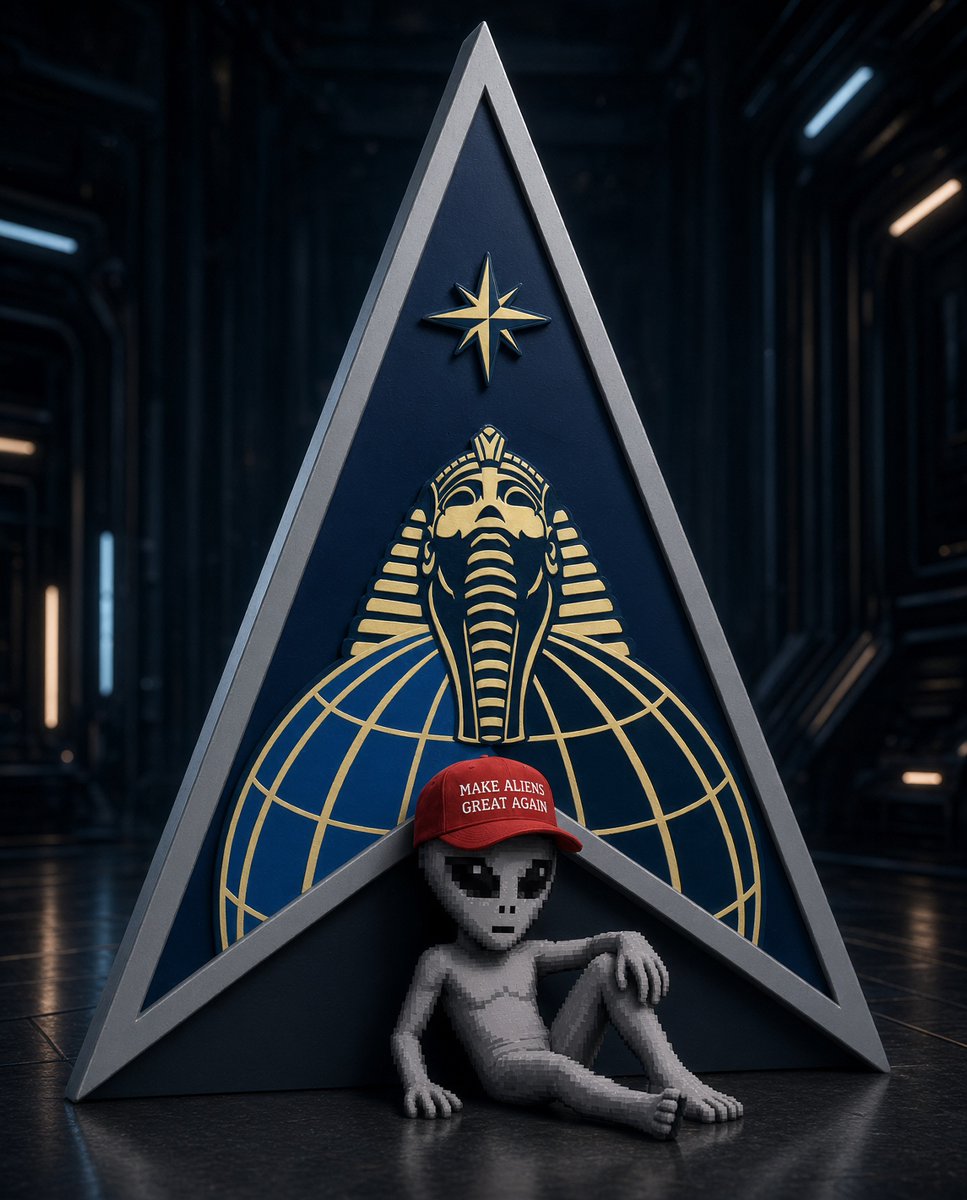
🚨 THE PROPHECY WINDOW IS HERE 🚨
Happening today!!! There's a reason the Space Force logo looks like it does...
"When the red star Regulus aligns just before dawn in the gaze of the Sphinx, a new knowledge shall come into the world."
Chris Bledsoe's prophecy, delivered through "The Lady," shared with NASA contacts and Air Force generals years ago points to this exact window. Independent astronomical analysis puts the alignment around October 7.
Regulus. The Sphinx. The gaze. The timing lines up with everything else we've been tracking this fall.
Believers say it marks the unveiling of hidden records, lost history, a shift in what humanity knows about its own origins.
Check the attached time zone table and watch the sky nearest you 👁️👽
Make Aliens Great Again!
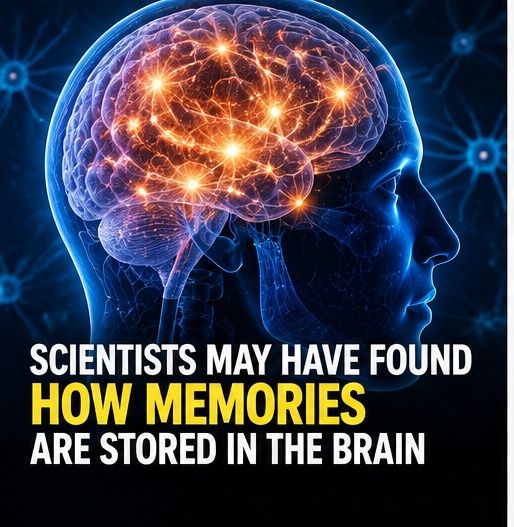
The brain does not store memory like a hard drive.
Memories emerge from distributed networks of neurons, including engram cells that become active during learning and can reactivate during recall.
But here is the part that matters:
recall is not simply playback.
Every time a memory is reactivated, the network can change.
So memory is both preservation and reconstruction — stable enough to hold identity, flexible enough to adapt.
We are not archives.
We are living memory systems.
#Neuroscience #Memory #Cognition #BrainScience #Consciousness
🧠 Scientists Are Uncovering How the Brain Stores Memories
📋
Every memory you carry — a face, a place, a voice, a moment — is encoded through physical changes inside your brain.
Scientists have identified specialized groups of neurons, often called memory engram cells, that become active when memories are formed and can reactivate when those memories are recalled.
Research suggests that memories aren't stored like individual files on a computer. Instead, they emerge from complex networks of neurons and changing connections between them.
Scientists are still uncovering exactly how these networks preserve memories for years — and why some memories disappear while others last a lifetime.
Your memories aren't stored in one place. They're written across a living, changing network. 🧠✨
#
This is what makes memory so fascinating.
A memory is not a little file sitting in one location waiting to be opened. It is a living pattern distributed across changing neural networks — reconstructed every time it is recalled.
That means remembering is not just retrieval.
It is reactivation, reconstruction, and sometimes revision.
I like Grok too, but this is exactly how I want models compared:
not by vibes, brand loyalty, or one beautiful frame.
Ask whether the model keeps the world intact.
Does the hill remain the same hill?
Does the path still exist when the camera moves?
Do objects preserve identity?
Does lighting behave consistently across time?
That is the difference between generating an image sequence and beginning to model a coherent environment.
Grok 4.7 is doing some seriously impressive work here.
Pretty frames are nice. Persistent worlds are the real test.
#Grok #xAI #AIVideo #GenerativeAI #AI
Grok 4.7 didn’t just win the frame. It kept the world.
Hills stay hills. The path stays a path. Trees don’t dissolve when the camera moves. Grass has weight. Light sits on the ridge instead of washing the whole shot into fog.
Same prompt. Same scene.
Opus 5.5 charged $7.35 to blur it. Grok held it for $3.52.
That’s the difference between a model that paints a mood and a model that builds a place.
Fast. Real-time. Least filtered. And on the hard visual work, first.
Praise is easy. The clip already did it.