Deep-sea mining threatens over half of molluscs reliant on hydrothermal vents, today’s update of The IUCN Red List of Threatened Species™ has revealed:
📢 BREAKING NEWS: From desert frog to deep-sea molluscs, remarkable species at risk – @IUCNRedList
Learn more in the latest IUCN Red List update https://t.co/LerLdtjXjD
🐝 New research co-authored by ANTENNA scientist Ignasi Bartomeus explores how insect life-history dynamics can help explain population declines and improve conservation efforts.
👉 Read more: https://t.co/3VBIDTx4Dr
Invertebrates provide essential ecosystem services, yet many species are in decline across Europe.🦋
Our new factsheet explores how #LIFEProjects help to conserve threatened invertebrates and their habitats.
📄https://t.co/xyfnsDocWK
Meet us at #ECE2026 event to learn more!
By simply hearing their parents’ song, zebra finch embryos start making last minute changes to their brains to prepare for hot weather on the other side of the eggshell.
https://t.co/bqG0quCdf3
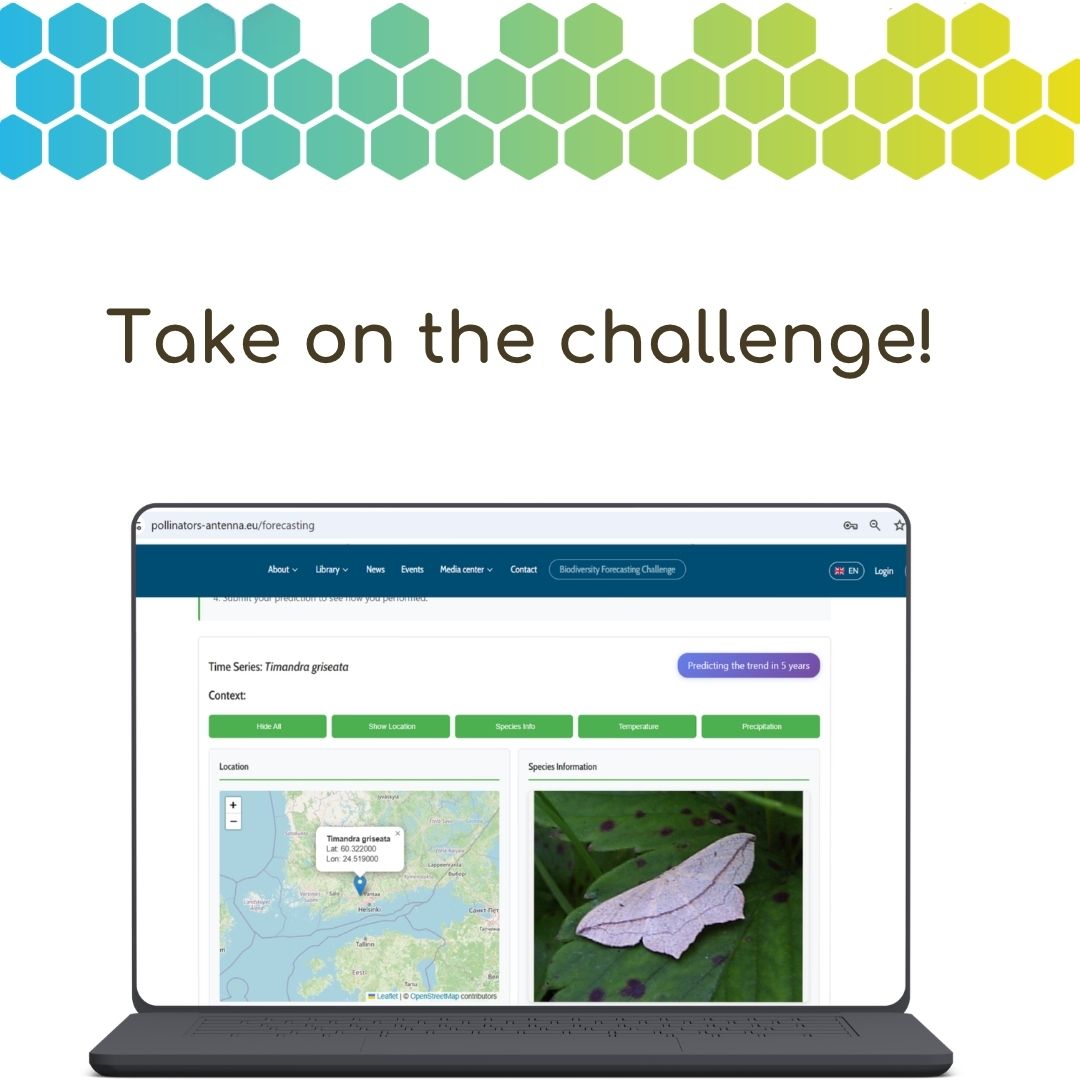
🐝 Have you already tried The Biodiversity Forecasting Challenge?
Combine the data on temperature, location, humidity, and species characteristics with your own intuition and see how the forecasting is actually happening!
🔗https://t.co/c0VMhkAUno
🤔 Can you beat AI in predicting insect populations around the world? Take our challenge!
The choice of strategy is yours: you can use the trends shown in our interactive challenge, or you can guess randomly.
🔗 Try it here: https://t.co/rf7zzieGvo
10 days to go until #BiodiversityDay 2026!🌿
A global moment to celebrate biodiversity and the actions helping protect life on Earth 🌍
Be part of the celebration for nature 💚
🔗https://t.co/dWGvr79rg6
#LocalAction#ForNature#UNBiodiversity#IDB2026
🔬 How does ANTENNA advance pollinator #biodiversity monitoring?
A recent seminar tackles the uncertainty in pollinator trends by providing insights from monitoring, modelling, and prediction.
Watch the recording here: https://t.co/CQAvV5ymam
#monitoring
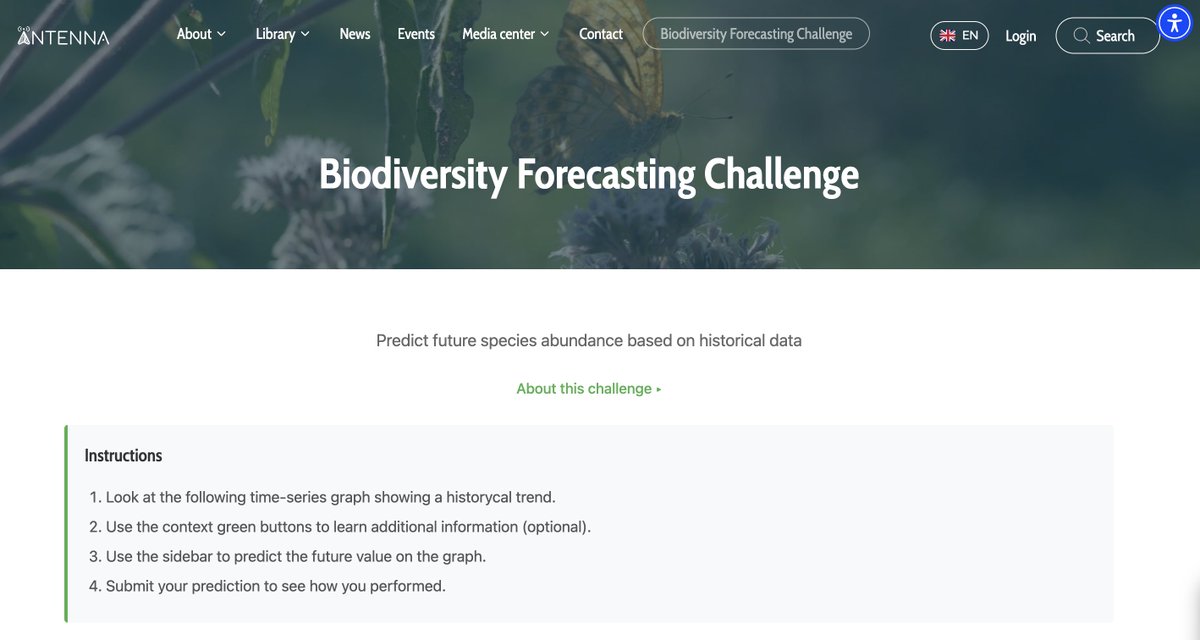
🐝 The Biodiversity Forecasting Challenge is an experiment to understand how well machine learning models compare to human intuition.
Discover the perks of predicting insect population trends yourself. No need for previous expertise to try it out!
👉 https://t.co/c0VMhkAUno
🦋 Do you think you can read nature's patterns better than an AI? We just released an interactive challenge that puts human intuition to the test.
🔗 No expertise required, and anyone is invited to participate! Try the Biodiversity Forecasting Challenge: https://t.co/rf7zzieGvo
🌸How do non-native pollinators change pollinating networks? By analysing 2,100+ records in Chile, researchers found that non-native bees (like 𝘉. 𝘵𝘦𝘳𝘳𝘦𝘴𝘵𝘳𝘪𝘴) are shifting pollination networks toward less specialised homogenised structures.
🔗https://t.co/taNuONlXmL
🇪🇺 ANTENNA is on the move! Our project materials have been crossing borders - landing in Freiburg, Turin, Brussels and Lund alongside the pollinator projects AGRI4POL, Safeguard, WildPosh and PollinERA.
Read about ANTENNA's scope of work: https://t.co/1fhDNXoh0Z
🔎 In this final post, part of the #ANTENNAexpertise campaign, we are sharing a paper that delves into how the future distributions of 48 European bumblebee species are strongly affected by climate change and land use change.
Discover the paper here: https://t.co/ie84oQVDgr
💡 A study assessed how climate change and landscape structure affect wild bees, showing that rising temperatures reduce bee species richness, but maintaining a high proportion of semi-natural habitats can mitigate these effects.
🔗 https://t.co/keNYgTlLD3
#ANTENNAexpertise
#Monitoring is needed to track changes in biodiversity and support nature conservation efforts. 🪲 Researchers propose a roadmap for improving Europe’s biodiversity monitoring system 🇪🇺
A new article in @NatRevBiodiv Nature Reviews Biodiversity outlines a blueprint for a coordinated European biodiversity observation system, which aims to transform how we track and understand biodiversity change across the continent.
By aligning diverse data streams — from field surveys and remote sensing to genomics and sensor networks — and identifying Essential Biodiversity Variables, this roadmap moves Europe closer to a truly integrated, transnational monitoring system for #biodiversity 🦉🦋🐿️🌿🍄
🔹 A harmonised system connecting monitoring efforts across countries and ecosystems
🔹 84 Essential Biodiversity Variables for consistent measurement
🔹 Establishment of a proposed European Biodiversity Observation Coordination Centre (EBOCC) to drive data integration and provide key information for decision-making.
Read our press release: https://t.co/w9iKc7iURD
@Nestor_Fdez@miguel@AlettaBonn@MartinaViti1@JoseValdezPhD@hmlfpereira@EuropaBon_H2020
🐝 Pollinators are essential for crops and wild plants, yet data on their declines are limited and biased. Coordinated research infrastructures are key to monitoring trends and supporting pollinator conservation in agroecosystems.
📝 https://t.co/80mW0W1hgQ
#ANTENNAexpertise
🐝🦇 🐦In light of the numerous threats to #pollinator health, we are launching Advances in Pollinator Research , a diamond #OA#journal that brings together diverse pollinator #science efforts.
👇Read more about it on our blog:
https://t.co/7NvBmoHQps
🏛️ Museum specimens reveal long-term shifts in pollinators, yet data remains scarce. Case studies from New Zealand and Spain show how historical collections can help track global declines.
🔗 https://t.co/sar4qxr4jz
#ANTENNAexpertise
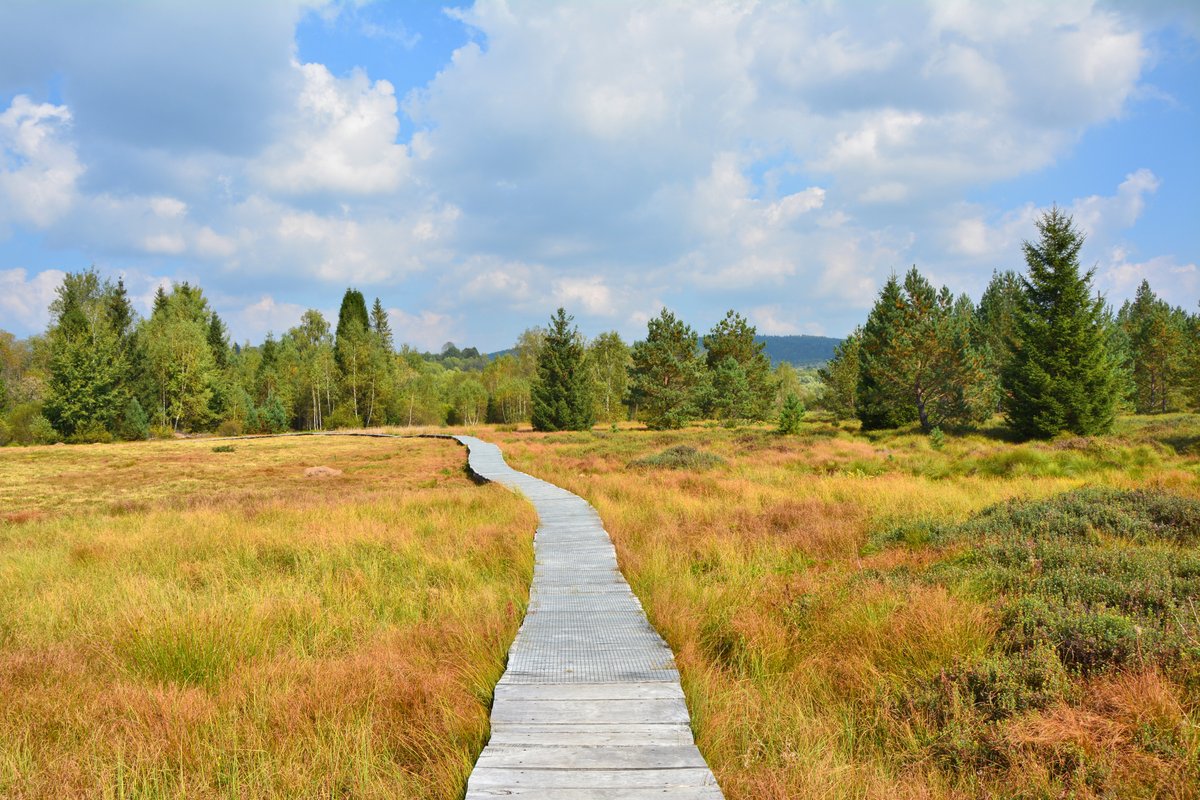
🐝The newly created National #park Entre-Sambre-et-Meuse National Park (ESEMNP) in southern Belgium is buzzing!
A 5-month survey of 32 sites collected 1,159 specimens from 102 species. See which habitat supported the highest #diversity here ⤵️
https://t.co/FDPUfSdbKe