𝐓𝐞𝐚𝐦 𝐓𝐗 𝐅𝐮𝐭𝐮𝐫𝐞 𝐆𝐚𝐦𝐞𝐬 𝐓𝐫𝐲𝐨𝐮𝐭𝐬: 𝐐𝐮𝐢𝐜𝐤 𝐇𝐢𝐭𝐬 📝
Scouting takeaways on some of the standouts from the Team TX Future Games Tryouts.
3️⃣5️⃣ names mentioned within.👇
🔗: https://t.co/uLREDysHac
The 2026 AP United States Government and Politics Exam scores:
5: 23%; 4: 28%; 3: 25%; 2: 16%; 1: 8%
The 2026 AP United States Government and Politics exam was taken by ~430,000 students, roughly 2.5% of the U.S. high school population.
AP US Government and Politics Multiple-Choice Questions (MCQs):
Students scored highest on questions related to Civil Rights and Liberties (Unit 3) and Political Participation (Unit 5); AP students scoring 3 or higher generally answered all or all but a few of these questions right.
The most challenging group of questions was related to Foundations of American Democracy (Unit 1); 28% of students answered all or all but one of these questions correctly.
AP United States Government and Politics Free-Response Questions (FRQ):
Each AP exam has multiple versions, for different time zones. I’ll focus the commentary below on the version taken by most students:
https://t.co/2bRqBaXu1O
Since AP scores are reported on a 5-point scale, the free-response questions deliberately include some very difficult points, designed to differentiate AP 5s from AP 4s, points of varying difficulty to differentiate AP 4s, 3s, and 2s, and more foundational points to separate AP 2s from AP 1s.
FRQ #1, the Concept Application Question that required electoral systems analysis in a historical context:
Q1, the Concept Application question, centered on the 1992 presidential election and Ross Perot’s independent candidacy, asking students to describe the impact of a third-party candidate, explain the structural barriers that limited that impact, and apply a voting behavior model to explain citizen decision-making, the sort of evidence-based reasoning required in college political science courses. The question parts differentiate between
students receiving AP 2s, who were not usually able to answer multiple parts of the question, and those receiving AP 3s or higher, who were.
FRQ #2, the Quantitative Analysis Question on State Income Tax Rates and Federalism
This four-part question used a 2023 data map to assess data literacy and political reasoning. The question collected info used to place students on both ends of the score scale, with several relatively easy points, and one especially challenging one that distinguished scores of 5 from scores of 4.
https://t.co/x2LQNMFeKA A & B require accurate reading of the data map, foundational points earned by almost all students, including those receiving 1s.
2.Part C was the most challenging part of this question. For students receiving AP 5s, the only group to consistently earn this point, this part required constructing an inferential argument about participatory democracy from the data rather than simply describing it.
3.Part D explaining federalism through state income tax variation distinguished between AP students receiving scores of 3 or better, who were typically able to explain this relationship accurately, while students receiving scores of 1 and 2 could not.
FRQ #3, the SCOTUS Comparison Question: McCulloch v. Maryland and Bonito Boats, Inc. v. Thunder Craft Boats, Inc
This question required students to apply constitutional knowledge to an unfamiliar Supreme Court case, the most rigorous task on the exam. Students needed to identify the Supremacy Clause as the constitutional principle common to both the studied case McCulloch v. Maryland (1819) and the provided case Bonito Boats, Inc. v. Thunder Craft Boats, Inc. (1989). They then had to explain how facts in both cases led to similar holdings and analyze how Bonito Boats illustrates the doctrine of stare decisis. The development committee’s crafting of this question is always one of the highlights of this exam for me, a great model for assessing college-level legal reasoning.
The rigor of all parts of this question is such that it serves to differentiate between AP 3s, 4s, and 5s, as exams scoring 1 and 2 are not typically earning any points on this FRQ. Students receiving an AP 3 must know constitutional principles well enough to be able to summon and state the Supremacy Clause as the common one across both cases. Students receiving an AP 4 must be able to move further into the question and explain the relationship between the facts of the cases and the resultant holdings, and students receiving an AP 5 must receiving perfect scores across all parts of this question.
FRQ #4, the Argument Essay on the Expansion of Voting Access
The Argument Essay asked students to draw upon three of the foundational documents for the course, including Article I of the U.S. Constitution, the First Amendment, and the “Letter from a Birmingham Jail”, to develop and defend a position on whether social movements or congressional actions have done more to expand voting opportunities in the United States. The essay required a defensible thesis, multiple pieces of specific evidence, logical reasoning connecting evidence to the claim, and a rebuttal of an opposing perspective, all within a timed, proctored environment.
Here’s what performance looked like:
Exams receiving an AP 2 were able to provide some evidence within their essay, which distinguished the work from a score of 1, but otherwise earned very few points.
On the other end of the spectrum, students achieving an AP 5 generally earned perfect scores on their essays, hitting the marks across all rows of the rubric. Exams receiving an AP 3 or an AP 4 earned a mix of points across various rubric categories, but not perfect scores.
Congrats to the AP United States Government and Politics students who completed the course and took this exam. In a single sitting, students interpreted a geographic data map, engaged in legal analysis of a Supreme Court case they had never seen before, applied voting behavior models to a historical election, and constructed a sustained argumentative essay drawing on foundational documents — all within the 100 minutes devoted to the free-response section. And they did all this after having spent 80 minutes answering 55 multiple-choice questions across the range of course topics.
Looking ahead to next year, four more required foundational documents have been added to the course: The Emancipation Proclamation; Federalist No. 39; The Gettysburg Address; and core principles from Adam Smith’s The Wealth of Nations. See more info here: https://t.co/2GCz2JzSkc
All subjects’ AP score distributions for 2026 will be posted here when available: https://t.co/OrkaQhPZYO
The 2026 AP Human Geography Exam scores:
5: 19%; 4: 26%; 3: 21%; 2: 24%; 1: 10%
The 2026 AP Human Geography exam was taken by ~300,000 students, about 2% of the U.S. high school population.
AP Human Geography Multiple-Choice Questions (MCQ):
Students did exceptionally well on questions requiring Data Analysis skills. Students achieving AP 5s typically answered 100% correctly; students achieving AP 4s got more than 90% right; and students earning AP 3s earned more than 80% of these points. It’s exciting to see the success students are achieving when interpreting quantitative and visual geographic data.
Students also performed very well on questions related to Unit 7: Industrial and Economic Development Patterns and Processes, demonstrating command of geography concepts that underpin real-world decisions about where industries locate and how development spreads.
The most challenging MCQs focused on Unit 4: Political Patterns and Processes, 22% of students answered all or all but one of these questions correctly.
AP Human Geography Free-Response Questions (FRQ):
https://t.co/Oz7r4IGeim
Taken together, Q1, Q2, and Q3 span population geography, agricultural practices, and cultural landscape analysis, inviting students to demonstrate command of a variety of geography concepts and skills during 75 minutes of analyzing, describing, and explaining.
Since AP scores are reported on a 5-point scale, the free-response questions deliberately include some very difficult points, designed to differentiate AP 5s from AP 4s, points of varying difficulty levels to differentiate AP 4s, 3s, and 2s, and more foundational points to separate AP 2s from AP 1s.
FRQ #1: Demographic Changes
This question required students to analyze demographic and political processes, including migration, population policy, technological change, and centrifugal forces.
Parts A, C, and D were entry-level points. These points were earned by 80%, 80%, and 92% of this year’s students, respectively.
Parts B and G were moderately difficult. These points were earned by 66% and 45% of students, respectively.
Parts E and F were the most challenging parts of this FRQ. These points were earned by 28% and 34% of students, respectively.
FRQ #2: Agricultural Trade
Point D of this question, earned by 21% of students, was the single hardest point across all three FRQs, requiring students to express their understanding of commodity dependence.
FRQ #3: Cultural Landscape
Part C and Part G were earned by 71% and 66% of students, respectively. These points demonstrated that higher performing students were consistently able to explain the patterns within the source maps.
All subjects’ AP score distributions for 2026 will be posted here when available: https://t.co/OrkaQhPZYO.
𝐒𝐨𝐮𝐭𝐡 𝐓𝐞𝐱𝐚𝐬 𝐏𝐫𝐞𝐬𝐞𝐚𝐬𝐨𝐧 𝐀𝐥𝐥-𝐒𝐭𝐚𝐭𝐞: 𝐃𝐚𝐭𝐚 𝐃𝐢𝐯𝐞𝐬 📊
With the help of our tech partners, we dove into the advanced data we captured at the South Texas Preseason All-State.👇
𝙋𝙤𝙨𝙞𝙩𝙞𝙤𝙣 𝙋𝙡𝙖𝙮𝙚𝙧𝙨: https://t.co/wOAzpgelnK
𝙋𝙞𝙩𝙘𝙝𝙚𝙧𝙨: https://t.co/bH39whIOwi
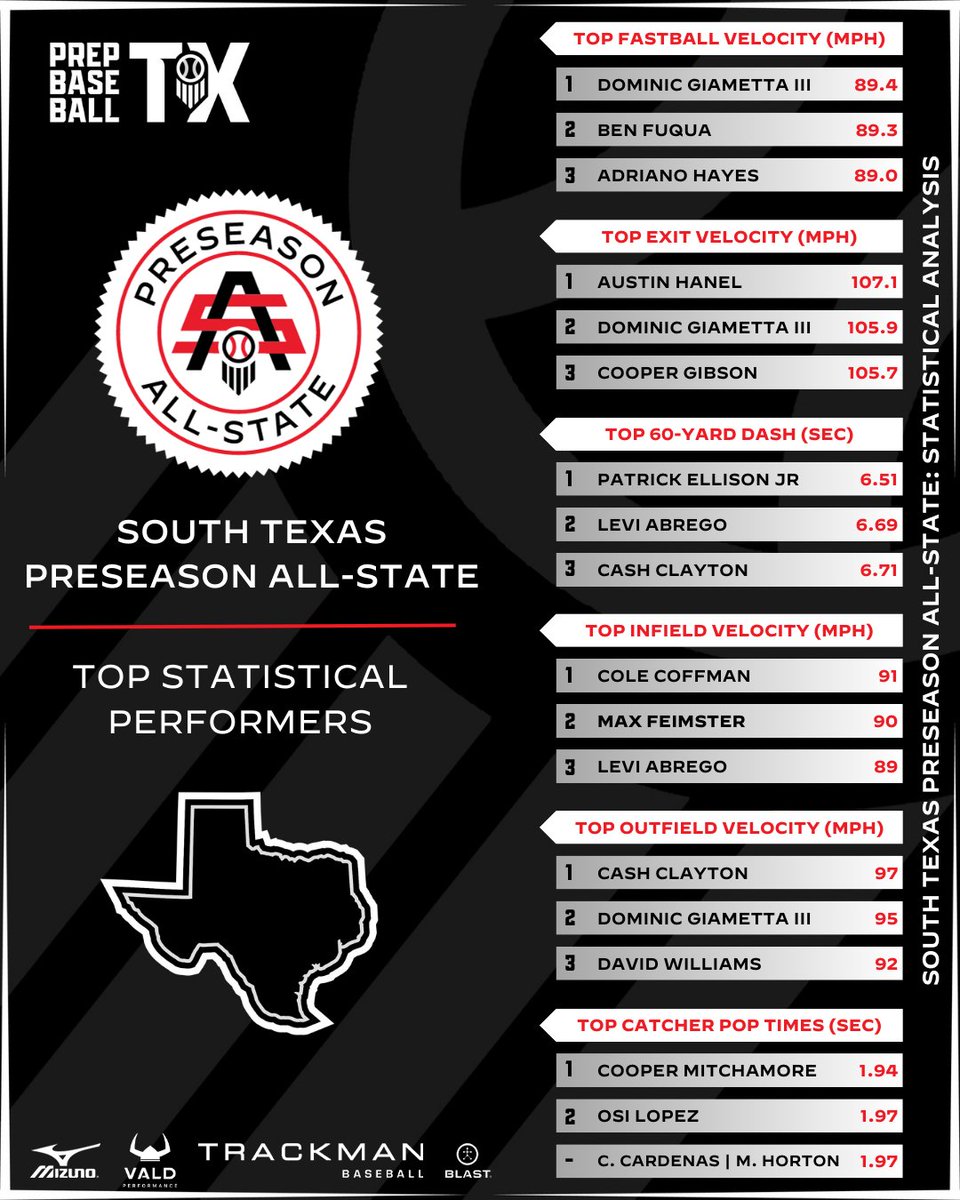
𝐒𝐨𝐮𝐭𝐡 𝐓𝐞𝐱𝐚𝐬 𝐏𝐫𝐞𝐬𝐞𝐚𝐬𝐨𝐧 𝐀𝐥𝐥-𝐒𝐭𝐚𝐭𝐞: 𝐒𝐭𝐚𝐭𝐢𝐬𝐭𝐢𝐜𝐚𝐥 𝐀𝐧𝐚𝐥𝐲𝐬𝐢𝐬 📈
With the help of our partners, we were able to fully breakdown the data from the South Texas Preseason All-State. A full statistical analysis, found within 👇
🔗: https://t.co/VjBtfMq8Rb
#𝐓𝐗𝐒𝐭𝐚𝐭𝐞𝐆𝐚𝐦𝐞𝐬𝐔𝐂: 𝐃𝐚𝐭𝐚 𝐃𝐢𝐯𝐞𝐬 ��
With the help of our tech partners, we dove into the advanced data we captured at the Texas State Games: Underclass.👇
𝙋𝙤𝙨𝙞𝙩𝙞𝙤𝙣 𝙋𝙡𝙖𝙮𝙚𝙧𝙨: https://t.co/COeAXb03DV
𝙋𝙞𝙩𝙘𝙝𝙚𝙧𝙨: https://t.co/uiFFUmZknA
#𝐓𝐗𝐒𝐭𝐚𝐭𝐞𝐆𝐚𝐦𝐞𝐬𝐔𝐂: 𝐐𝐮𝐢𝐜𝐤 𝐇𝐢𝐭𝐬 ��
Scouting takeaways on some of the standouts from the Texas State Games: Underclass.
4️⃣0️⃣+ names mentioned within.👇
🔗: https://t.co/4uySavcI8O
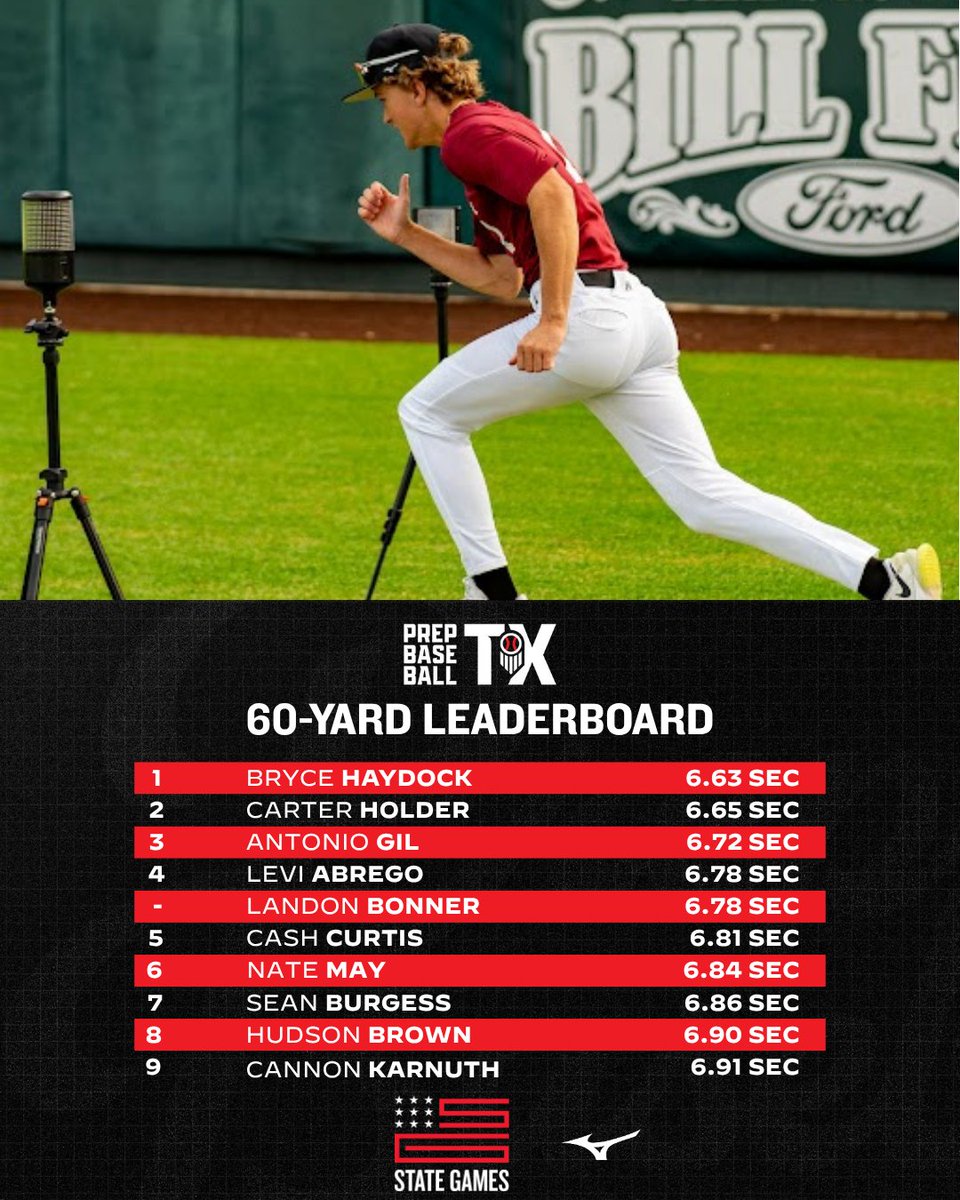
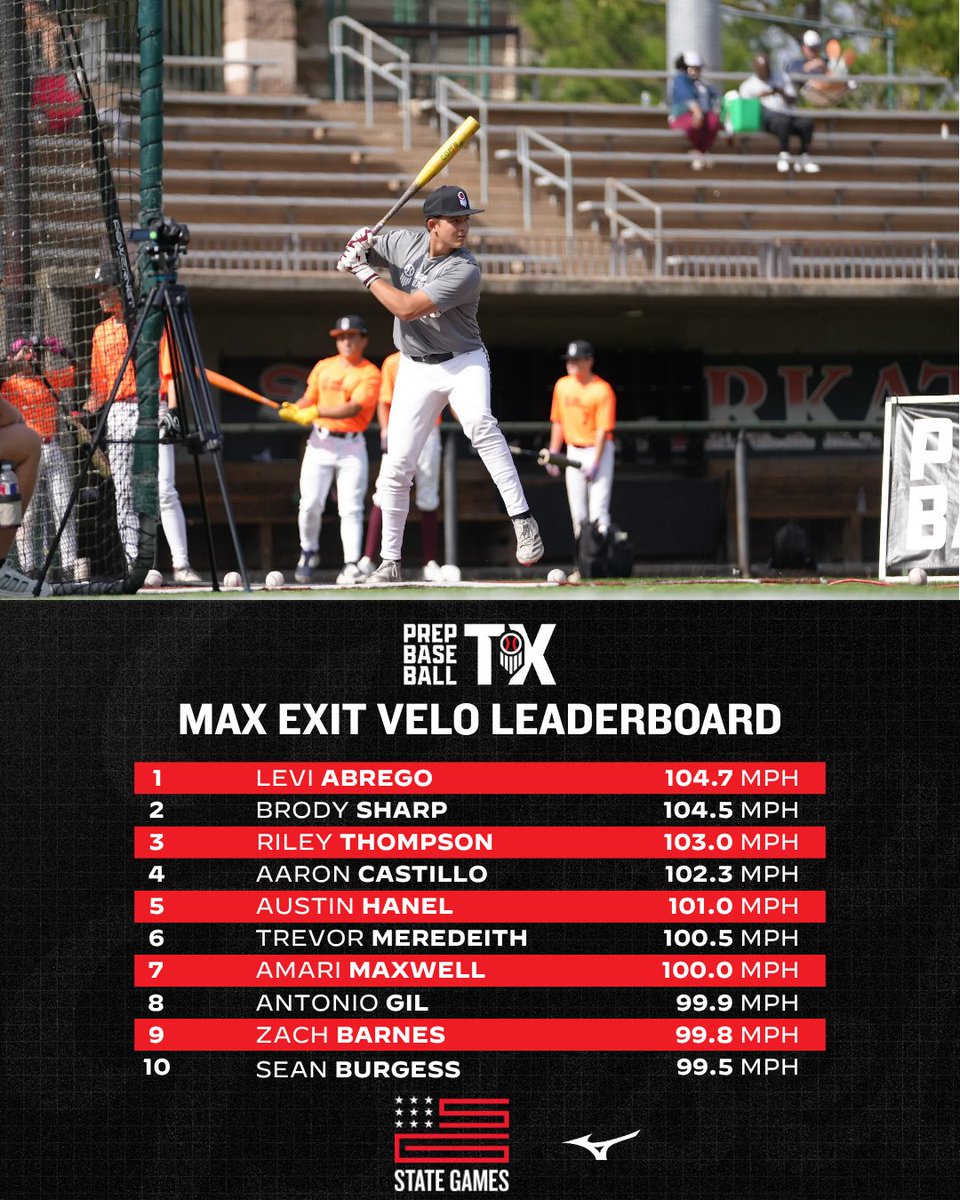
#𝐓𝐗𝐒𝐭𝐚𝐭𝐞𝐆𝐚𝐦𝐞𝐬𝐔𝐂: 𝐒𝐭𝐚𝐭 𝐋𝐞𝐚𝐝𝐞𝐫��𝐨𝐚𝐫𝐝𝐬 📈
Leaderboards for both the 60 yard dash and max exit velocity from the Texas State Games: Underclass.
5️⃣0️⃣ names included, within.👇
🔗: https://t.co/CZWRhIk0NG