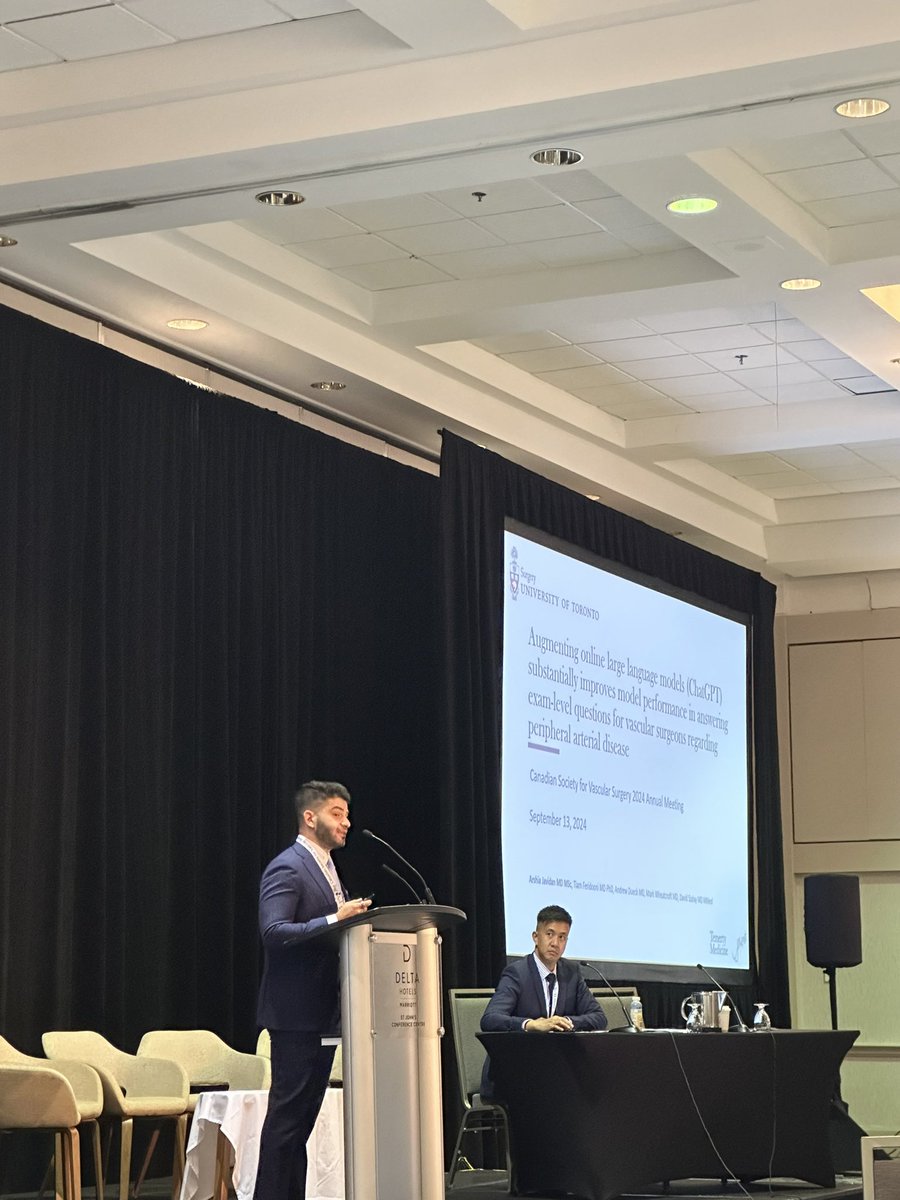
Excited to announce the project that @TiamFeridooni and I have been working on for the past year: an augmented LLM that combines the capabilities of open access models with publicly available vascular surgery resources for improved performance.
Our first paper with more to come!
Our most recent study published in @JVascSurgVI demonstrating the profiency of https://t.co/V2APK9vz6i in responding to VESAP-5 multiple choice qustionare.
🔍 Study Highlights:
https://t.co/8n9UJjwlZv performed with a 93.8% accuracy in answering complex, domain-specific questions, surpassing general AI models such as GPT-4o (77.7%).
This model minimizes the risk of misinformation, often seen in general-purpose AIs, by focusing on logical accuracy, making it a reliable tool for vascular surgery training, medical education, and patient care.
You can read the full study here:
https://t.co/kK5lYTaDR4
For academic vascular surgeons, https://t.co/8n9UJjwlZv presents a significant advancement in how specialized knowledge is curated and applied. Its potential to support clinical assessments, enhance educational resources, and integrate rapidly evolving research makes it a valuable tool in both academic and clinical settings.
#VascularSurgery #SurgicalEducation #RAG #AI #LLM
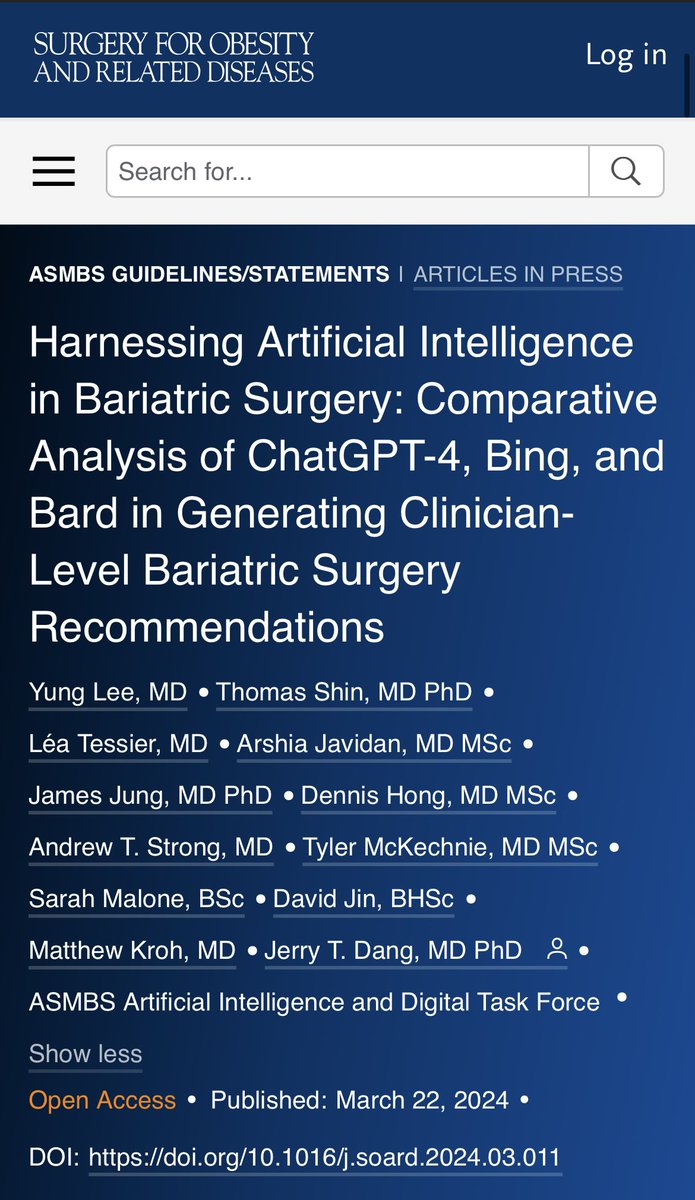
Our first work from the @ASMBS AI and Digital Surgery Task Force! @OpenAI#ChatGPT looking promising for clinician level bariatric surgery recommendations @SOARD_JOURNAL https://t.co/kEEnUctzYV
Fresh from the @EJVES_ESVS#EJVESforum "YouTube as a Source of Patient and Trainee Education in Vascular Surgery: A Systematic Review" - an interesting paper by @APJavidan - watch out for the live @disqus chat set up by @FLareyre#vascsurg https://t.co/BLsEoFRDcQ
AI/LLMs making rapid progress in surgery: our recent paper in @JVascSurgVI demonstrates how the most recent version of @OpenAI's chatGPT is able to accurately answer 95% of clinical vascular surgery questions!
https://t.co/HnivpaFYXk
@TiamFeridooni@LaurenGordonMD@JVascSurg
Researchers @UHN's @TGHRI_UHN harness the power of #AI to pinpoint safe and risky zones for stent deployment in abdominal aneurysm surgery.
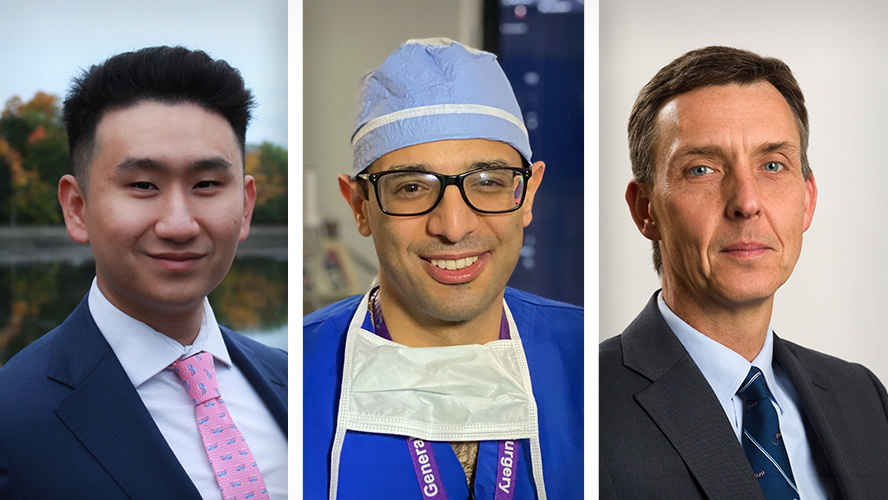
Read more about Drs. @TL_Forbes, @aminmadaniMD and @AllenLiMed’s critical research here: https://t.co/5B6tmXV6fD; https://t.co/PbVEb2crq8
@JVascSurg@AllenLiMed@TiamFeridooni@UofTVascular@UofTSurgery@BEST_CLI Bottom line: Many vascular surgery RCTs are statistically fragile, with a median FI of 3. Clinicians should be aware of how to calculate, interpret, and integrate the FI into their appraisal of RCTs, especially in cases of significant data loss (loss to follow-up).
Exploring the Fragility Index (FI) in Vascular Surgery Trials: A Thread. The FI assesses the robustness of statistically significant findings in randomized controlled trials (RCTs), focusing on the minimum number of event conversions required to change the outcome's significance.
@JVascSurg@AllenLiMed@TiamFeridooni@UofTVascular@UofTSurgery@BEST_CLI Also another limitation of the FI: it primarily applies to dichotomous and cross-sectional endpoints. It is less applicable for continuous outcomes, which are significant in evaluating aspects like quality of life in clinical trials.
SRMAs in the vascular surgery literature are inconsistently reported.
Our meta-epidemiological study outlines how study authors can improve SRMA reporting, published in the most recent edition of @JVascSurg
With @AllenLiMed and @KaanBalta_
https://t.co/t5XjiD9w1R