the APT project - Aphasia Partnership Training - is a research project sponsored by Sheffield Teaching Hospitals NHS Foundation Trust, and funded by the NIHR.
The APT Project is back up and running!🎉Thanks to everyone who attended the launch event yesterday. We will share the video on our website as soon as it is ready - https://t.co/IYBcxkh8OC
Survey request for UK #SLTs. What are your thoughts on communication partner training?
🔗 Take part today: https://t.co/vMZ4nfEhzh
We've had 15 completed responses so far. Let’s get numbers up!👊
@MadelineCruice
Calling UK #SLTs. Your expertise is crucial!
✨ Help shape the future of communication partner training by completing our survey.
🔗 Take part today: https://t.co/vMZ4nfEhzh
@RPalmerSLT@MadelineCruice
I am tickled pink 🥰
In 1998 I chose a tool to measure social networks in ppl w aphasia for my PhD & published about it in 2003 & 2006, and share/teach it with students and SLTs.
Sitting here in #BCconf23 and carers & therapists use this tool!
See here
https://t.co/xJ1RUxz0h5
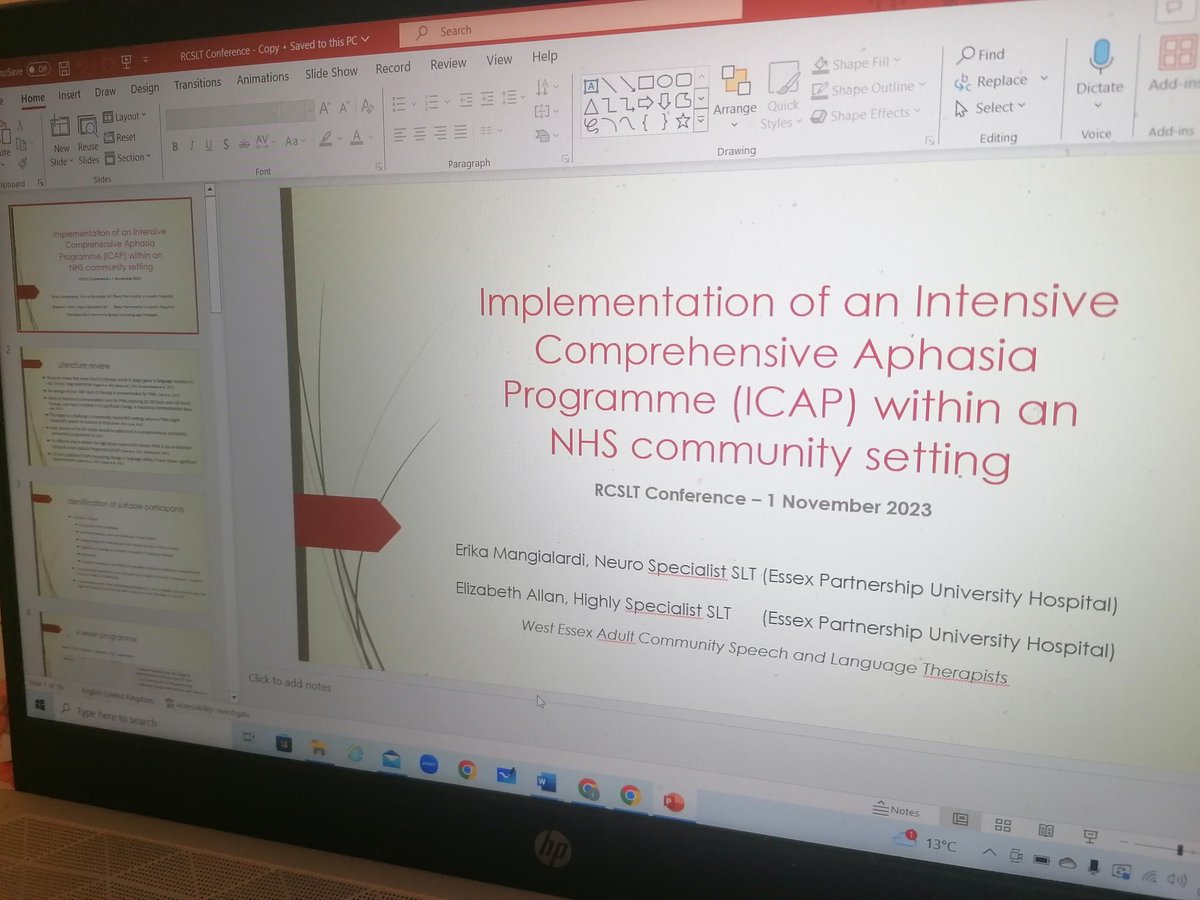
Honoured to have shared our experience delivering a pilot #ICAP at #RCSLTConf2023 with @LibbyAllanSLT - the volume of questions we've received demonstrates SLTs' interest to advancing #aphasia rehab. IMO A positive step forward!
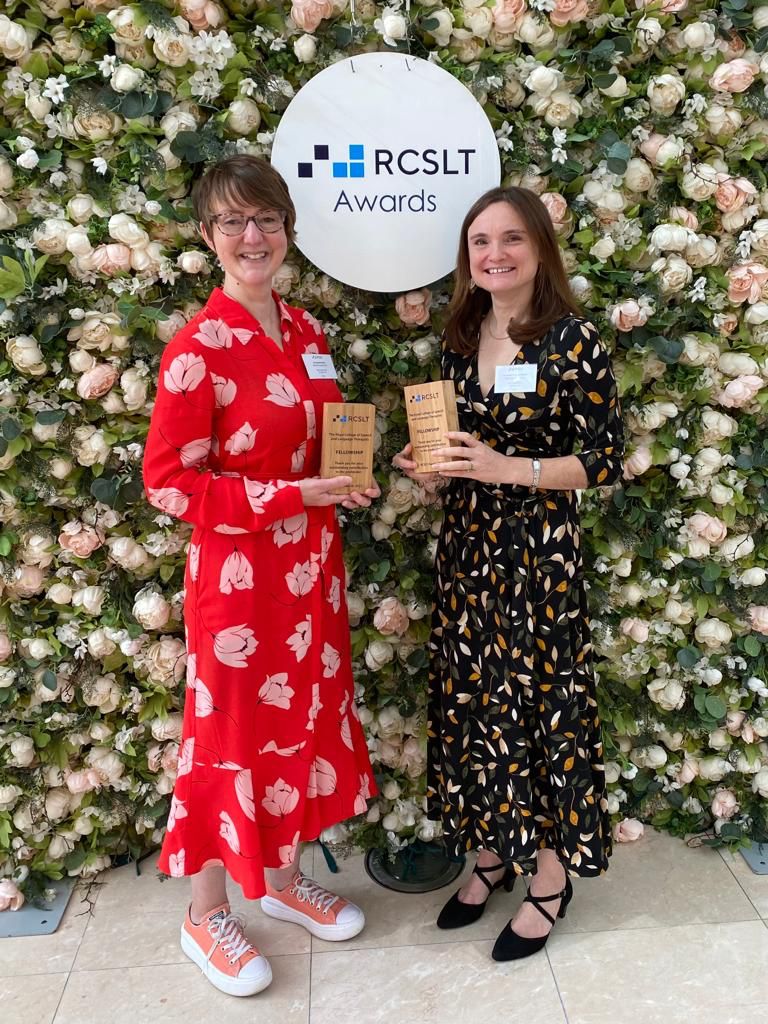
Today not one but two members of the team were awarded a fellowship of the @RCSLT for their research and its impact within #SLT - Rebecca @RPalmerSLT and Suzanne @BCAphasia Congratulations! 🎉🎉🎉 #RCSLTAwards
Aphasia Partnership Training (APT) is dyadic- targeting the PWA & CP and working with stakeholders to develop the programme
A concensus was reached that APT should include instruction/feedback, setting goals, solving communication problems, demonstration & much more!#BASConf23
First of our oral presentations is @MadelineCruice sharing her work with @BCAphasia and team on how they developed a communication partner training programme, considering research & evidence, lived experience and clinical perspectives #BASConf23#aphasia
Results - full consensus achieved on 16 BCTs, linked to 11 MoAs
Couldn't write quick enough to share all of these! Such incredible detail and specificity @APTproject2
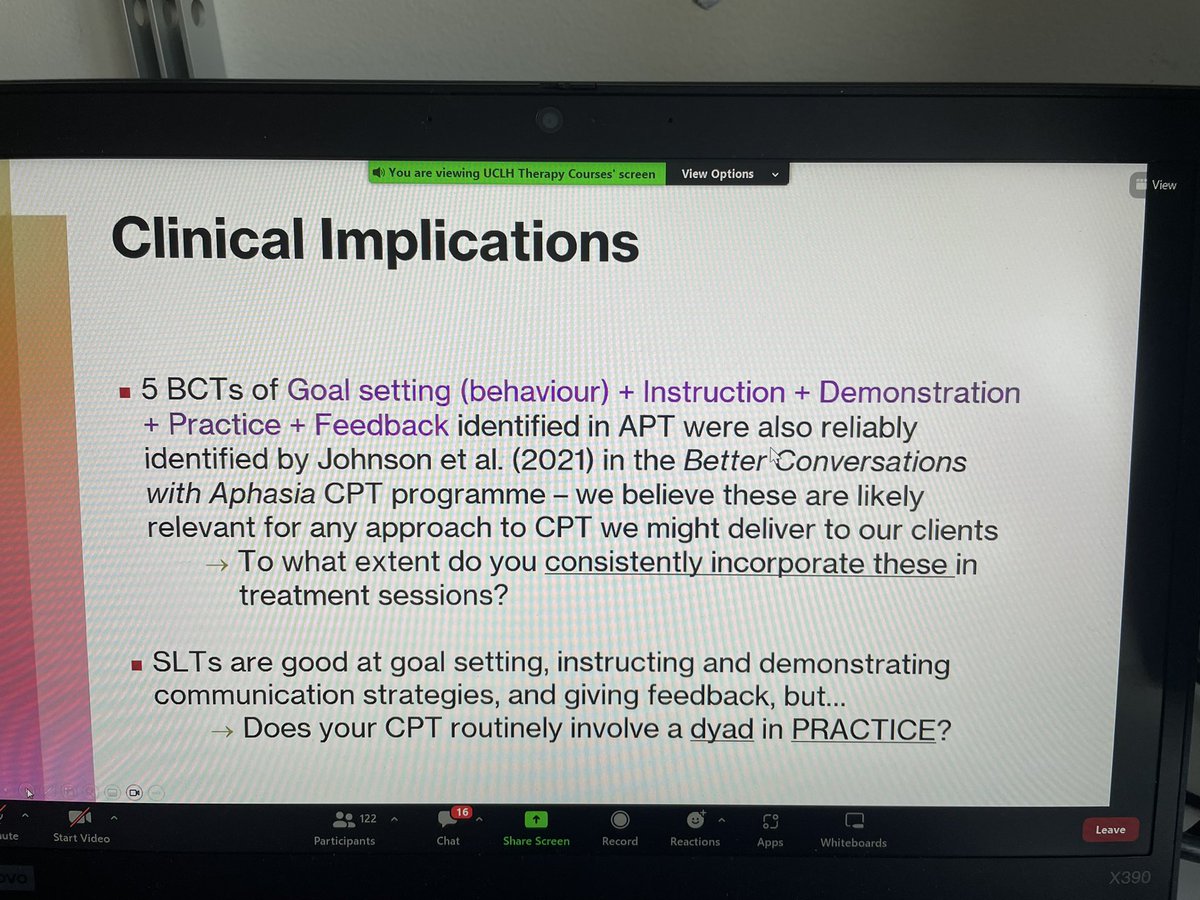
There is overlap with existing literature with 5 BCTs so these are key:
Great to hear some outcomes from @APTproject2 identifying some key behavioural change techniques to embed in CPT and aligned with @msfionajohnson
✔️goal setting
✔️instruction
✔️demonstration
✔️practise
✔️feedback
@BASConf2023 #BASconf2023
More talks from the #NIHR funded @APTproject2, now @RPalmerSLT shares what outcomes ppl with aphasia, family members & SLTs expect
What do we need to measure? The systematic reviews use 56 different outcomes measures. Perhaps we are not that clear on what change we are expecting
@APTproject2 56 systemic reviews of CPT found 56 different outcome measures! Stakeholders asked ❔what do we expect from what we’re doing
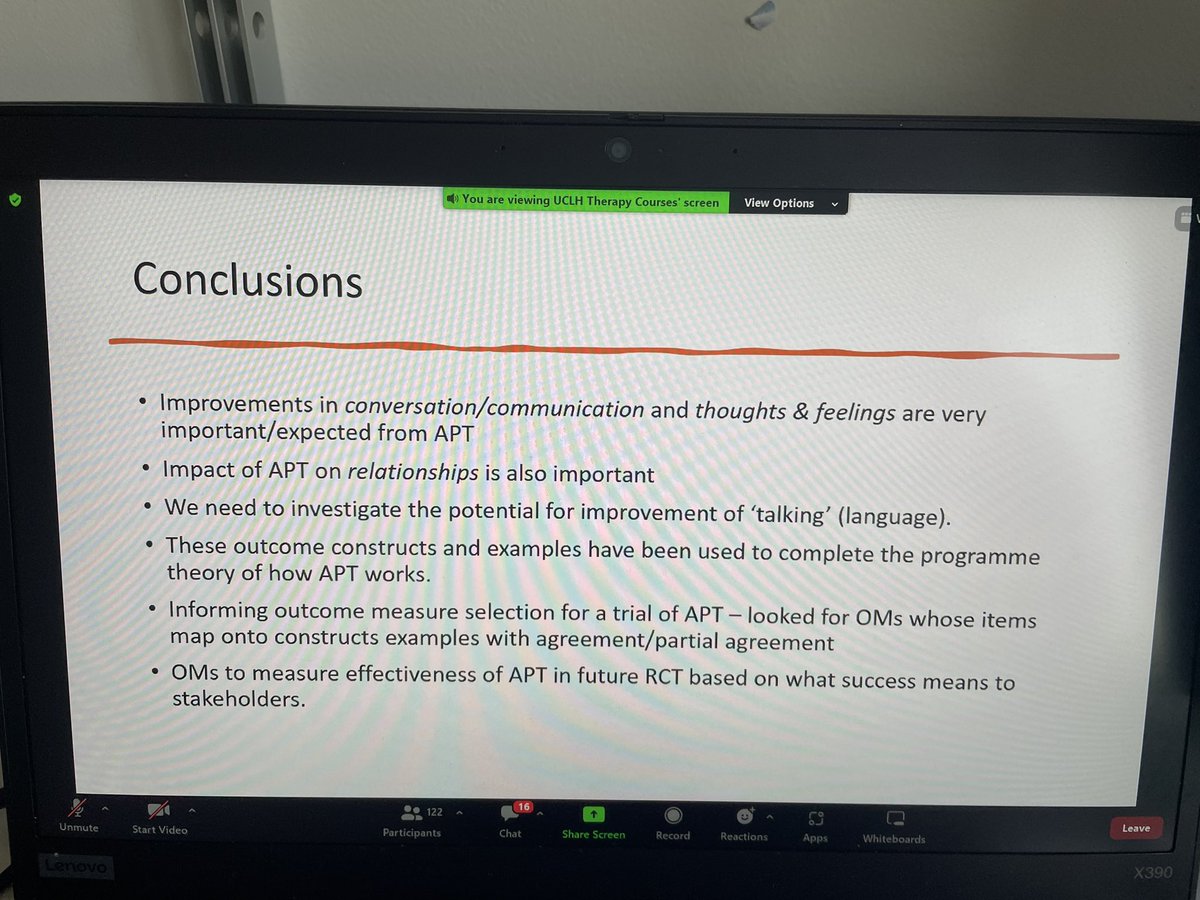
➡️ agreement from all that improvements in convos and thoughts/feelings are v important @BASConf2023
Really enjoyed hearing about the @APTproject2 by @MadelineCruice and @RPalmerSLT – particularly 1.key ingredients that should be in every communication partner training and 2. Does improvement of ‘talking’ mean something different to PWA and SLTs? @BASConf2023#BASConf2023
That's a wrap!
The APT project's programme development grant ends today.
In our latest blog, we reflect on our research journey and outcomes over the past 24 months: https://t.co/YR3PX80Lxo
Thanks to each and every person who has taken part and contributed to this research!
It's the final week of this early-stage research project. Our thanks to our funder, the NIHR, and to everyone who has taken part over the past 2 years. The APT team is now busy working on an application for a large-scale programme grant. We'll keep you posted! (1/n)
That's a wrap! Thanks for joining us along the way. We hope this series has helped demystify behaviour change theory and shown how it can be applied to CPT in aphasia. If you have any feedback on this series, please leave a comment below or contact us at [email protected] (20/n)