Iraqi Museum discovers missing lines from the 'Epic of Gilgamesh'...
It's not unusual for fantasy epics to endure for years. (Right,��Game of Thrones fans?) But even George R.R. Martin would be shocked to learn about century-and-a-half wait for a new chapter of the Epic of Gilgamesh, one of the world's oldest written stories. The Sulaymaniyah Museum in Iraq has discovered 20 new lines to the ancient Babylonian poem, writes Ted Mills for Open Culture.
The Epic of Gilgamesh, which dates back to 18th Century BC, was pieced together from fragments that tell the story of a Sumerian king who travels with a wild companion named Enkidu. As Mills explains, scholars were well aware that new fragments of the poem could possibly turn up — modern readers are most familiar with a version discovered in Nineveh in 1853 and during the war in Iraq, as looters pillaged ancient sites, they finally did. The Sulaymaniah Museum acquired the tablet in 2011, as part of a collection purchased from a smuggler, according to Osama S.M. Amin at Ancient History Et Cetera:
"The collection was composed of 80-90 tablets of different shapes, contents and sizes. All of the tablets were, to some degree, still covered with mud. Some were completely intact, while others were fragmented. The precise location of their excavation is unknown, but it is likely that they were illegally unearthed from, what is known today as, the southern part of the Babel (Babylon) or Governorate, Iraq (Mesopotamia)."
The tablet is three fragments joined together, dating back nearly 3,000 years to the Neo-Babylonian period. An analysis by the University of London's Farouk Al-Rawi’s reveals more details from the poem's fifth chapter, according to Amin. The new lines include descriptions of a journey into the "Cedar Forest," where Gilgamesh and Enkidu encounter monkeys, birds and insects, then kill a forest demigod named Humbaba. In a paper for the American Schools of Oriental Research, Al-Rawi describes the significance of these details:
The previously available text made it clear that [Gilgamesh] and Enkidu knew, even before they killed Humbaba, that what they were doing would anger the cosmic forces that governed the world, chiefly the god Enlil. Their reaction after the event is now tinged with a hint of guilty conscience, when Enkidu remarks ruefully that … "we have reduced the forest [to] a wasteland."
The museum's discovery casts new light on Humbaba, in particular, who had been depicted as a "barbarian ogre" in other tablets. As Mills writes, "Just like a good director’s cut, these extra scenes clear up some muddy character motivation, and add an environmental moral to the tale."
#archaeohistories
Circe Offering the Cup to Odysseus (1891), an oil painting in the Pre-Raphaelite style by John William Waterhouse (1849-1917). The original artwork is currently housed in Gallery Oldham in England.
The painting depicts a scene from the Odyssey. Circe, a sorceress, offers a cup to Odysseus (Ulysses). In the cup is a potion. Circe seeks to bring Ulysses under her spell, as she has done with his crew. Two of Ulysses' crewmen have been transformed into pigs; one can be seen beside Circe's feet on the right, while the other is peering out from behind her throne on the left. Ulysses' reflection can be seen in the mirror behind Circe's throne, in addition to the columns of her palace and Ulysses' ship.
Ulysses, intrepid and worried about his sailors, tries to save them and, on the way to do so, Hermes (the messenger of the immortals) intercepts him and tells him of Circe's intentions. He advises Ulysses to find a special plant that makes him immune to the effects of Circe's potion, which he proceeds to do. Under the impression that the effects of the potion have taken hold, Circe touches Ulysses with her wand to complete the transformation process. He threatens Circe with his sword, who then seduces and coerces him into sleeping with her to return his sailors. He reluctantly agrees, and, after the arrangement is consummated, she returns his sailors to their human form.
A large, circular mirror behind her reveals a reflection of Odysseus approaching the scene. The trick of having a wide view shown in a large mirror behind the subject is used in other paintings by Waterhouse. It is also seen in his The Lady of Shalott Looking at Lancelot (1894) and his I Am Half-Sick of Shadows, Said the Lady of Shalott (1916). Those are both based on Tennyson's poem The Lady of Shalott, where the subject is described as weaving a tapestry of the view in her mirror (a common method still used by weavers).
#archaeohistories
On the remote island of Nuku Hiva, ancient stone figures lie hidden among dense valleys and old ceremonial grounds, carved centuries before European contact. Many of the statues stand apart from later Polynesian artwork, with exaggerated heads, large staring eyes, and unusual human proportions that have fueled debate for decades.
Archaeological evidence found near several carving sites, including charcoal deposits, stone tools, and traces of early habitation, suggests many of these figures were created roughly 1,000 years ago during the Marquesas Islands’ earliest settlement phase between 900 and 1200 AD. The carvings are tied to some of the island’s oldest known communities, though their exact purpose has never been fully understood.
Marquesan oral traditions tell of ancient ancestral groups said to have inhabited the island long before later tribal lineages emerged. These accounts describe powerful beings connected to the land and sacred sites across the island. But despite generations of stories and modern archaeological study, no definitive explanation exists for who carved the figures or what they originally symbolized.
#drthehistories
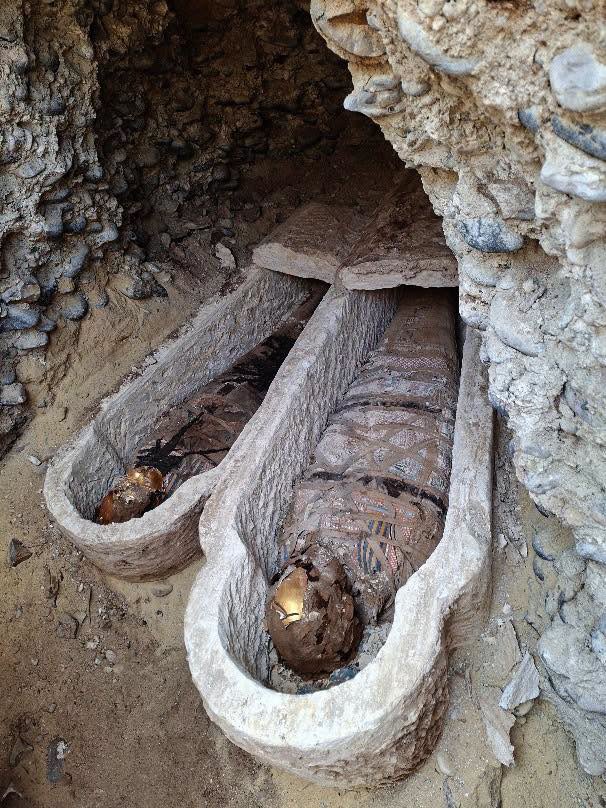
Archaeologists have made a stunning discovery inside a 1,600-year-old Egyptian mummy — a fragment of Homer's Iliad.
The papyrus was found tucked inside the gut of a mummy unearthed in Tomb 65 at Oxyrhynchus, an ancient city located 118 miles south of Cairo.
The excavation was carried out between November and December 2025 by a team including researchers from the University of Barcelona and the Institute of Ancient Near East Studies.
This marks the first time a Greek literary text has been found incorporated into the mummification process.
Previous discoveries at Oxyrhynchus had turned up Greek papyri used in burials, but their contents were always magical or ritualistic in nature.
The fragment found within the mummy belongs to Book II of the Iliad, a section known as the Catalogue of Ships, which lists the Greek forces that sailed to Troy.
The Iliad, composed around 800 BC, is widely considered the cornerstone of Western literature and centers on the Trojan War and the fate of the warrior Achilles.
Researchers are still unsure why this particular literary passage was chosen for the embalming ritual.
The funerary complex also yielded other remarkable finds, including mummies adorned with gold tongues and fingernails, heart scarabs, and amulets depicting gods such as Horus, Thoth, and Isis.
#archaeohistories
A man in 1835 was digging a duck pond and accidentally uncovered a 104-foot tunnel made entirely of seashells...
James Newlove was digging a pond in his garden in Margate, England 🏴🇬🇧, when his shovel struck something unexpected—an opening that led to a long, winding underground passage. When he and his son lowered a lantern and ventured inside, they discovered one of the most mysterious subterranean wonders in Britain: a 104-foot tunnel entirely covered in seashells.
Known today as the Shell Grotto, the passage’s walls and ceilings are decorated with an estimated 4.6 million shells—oysters, mussels, cockles, and whelks—arranged in intricate geometric and floral patterns. No one knows who built it or why. Some theories suggest it was an ancient pagan temple, others a secret meeting place, or even a Victorian-era folly. The absence of records and the precision of the design have kept its origins a mystery for nearly two centuries.
The grotto was opened to the public in 1838 and remains one of Britain’s most enigmatic historical sites. Visitors still walk the same dimly lit tunnel, the shells glinting softly in the glow of modern lamps, an enduring monument to craftsmanship and mystery.
Despite extensive study, radiocarbon dating has never been able to confirm when the shells were placed, leaving open the possibility that the grotto may be far older than its 19th-century discovery.
#archaeohistories
Etruscans art, flourished in central Italy 🇮🇹 between 8th-3rd Century BC, is renowned for its vitality and often vivid colouring. Wall paintings were especially vibrant and frequently capture scenes of Etruscans enjoying themselves at parties and banquets. Terracotta additions to buildings were another Etruscan speciality, as were carved bronze mirrors and fine figure sculpture in bronze and terracotta. Minor arts are perhaps best represented by intricate gold jewellery pieces and distinctive black pottery known as bucchero whose shapes like kantharos cup would inspire Greek potters.
Etruscans not living in isolation from other Mediterranean cultures, that's why in their art, we have found ideas and art objects from Greece, Phoenicia and East reached Etruria via long-established trade networks of ancient Mediterranean. Greek artists also settled in Etruria from 7th Century BC, onwards and many works of Etruscan art are signed by artists with Greek names. Greek art and especially work from Athens, was highly esteemed then. Etruscan and Greek artists in Etruria may have sometimes lacked the finer techniques of vase-painting and sculpture in stone that their contemporaries in Greece, Ionia, and Magna Graecia possessed but, at same time, other art forms such as gem-cutting, goldwork, and terracotta sculpture show that Etruscans had a greater technical knowledge in these areas.
Etruscans greatly appreciated foreign art (their tombs are full of imported pieces) and they readily adopted ideas and forms prevalent in art of other cultures, they also added their own twists to conventions. Etruscans produced nude statues of female deities before Greeks did and they uniquely blended Eastern motifs and subjects (mythological ones and creatures never present in Etruria like lions) with those from Greek world and their own homegrown ideas which can be traced back to indigenous Villanovan culture (1000-750 BC), precursor to Etruscan culture proper. This perpetual synthesis of ideas is perhaps best seen in funerary sculpture. Terracotta coffin lids with a reclining couple in round may, when one inspects each figure closely, resemble Archaic Greek models but physical attitude of couple when seen as a pair and affection between them which artist has captured are entirely Etruscan.
Etruscans artworks were widely exported too. Bucchero wares, as we have seen, have been found across Mediterranean from Spain to Syria. Etruscans also traded with central and northern European tribes and their artworks reached Celtic sites across Alps in modern Switzerland and Germany. Greatest influence of Etruscan art, though, was on their immediate neighbours and cultural successors in general, Romans. Rome conquered Etruscan cities in 3rd Century BC, but they remained independent centres of art production. Art works did reflect Roman tastes and culture, though, so that Etruscan and Roman art often became indistinguishable. An excellent example of proximity between two is bronze statue of an orator from Pila, near modern Perugia. Cast in 90 BC, figure, with his toga and raised right arm, is as quintessentially Roman as a statue from imperial period.
Aside from their obvious role in acting as a cultural link between Greek world and ancient Rome, perhaps most lasting legacy of Etruscan artists is realism they tried to achieve in portraiture. Although still partially idealised, funerary portraits on Etruscan sarcophagi are honest enough to reveal physical flaws of individual and there is a clear attempt by artists to illustrate unique personality of individual. This was a concept that their Roman successors would also strive for and capture in very often moving portraits of private Roman citizens brilliantly rendered in paint, metal, and stone.
📷 : Etruscan Mural from Tarkynia- Tomb of Shields; 4th Century BC. All inscriptions are on Etruscan language. Etruscan alphabet derives from Euboean alphabet used in Greek colonies in southern Italy.
#archaeohistories
Three Headed Lernaean Hydra; wall painting from an Etruscan Tomb (4th Century BC), at necropolis of Pianacce, Italy 🇮🇹
Tomb (Tomb of Infernal Chariot) is considered one of beautifully painted Etruscan Tomb and a structure for holding funeral rites that is unrivalled in all of Etruria. Tomb was discovered in 2003, at a site in Pianacce and is one of most important discoveries of Etruscan civilisation ever found.
Tomb is characterised by a perfectly preserved coloured painting that depicts an exceptional iconographic theme: a quadriga (chariot) pulled by two lions and two gryphons and driven by a demon with a terrifying and possessive look, most likely an innovative representation of the demon Charun, the equivalent of the Greek Charon who accompanied deceased souls to Hades.
Figure of Charioteer had never been seen in Etruscan art before this discovery.
#drthehistories
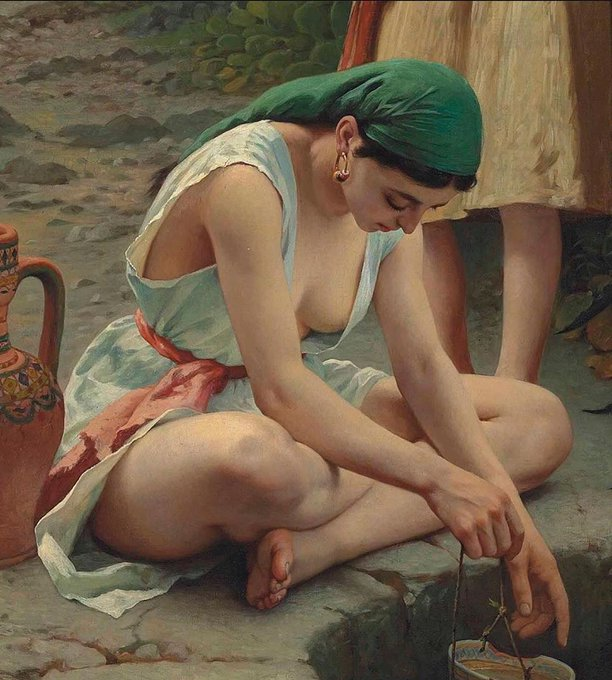
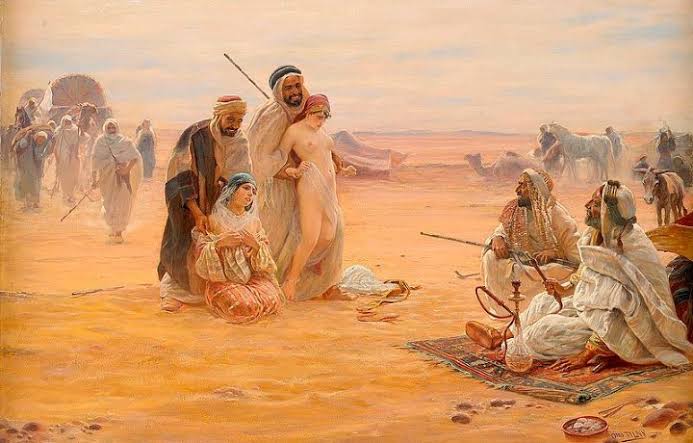
Slavery in Islamic law is not based on race or ethnicity. However, while there was no legal distinction between white European and black African slaves, in some Muslim societies they were employed in different roles: for example, Ottoman Empire made white slaves (from Russia and other states) serve as soldiers and government officials, while black slaves were placed as guards at palaces and the harems of elite families.
The subject of slavery in Ottoman Empire is not a topic widely discussed amongst literary circles. Muslims choose to completely oversee these large scale harrowing atrocities on a captive people. Professor George Junne of University of Colorado has written a book on the subject, in which he talks about the key role that eunuchs played in Ottoman state. He describes how Ottomans bought the slaves after checking their value in terms of performing arts as well as their capacity to run businesses etc. Slaves would be priced according to their skills and will be assigned tasks as per their calibre.
In his book, Junne describes how a black slave would be completely separated from family and friends. Ottoman practice of eunuch-making and institutionalization of it, was one of the many customs they used to control Kuffar. Main difference between white eunuchs and black eunuchs is, that with white eunuchs, they just took out their testicles. With black eunuchs, they were completely “shaved,” meaning that everything came off. White eunuchs were sourced (bought and abducted) by Ottomans bought and from Christians and Jews. Black slaves who were later turned into Eunuchs were simply abducted. Afterward, they ended up either in the Sultan’s Harem as guards, or in Istanbul, where there were a lot of very rich men who had their own personal harems. This went on throughout Ottoman Empire. Advent of Kemal Atatürk put got rid of things like harems and the eunuch system as Turkey tried to become more European.
Scholars trying to be balanced have argued that religious scriptures contain a number of verses aimed at regulating slavery and mitigating its negative impact. They state that Quran prescribes kindness towards slaves, that they are considered morally equal to free persons, perhaps with lower legal standing and that Quran aimed to gradually phase out slavery altogether. But it did not make slavery Haram, like it states about consumption of pork. According to Dr. Shabbir Ally, a Muslim scholar, Muslims did not follow instructions of Quran and were therefore not able to abolish Slavery from their midst until the Europeans made it illegal in some countries. However, matter of slavery is left to interpretation in scriptures and as many proselytising Muslims would want us to believe, should be read about keeping in mind background (Syaq o Sabaaq). Those who cannot make logical sense of this practice but still are adamant defenders of the scripture believe that since there is a Hadith on correcting what is wrong, which says that there should be no harm to anyone, therefore followers of Quran were ones who were given open initiation to stop slavery. However, even they cannot justify order for slave girls to remain only partially dressed when in public, to differentiate between a slave and a free woman. According to Hanafi School of thought, during early days of Islam, it was already proscribed that a slave girl was to hide her body “from navel to knees”.
References:
The Travels of Reverend Olafur Egilsson: The Story of the Barbary Corsair Raid on Iceland in 1627. by Olafur Egilsson
An interview of Dr. Shabbir Ally
The Legacy of Arab-Islam In Africa by Azumah John Alembillah & Race and Slavery in the Middle East by Bernard Lewis
#archaeohistories
The word "Panic" actually comes from this Greek god, Pan.... This 2,000-year-old statue found in Turkey captures his terrifying stare perfectly. Look at those eyes.
The modern word “panic” traces its origins to the ancient Greek god Pan. In Greek mythology, Pan was the half-man, half-goat deity of forests, shepherds, and untamed nature. According to legend, travelers moving through lonely mountains or dense forests sometimes heard strange cries echoing through the wilderness. When people suddenly fled in irrational terror, Greeks believed the fright had been caused by Pan—giving rise to the term “panikon deima,” or panic fear.
Sculptures like this one capture the unsettling expression ancient artists sometimes gave the god. Pan was not merely playful; myths describe him as unpredictable and capable of frightening entire armies with sudden, supernatural dread. Greek writers even claimed that soldiers could be seized by mass fear in battle after hearing Pan’s eerie shout.
Despite his frightening reputation, Pan was also associated with music and pastoral life. He was said to have invented the pan flute, an instrument made from reeds that became one of the enduring symbols of rustic Greek culture.
The word “panic” entered the English language in the 17th century, directly derived from the ancient Greek belief that sudden, unexplained terror in crowds was caused by Pan himself.
#archaeohistories
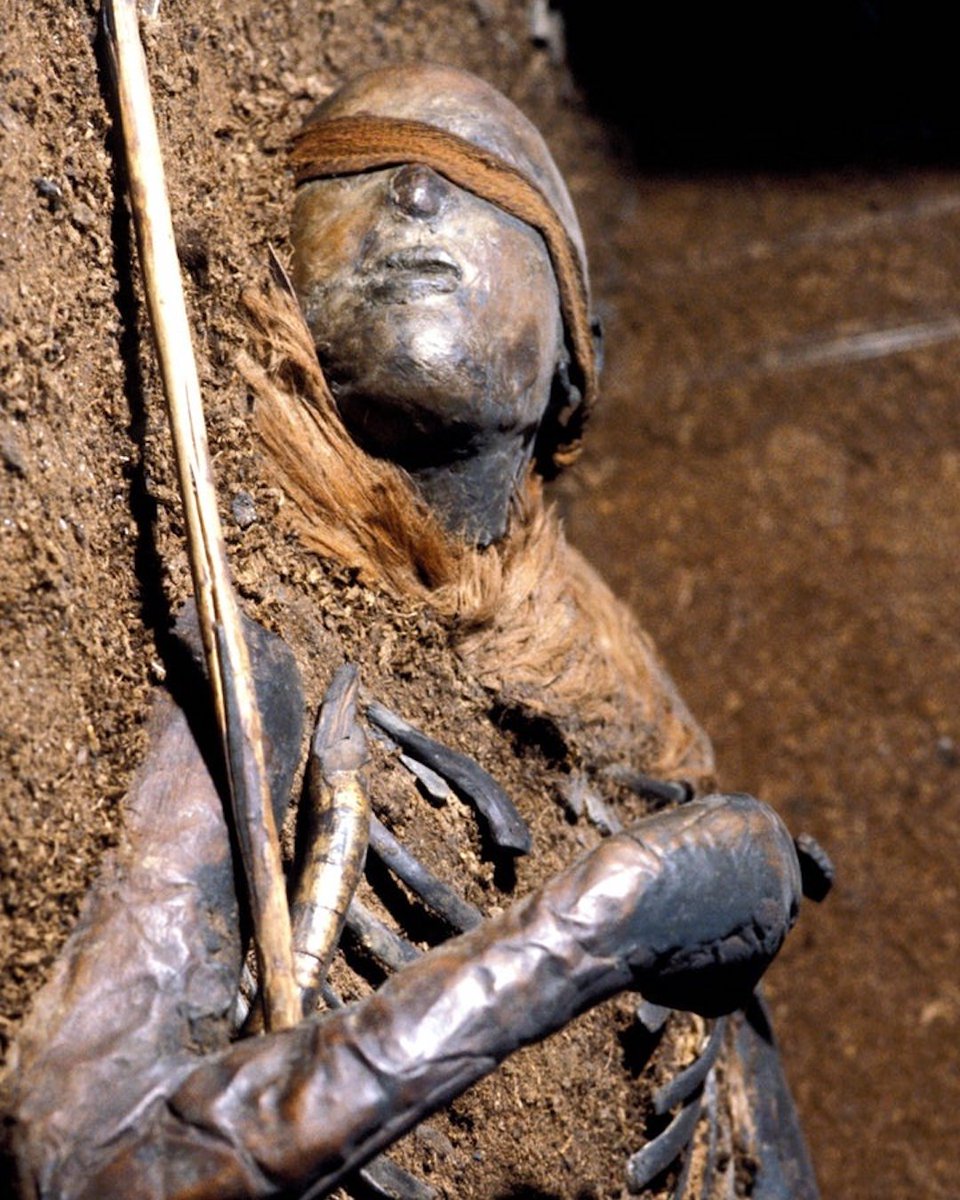
#Windby Kızı olarak bilinen bataklık cesedi, oldukça ilginç bir arkeolojik buluntu. 1952 yılında Almanya'nın Windeby bölgesindeki bir bataklıkta keşfedildi ve yaklaşık 2000 yıl öncesine tarihlendirildi.
Neden bu kadar ilgi çekiyor?
Gizemli Görünümü: Bulunduğunda gözleri bağlı ve kafasının bir kısmı tıraşlı olduğu için birçok teori ortaya atıldı. Kurban mıydı, yoksa başka bir sebeple mi böyle bir görüntüye sahipti?
Cinsiyet Karmaşası: Uzun yıllar boyunca genç bir kız olduğu düşünüldü. Ancak yapılan detaylı incelemeler sonucu, bu kişinin aslında genç bir erkek olduğu ortaya çıktı.
Ölüm Nedeni: Vücudunda şiddete dair bir iz bulunmamasına rağmen, ölüm nedeni tam olarak anlaşılamadı. Tekrarlayan hastalıklar veya yetersiz beslenme gibi nedenler öne sürüldü.
Koruma Çalışmaları: Bataklık ortamı sayesinde oldukça iyi korunmuş olan beden, günümüzde bilim insanları tarafından incelenmeye devam ediyor.
Özetle: Windby Kızı, sadece bir ceset değil, aynı zamanda geçmişe dair önemli ipuçları sunan bir buluntu. Bilim insanları, bu buluntu sayesinde o dönemdeki yaşam koşulları, sağlık sorunları ve hatta kültürel uygulamalar hakkında daha fazla bilgi edinmeye çalışıyorlar.