We have seen the OHCHR’s remarks about today’s events in New Delhi.
India is the world’s largest democracy, where the right to peaceful assembly is guaranteed by our Constitution and safeguarded by robust institutions, an independent judiciary and a free media. As in every democracy, Indian citizens exercise this right subject to reasonable restrictions in the interest of public order. The authorities, for their part, act in accordance with the law, and our courts remain available to all for redressal of any grievances.
The OHCHR’s concerns are therefore misplaced and constitute an unwarranted interference in the internal affairs of India.
In this context, OHCHR would also do well to devote comparable attention to large-scale protests elsewhere, consistent with its mandate of impartiality and non-selectivity.
@MEAIndia@IndianDiplomacy@PMOIndia@DrSJaishankar@abagchimea
The GST Council has taken a decision for smoother movement of goods.
The Council recommended that goods can be inspected, detained or seized only by an officer of the supplier state or the destination state.
No stopping or checking in between. Only the supplier state or the destination state.
Further, goods can be intercepted only on the basis of specific intelligence and with authorisation from an officer of at least Joint Commissioner level.
So, any random GST officer cannot stop a vehicle.
This prevents arbitrary checks by GST enforcement wings that affect the movement of goods from one state to another.
This would significantly improve the ease of movement of goods.
- Smt @nsitharaman during the media interaction on the outcomes of 57th GST Council Meeting
My salute to the Indian pilot Captain Smit Machchhar for his extraordinary bravery.
Despite being stabbed and seriously injured, he fought back, resisted, opened the cockpit door, and enabled passengers and crew to overpower the attacker — preventing a catastrophic mid-air disaster.
He saved the lives of 174 people, including Israeli citizens and other nationals.
I wish Captain Machchhar a speedy and full recovery.
He is a true hero.
Certain media reports have alleged that GST on UPI Merchant Discount Rate (MDR) will burden small merchants and make digital payments costly. This is incorrect.
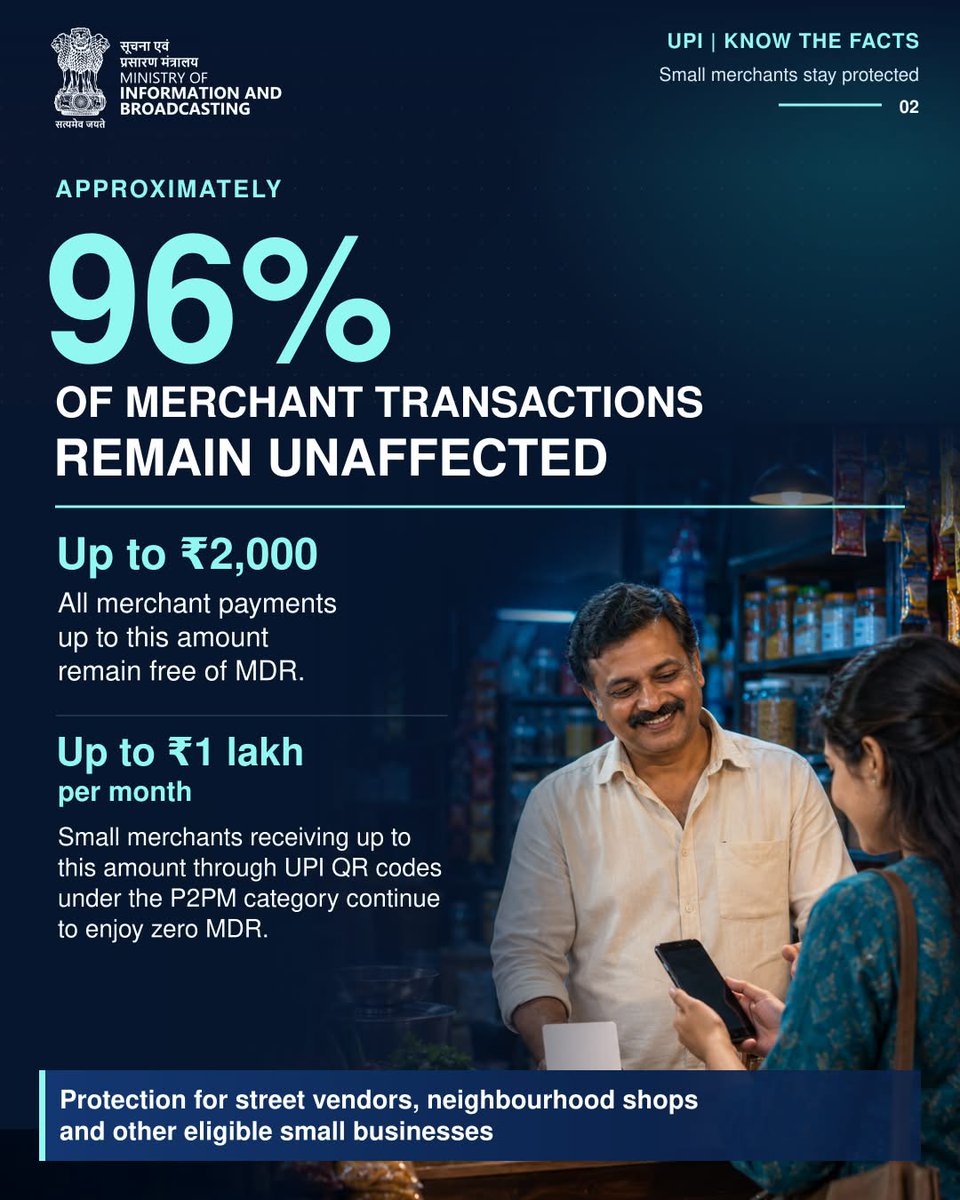
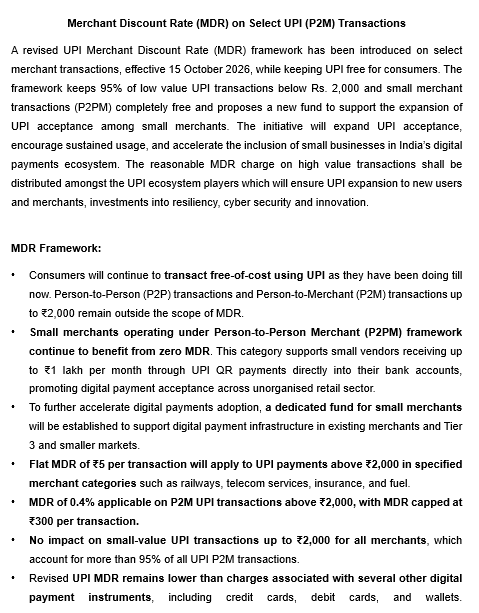
MDR applies only to P2M transactions above ₹2,000. Transactions up to ₹2,000 continue to have zero MDR and therefore zero GST impact. Government data indicates that transactions of up to ₹2,000 constitute more than 96% of UPI merchant transaction volume. As a result, the overwhelming majority of UPI payments will not attract MDR and hence no GST on MDR.
Further, GST paid on MDR by a merchant will be adjusted against the GST payable on the sale of goods, in the same manner that input taxes are set off against output tax liability. Consequently, merchants do not bear the cost of GST on the MDR amount paid by them.
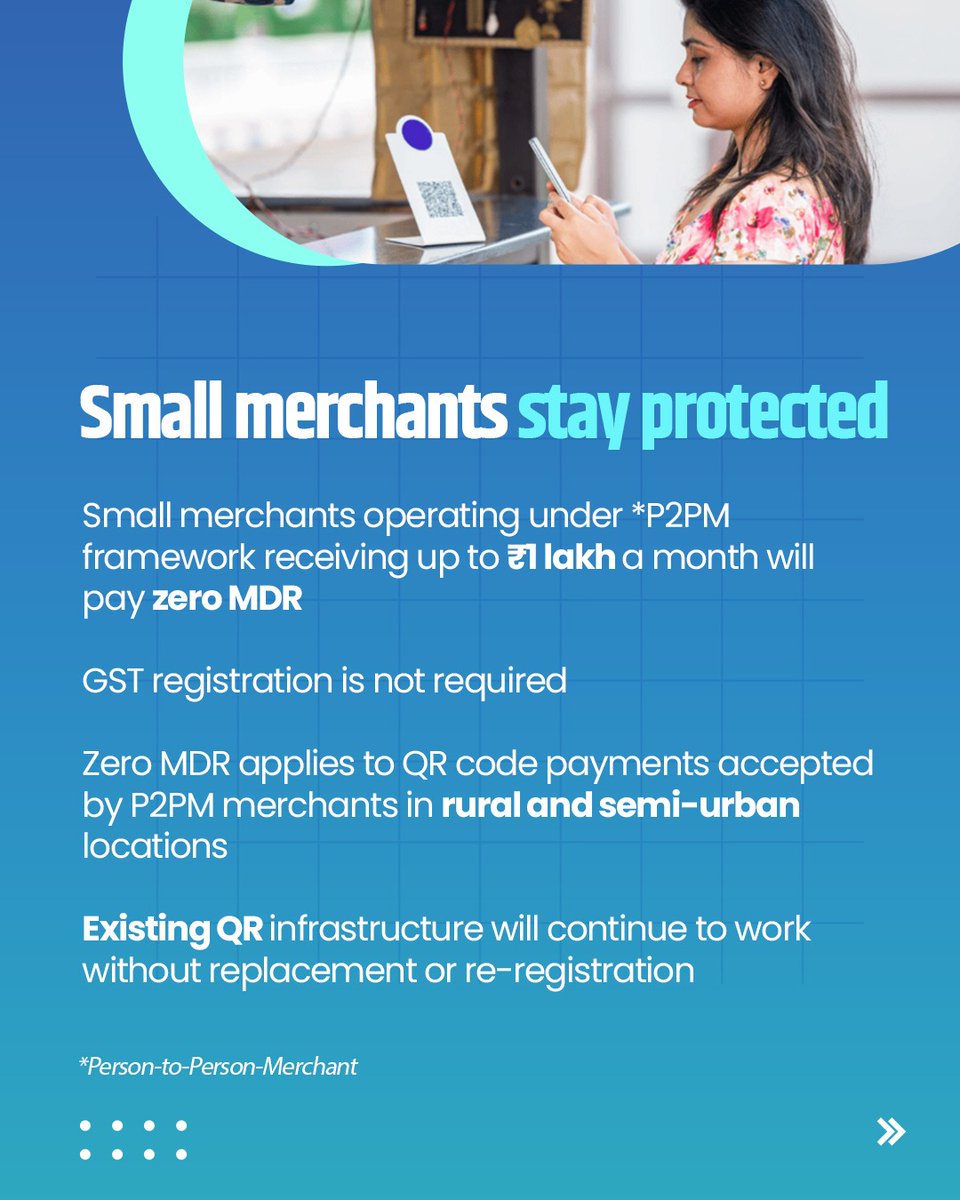
Merchants with monthly UPI receipts of up to ₹1 lakh are not liable to pay MDR and therefore do not even have the issue of GST on MDR.
Hence, apprehensions that GST on MDR will impose an additional burden on merchants are misplaced. The overwhelming majority of UPI transactions and small merchants remain unaffected.
#UPI #DigitalPayments #DigitalIndia
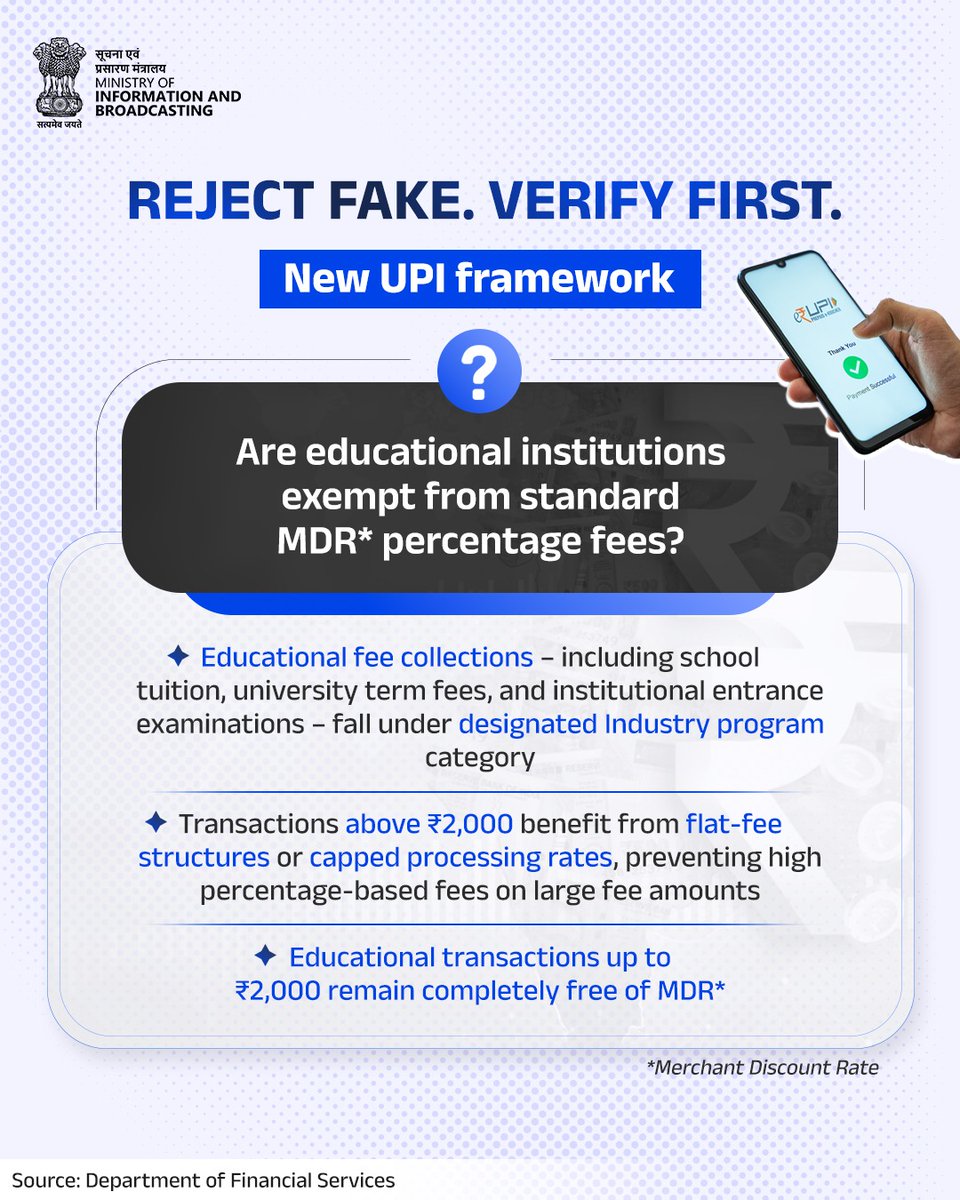
To ensure schools, colleges, and students can process tuition fees digitally without heavy administrative fees, education fee payments via UPI get concessional MDR treatment.
For eligible transactions above ₹2,000, flat-fee or capped processing rates apply instead of standard percentage-based charges. Payments up to ₹2,000 remain at 0% MDR, supporting low-cost digital fee collections.
#UPIUpdates
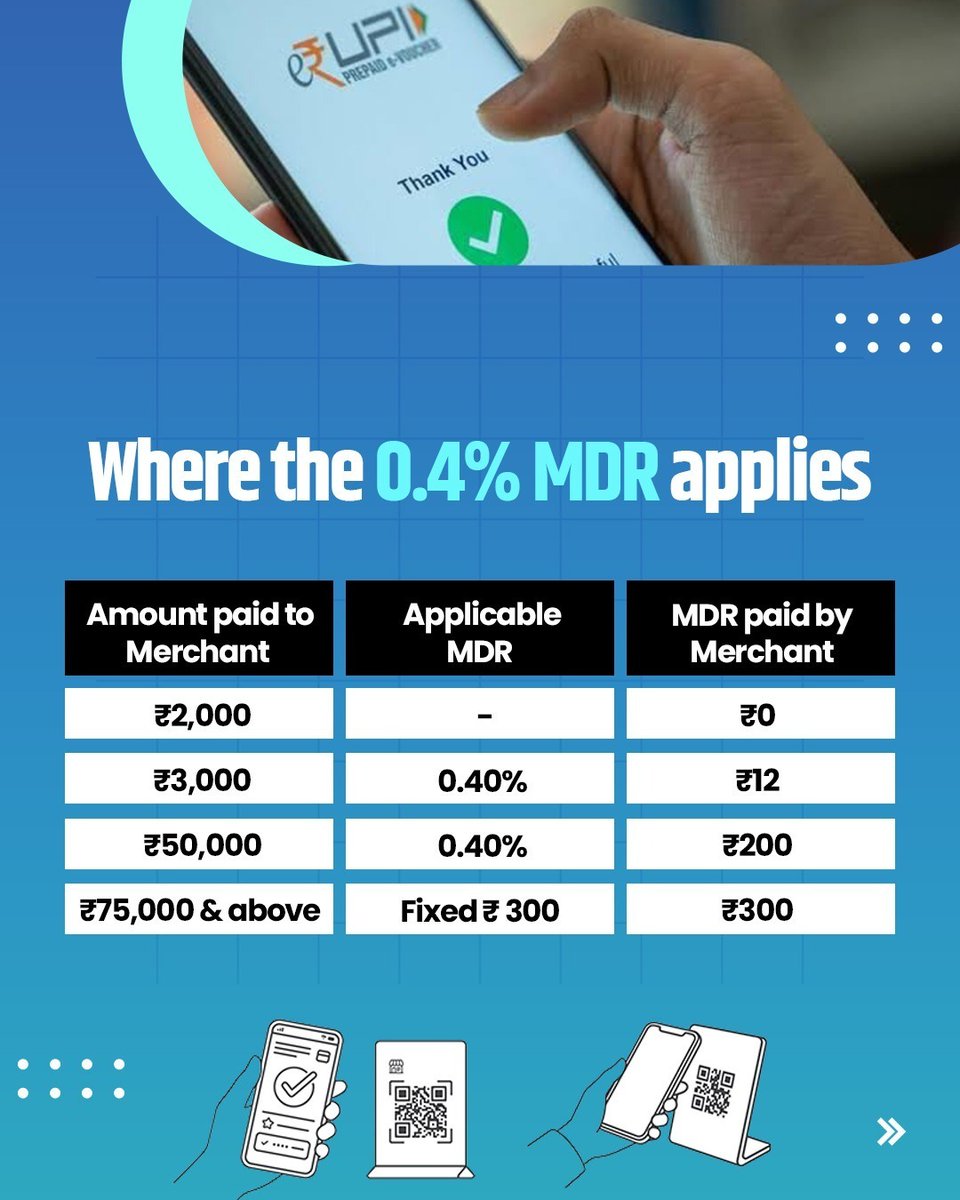
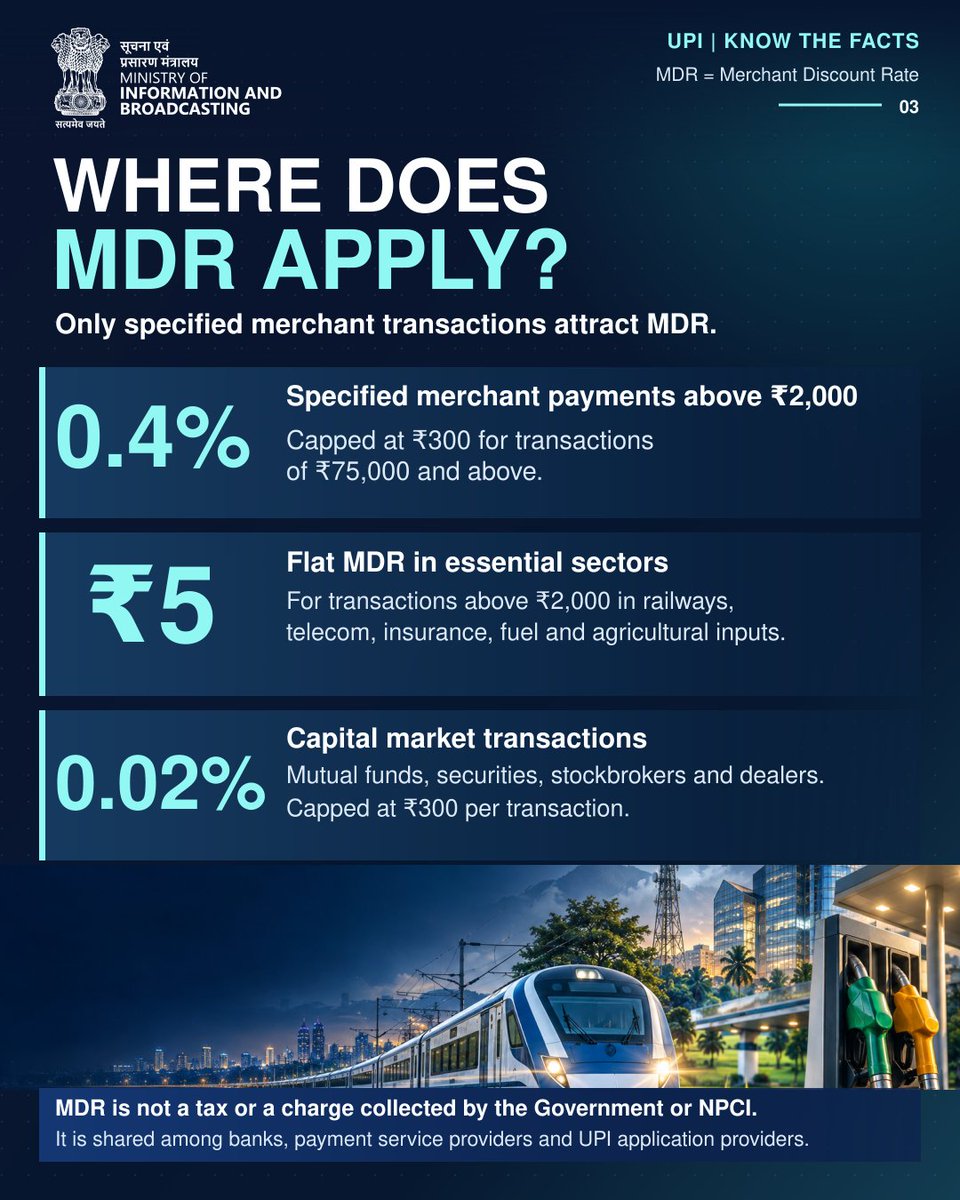
🔰Understanding where MDR applies, and what it means for different payments
▪️From the 0.4% MDR framework to select payment categories, here’s what you need to know about the changes and what remains free for most UPI users.
#UPI#DigitalPayments#UPIPayments#MDR@UPI_NPCI@FinMinIndia
(2/2)
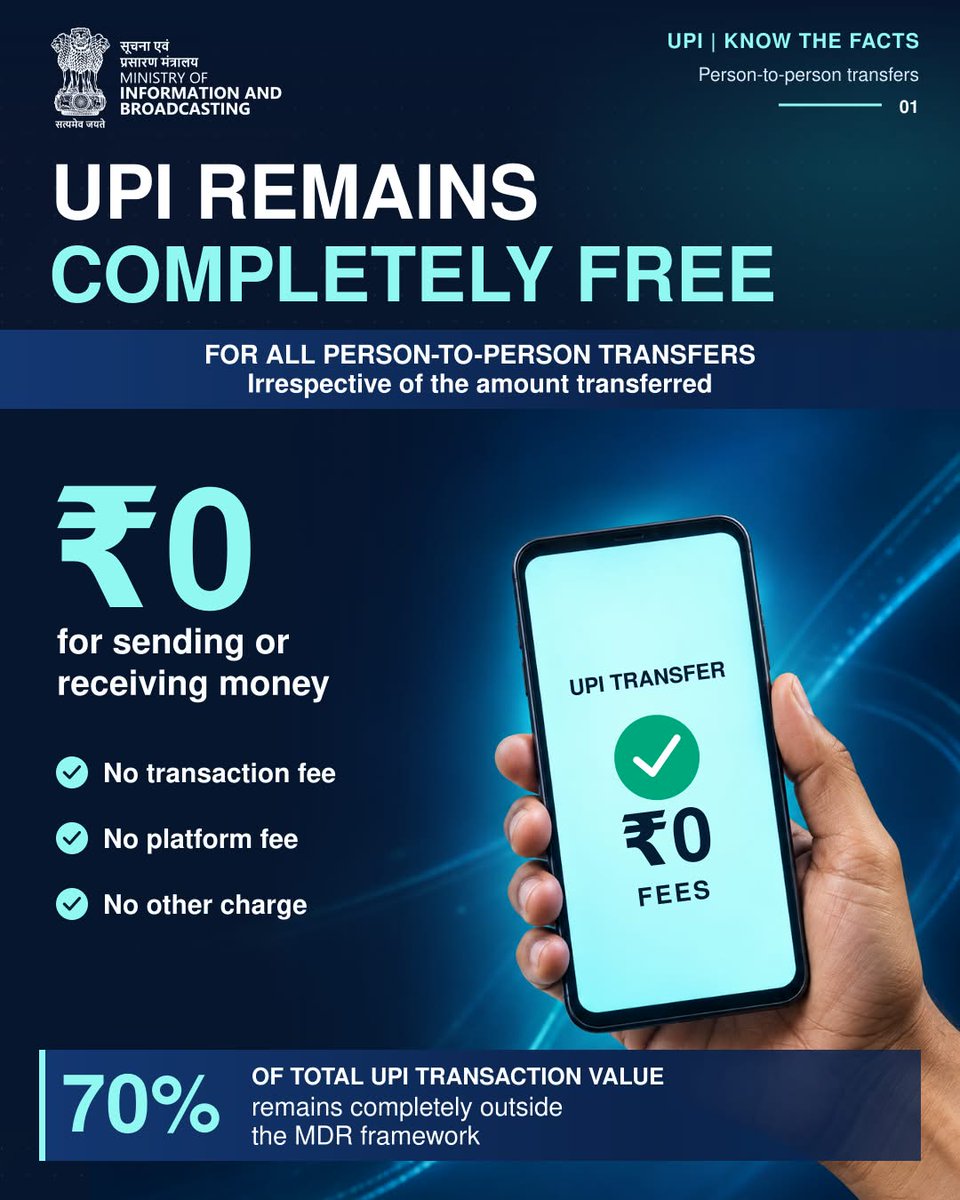
🔰UPI & MDR: What’s changing? 💳📲
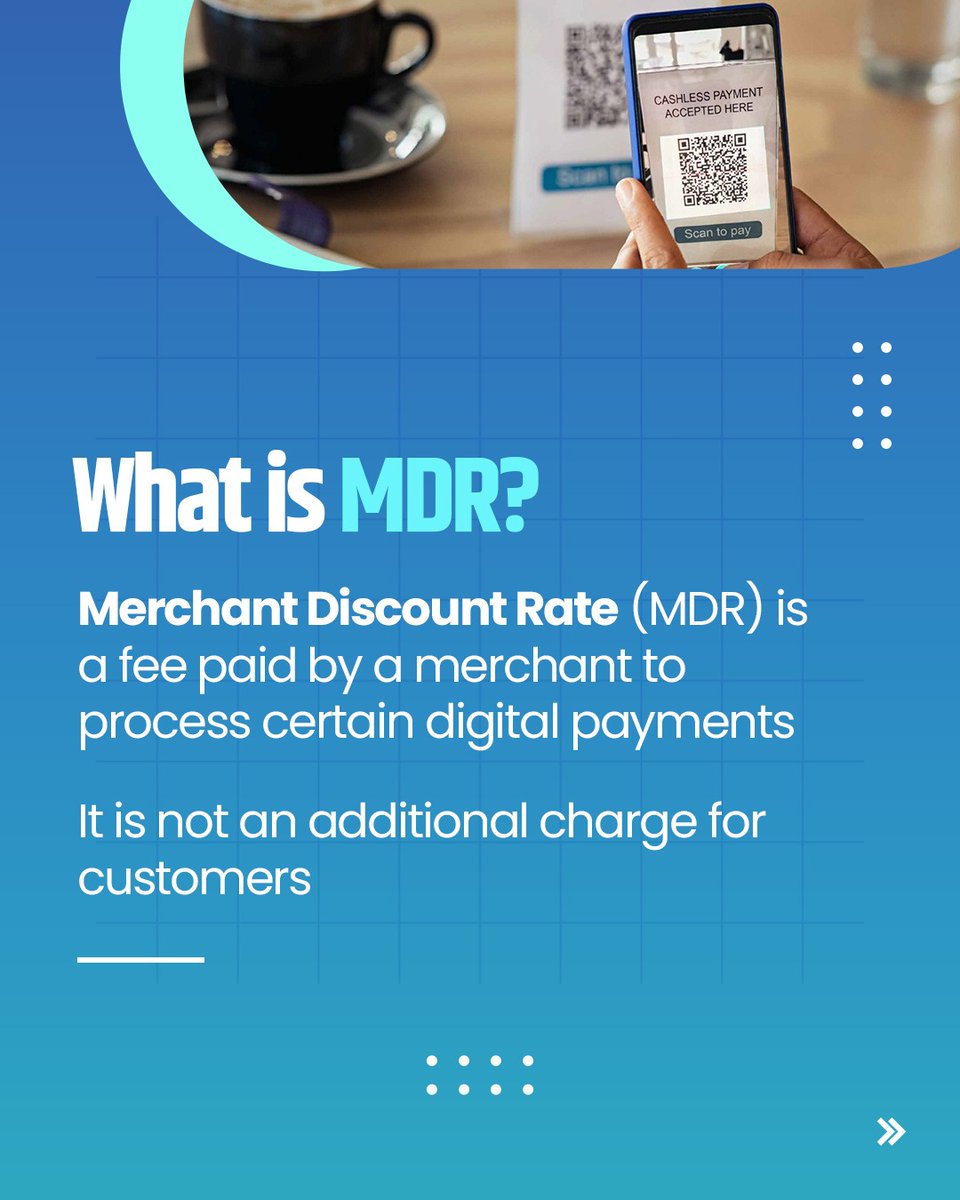
▪️What does MDR mean, where does it apply, and what does it mean for everyday UPI payments?
👇Here’s a simple breakdown, including how small merchants continue to remain protected.
#UPI #DigitalPayments #UPIPayments #MDR
@UP@UPI_NPCI@FinMinIndia
(1/2)
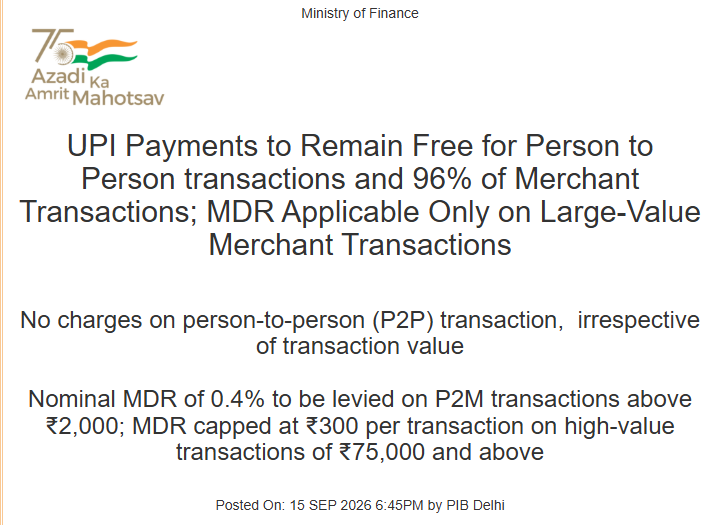
A press release on Ministry of Finance reads, "UPI Payments to Remain Free for Person to Person transactions and 96% of Merchant Transactions; MDR Applicable Only on Large-Value Merchant Transactions."
The introduction of MDR on large-value UPI transactions (i.e., above ₹2,000) is an important step towards strengthening the long-term sustainability of India’s digital payments ecosystem. It will help UPI in continuing to scale, innovate and serve consumers and businesses across the country.
A fair and appropriate distribution of MDR across ecosystem participants will support continued investment in technology, infrastructure and acceptance networks. This, in turn, can enable wider UPI acceptance, deepen the customer base and support sustained growth in transaction volumes.
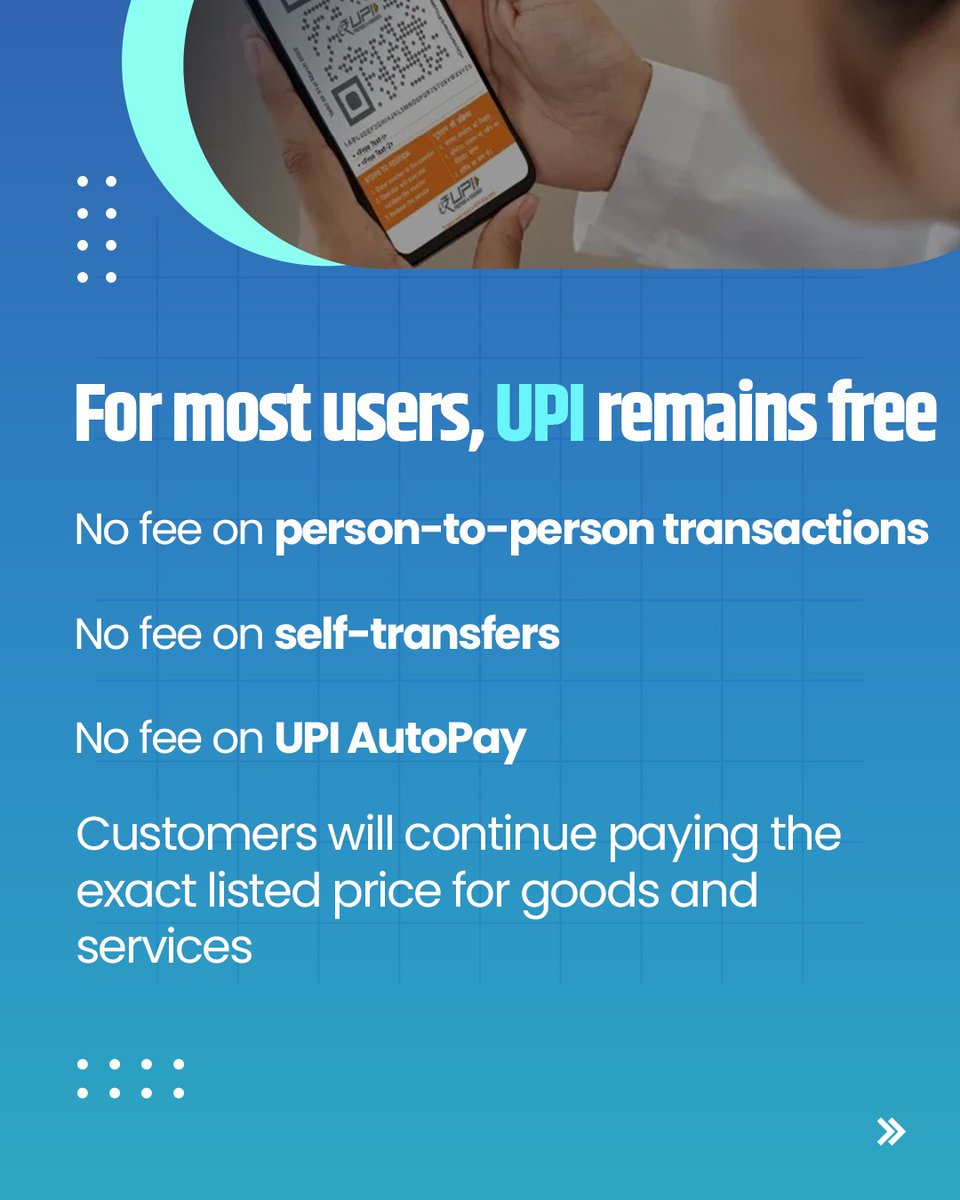
Importantly, all UPI transactions - P2P and P2M - shall remain free for users. P2M UPI transactions below ₹2,000 will continue to remain free for merchants, while MDR may be levied on merchants for P2M .
RBI remains committed to ensuring that UPI continues to be safe, seamless, affordable, and accessible, while supporting the long-term sustainability and growth of India’s world-class digital payments ecosystem.
Don’t fall for rumours. Know the facts! 📱
UPI stays free for you. Eligible small vendors continue to pay zero MDR, and around 96% of merchant transactions remain unaffected.
Stay informed. Pay with confidence.
Read here: https://t.co/ApsnyyBc0m
#KnowTheFacts#UPIUpdates
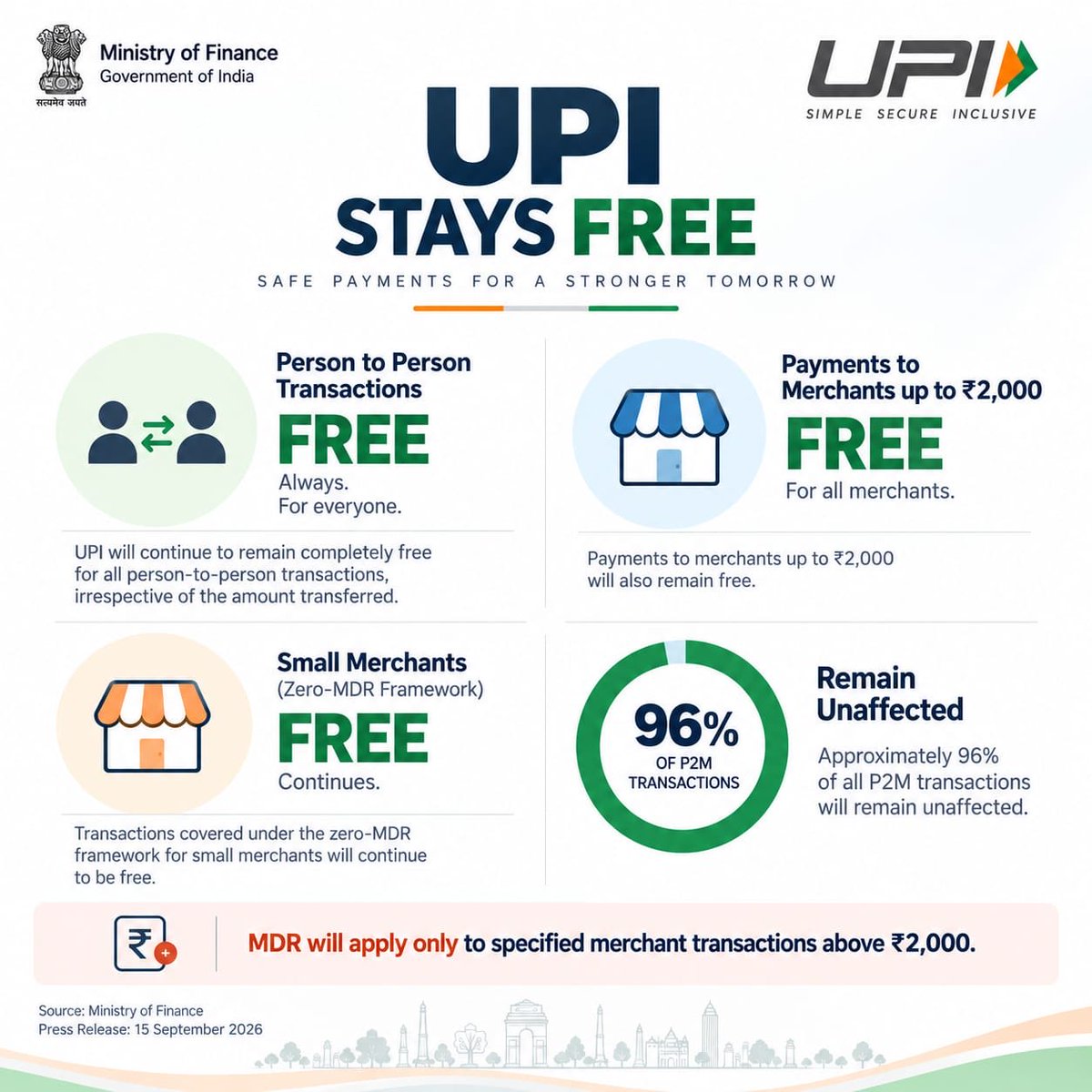
👉 UPI Continues to Remain Free for Peer to Peer Transactions and 96% of Merchant Transactions
👉 The new UPI framework introduced has no impact on any person to person transactions
👉 UPI will continue to remain completely free for all person-to-person transactions, irrespective of the amount transferred
👉 Payments to merchants up to ₹2,000, along with transactions covered under the zero-MDR framework for small merchants, will also remain free
👉 Consequently, approximately 96% of all P2M transactions will remain unaffected. MDR will apply only to specified merchant transactions above ₹2,000
👉 It is clarified that MDR is neither a tax nor a charge collected by the Government or @NPCI_NPCI. It is distributed among payment ecosystem participants, including banks and payment application providers, to support the operation and continued expansion of the UPI ecosystem
👉 Introduced under the Payment and Settlement Systems Act, 2007, following detailed deliberations by the UPI Steering Committee, the framework seeks to ensure the long-term sustainability of UPI while protecting individuals and small merchants from additional charges
Read here for full details ➡️ https://t.co/KGxlX3SVC0