Lubomyr Luciuk is urging PM Mark Carney to sever diplomatic ties with Russia after reported strikes damaged Kyiv’s Pechersk Lavra and other cultural sites in Ukraine.
Read More: https://t.co/RCBf9zLkh5
#Canada#Ukraine#Russia#ForeignPolicy#HumanRights
In Inside Policy, Yaroslav Baran warns that Belarus could become the next major security challenge in the Russia-Ukraine war and argues that stronger deterrence is needed to prevent escalation.
Read More: https://t.co/34SYuEjm5a
#Belarus#Ukraine#NATO#RussiaUkraineWar#Europe
Europe now provides most of Ukraine’s support. The Economist argues Europe needs a long-term strategy focused on security, diplomacy, and Ukraine’s future, not just helping it survive.
https://t.co/tNCmubQ4ae
#Ukraine#Europe#EU#Geopolitics#Security
A Euractiv opinion article by Margus Tsahkna argues that Europe’s security is directly tied to a strong Ukraine, positioning Ukraine not only as a country needing support, but as a future strategic partner.
https://t.co/6G5JqwFFsS
#Ukraine#Europe#EuropeanSecurity#Democracy
Russia’s Victory Day parade in Moscow was scaled back this year, with no tanks or heavy weapons displayed. Putin praised Russian troops in Ukraine as ceasefire discussions continued in the background.
https://t.co/lPBvYFfZmW
#Ukraine#Putin#VictoryDay#WorldNews#Russia
Russia’s war against Ukraine is intensifying fears of instability inside the Kremlin. Evgeniy Dyuk DW article examines reports of tightened security around Putin, elite rivalries, and possible coup concerns.
https://t.co/T65vo9fDdv
Forcing Ukraine to cede land won’t bring peace—it rewards aggression. Dr. Michael Rubin argues lasting stability may require dismantling Russia’s imperial structure into independent states, as seen with past empires.
Read more: https://t.co/aeELb4uxxu
#Ukraine#Russia#NATO
Europe’s biggest weakness isn’t Russia—it’s hesitation. Support for Ukraine has been enough to survive, not enough to win. Fear of escalation prolongs war and weakens deterrence. Power is defined by action.
Read: https://t.co/Trq4TABc6U
#Europe#Ukraine#Security#Geopolitics
Russia could target the Baltics next using hybrid tactics—propaganda, proxies, and denial. The real risk is hesitation. Deterrence requires clarity, unity, and rapid response. #Europe#Baltics#NATO#Security#Ukraine
Read more: https://t.co/uGJsx0lkpw
Simon Tisdall calls Ukraine the defining test for Europe: surge aid to Kyiv, build European-led defense, counter hybrid war, and reject any deal that rewards aggression. Europe—and allies like Canada—must lead to protect democracy and long-term security.
https://t.co/LqgU8BhXys
Four years into Russia’s full-scale invasion, Brookings experts call the war a high-casualty stalemate with halting peace talks and rising pressure on Kyiv to make concessions. Sanctions bite, but sustainability — not just ceasefire — is key.
https://t.co/d2or6ynGXA
#Ukraine
The Hill warns Trump’s Ukraine diplomacy risks a Europe-wide forever war by pressuring Kyiv instead of Moscow. Ending the war means coercing Russia—not Ukraine.
https://t.co/klUoiIp1vk #Ukraine
Poland won't applaud Trump’s vanity project, the Nobel Peace Prize.
Today a major diplomatic row broke out between the U.S. and Poland because Włodzimierz Czarzasty (the Speaker of the Sejm) took a very public stand against Donald Trump.
The catalyst was a formal request from U.S. House Speaker Mike Johnson and Israeli Knesset Speaker Amir Ohana, asking international leaders to co-sign a nomination for Donald Trump for the Nobel Peace Prize.
Czarzasty flatly refused.
U.S. Ambassador Tom Rose responded by blacklisting Czarzasty, declaring that the U.S. Embassy would have "no further dealings, contacts, or communications" with him effective immediately.
Polish Prime Minister Donald Tusk joined the fray, telling the U.S. Ambassador that "allies should respect, not lecture, each other.
Roman Giertych then wrote a letter (see in the comments), escalating the rhetoric by comparing the demand for the Nobel Prize to the vanity of the Emperor Nero.
Here is what Włodzimierz Czarzasty said:
Włodzimierz Czarzasty: “Building new platforms like the 'Peace Council' by the United States is, in my opinion, deceptive. We must strengthen the European Union, NATO, the UN, and the WHO. Our security lies there.
President Trump, in my opinion, destabilises these organisations by representing a policy of force and conducting transactional politics. This often breaks principles, values, and international law.
His interpretation of history—for example, regarding the participation of Polish soldiers on missions—and his instrumental treatment of other territories, like Greenland, means I will not support the Nobel request for President Trump. He does not deserve it."
Главный раввин, глава русскоязычных евреев Киева, обратился к путинским «освободителям»:
«Вы замораживаете людей и просто обрекаете их на гибель. Я горжусь тем, что нахожусь здесь – на этой стороне, с героическим украинским народом, который не готов сдаваться, идти в рабство, терять свою культуру и свою страну».
Блестяще, лучше и не скажешь✊🤝
BREAKING: Pulitzer Board turns the tables on Trump in defamation lawsuit — demands discovery of ALL his finances and medical records in explosive legal fight.
Donald Trump thought he could bully and intimidate the Pulitzer Prize Board into submission. Instead, the Board just hit back — hard.
According to a new report from Law & Crime, members of the Pulitzer Prize Board are fighting Trump’s lawsuit with sweeping discovery demands that could pry open one of his most closely guarded secrets: his finances. After Trump sued the Board for standing by Pulitzer-winning reporting on his links to Russia — reporting that he despises — the Board is now insisting that if Trump wants to litigate, he’s going to have to play by the rules — and answer uncomfortable questions under oath.
Trump’s lawsuit claims the Board defamed him by refusing to retract awards given to journalists whose reporting detailed his ties to Russia. But the Board isn’t backing down. Instead, its lawyers are demanding broad discovery, including documents and testimony that go directly to Trump’s wealth, business interests, medical history, and credibility — areas that have long proven hazardous terrain for the president.
In court filings, the Board argues that Trump himself made his finances relevant by repeatedly injecting claims about his success, reputation, and damages into the case. In other words: if Trump says the reporting hurt his standing, then the truth about his money matters — a lot.
Legal experts say this is a classic “be careful what you wish for” moment. Trump has spent years attacking journalists, institutions, and independent watchdogs, assuming intimidation would be enough. But discovery cuts both ways. If this case proceeds, Trump could be forced to turn over records he has spent decades concealing and sit for depositions that can’t be spun away with late-night rants on social media.
The Pulitzer Board’s message is unmistakable: they’re not afraid of Trump, and they’re not rewriting history because he doesn’t like it. The awards were granted, the reporting stands, and now Trump may have to answer — in a courtroom, not on Truth Social.
This legal counterpunch also exposes the deeper irony of Trump’s crusade. A man who claims to champion “free speech” is trying to punish journalists for doing their jobs — while crying victim when those journalists, and the institutions that defend them, refuse to cave.
If Trump thought this lawsuit would intimidate the press, it may end up doing the opposite. By opening the door to discovery into his finances and credibility, he’s handed his critics exactly what they’ve been asking for: accountability.
And this time, it won’t be decided by a rally crowd or a rage post — it’ll be decided under oath.
Please like and share if you can’t wait to see how this turns out!
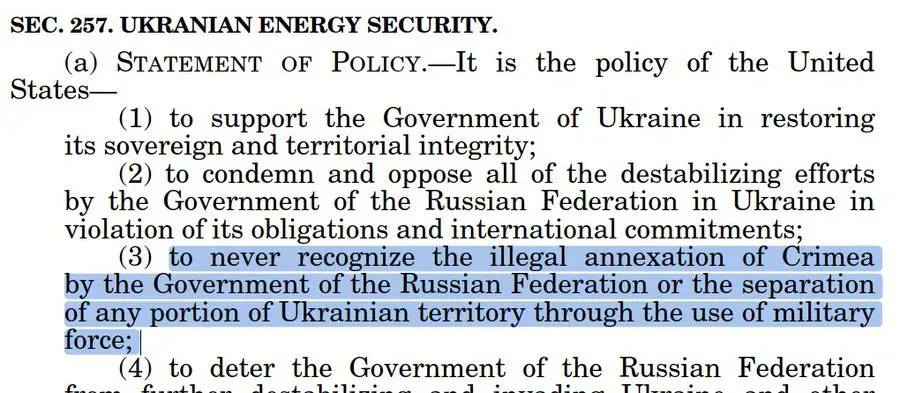
It is amazing that the current administration is prepared to break its own laws in recognizing Putin's invasion of Ukraine but does not understand why Ukraine refuses such recognition. See below.
Quick question for every journalist covering the Ukraine/Berlin talks:
Have you read Section 257 of CAATSA?
It's current US law. Trump signed it himself in 2017. It says the US will NEVER recognize the separation of ANY Ukrainian territory through military force.
Never. That's what it says. Still in effect.
So why is no one asking why the President is demanding Ukraine do exactly what US law says America will never recognize?
This isn't obscure. It passed 419-3 in the House, 98-2 in the Senate.
Do your job.
Ukraine isn’t just defending itself—it’s becoming one of the world’s most advanced military producers. From AI drone swarms to battle-tested weapons, the war has reshaped Europe’s security landscape.
Watch: https://t.co/iBU9CMaq6h
#Ukraine#DefenseTech#Drones#EuropeanSecurity