The world runs on numbers nobody checks. We check them. Forensic audits of official energy and shipping data. Open code, error ranges, errors credited.
AUDIT #1: Strait of Hormuz, IMF PortWatch data.
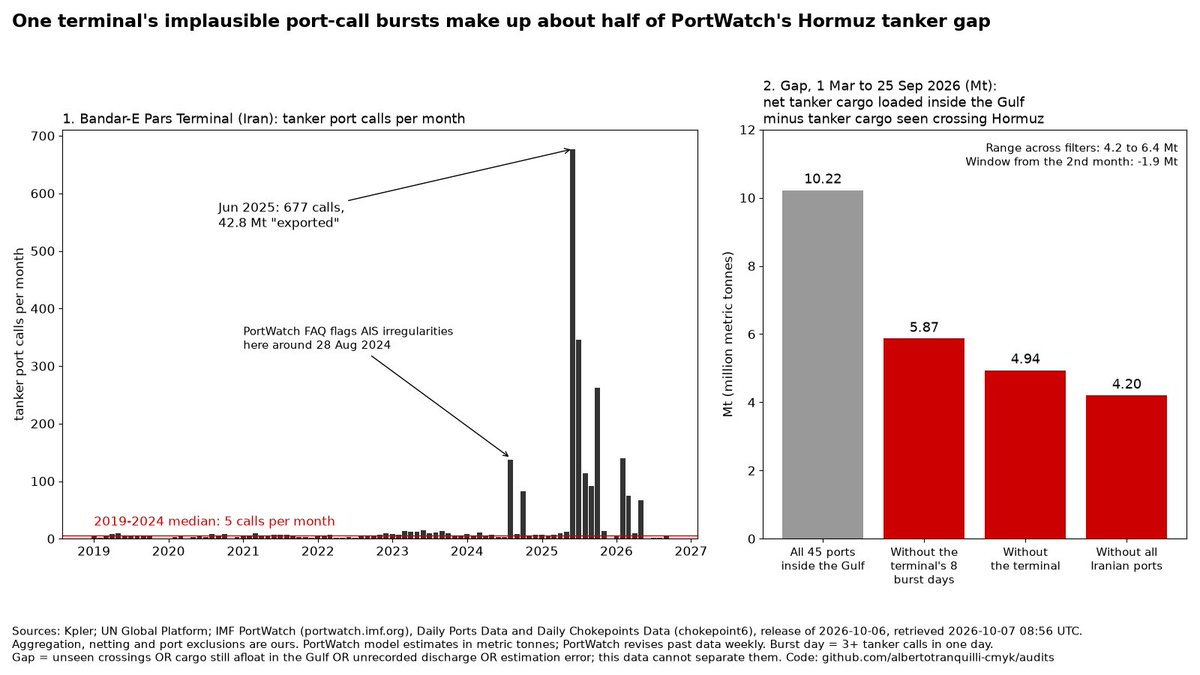
PortWatch's port series shows 10.22 Mt more net tanker cargo loaded inside the Gulf than its Hormuz series sees crossing (1 Mar-25 Sep 2026).
About half comes from one terminal with implausible data. Filtering it: 4.2 to 6.4 Mt.
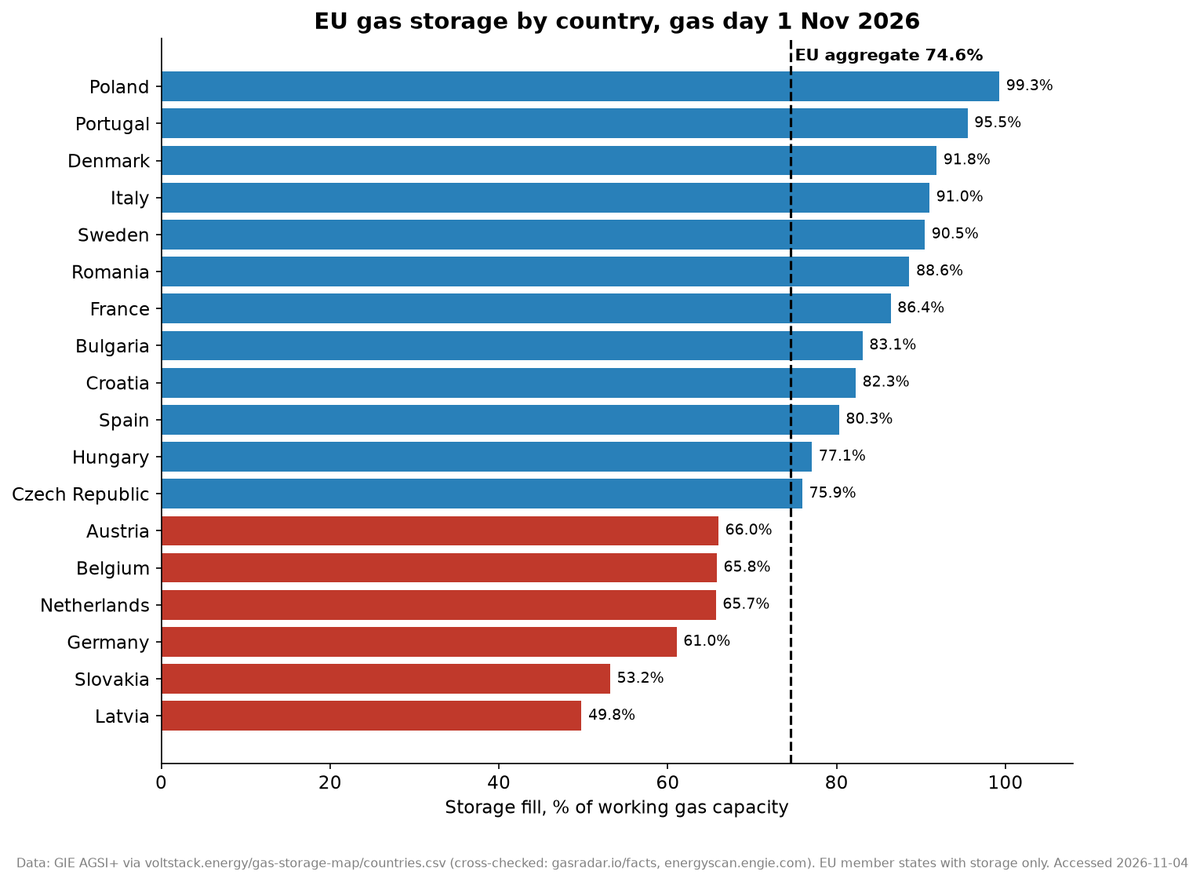
EU gas storage, gas day 1 Nov 2026: 74.6% full. Poland 99%, Italy 91%; Germany 61%, Latvia 50%, Slovakia 53%. The EU average hides a wide north-west gap going into winter. Data: GIE AGSI+.
Hormuz, Mar-Sep 2026: ports inside the Strait shipped 10.2 Mt more than tankers seen leaving. Strip Bandar-E Pars bursts and Iranian ports: 4.2 Mt left. Unseen, afloat, unrecorded, or estimate error. Data: IMF PortWatch.
The CCC's 2020 net cost of net zero was £478bn. Add the sector rows AND the annual totals row and you get £957bn: the same money counted twice. One spreadsheet row, ~£480bn of error.
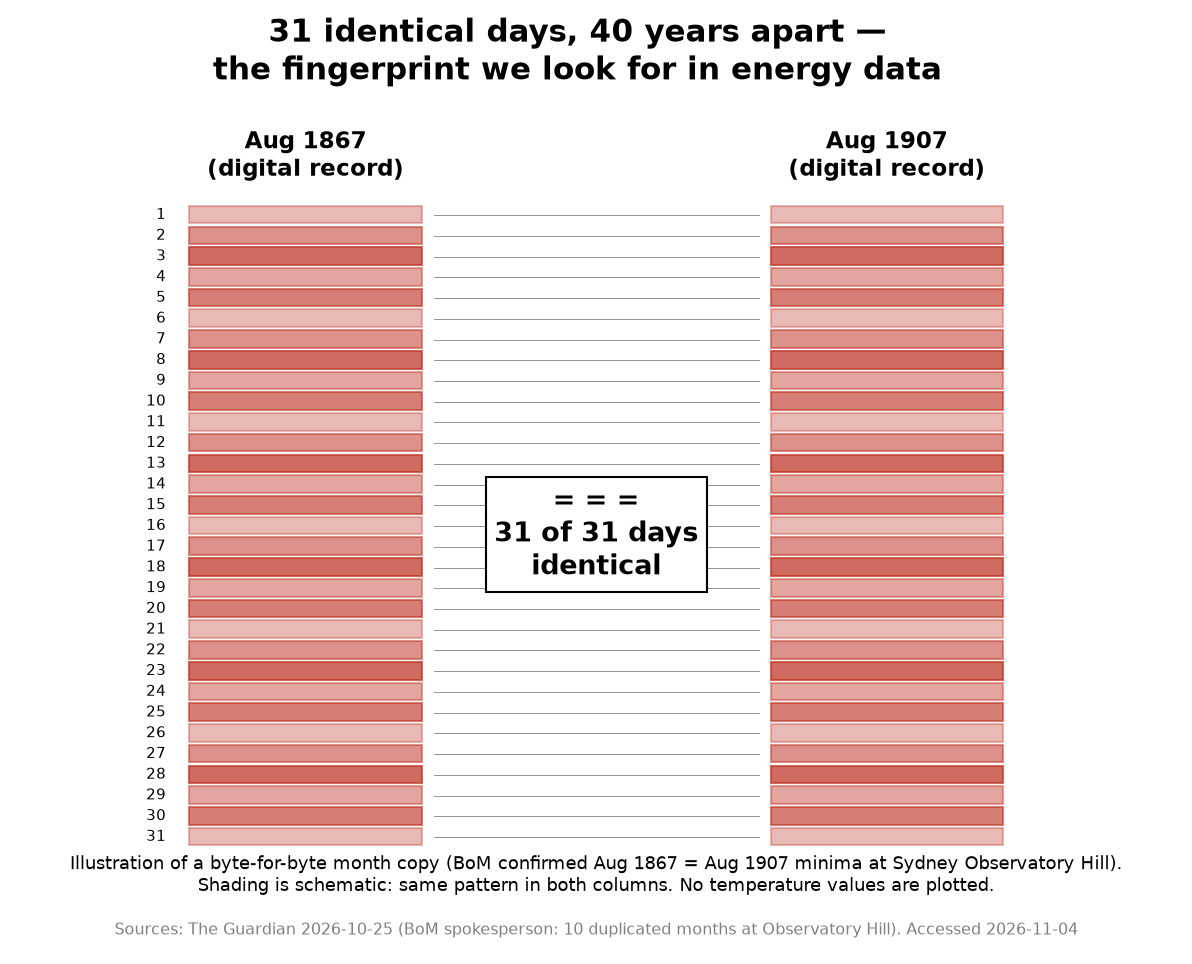
Aug 1867 and Aug 1907 at Sydney Observatory Hill: same minima on all 31 days. BoM confirmed the copy. A duplicated block is the fingerprint we now scan for in energy data. Illustration, no values plotted.
Knuth paid $2.56 per error in his own books.
Entry #0 in our public error ledger: we overstated the Hormuz gap before anyone else found it.
10.23 Mt → 4.2–6.4 Mt. Credited.
https://t.co/3hApV6sfDB
🚨 CVE-2026-97631 è grave. Ma il problema più inquietante potrebbe essere altrove.
Il 26 ottobre runZero ha pubblicato nuove evidenze su vulnerabilità nei sistemi che amministrano i server indipendentemente dal sistema operativo.
🔴 Avocent — CVE-2026-65184 (9,8): possibile esecuzione di comandi root senza autenticazione.
🔴 Supermicro — CVE-2026-65211: accesso arbitrario alla memoria fisica del BMC da parte di un amministratore IPMI.
🔴 Dell — CVE-2026-80357: dimostrato un aggiramento della verifica di integrità del firmware, in presenza di specifici prerequisiti.
E qui emerge il vero problema.
Puoi reinstallare il sistema operativo, aggiornare il kernel e abilitare Secure Boot. Ma chi verifica l’integrità del controller che gestisce fisicamente il server?
Il BMC è un computer dentro il computer. Può rimanere operativo anche quando il server principale è spento.
Non significa che ogni server sia compromesso. Significa che proteggere il sistema operativo non equivale a proteggere l’intera macchina.
La prossima grande crisi informatica potrebbe non iniziare da Windows, Linux o UEFI, ma dall’infrastruttura di gestione che diamo per affidabile.
Fonti: runZero, Supermicro Security Advisory, Google Security Research.
#CyberSecurity #BMC #Firmware #ServerSecurity
@EnergzdEconomy One caveat if this shift is tracked with JODI data: China's "refinery intake" there equals production + imports − exports in 70 of 70 months since Oct 2020. JODI's country note says "calculated", not observed. We pre-registered the Aug figure: https://t.co/FBqxk0dEwf
@Ole_S_Hansen Exact print: 424,134 thousand barrels (EIA series WCESTUS1, week ending 2 Oct). We archive every weekly release with a timestamp so silent revisions get caught and logged in public: https://t.co/N2ms2wfz9K
@TankerTrackers For contrast, the free IMF PortWatch AIS series counts only ~0.50 Mt of tanker cargo crossing Hormuz in Aug 2026 and ~0.37 Mt in 1-25 Sep. Dark ships simply aren't in it, which is why AIS-only counts miss what you show. Our open audit of that series: https://t.co/gMgCuHu05N
Registered late, on the record: the published slot was 8 Oct 07:30 UTC; the commit is 20:15 UTC. At that moment JODI's file still showed Last-Modified 22 Sep 07:18 UTC, so no August data was out. File, hash, commits: https://t.co/rbP7vKAP7Q
Code, tables, hashes: https://t.co/gMgCuHu05N
One script reruns it all; --fresh re-downloads from PortWatch (no PortWatch data shipped).
Find an error: it goes into the repo's public error ledger, credited if you want. Entry #0 is ours: our first draft overstated this result.
AUDIT #1: Strait of Hormuz, IMF PortWatch data.
PortWatch's port series shows 10.22 Mt more net tanker cargo loaded inside the Gulf than its Hormuz series sees crossing (1 Mar-25 Sep 2026).
About half comes from one terminal with implausible data. Filtering it: 4.2 to 6.4 Mt.
PortWatch's "capacity" field is estimated cargo on board in metric tonnes: draught-based payload share x deadweight, with ships in ballast set to zero since a 2025 method update.
Some trackers label it deadweight tonnage: same numbers, wrong quantity name.