Official account of #Atmosfera Journal published by @ICAyCC_UNAM on theoretical, empirical, and applied research contributions in #AtmosSci and #Climate
#UnDíaComoHoy se conmemora el Día Internacional de la Mujer y la Niña en la Ciencia 👩🔬. Este #11F, conoce sobre cómo revolucionar las ciencias desde el feminismo con #HistoriasUNAM de #UNAMGlobalTV > https://t.co/Om1toCNHY6
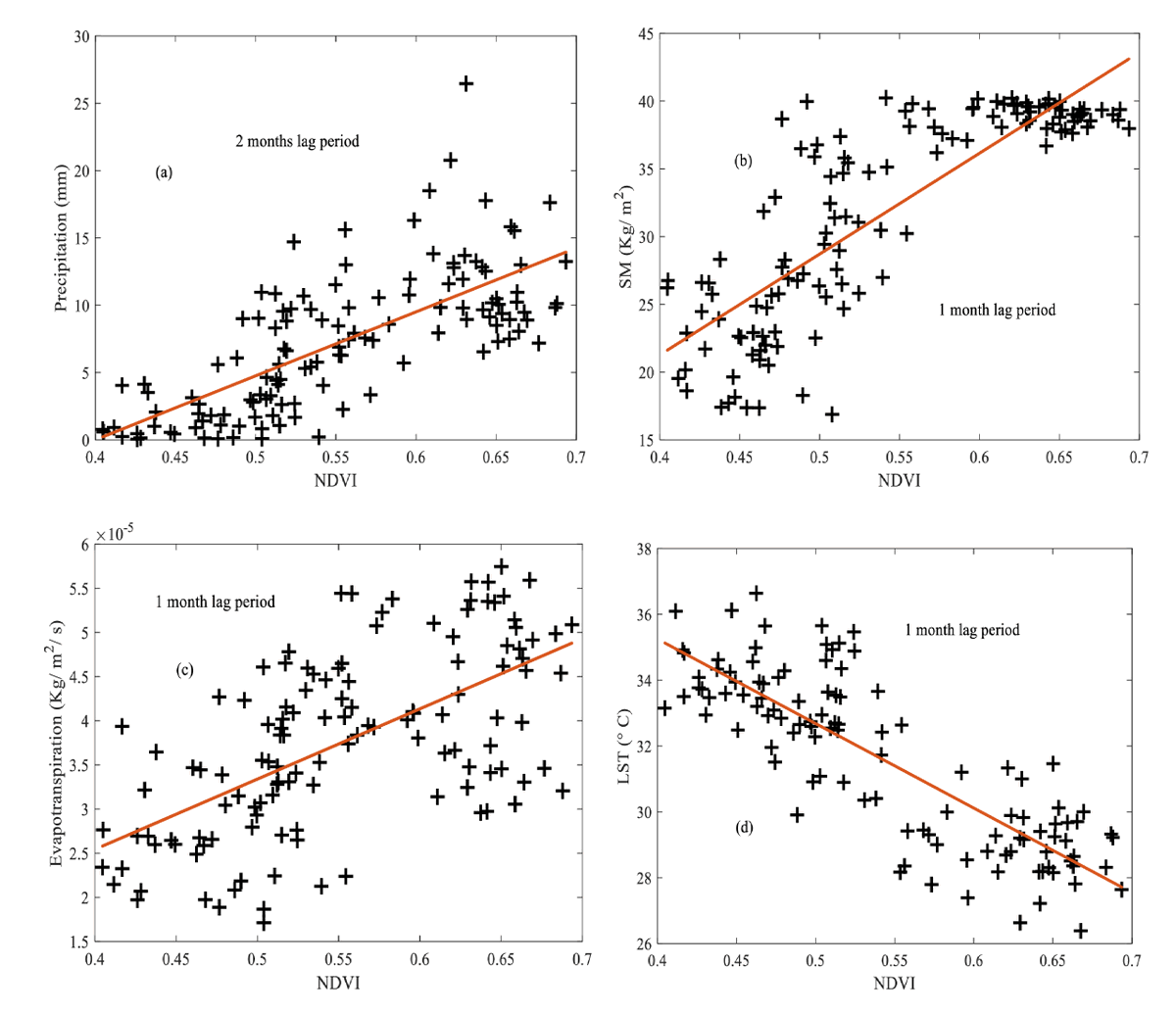
Highlights💡: NDVI and EVI exhibit maximum correlation with rainfall, SM, ET, and LST within specific lag periods. A positive correlation is observed between NDVI and ET. A negative correlation is noted between NDVI and LST in the region studied (2/2).
We invite you to read ▶️ “Spatiotemporal analysis of different vegetation indices and relation to meteorological parameters over a tropical urban location and its surroundings” by A. De et al. at https://t.co/XzVVRAOuHY From our Vol.38 of @ATMJournal (1/2).
Highlights💡: The water chemistry responds to the local conditions of the air column below the clouds, while the isotope composition is influenced by the origin of moisture and the physical conditions in which water evaporates and condenses as well (2/2).
Enjoy reading ▶️ “Chemical and isotopic composition of rainwater in the eastern Yucatan peninsula, Mexico (edited by Dr. Iván Y. Hernández Paniagua)” by D. Ortega-Camacho et al. at https://t.co/Xm5i2V3yGs From our Vol.38 of @ATMJournal (1/2).
Highlights: The lower limit of surface freezing was estimated for each arrival of cold air masses; the occurrence of snowfall was determined by remote sensing, the area of snow cover was calculated and the population affected by freezing weather conditions was estimated (2/2).
Read our article ▶️ “Severe winter conditions in the Citlaltepetl-Cofre de Perote mountain range, 2021-2022” by V. Soto et al. at https://t.co/a6N0mgTskp From our Vol.38 of @ATMJournal (1/2).
Highlights💡: To analyze the reasons for the failure of the NWF, two experiments using the WRF model, with GFS and ERA5 data as initial condition (IC) were conducted. However, no experiment captured the intensity or rapid intensification of HO (2/2).
We invite you to read ▶️ “Why did numerical weather forecasting systems fail to predict the Hurricane Otis’s development?” by J. C. Guillermo-Montiel et al. at https://t.co/jXkENr84Ng From our Vol.38 of @ATMJournal (1/2).
Highlights💡: This study examines the levels of specific metals (Al, Fe, Cu, Pb, Zn) present in dust samples collected from two laboratories in UiTM Cawangan Pahang, Malaysia. The analysis focuses on assessing pollution levels and potential impacts on human health (2/2).
Read our article ▶️ “Indoor dust composition of university laboratories and potential health risks in Pahang, Malaysia” by F. R. Sulaiman et al. at https://t.co/KGgQI9k9fZ From our Vol.38 of @ATMJournal (1/2).
Highlights💡: The synoptic classification identified four main surface synoptic patterns associated with HRE in the IVr. The most frequent pattern was related to the presence of the South Atlantic Subtropical Anticyclone (SASA) with blocking characteristics (2/2).
We invite you to read ▶️ “Synoptic climatology associated with heavy rainfall events in the Itajaí Valley region, Brazil” by G. C. J. Escobar and M. Barbio Rosa at https://t.co/pj2c1mXgcI From our Vol.38 of @ATMJournal (1/2).
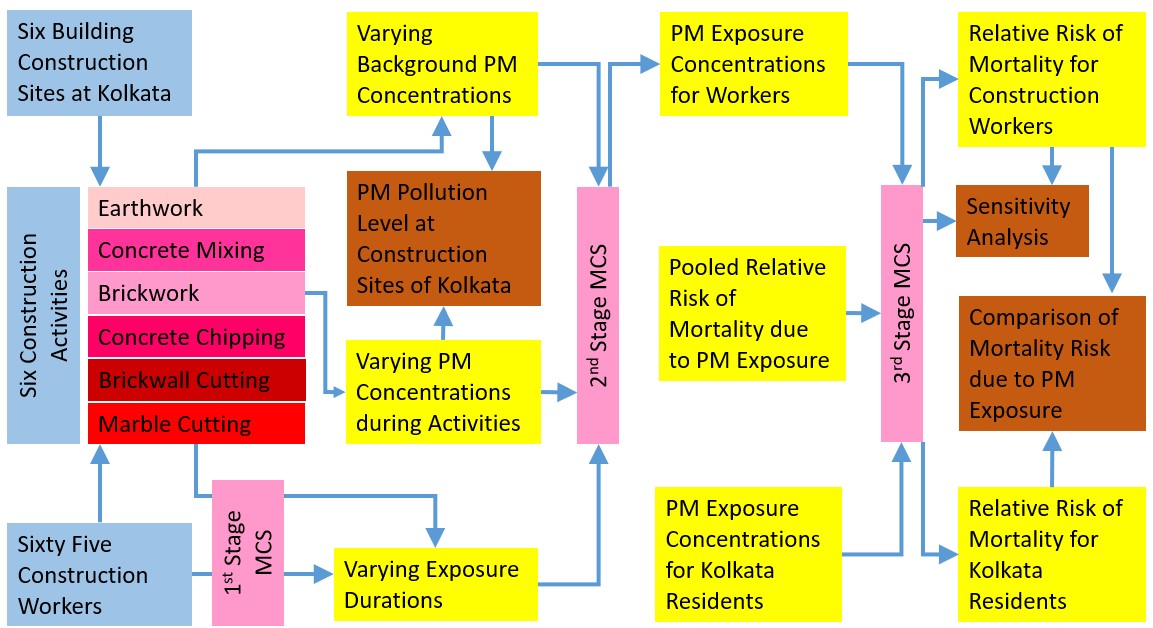
Highlights💡: The mortality risk of exposed construction workers was alarmingly higher than the average Kolkata City population. Policy-level and site-level interventions are necessary to control and mitigate the alarming scenario (2/2).
Enjoy reading our article ▶️ “Monitoring of construction dust and assessment of probable increment in mortality risks for exposed construction workers at Kolkata, india” by A. Sarkar et al. at https://t.co/FB1LnVbJOl From our Vol.38 of @ATMJournal (1/2).
Highlights💡: WRF consistently represented the height of the PBL and atmospheric stability. Therefore, this study shows that WRF results can be used to simulate PBL conditions and could be used as a source of upper air information in the MARJ (2/2).
We invite you to read ▶️ “Simulation of the Planetary Boundary Layer characteristics and its relation to air quality in the Metropolitan Area of Rio de Janeiro, Brazil”
by W. W. da Silveira et al. at https://t.co/osJtw6qRuO From our Vol.38 of @ATMJournal (1/2).
Highlights💡: Evaluation of error metrics revealed superior results incorporating shoreline distance as a covariable in the wet month of July. Conversely, optimal results were achieved for the dry month (February) using ordinary kriging excluding outliers’ values (2/2).
Read our article ▶️ “Enhancing geostatistical precipitation estimations for the Santiago River basin, Mexico” by J. R. Ávila-Carrasco et al. at https://t.co/XreA9fvUcu
From our Vol.38 of @ATMJournal (1/2).