What the West Still Doesn’t Get It:
Communism’s True Core: The Systemic Lie
Most people in the West think they understand communism. They picture bread lines, gulags, failed five-year plans, and the collapsed Soviet Union. They treat it as a discredited economic theory – an experiment that proved that abolishing private property doesn’t work. Case closed, history moved on.
This misunderstanding may be the most dangerous intellectual failure of our time.
Communism was never primarily an economic system. Economics was the surface. Beneath it lay something far more insidious: a total, systemic, institutionalized commitment to lying. Not occasional dishonesty. Not spin or propaganda in the ordinary sense. Something deeper – a civilizational war against truth itself, waged through every institution, every classroom, every newspaper, every conversation, until reality itself became negotiable and the lie became the air people breathed.
The Words We’re Missing
The Polish language, forged by decades of living under this system, produced words for this phenomenon that English simply cannot match:
Zakłamanie [zah-kwah-MAH-nyeh] – a state of total, pervasive, socially embedded falsehood, a condition in which an entire society is saturated with lies so thoroughly that truth becomes almost inaccessible.
Obłuda [ob-woo-dah] – a deep, performative hypocrisy, the gap between what is proclaimed and what is actually practiced, the mask worn so long it begins to feel like a face.
These are not words for individual liars. They describe a system – a mode of social organization built on organized mendacity, where the lie is not the exception but the foundation. English has no single word for either concept, and that linguistic gap is not a coincidence. It reflects a gap in experience. Cultures that did not live under communism lack the vocabulary because they lack the wound.
And because they lack the vocabulary, they struggle to recognize the thing when it reappears in new clothing.
The Continuity: Communism, Leftism, Wokeism
What we call wokeism today, or the broader radical left, is not a new phenomenon. It is the same operating system running on updated hardware. The specifics have changed – instead of the proletariat, we have marginalized identity groups; instead of bourgeois class enemies, we have racists and transphobes; instead of socialist realism, we have DEI statements. But the deep structure is the same.
That deep structure is this: truth is not discovered, it is assigned. Reality is not something to be understood honestly but something to be narrated strategically. Language is not a tool for communication but a weapon of power. And anyone who resists the approved narrative is not simply wrong – they are dangerous, and must be silenced, shamed, or destroyed.
This is zakłamanie in its modern form. This is obłuda wearing a human rights badge.
The same movement that insists men can become women will insist, with equal fervor, that questioning this is an act of violence. The same institutions that claim to champion free inquiry systematically suppress dissent. The same people who invoke tolerance as their highest value are among the most intolerant forces in public life. The contradiction is not accidental – it is structural. It is the system working as designed.
Why the West Still Doesn’t Get It
People who grew up in freedom tend to assume, at some level, that bad actors know they are lying. That somewhere behind the ideological performance, there is a cynical operator who privately acknowledges reality. This assumption is wrong, and it is why Westerners consistently underestimate what they are dealing with.
The totalitarian lie, at its mature stage, is not cynical. It is believed. Or rather, it creates a condition in which the distinction between belief and performance collapses entirely. People learn to say things they do not believe so fluently, and for so long, that they lose access to what they actually think.
1/2
Pope Leo XIV encourages young people to marry and create families:
"Marriage is also a vocation. Do not be afraid of marriage and of forming a family."
The start of our Corpus Christi procession, with 600+ Catholics taking up two full city blocks in the streets of Cincinnati.
O Sacrament Most Holy! O Sacrament Divine!
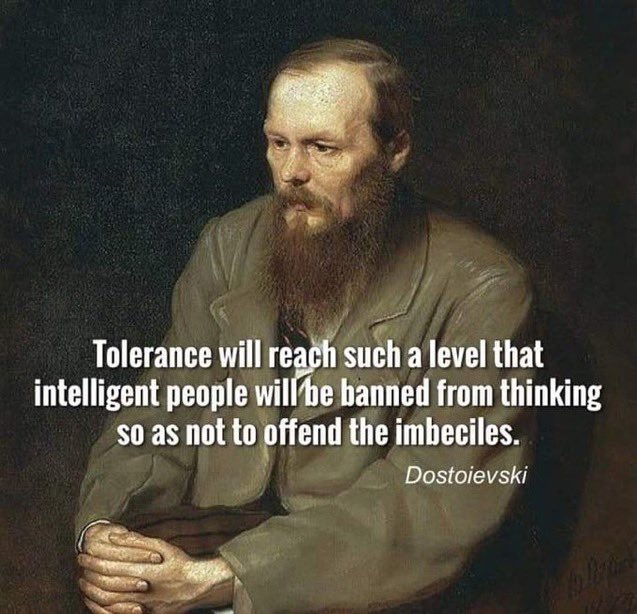
The world is so fake right now… our tolerance has reached levels where the intelligent are banned from thinking so as to not offend the imbeciles running the world
📌 We can’t define a man/woman
📌 We can’t define what gender is
📌 We can’t offend colored people
📌 We are persecuted for the truth
📌 We pay reparations for crimes that we didn’t commit
Cardinal Müller thinks it's unreasonable to suggest that the Novus Ordo obscures the sacrificial nature of the Mass.
Here is a list of changes which do exactly that:
- Judica, which refers to altar worship, was removed
- The prayer aufer a nobis, which refers to the priest as sacrificer, was removed
- The NO lectionary skips passages related to sacrifice. For example in Hebrews 13 the critical verses 9-16 have been cut out.
-The Suscipe sancte pater which mentions the Spotless Host (ie sacrificial victim") has been cut out.
-The Orate Fratres only survived thanks to pushback
-The Secret regularly waters down the references to sacrifice in the NO
- In the Quam oblationem, the words “consecrate” and “perfect” are replaced by “acknowledge” and “spiritual.”
- At the consecration of the wine, the words “as often as you do these things” are omitted before “do this in memory of me”. The effect is to emphasize the memorial nature of the consecration. The words “Mystery of Faith” are placed after instead of during the words of consecration, where they had directly referred to the mystery of Transubstantiation, and are instead explained by a new phrase such as “We proclaim your Death, O Lord, and profess your Resurrection until you come again.”
- The word consecrated is omitted from the commingling.
-The Placeat Tibi, which refers to the Mass as a sacrifice, is omitted.
For further information, see my article here:
https://t.co/1xS6YHJTQI
The soul remembers what the mind forgets.
In this beautiful moment, Yvon Kanters sings Ave Maria with Rudy, a tenor living with dementia.
Dementia can take names, dates, and memories.
But it cannot erase the music God planted deep in the soul.
For a few minutes, suffering gives way to beauty.
The room becomes a chapel.
And grace reminds us:
every human life is still sacred, still loved, and still capable of reflecting God. ❤️
Yesterday in DC Kennedy Center I was honoured to say a few words at the 🇺🇸 US premiere of a fantastic French movie on the Vendee uprising, VICTORY OR DEATH. Dark, bloody, beautifully shot and full of hope.
Check out the homepage:
https://t.co/lZamDyxEYK
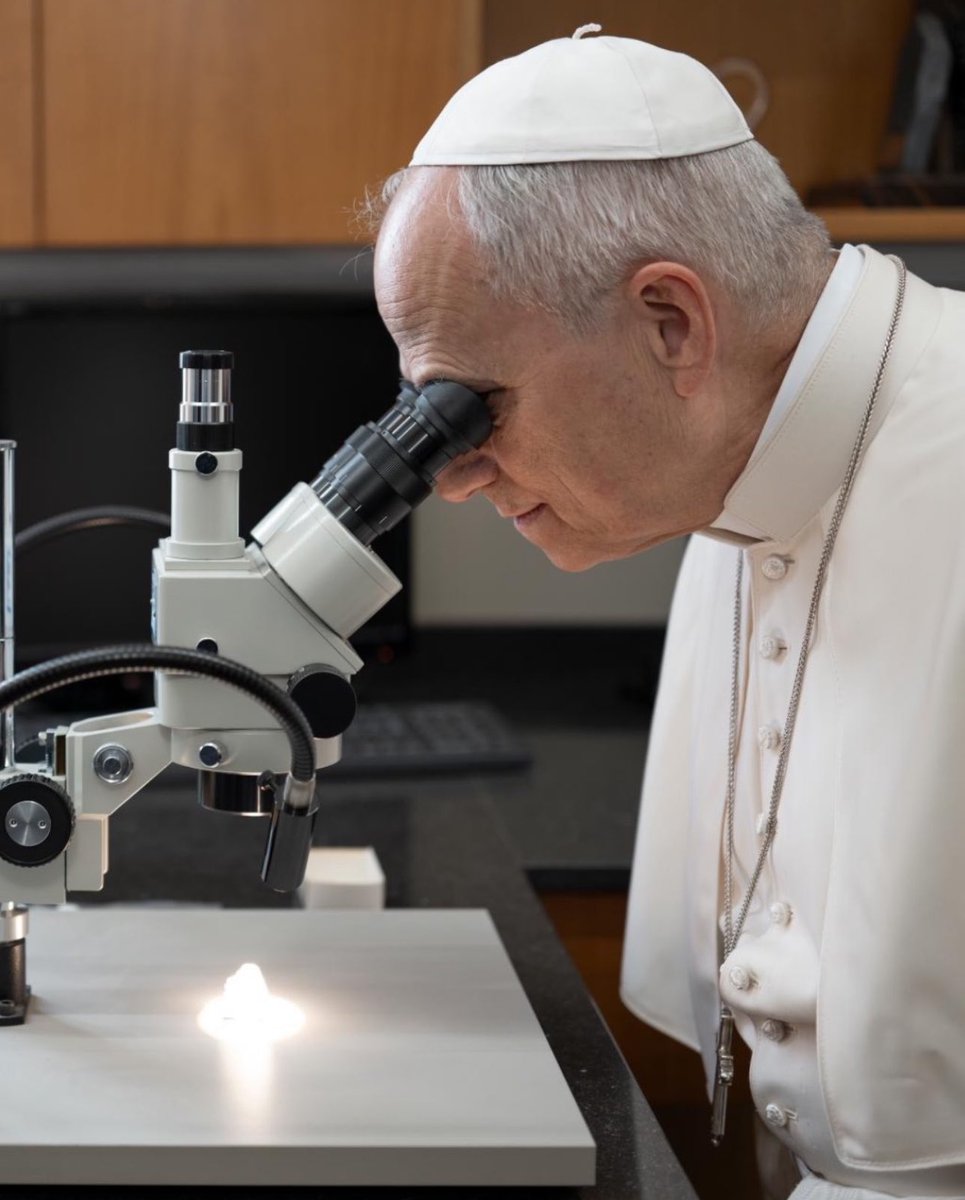
Atheists: The Catholic Church has always been against science
Meanwhile the Church:
• Georges Lemaître — Catholic priest; proposed the “primeval atom” theory, which became the foundation of the modern Big Bang cosmological model.
• Gregor Mendel — Augustinian friar; discovered the laws of inheritance (Mendelian genetics), forming the basis of modern genetics.
• Nicolaus Copernicus — Catholic canon; developed the heliocentric model (Sun-centered solar system), transforming astronomy.
• Christopher Clavius — Jesuit priest; principal mathematician behind the Gregorian calendar reform still used worldwide today.
• Roger Boscovich — Jesuit priest; early theory of atomic structure and force fields, influencing modern physics concepts.
• Angelo Secchi — Jesuit priest; pioneer of astrophysics and first classification system of stars based on spectra.
• Francesco Maria Grimaldi — Jesuit priest; discovered diffraction of light and contributed to wave theory of optics.
• Jean Picard — Catholic priest; first highly accurate measurement of Earth’s radius using modern scientific instruments.
• Nicolas Steno — Catholic bishop; founded stratigraphy (law of superposition), a foundation of modern geology.
• Marin Mersenne — Minim friar; “Mersenne primes” in number theory are named after him; also built scientific communication networks across Europe.
• Benito Viñes — Jesuit priest; developed early hurricane tracking and forecasting methods in Cuba.
Song “Andromeda” is inspired by the real historical experience of Croatian Catholic women in Bosnia and Herzegovina during the Ottoman Empire, who used tattoos to preserve their faith, identity, dignity, and freedom.
This is not a political provocation, but a reminder of a heritage and values passed down through generations.
The Eurovision performance by etno group Lelek was a powerful and dignified portrayal of a part of history that should never be forgotten.
"Starszy mężczyzna, mający około siedemdziesięciu pięciu lat, podróżował pociągiem z otwartą książką w dłoniach. Wykorzystywał czas podróży, by całkowicie zanurzyć się w lekturze. Obok niego siedział młody student, pochłonięty grubym podręcznikiem naukowym, który co jakiś czas zerkał na sąsiada z wyraźnym zainteresowaniem.
W końcu zauważył, że starszy pan czyta Biblię. Na jego twarzy pojawił się lekko ironiczny uśmiech i bez większych ceregieli zapytał:
— Naprawdę wierzy pan jeszcze w tę książkę pełną bajek i legend?
Staruszek spokojnie uniósł głowę i odpowiedział łagodnym tonem:
— Oczywiście. To nie są ani bajki, ani opowieści — to Słowo Boże. A pan uważa, że się mylę?
— Bez wątpienia! — odparł student z przekonaniem. — Lepiej byłoby poświęcić czas na naukę i historię świata. Wtedy zrozumiałby pan, że choćby Rewolucja Francuska, ponad sto lat temu, pokazała jasno absurd i fałsz religii. W takie rzeczy wierzą już tylko ludzie niewykształceni albo fanatycy.
Na twarzy starszego mężczyzny pojawił się delikatny uśmiech.
— A proszę mi powiedzieć, młody człowieku, czy to rzeczywiście pogląd wszystkich naukowców na temat Biblii?
Student spojrzał na zegarek i odpowiedział pospiesznie:
— Proszę posłuchać, wysiadam na następnej stacji i nie mam czasu, by to wszystko tłumaczyć. Proszę jednak zostawić mi swój adres — wyślę panu materiały naukowe, które pomogą panu zrozumieć naprawdę ważne kwestie.
Starszy pan, z niewzruszonym spokojem, sięgnął do kieszeni płaszcza, wyjął wizytówkę i podał ją studentowi. Ten chwycił ją od niechcenia, lecz gdy tylko spojrzał na napis, jego pewność siebie nagle zniknęła.
Zastygł na chwilę, wzrok mu się zamglił, a potem — ze spuszczoną głową — wysiadł z pociągu, przygnieciony mieszanką wstydu i zdumienia.
Na wizytówce widniało:
Profesor Louis Pasteur
Dyrektor Generalny Instytutu Badań Naukowych
Uniwersytet Narodowy we Francji
Opowieść głosi, że taka rozmowa rzeczywiście miała miejsce w 1892 roku. A sam Pasteur powiedział kiedyś:
„Odrobina wiedzy oddala od Boga, ale głęboka wiedza prowadzi z powrotem do Niego.”
Morał: prawdziwie wybitny umysł potrafi zachować pokorę — nawet wobec kogoś, kto myli pewność siebie z mądrością."
za Kocham i Rozumiem


![Kristof_Poland's tweet photo. What the West Still Doesn’t Get It:
Communism’s True Core: The Systemic Lie
Most people in the West think they understand communism. They picture bread lines, gulags, failed five-year plans, and the collapsed Soviet Union. They treat it as a discredited economic theory – an experiment that proved that abolishing private property doesn’t work. Case closed, history moved on.
This misunderstanding may be the most dangerous intellectual failure of our time.
Communism was never primarily an economic system. Economics was the surface. Beneath it lay something far more insidious: a total, systemic, institutionalized commitment to lying. Not occasional dishonesty. Not spin or propaganda in the ordinary sense. Something deeper – a civilizational war against truth itself, waged through every institution, every classroom, every newspaper, every conversation, until reality itself became negotiable and the lie became the air people breathed.
The Words We’re Missing
The Polish language, forged by decades of living under this system, produced words for this phenomenon that English simply cannot match:
Zakłamanie [zah-kwah-MAH-nyeh] – a state of total, pervasive, socially embedded falsehood, a condition in which an entire society is saturated with lies so thoroughly that truth becomes almost inaccessible.
Obłuda [ob-woo-dah] – a deep, performative hypocrisy, the gap between what is proclaimed and what is actually practiced, the mask worn so long it begins to feel like a face.
These are not words for individual liars. They describe a system – a mode of social organization built on organized mendacity, where the lie is not the exception but the foundation. English has no single word for either concept, and that linguistic gap is not a coincidence. It reflects a gap in experience. Cultures that did not live under communism lack the vocabulary because they lack the wound.
And because they lack the vocabulary, they struggle to recognize the thing when it reappears in new clothing.
The Continuity: Communism, Leftism, Wokeism
What we call wokeism today, or the broader radical left, is not a new phenomenon. It is the same operating system running on updated hardware. The specifics have changed – instead of the proletariat, we have marginalized identity groups; instead of bourgeois class enemies, we have racists and transphobes; instead of socialist realism, we have DEI statements. But the deep structure is the same.
That deep structure is this: truth is not discovered, it is assigned. Reality is not something to be understood honestly but something to be narrated strategically. Language is not a tool for communication but a weapon of power. And anyone who resists the approved narrative is not simply wrong – they are dangerous, and must be silenced, shamed, or destroyed.
This is zakłamanie in its modern form. This is obłuda wearing a human rights badge.
The same movement that insists men can become women will insist, with equal fervor, that questioning this is an act of violence. The same institutions that claim to champion free inquiry systematically suppress dissent. The same people who invoke tolerance as their highest value are among the most intolerant forces in public life. The contradiction is not accidental – it is structural. It is the system working as designed.
Why the West Still Doesn’t Get It
People who grew up in freedom tend to assume, at some level, that bad actors know they are lying. That somewhere behind the ideological performance, there is a cynical operator who privately acknowledges reality. This assumption is wrong, and it is why Westerners consistently underestimate what they are dealing with.
The totalitarian lie, at its mature stage, is not cynical. It is believed. Or rather, it creates a condition in which the distinction between belief and performance collapses entirely. People learn to say things they do not believe so fluently, and for so long, that they lose access to what they actually think.
1/2](https://pbs.twimg.com/media/HKXmpzvWAAAls5W.jpg)