Fabulous @BoomRadioUK + 2 hours of great #sixties#songs playing right now on this Saturday morning with DJ Roger Day & his brilliant My Generation Show @TwiggyDay
Fabulous @BoomRadioUK + 2 hours of great #sixties#songs playing right now on this Saturday morning with DJ Roger Day & his brilliant My Generation Show @TwiggyDay
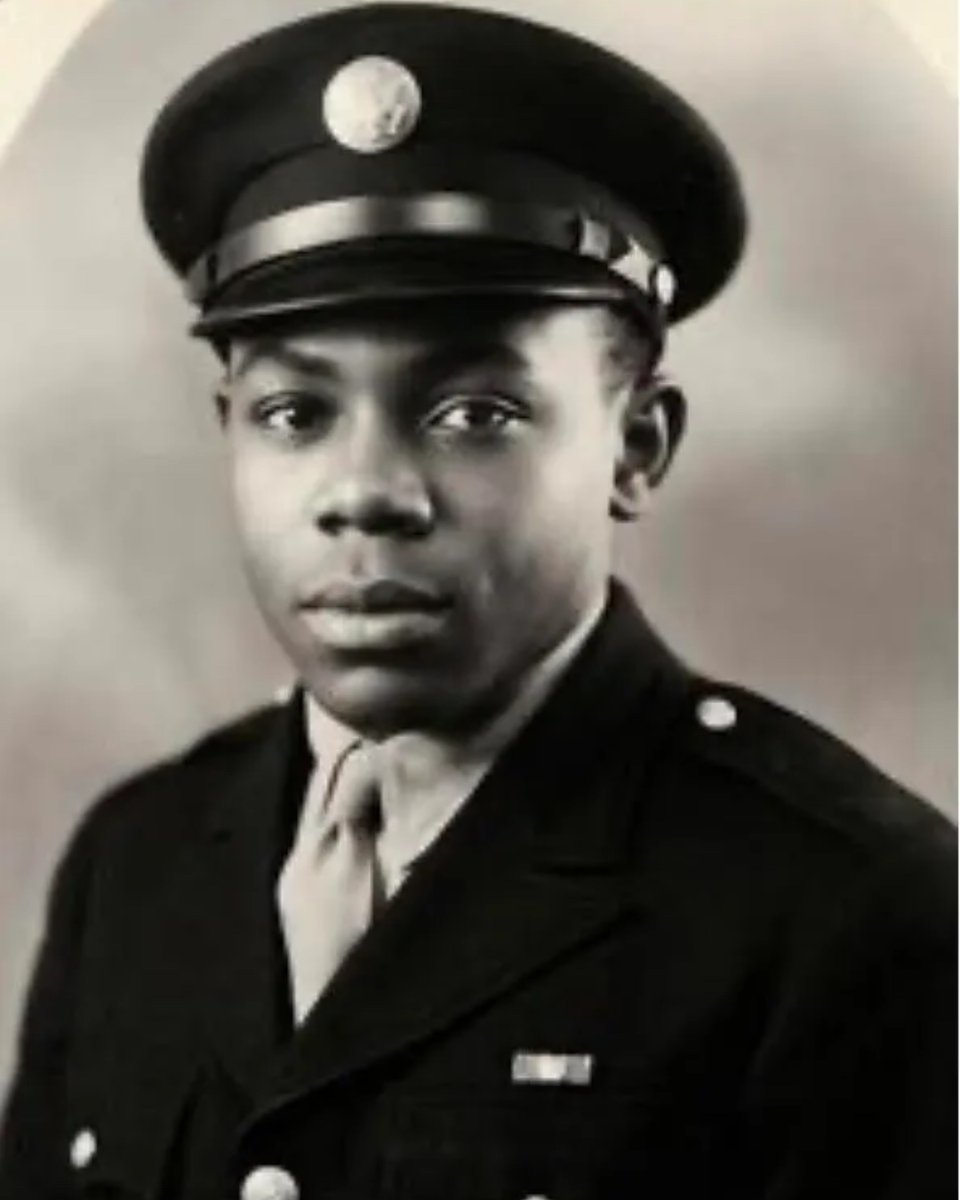
Funeral services were held today for U.S. Army Private Mack Homer, of Tallahassee, FL, who died more than eighty years ago during World War II. He was just 20 years old when he was killed.
Born on February 10, 1924, Homer entered the U.S. Army on his 19th birthday at Fort Benning, Georgia, in 1943. He served with Company E, 364th Engineer General Service Regiment, U.S. Army Corps of Engineers, during World War II.
On July 7, 1944, just weeks after D-Day, Homer was killed in France when an explosion occurred as he and fellow soldiers cleared munitions from a captured enemy bunker. The blast claimed the lives of multiple members of his unit.
Homer's remains were accounted for on May 7, 2025.
Rest in peace, Sir! We thank you for your service!
#WeRememberThem
#BlackVetsCount
In April 1942, the British submarine HMS Urge slipped out of Malta bound for Alexandria. She never arrived. 44 men vanished with her, and for 77 years no one knew where she lay.
Urge was a legend by then. Under Lt-Cdr Edward Tomkinson she ran 20 patrols out of a Malta being bombed almost daily, torpedoed the Italian battleship Vittorio Veneto, sank the cruiser Giovanni delle Bande Nere with two hits from 5,000 yards, and even ferried commandos on secret raids. Aboard for that final voyage was a war correspondent, Bernard Gray, chasing one more story.
Then nothing. Some claimed she went down off Libya. Families spent decades not even knowing which sea held their fathers and husbands.
The answer came from Tomkinson's own grandson. Working with a University of Malta archaeologist and a Canadian historian, he found that the Axis had laid a fresh minefield across Urge's exact route just days before she sailed. In October 2019 divers found her two miles off Malta, 130 meters down, bow torn clean off. She had hit that minefield within minutes of leaving harbor and gone down before anyone could react.
In 2021 they read the name off her conning tower and made it certain.
She rests there now as a war grave, exactly where she fell, 44 men finally accounted for.
A Farewell at the Front Door
Before the train, before the battlefield, there was this moment.
A soldier of the Sherwood Foresters (Nottinghamshire and Derbyshire Regiment) says goodbye to his mother as he leaves home after 14 days' leave during the First World War. One final adjustment to his uniform. One last embrace. Then it's time to go.
Part of the Imperial War Museums' Fourteen Days' Leave photographic series, this image captures the quiet reality of war beyond the front line. Every departure carried uncertainty—not only for those who served, but for the families who remained at home, waiting and hoping for their safe return.
As we reflect on images like this, we remember that military service has always been a shared experience. Behind every uniform is a family, a community and loved ones whose lives are also shaped by service.
Today, Veterans' Foundation continues to back the organisations that support veterans and their families across the UK, helping them access the care, connection and opportunities they need long after their service has ended.
Because supporting those who have served also means supporting the people who stand beside them.
Photo: Saidman (Mr), War Office official photographer, Public domain, via Wikimedia Commons
Dirk Bogarde served as an intelligence officer with the 21st Army Group during World War Two, landed in Europe and participated in the liberation of the Bergen-Belsen concentration camp, of which he commented:
"The gates were opened, and then I realised that I was looking at Dante's Inferno. And a girl came up who spoke English, because she recognised one of the badges, and she ... her breasts were like, sort of, empty purses, she had no top on, and a pair of man's pyjamas, you know, the prison pyjamas, and no hair ... and all around us there were mountains of dead people, I mean mountains of them, and they were slushy, and they were slimy."
It was an experience that had the most profound effect on him and about which he had difficulty speaking for many years afterwards.
Scotland has just done something quietly brilliant for its birds 🐦
New buildings across the country will now have to include "swift bricks", hollow bricks built straight into the walls that give birds a safe place to nest.
It sounds like a small thing but it isn't. Swift numbers in the UK have fallen by around 60% since the mid-1990s, and one of the biggest reasons is heartbreakingly simple: modern buildings have nowhere for them to go. Swifts have always nested in the nooks and gaps of our houses, and as those disappeared, so did they.
The birds themselves make it worse by being loyal to a fault. Swifts return to the exact same nest site year after year, having flown thousands of miles from Africa to get there.
When they arrive to find it sealed up, some will keep flying at the spot again and again, sometimes injuring themselves in the process.
The bricks cost about £30 each. They need no maintenance, they don't affect insulation, and once they're in the wall, you'd never know they were there. Sparrows, starlings and house martins use them too, all species in trouble for the same reason.
One RSPB conservationist put it starkly. In his part of Glasgow, not a single swift bred in 2025, the first time in his 30 years there. He called it "nothing short of heartbreaking."
Scotland is the first country in the UK to write this into law. Campaigners are now hoping the rest follows.
MEET JONATHAN REYNOLDS. THE MAN NOW IN CHARGE OF THE ENTIRE BRITISH ECONOMY.
This is the UK's new Business Secretary. He has never run a business. He has never even worked for one. 🤡
He knows absolutely nothing about risk taking, entrepreneurship, or meeting a payroll.
He has never had to hire staff, remortgage his house to provide working capital, or skip his own salary so his employees could have theirs!
In fact, he could not even manage to finish his basic training to become a solicitor. Yet the Westminster elite think he is qualified to dictate how British businesses are run!
How can we expect our economy to grow when the people running it have never spent a single day in the private sector? They are career politicians who have spent their entire lives living off the taxpayer.
RT if you are completely sick of clueless career politicians running our country into the ground! 🇬🇧🔥
Ronnie Hamlyn, known as "The Pied Piper of Harrogate," was one of the RAF's first "aces in a day."
On the morning of 24 August 1940, he was waiting to face his commanding officer after being charged with negligence.
Before he could be seen, the scramble bell rang.
In his first sortie, he shot down a Ju 88 bomber and a Bf 109 over Dover. He returned to the CO's office—only for the alarm to sound again. This time, he downed another Messerschmitt.
After returning once more, the bell rang for a third time. Hamlyn took to the skies again and destroyed two more Bf 109s over London.
Five victories in three sorties later, he finally met his commanding officer.
Instead of a reprimand, he was recommended for the Distinguished Flying Medal.
One of the greatest turnarounds in RAF history.
Respect to Ronnie Hamlyn. 🇬🇧
Purchased in South Korea in 1952 for $250, Reckless was originally trained as a racehorse before being bought by Marines to carry ammunition.
She quickly learned supply routes and often carried ammunition to the front lines without a handler. She also learned to lie down or seek cover during artillery barrages and helped carry wounded Marines away from the fighting.
During the Battle of Outpost Vegas in March 1953, Sergeant Reckless made 51 trips in a single day, carrying more than 9,000 pounds (4,100 kg) of ammunition over roughly 35 miles (56 km), much of it under heavy enemy fire. She was wounded twice but continued working throughout the battle.
The Marines treated her as one of their own. She slept in their tents, ate with the men, and became famous for eating almost anything, including scrambled eggs, bacon, candy bars, beer, Coca-Cola, and even poker chips and blankets.
After the war, Sergeant Reckless was brought to the United States, where she was promoted several times, eventually reaching the rank of Staff Sergeant.
She received two Purple Hearts, the Marine Corps Good Conduct Medal, the Korean Service Medal with three bronze service stars, the United Nations Korea Medal, and numerous other honors, making her one of the most decorated animals in U.S. military history.
#archaeohistories
Just 5 years after being fined £90 million for illegally dumping sewage of the Kent coast Southern Water have; just been fined £7m after illegally dumping sewage off Kent coast.
That's the 106 offence in the last 15 years. Time to put an end to the corruption.
https://t.co/WgKYaBPQX6
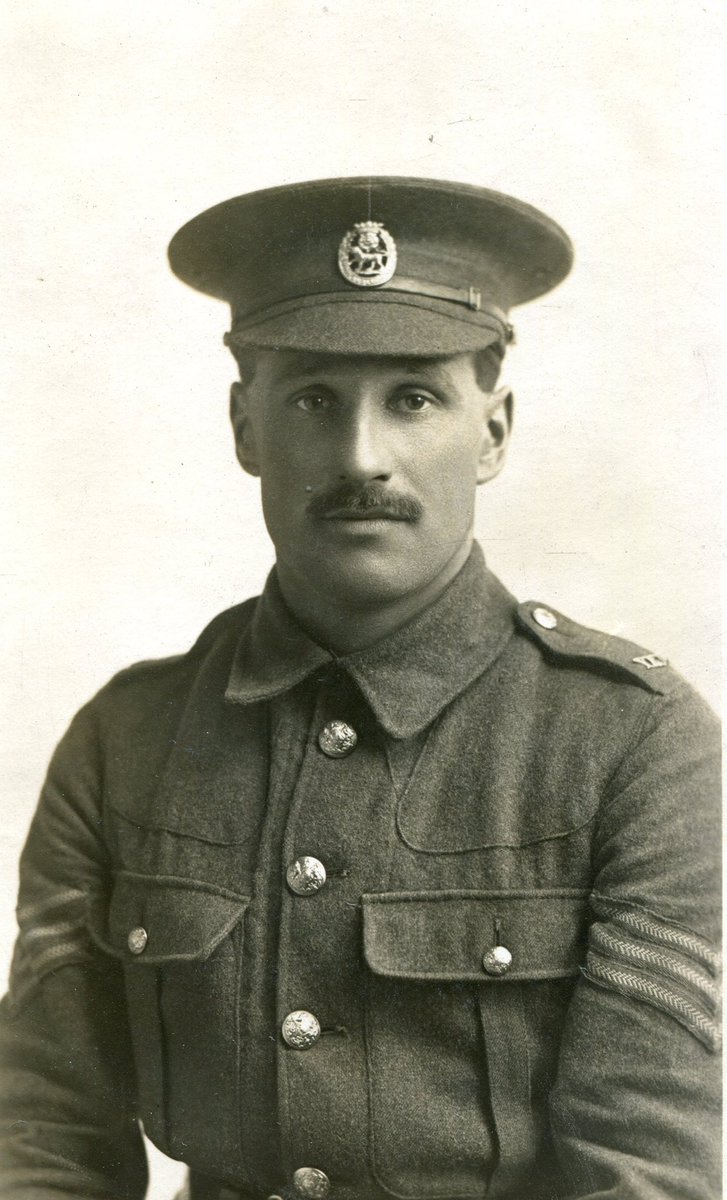
Many years ago I found this photo in a junk shop. Harry Scargill was a Barnsley Draper: he closed his shop ‘for the duration’ but fell in the opening moments of the Somme #OTD in 1916 and never came home. Look into his eyes and you will never forget him. #Somme
Remembering all those who went over the top at the Somme 109 years ago today. ‘The day of hope and slaughter’ as one survivor memorably named it. A day like no other #Somme#WW1
He told his students to go to the windows.
Get out. Jump if you have to.
Then Liviu Librescu walked to the classroom door and pressed his body against it.
He was 76 years old. He weighed 140 lbs
The gunman was in the hallway.
It was April 16, 2007. A Monday morning. Solid mechanics class at Virginia Tech, Room 204. Twenty-two students, most of them 19 or 20 years old.
At 9:45 AM, gunshots echoed through Norris Hall. Room by room, the shooter was working his way down the corridor.
Liviu heard it. He understood immediately.
He had survived the Holocaust. He had survived a labor camp. He had spent decades living under Communist oppression. He knew exactly what evil sounded like.
He told his students to escape through the windows. Second floor — it was a drop, but they'd survive. Then he walked to the door and held it shut with his body.
The shooter tried to force it open. It wouldn't move.
He fired through the door. Wood splintered. Bullets came through.
Liviu stayed.
Behind him, students were climbing out the windows. Dropping to the ground. Running. One by one, all twenty-two of them got out.
The shooter kept firing through the door.
Liviu held it shut until every student was safe.
Then the bullets killed him.
When police arrived, they found his body at the door.
All 22 of his students survived. Not one was injured.
Liviu Librescu was born on August 18, 1930, in Ploiești, Romania.
He was Jewish. In 1941, when he was eleven years old, Romanian authorities sent him and his family to a labor camp. His father died there. Liviu survived. When the war ended, he was fifteen.
He went back to school. Studied engineering. Earned a doctorate from the University of Bucharest.
But Communist Romania had no interest in allowing a Jewish intellectual to succeed. He was blocked from academic positions. Passed over for jobs he deserved. He applied to emigrate. The government kept refusing.
Finally, in 1978 when Liviu was 48 years old — Israeli Prime Minister Menachem Begin personally intervened. Romania let him go.
He had spent most of his adult life trapped in a country that didn't want him.
In Israel, he taught at Tel Aviv University. Published over 300 papers. Became an international expert in aeroelasticity — the science of how air flows over aircraft wings.
In 1985, Virginia Tech offered him a position. He moved to Blacksburg, Virginia. He taught there for 22 years. His students loved him — demanding but kind, high standards, genuine care.
He was still teaching full-time at 76. Still publishing research. Still showing up every Monday morning for solid mechanics.
April 16 was the first day of Passover — the Jewish holiday celebrating liberation from slavery and oppression.
Liviu Librescu died on the day his tradition sets aside to celebrate freedom.
He spent his entire life escaping death and oppression by luck, by persistence, by the intervention of others. And on his last morning, he chose to stand at a door so that twenty-two young people could have the future he had fought so hard to reach.
He could have run. He could have hidden. He could have climbed out a window with his students.
He chose to stay.
The Virginia Tech shooting killed 32 people that day — the deadliest school shooting in American history at the time.
Room 204 had zero casualties.
Because a 76-year-old Holocaust survivor held a door with his body until every student behind him was gone.
His funeral was held in Israel. Students from Virginia Tech flew across the ocean to honor him. The Israeli government awarded him the Star of David Medal posthumously. Virginia Tech named a scholarship in his memory.
His son said his father died the way he lived — protecting others.
A man who survived everything evil threw at him for 76 years.
On his last day, he made sure 22 kids survived too.
Professor Liviu Librescu. August 18, 1930 — April 16, 2007.
Holocaust survivor. Labor camp survivor.
302 published papers. 22 years at Virginia Tech.
22 students out the window.
He held the door.
I feel sad seeing newly planted trees in London dying or dead. It doesn’t take much to come out with a watering can or bucket once or twice a week to keep them alive. Please share. Encourage people to look after what little nature we have.