7 Elements of Storytelling to Write More Intentional and Moving Stories
Story is a bridge 🌉 that can take viewers from where they are, to a new idea, product or service you'd like them to know about.
Here're some ways to help you write ✍️ better stories.
@samuel_Twtt Yes I tried it initially and still plan to make it my go to scheduling tool. Unless it has changed you could schedule up to 10 posts for 3 platforms per day? And, better a way late reply than none, huh? 🙂
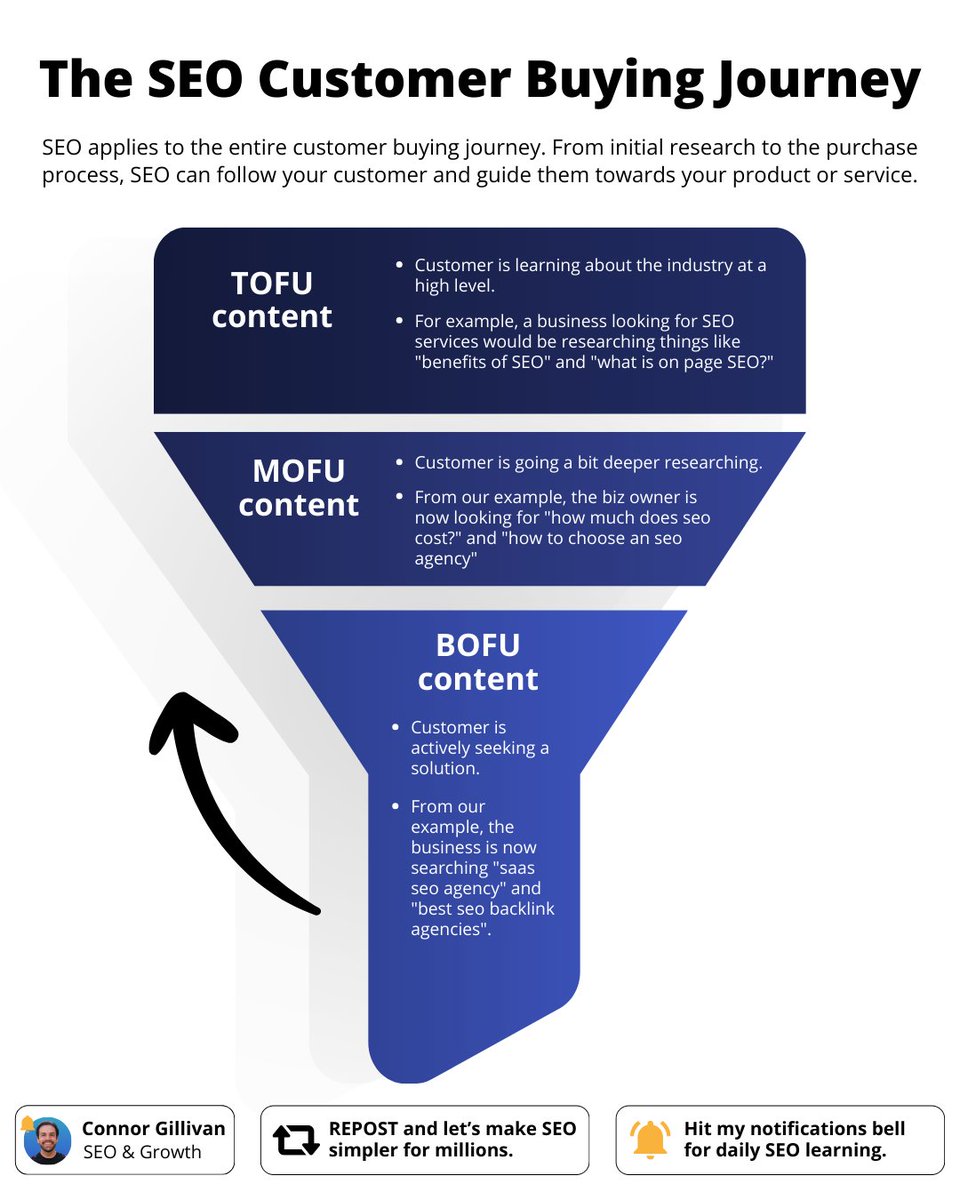
Think of SEO content as a sales funnel.
- TOFU drives awareness.
- MOFU helps research.
- BOFU guides decisions.
My advice: Go from bottom up ⬆️
BOFU first & capture paying customers.
Then cater to customers researching.
Finally, build awareness with TOFU.
Agree?
Dream of publishing more SEO content?
But don't have a good system for it...
I got you covered:
1. Choose keyword
2. Make outline
3. Assign to Writer
4. Edit & optimize
5. Upload
6. Internal link
7. Publish & index
I use this to publish 100+ blogs/mo.
Get the full SOP: 🧵
@ericasmyname I too differ. When you're doing niche-basic content marketing and just starting your email list, newbs are your target audience. And I'm like my icon
Neil Patel (I know, I sound like a broken record 🙂) he gets the most satisfaction from helping newbies.
5 SEO Systems Every Marketer Should Have:
Your SEO needs systems.
There's no way around it.
Especially if you want it to bring results.
These 5 systems helped me grow to $12M ARR w/ an exit in 2019:
How to make 30% more revenue without dropping a single penny on paid ads
From an email marketer who has generated over $50 Million dollars in sales for dozens of 6 to 9 figure Ecommerce brands.
Bookmark this 💰💰💰 Thread
//Thread//
@jappleby What you r-e-a-l-l-y need is, Zero Belly Diet by Dr. David Zinczenko. This book teaches the truth about eating right for good health and weight loss.
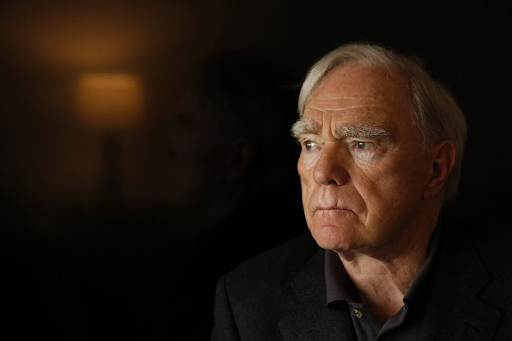
Robert McKee may be the most interesting Storyteller alive.
He taught screenwriting to:
• Julia Roberts
• Russell Brand
• Peter Jackson
And re-designed the marketing of:
• HP
• Nike
• Microsoft
To be centered around story.
So I spent hours devouring his books and classes. They're wonderful. The most interesting framework I learned from him is the 'Purpose-Told Story.'
In it, McKee lays out 8 stages to develop a great story. Here they are:
1. The 3 Targets
Before considering your story, you must understand your:
• Target audience – who you’re talking to
• Target need – what problem they have your product solves
• Target action – what you want them to do
Without defining those three, you’re guessing.
2. Subject Matter
The constraints and subjects that make up your story.
McKee breaks it into 3 components:
• Core value – the value your brand couldn’t exist without
• Protagonist – the Hero your audience empathizes with
• Setting – society, time, and place
3. The Inciting Incident
Launch the story by throwing the protagonist’s life out of whack.
McKee says, “fine storytellers seek out the negative side of life.”
Your goal is two-fold:
• Grab your audience’s attention
• Propel the protagonist to action
4. The Object of Desire
What does the protagonist feel they need to get their life back on track?
McKee says the most compelling objects come with the highest price tags.
5. First Action
The tactical choice the protagonist makes to re-balance their life.
This cannot succeed. That’d be too easy.
Introduce antagonists – anything keeping the protagonist from the Object of Desire.
6. The First Reaction
The reaction to the First Action should be different or more powerful than expected.
That gap in expectation vs. reality leaves space for the protagonist to gain insight.
Two key aspects:
• Turning points
• Violation of expectations
7. Crisis Choice
The moment of truth – the protagonist must take their earned insight and make a decision.
It’s now or never.
This final action must be more risky than the first. Raising stakes and all that.
The protagonist will either re-balance their life or remain in chaos.
8. Climactic Reaction
The protagonist gets their life back on track.
Neuroscientists find the brain’s response to a good story’s climax is a few seconds of heightened memory.
***
The brilliant part of McKee’s process?
It’s built outside in.
He starts with the end – your audience, their problem, and the desired action.
Then he figures out the beginning – the event to trigger the entire story.
From there, you build the narrative arc to connect beginning and end.
He says, "Purpose-told stories do far more than entertain. They trigger an action in the listener: a purchase, an investment, a job well done. A purpose-told story needs talent, imagination and time to conceive, create and hone to its audience."
I'm able to so something you LITERALLY cannot do.
→ THAT is the essence of your offer
Whether it's your:
→ Fabulous product
→ Unmatched service
→ Gorgeously crafted website
→ Once in a lifetime newsletter
Any one of these has to do something others can't:
→ Will they get results faster?
→ Will they make more money?
→ Will they become much smarter?
→ Will they grow their audience better?
And if you cannot articulate that:
→ You are dead in the water
→ You wasted that opportunity
→ Your content is going to be meaningless
So HOW do you articulate that? It starts VERY early
On Linkedin:
→ Explain what you do in your banner
→ Get more particular about it in the tagline
→ Tell your differentiating story in the about section
→ Give them a way to reach you in the featured section
But this applies ANYWHERE. This isn't Linkedin coaching.
→ This is BRANDING.
→ What do you do that NO ONE else can?
→ And how will you present and explain it to people?
The presentation and explanation is MARKETING.
Once people know what it is? You then PRESENT it to them.
How?
With a very simple, clear, easy to follow OFFER.
"For X amount of dollars, you will achieve Y in Z amount of time. We do this by following a framework that does, X, Y, Z."
But remember, without that differentiating "thing," you're just like anyone else.
Don't be.
DM me "OFFER" to starting building the right business and offer
How to stand out on social media (without selling out):
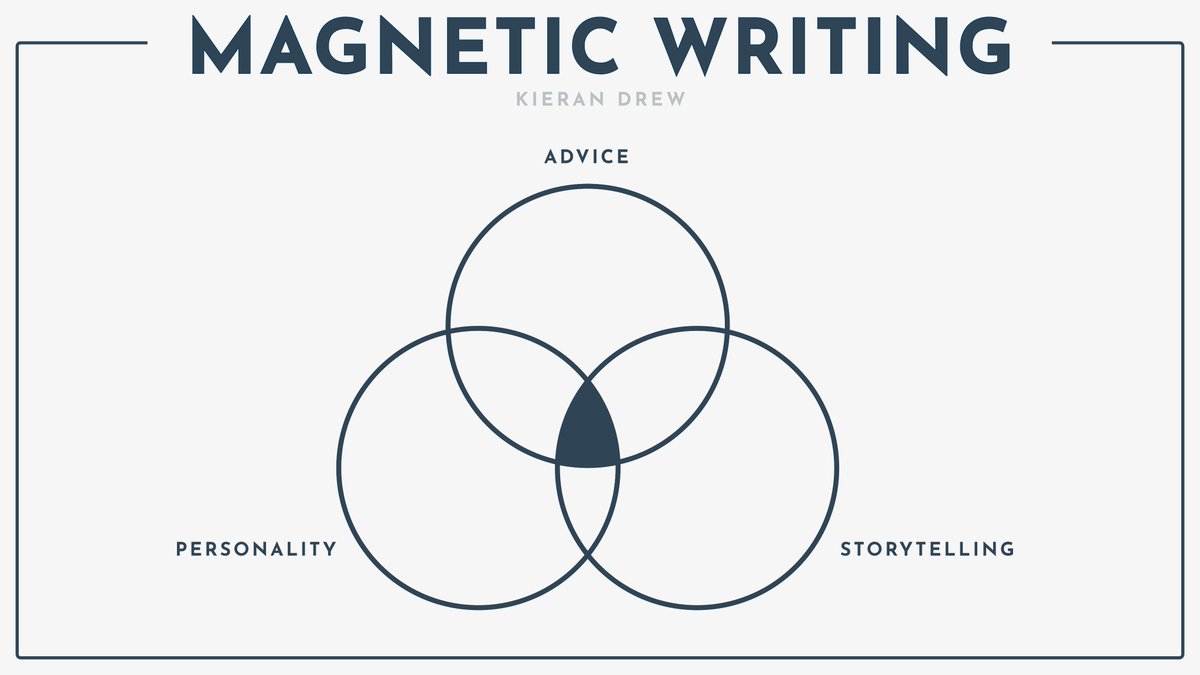
It’s getting harder to get noticed on 𝕏. Out of all the content you could create, there are only 3 things you should focus on — the 3 pillars of magnetic writing.
A breakdown:
1) Actionable advice
Trends come and go, but being useful will never go out of fashion. Why? Because people are always searching for solutions to their problems. The trick is to make your advice unique from the crowd’s.
• Lessons and mistakes: Earned experience
• Ideas: Unique mechanisms and concepts (like the 3 pillars of magnetic writing)
• Systems: Create simple strategies to help your audience go from point A to point B
• Predictions: What is no one talking about that you think is true?
Share one idea daily to help your audience win.
2) Personality
There’re thousands of people in your niche. None are just like you. You need to show your values, worldviews, and beliefs to give your reader a chance to resonate.
• What pisses you off?
• What makes you weird?
• What quirks can you lean into?
• What do you believe strongly about that most people don’t?
Don’t try to be the writer for everyone. Be THE writer for someone.
3) Storytelling
People can steal your content, but they can never steal your story.
• What have you overcome?
• What beliefs have you changed?
• What difficult decisions have you made?
• What advice or adventure has most changed your life?
• What have you achieved that few people have (or what do you want to achieve?)
But remember: storytelling is not really about you. It’s about the reader. Always bring it back to them.
***
2024 will be less about content and more about connection. Lean into the 3 pillars of magnetic writing and pull people into your world.