Check out our recent publication: "Local human disturbances on coral reefs negate potential climate refugia" out now in Communications Earth & Environment!
https://t.co/FZAJIvh2cb
Seawater microbes are a reef’s 1st responders. Shifts in microbial communities correlate directly to environmental changes. During the #GreatBarrierReef#bleaching event, we sampled microbial communities to ID which may be used for predictive monitoring➡️ https://t.co/vchzynq0Hm
That's a wrap! Ice season in the #GreatLakes has officially concluded with a seasonal average of 4.3%, a record low since records began in 1973.
https://t.co/fbTT9oVNDC
|| NEW RESEARCH ||
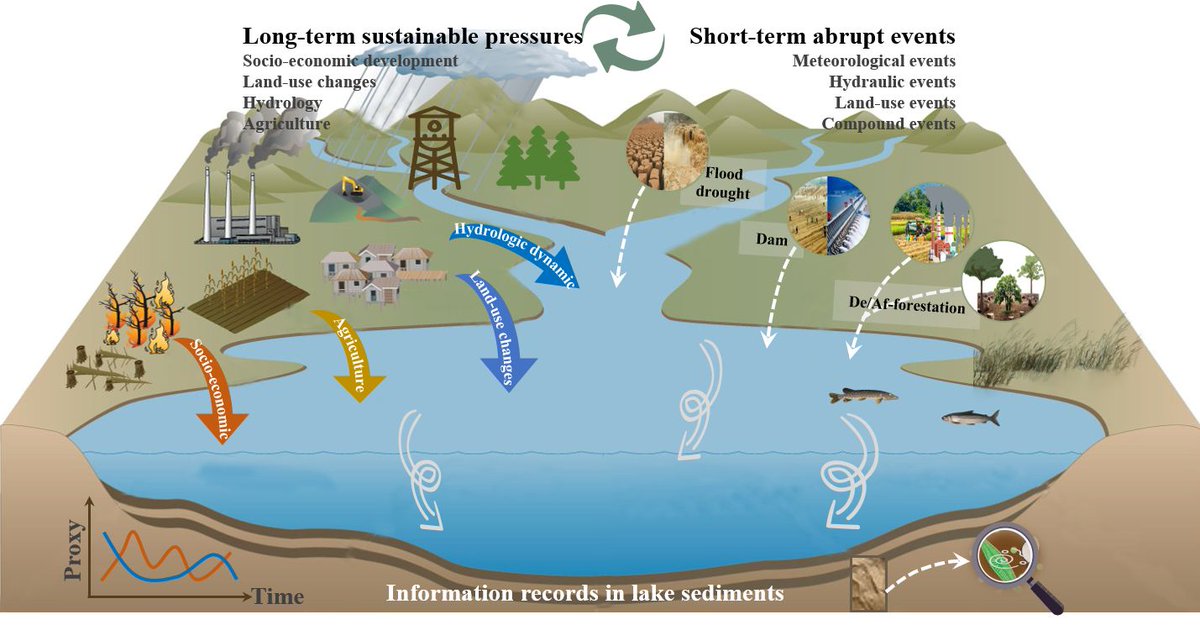
Driver–response relationships in a large shallow lake since the Anthropocene: Short-term abrupt perturbations versus long-term sustainable pressures
📄 https://t.co/PCwxObwK2m
Check out the new publication from our lab in Nature's Scientific Data!
"A global database on coral recovery following marine heatwaves"
https://t.co/VujdZWCfn6
@ZachFerris_ , our computer vision guru, just published a new method for extracting quantitative data from seascape images. This revolutionizes data collection on coral reefs, retroactively expanding the historical data available for analysis!
https://t.co/MkgLokEifP
The ReScape algorithm ends the century-long inability to analyze reef conditions in countless recreational images and creates a rapid survey method
My first paper and App out now in @SciReports
https://t.co/zcK7NbV3ra
@NSF@FloridaTech
Towards real-time 3D mapping of coral reefs with deep learning using only videos from cheap cameras, now published in Methods and Ecology and Evolution!
In short, we propose to use 3D mapping entirely driven by deep learning.
A new Florida Tech study has found that managing reef conditions at a local level—such as reducing pollution and macroalgae—can help coral reefs recover after disturbances.
https://t.co/OmnN5wplTc
Check out my first publication in @GlobalChangeBio! In it we provide a comprehensive global analysis of coral-reef recovery rates over the past three decades
https://t.co/R3fRVIr5MD