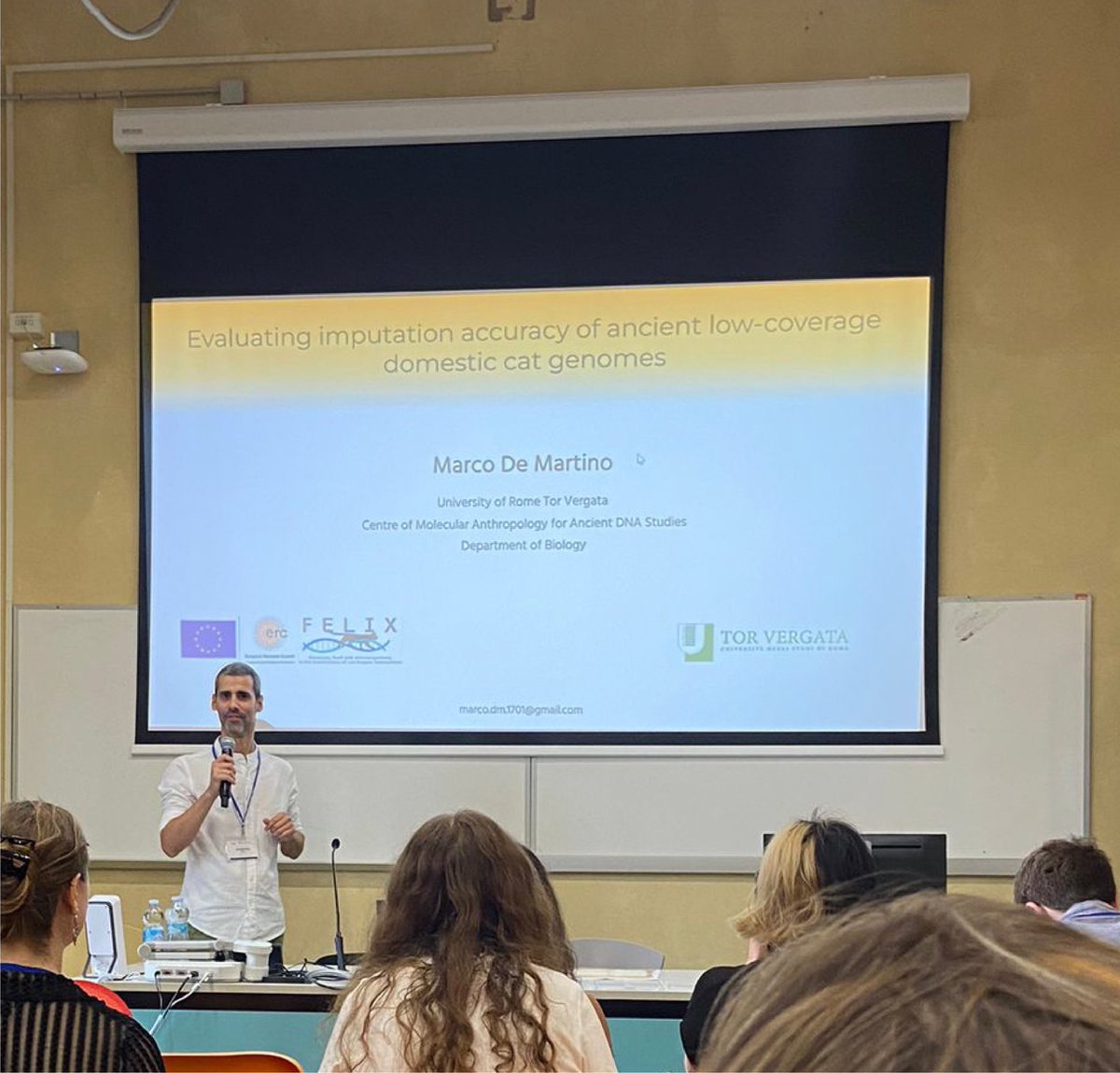
Trying to catch up with more studied domestic animals 🐄🐕🐐🐎 and exploring cutting-edge tools, I was excited to present the first imputation tests in ancient & modern cat genomes 🐈 at the first in-person AaRC meeting in Turin. @AaRC_Community@ISBA11_Torino@felix_erc
Have a look at our new 2025 Blog entry from @AaRC_Community where we interviewed Dr. Alexander Salis and Dr. Anna Penna (@StrepsiPrimate) about the research project he presented in February 2025 #AaRCTikTalks.
https://t.co/VLGPbOC7Dh
https://t.co/8X4srd0CMb
#aDNA#museomics
Have a look at our new 2025 Blog entry from
@AaRC_Community where we interviewed PhD Fellow Lydia Hildebrand Furness about the research project she presented in March 2025 #AaRCTikTalks.
https://t.co/BW6bRSW14Z
#aDNA#Dugong#conservation
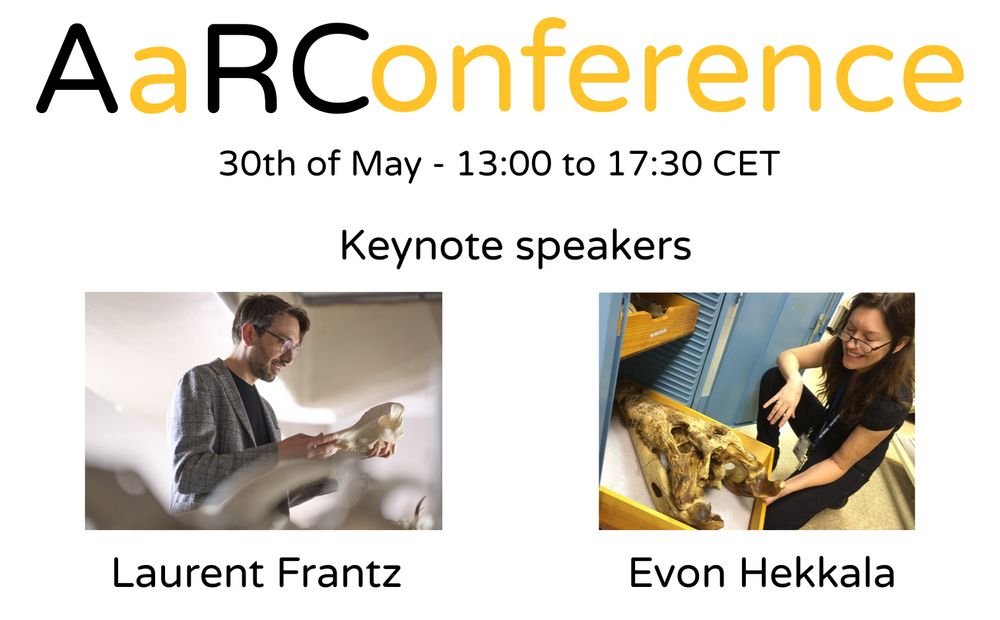
Abstract submission is open for the online #AaRConference! Join us and invited speakers Laurent Frantz and Evon Hekkala on May 30th to present your research about animal #aDNA and discuss them with the community. All topics #aDNA related are welcomed!
It´s already February, and that means we have a new #AaRCTikTalks. This month we'll focus on museomics, or the use of museum collections as sources of #aDNA data. Come and check out our amazing speakers on Friday 28th! Save the date!
Next week we will got back to our schedule of
#AaRCTikTalks
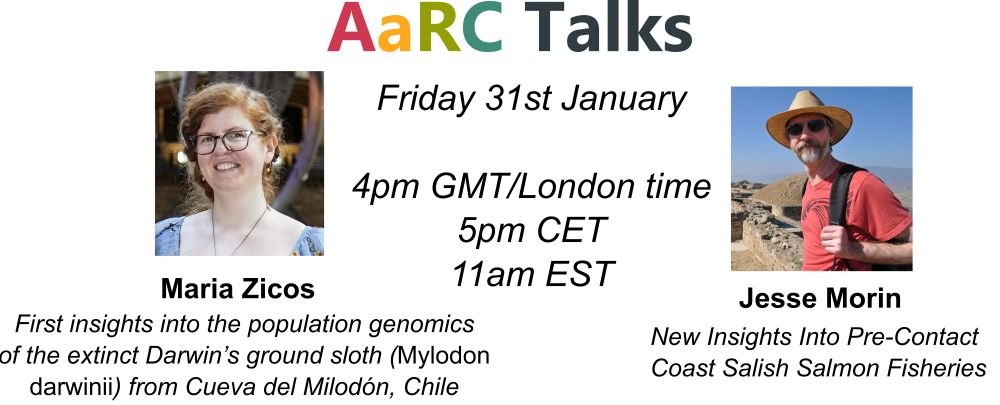
, and this year starts strong with a talk about the population genomics of the extinct Darwin ground sloths of Chile and another about the salmon fisheries of the Coast Salish
#aDNA
🧬Research Alert!🧬
@PNASNews features our latest research
🐴 ✨ We explained the legacy of Oriental horses, embedded in a 1,500-year-old Crown lineage
👑 spread across continents and centuries! 🌍 🧵 1/5
#MSY#HorseGenetics#HorseBreeds#Ancestry
https://t.co/u8JneWmLVl
🧬🐭🐴🐻JOB ALERT🐻🐴🐭🧬
We are hiring 3 postdoctoral researchers in DeepTime Palaeogenomics!
All positions are for 2 years (extension possible), & are fully funded both in terms of employment and project costs.
Deadline: 2 Dec 2024
Please RT!
Apply:
https://t.co/5hR5NA5kMF
Who reviewed this paper?
A few days ago @gcabanac tweeted about a paper that had published a remark that it had been forced to cite irrelevant papers. You can see the tweet here: https://t.co/FpSr5QLPfW. We remarked that if it was not so serious, it would be funny.
Since reading that tweet, we have not been able to get it out of our head, so we thught that we would document it in a little more detail. We are doing this for three reasons.
1️⃣ In our view, it descerves more detail to be made available.
2️⃣ We'd like these details to be be kept as a matter of public record, so we are posting similar posts on our X account and our LinkedIn account.
3️⃣ It should be of interest to this community, so we hope that this raises even further the ethical issues around this topic.
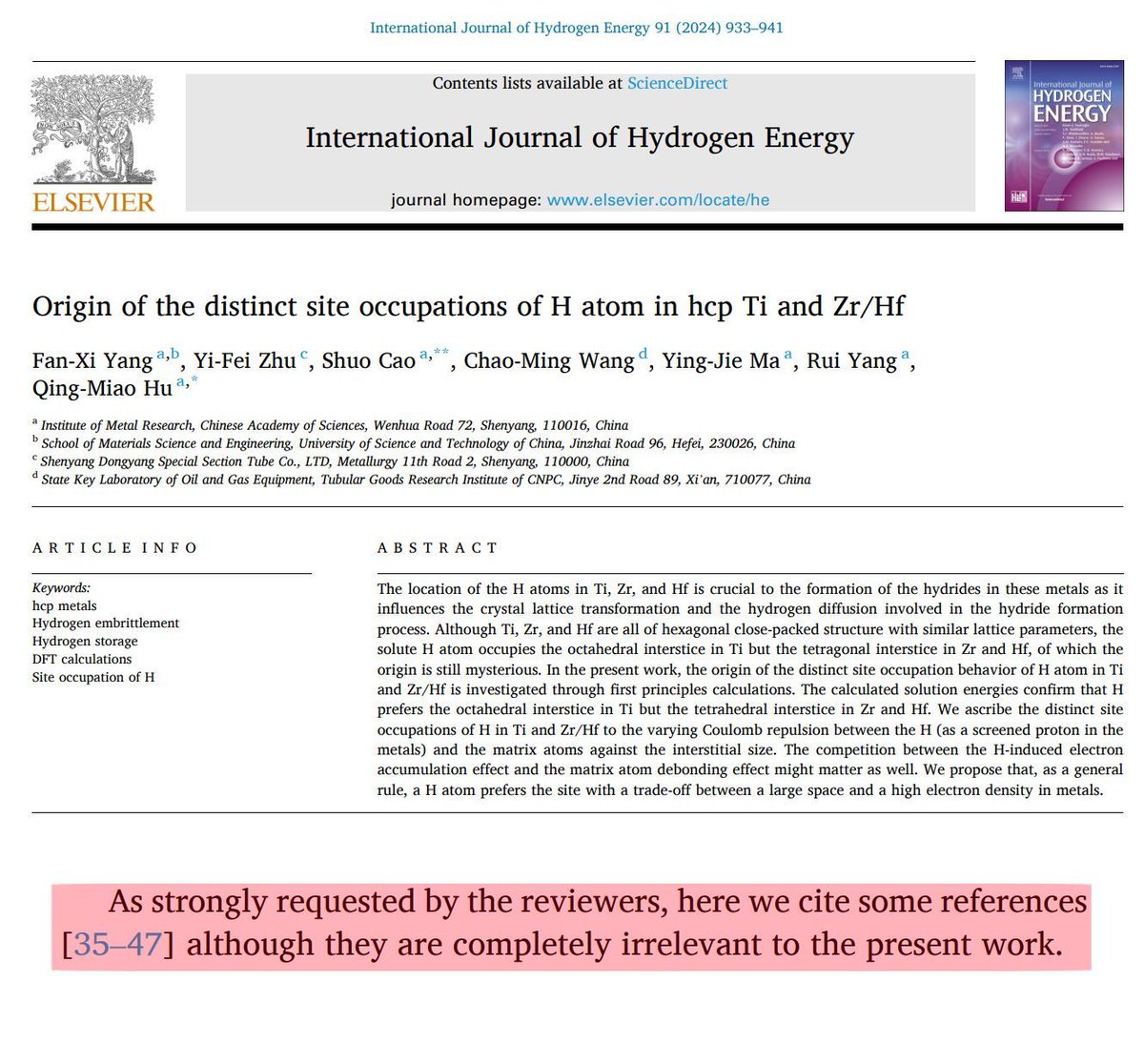
The first image shows the paper that we are looking at. What is interesting is the text that appears on at the end of the introduction (highlighted in red). This appears to show that the reviewer insisted that a set of 13 papers be cited, else they would not accept the paper. It would be interesting to see the review repport, so that we could be certain what had been said. If you want to see the paper, it is available here: https://t.co/mlv5UDdp5T
In the rest of this 🧵, we show the papers that have been asked to be cited (i.e. [35]-[47]). These have been taken from the paper mentioned above. You'll notice (as we have highlighted it) that every paper is "et al." meaning, of course, that there are quite a few authors on each paper.
Gicven that we cannot see all the authors, the other images on this 🧵 shows the full set of authors on each of these 13 papers.
We leave it an an exercise for the reader to hazard a guess as to the reviewr is?
On Friday 29th we will also have our monthly
#AaRCTikTalks. This month Ophelie Lebrasseur will showcase her work on ancient domestic birds of Asia and South America, while @MariDehasque will showcase her awesome work on mammoth genomics.
Don't miss this great webinar on Friday next week, celebrating the 40th birthday of the first ancient DNA paper. A great line-up of speakers, sign up here: https://t.co/GRh4HNQk96