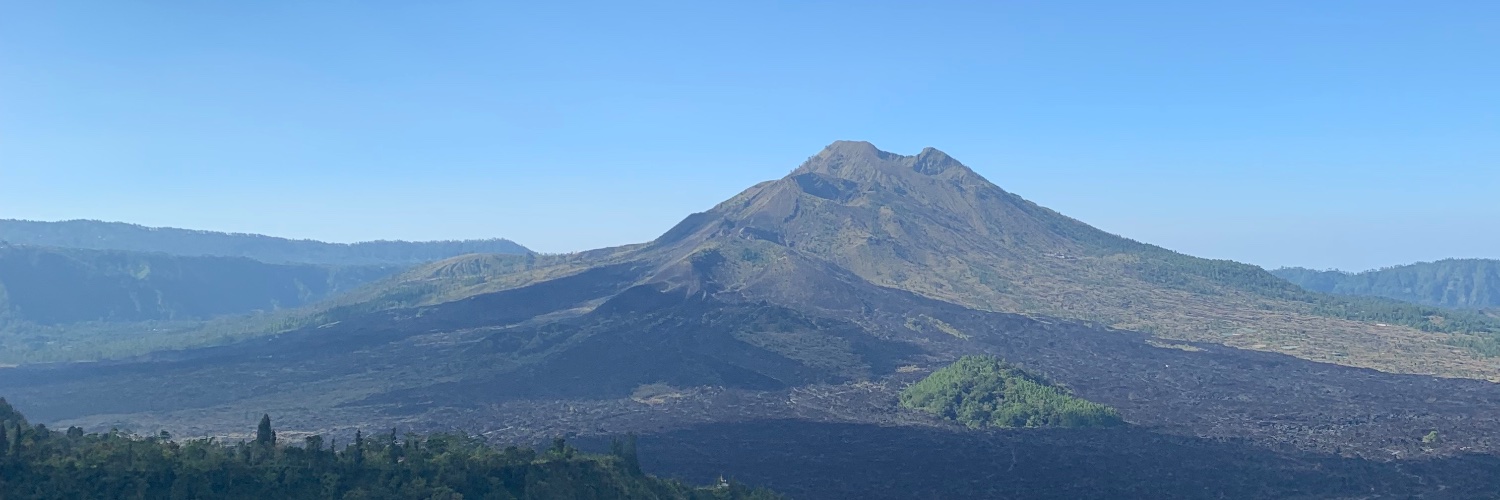
Antoni Gaudi died 100 years ago today.
He was 73 and spent over 40 years working on La Sagrada Familia (completing 1/4th of entire basilica).
Gaudi’s method for designing it was genius: he hung movable weights on strings and let gravity do the work of showing the proper angles and force vectors for his nature-inspired look.
He then flipped the model upside down to see how to build the columns and arches.
Also inspired by forests and sea life, the legendary architect once said, “there are no straight lines or sharp corners in nature.”
In the final years of his life, Gaudi’s was solely focussed on the project. His diet was lettuce leafs dipped in milk. Lived inside the Basilica and barely slept on a simple cot.
He died after getting hit by a tram while walking aroudn Barcelona. His clothes was so ratty — underwear held together with safety pins — that passerbys thought he was homeless.
The city held a massive funeral for him with 30,000 people packing the streets.
While 3/4 of La Sagrada Familia was undone, Gaudi left enough plans (models, drawings) for future generations.
La Sagrada Familia was largely dormant for a few decades 1930s-1960s (Spanish Civil War, World War II, early Cold War).
Some of Gaudi’s designs were so ahead his time that it would require the development of aeronautical design software to complete his vision.
Gaudi once remarked that “my client” — referring to God — “is not in a hurry”.
There is still work to be done but a major milestone was completed in February: workers installed a cross on top of La Sagrada Familia, making it the tallest church in the world (172.5 meters or 566 feet).
It’s also the tallest structure in Barcelona. But Gaudi intentionally capped the height because “human creation should not pass God’s work.”
The Montjuïc Hill in the southwestern part of Barcelona is ~570 feet.
***
Video link: https://t.co/LmmquC3dlT
We see the tower of Jesus Christ illuminated for the first time!
The light show, starting from the base up to the illumination of the cross, culminated with a composition of lights guided by drones that traced the figure of Gaudí and the phrase “first love, then technique”.
Deccan Herald confirmed: 'Govt has NO PLAN to go back to E0.' Ethanol-free petrol is gone from India forever. Vintage bike owner. Carburetted two-stroke. Racing vehicle. Sensitive medical generator. There is no pure petrol for you, anywhere in this country. A fuel monopoly enforced without a single parliamentary vote.
An empty DTC bus at 9 PM. Not because there are no passengers—hundreds were waiting at bus stops along the route. The driver simply wouldn't stop. Route 356STL Dwarka Cluster Depot 22 buses are notorious for this.
The only reason I managed to board was because, as I saw the driver not slowing down at my stop, so I pulled out my phone and started recording with flash. The driver immediately stopped.
For many Delhi residents, these are the everyday hurdles involved in something as basic as boarding a public bus, especially the old orange ones. Operator contracts need stricter infractions clauses for not stopping.
Blinkit is now being treated by FSSAI as a food business operator, not a marketplace
By purchasing goods directly and issuing invoices under its own name, Blinkit is legally liable for food safety compliance
which means they’re liable when the paneer is bad. not just the seller
this changes the economics of quick commerce work
This might be one of the biggest accounting scam India has seen in years.
Let me explain the whole thing, for anyone who has no idea what just happened.
First, let's understand who is this company.
Rajesh Exports is a company in Bengaluru that refines gold and makes jewellery. You may know its retail brand, Shubh Jewellers.
It also owns Valcambi, a Swiss company often called the largest gold refinery in the world, which it bought back in 2015. For years it was talked about as one of India's biggest companies by sales.
The man who runs it is Rajesh Mehta, the promoter and chairman.
Now the weird thing;
This company reported gigantic sales. In just the January to March quarter of 2026, it reported revenue of about ₹2.36 lakh crore. That is bigger than the sales of almost any company in India.
But for all those enormous sales, it barely made any profit. It actually posted a small loss. And the whole company on the stock market was worth only about ₹3,200 crore.
So a shop claims it sold goods worth lakhs of crores, but kept almost no profit, and the shop itself is valued at a tiny fraction of its sales. When the sales are huge but the profit and the company value are tiny, something is off.
Now this mismatch was visible for years but let's understand how the investigation started.
In March 2024, a shareholder complained to SEBI, the market regulator. The complaint was simple. The company was showing a huge pile of money that customers supposedly owed it, sitting unpaid for more than two years. That is a classic sign that the sales behind it might not be real.
SEBI dug in, appointed investigators, and brought in a forensic auditor to go through the books.
On June 3, 2026, it released its findings in an interim order. These are early findings, called prima facie, so the company has not been found guilty yet, and I will come back to that.
But let's understand what SEBI says it found. Will try to keep this simple;
1. Most of the sales came from a foreign company whose own books showed almost nothing.
SEBI says around 97 to 99% of the group's revenue was shown as coming from its overseas arms, mainly Valcambi in Switzerland. But Valcambi's own standalone audited accounts reported barely any revenue.
So the group was claiming lakhs of crores in sales through a subsidiary that, on its own books, looked nearly empty. SEBI also says the company kept hiding these subsidiary accounts from the public.
2. Fake-looking sales tied to the promoter's personal trades.
The company recorded about ₹11,487 crore of sales and ₹11,488 crore of purchases with a firm called Affluence.
That was roughly two-thirds of its standalone sales. But Affluence denied doing any such business with the company. SEBI says these were not real trades at all. They were linked to Rajesh Mehta's own personal derivative trading, written into the company's books as if they were company sales, just to make the business look bigger.
3. Other income were presented as sales.
SEBI says the company booked ₹867 crore and ₹716 crore of currency gains as if they were sales and purchases, and booked ₹204 crore of interest from mutual funds and fixed deposits as business revenue.
These are not sales. Calling them sales makes the business look bigger than it is.
4. The gold mines in Africa that no one could verify.
When the stock exchange asked about a ₹1,035 crore investment, the company said it was money put into gold mines in Africa.
SEBI looked into it and could not verify this claim. The Swiss arm's own boss told SEBI that it does not own any gold mine, it only refines gold.
5. Quietly erasing old money owed.
SEBI says the company wiped out about ₹2,914 crore of very old unpaid dues by secretly cancelling them against money it owed others, without properly explaining it.
6. Company money flowing through the promoter's personal accounts.
SEBI says company funds were routed through the personal bank accounts of Rajesh Mehta and a family member, including for his personal trades, without board approval and without telling investors.
News reports put one chunk of this at ₹339 crore, and the wider routing at around ₹926 crore.
7. Not cooperating.
SEBI says the company ignored more than ten official notices over months, did not give full records, gave changing and contradictory numbers, and did not give the auditors proper access.
SEBI says about ₹15.15 lakh crore of revenue over five years was misrepresented.
It is important to understand what this means.
That is not ₹15 lakh crore stolen from investors. It is the size of the sales that SEBI says were inflated or could not be verified.
The company's market value fell by close to ₹28,000 crore from its peak, and the wealth lost by public shareholders is estimated at around ₹12,725 crore.
The stock is down about 54% from its high last December, and it hit the lower limit again right after this order.
As of now, SEBI has taken the following steps;
> Rajesh Mehta is banned from buying, selling or dealing in the company's shares, directly or indirectly, until further orders.
> Both the company and Mehta must cooperate with the investigation and hand over a long list of documents within 30 days.
> The company must now make true and fair disclosures of its finances and its dealings with related parties.
> SEBI will appoint a new forensic auditor, because the first one could not finish the job without cooperation.
This is an interim order. It was passed without hearing the company first, which SEBI is allowed to do when it fears assets might be moved or records destroyed.
The company and Mehta get 21 days to reply and ask for a hearing. So far the company has not made any public statement.
I know treatment at Sir Ganga Ram is expensive but people really have no chill
Minor OT and the doc has forceps in his hands and an attendant barged in, is shouting at the nurse because his doctor is late and how dare the doc operate on the table
(make it make sense)
How fair is it that in Bhopal the govt is cutting trees by the thousands and asking common folks to plant more trees. National Parks are being bulldozed and everybody seems to be sleeping! We deserve the hell we’re subjected to.