#Arrhythmias only occur in a few % of people, so we need to shift the emphasis of screening pills to people. A better insight to the #genetic basis of #proarrhythmia will allow both personalised risk prediction, as well as development of population risk metrics.
#SVCRS2021
5/5
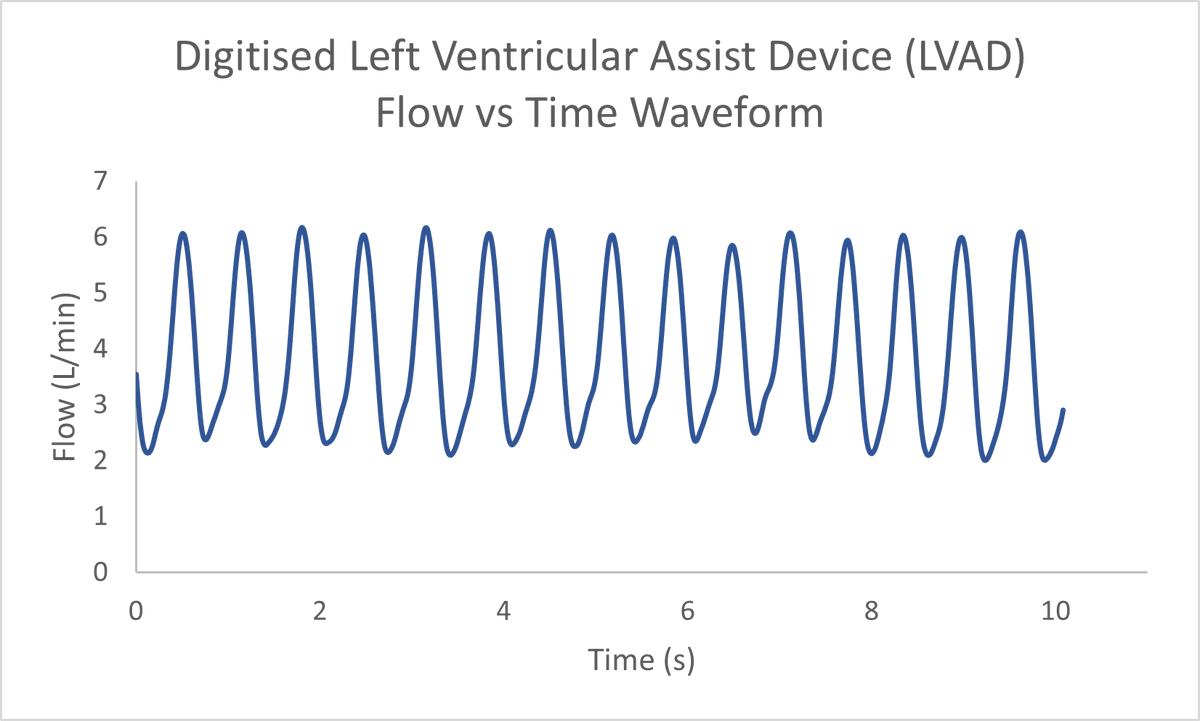
Our study compared left ventricular assist device (#LVAD) flow waveforms digitised by the currently accepted (but not widely available) method with WaveApp under different conditions (i.e., angle and distance of photo and lighting in the room) @SVHSydney #SVCRS2021 4/5.
Further research and clinical use of waveform analysis is limited by current digitisation technology which is not widely available. @SVHSydney we have developed WaveApp, a smartphone app that can digitise patient flow waveforms, without specialised equipment #SVCRS2021 3/5.
#LVADs display waveforms that represent pump flow output. Changes in different parts of these flow waveforms may reflect changes to the patient’s cardiovascular function. Waveform analysis is being investigated as a tool to ensure optimum patient management #SVCRS2021 2/5.
Our results show WaveApp is a robust method of flow waveform digitisation compared to the currently accepted method. More accessible flow waveform digitisation using WaveApp may support the clinical use of waveform analysis for management of #LVAD patients. #SVCRS2021 5/5
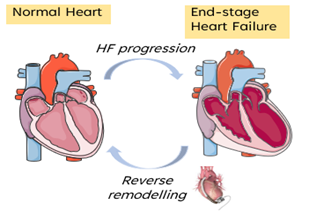
#HeartFailure is a chronic disease where the ❤ cannot pump enough blood around the body. Left ventricular assist devices (#LVADs) are mechanical pumps used to support patients with advanced ❤ failure. With Bruno Schnegg @Audrey_Adji @Dr_MikeStevens @nigelhlovell#SVCRS2021 1/5.
Love the surreal moments virtual conferences bring... like introducing yourself from 5 days ago. Excited to share our work on the most important gene in #VascularDisease#PHACTR1#multiomics#SVCRS2021
Patients are increasingly under LVAD treatment for longer durations. Concerted efforts to understand predictors of haemodynamic changes in the native heart will assist clinicians in tailoring #LVAD management to *maximise* benefits in the most *suitable* patients.
#SVCRS2021 5/5
2. Improvement in contractility with lower #LVAD speed.
The ideal LVAD support strategy?
💖A) High pump speed=Less cardiac load="Rest" the heart
OR
💖B) Low pump speed=More cardiac load="Work" the heart
To maximise cardiac recovery, our results suggest option B.
#SVCRS2021 4/5
1. Cardiac chamber improvement observed in ischaemic cardiomyopathy Px.
Pxs who are discharged after initial ischaemic episode may present with #HeartFailure years later. Perhaps a potential for reverse remodelling in the non-infarcted, viable myocardial regions?
#SVCRS2021 3/5
At @SVHSydney, MCS team incl. @pankajjain185 and @Audrey_Adji developed this technique to generate PV loops and quantify cardiac functional parameters.
PV measures were assessed across a 6-month period after device implant.
We found some interesting results 👆:
#SVCRS2021 2/5
The🎯for LVAD-induced reversal of #HeartFailure is garnering attention.
Yet, routine assessment of the changes in residual cardiac function that occur during LVAD support remains a challenge.
Non-invasive pressure-volume (PV) loops could offer a solution🧐
#SVCRS2021 1/5
The🎯for LVAD-induced reversal of #HeartFailure is garnering attention.
Yet, routine assessment of the changes in residual cardiac function that occur during LVAD support remains a challenge.
Non-invasive pressure-volume (PV) loops could offer a solution🧐
#SVCRStest 1/5
Our review on the effect of #aging , #hypertension (associated with arterial stiffness) and stenotic aortic valve on the heart-systemic interaction - with @SVHSydney colleagues - now published in latest edition of HeartLungCirc @VictorChangInst
Abstract submission deadline for the @HBPRCA ASM has been **EXTENDED** to midnight AEDT this Thursday (7th October). Don't miss out on sharing your research in Australia's premier conference on #hypertension#bloodpressure research. #HBPRCA_ASM2021
https://t.co/pKRdhgcgSS