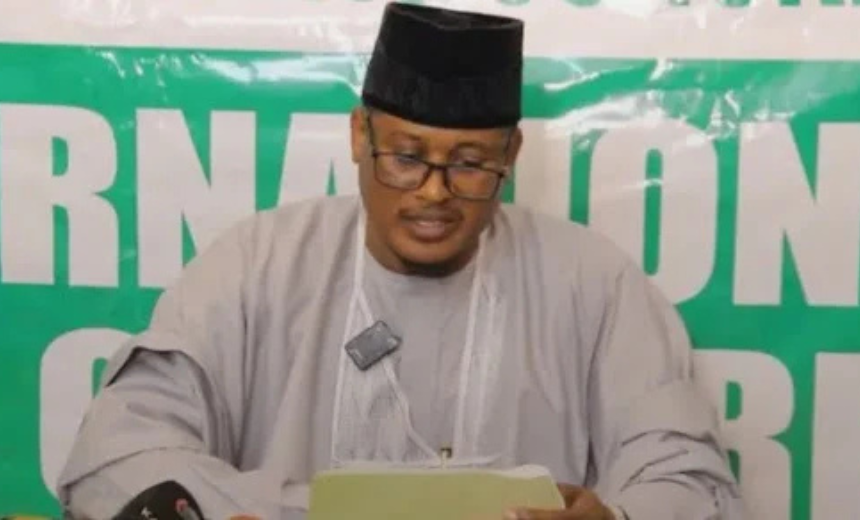
This man (Prince Adeniyi Matthew) created a fake government agency called Presidential Foreign Intervention Promotion Council, appointed himself as DG, secured office space at the Federal Secretariat, opened a CBN account in its name, got N1,302,978,784 allocation in 2026 budget, summoned ambassadors to meetings, held strategic sessions with ministers, and even represented Nigeria at international conferences.
The audacity is almost unbelievable. Nigeria never runs short of ‘yan iska.
If you are not careful in Kaduna and Abuja, you will hit 40 years old with nothing but pictures and memories of hangout, picnic, funfair, and fake life.
IBADAN DECLARATION
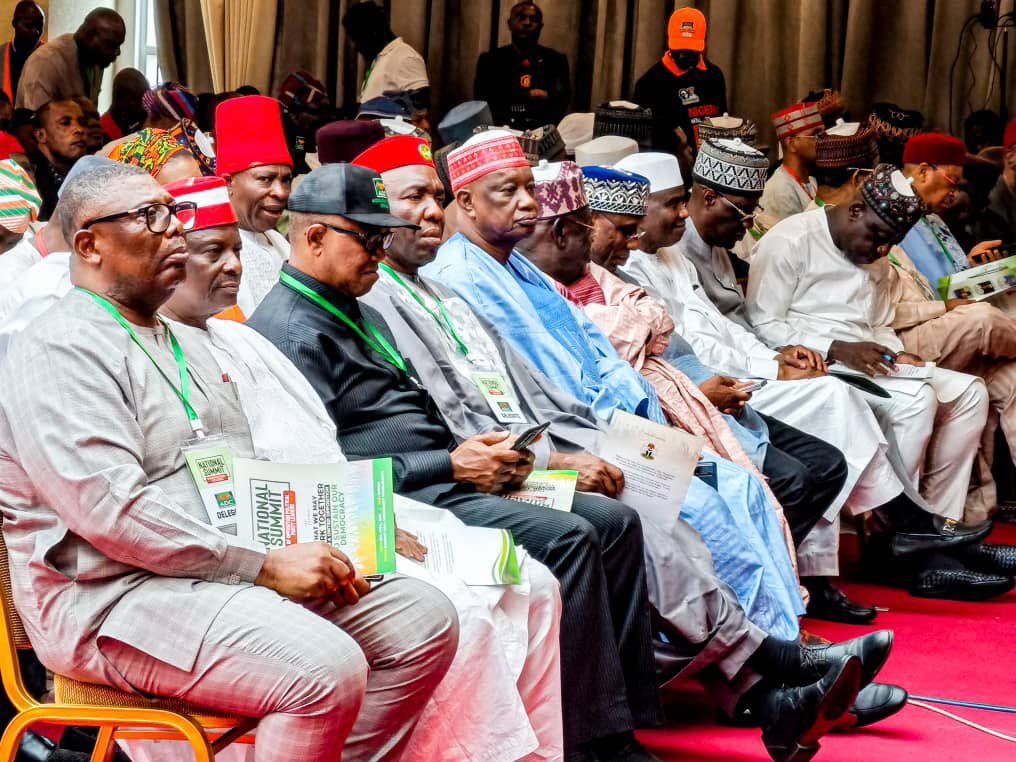
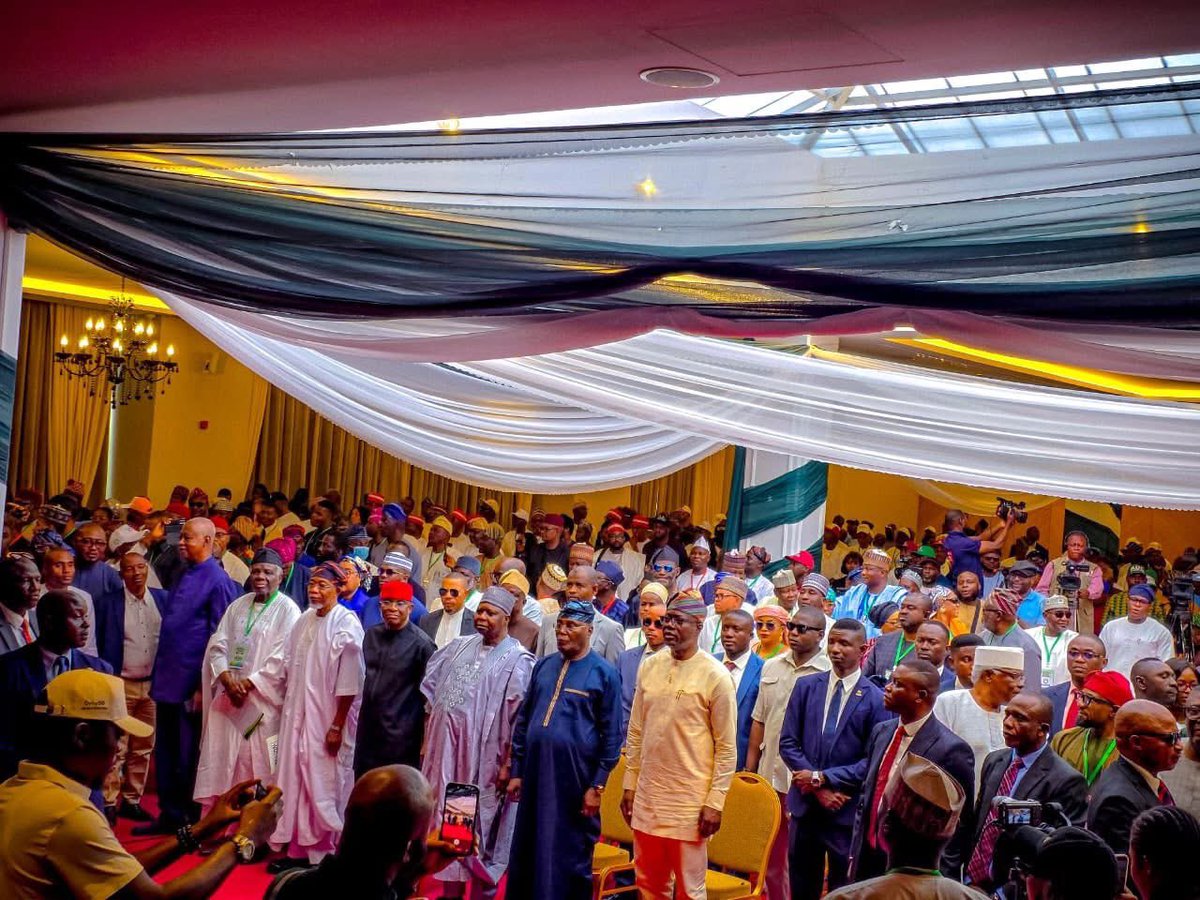
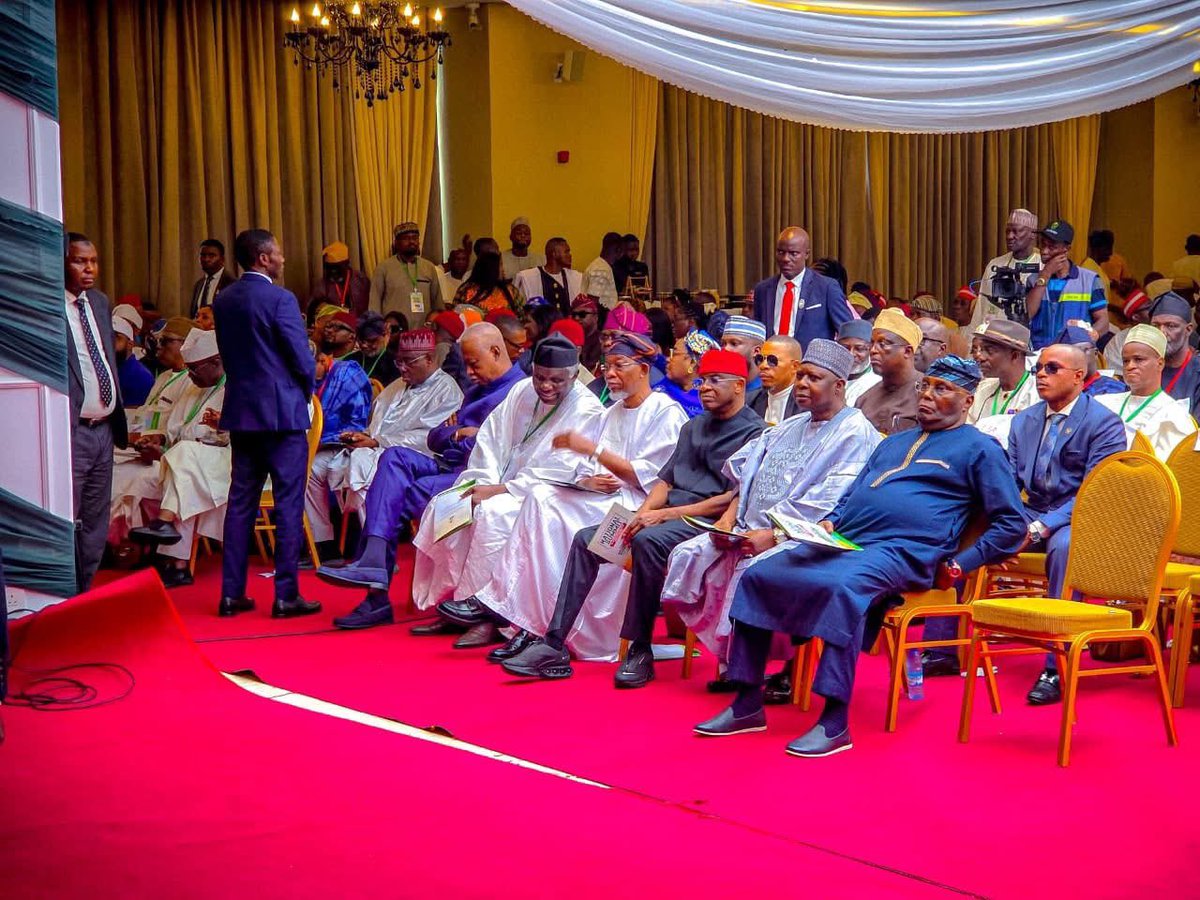
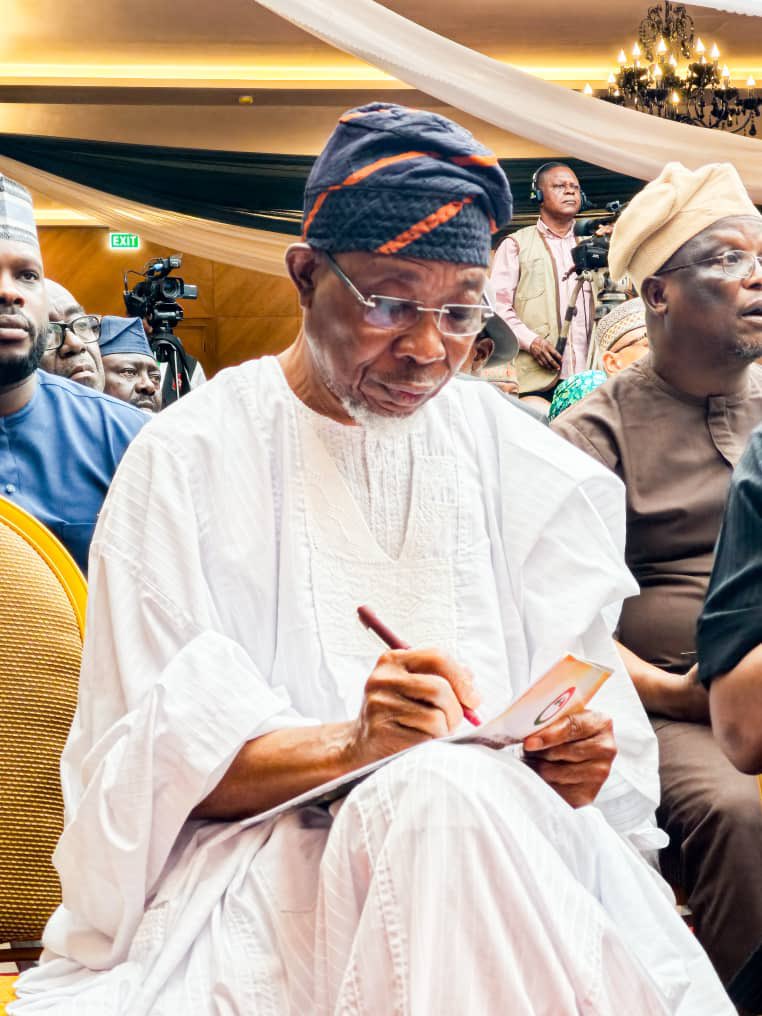
Communiqué issued at the end of Opposition Political Parties National Summit held on Saturday April 25, 2026 in Ibadan, Oyo State.
Participating Opposition Parties in Nigeria, after an extensive deliberation on the collective threats that we face and the existential challenges facing our country under the stranglehold of the oppressive and anti-democratic All Progressives Congress (APC) and given the need for urgent, collective action to rescue our nation and the destiny of over 200 million compatriots, hereby resolve as follows:
1. That we shall resist all machinations by the APC to foist a one-party State on Nigeria and fight for the survival of multi-party democracy in our country.
2. That despite the onslaughts and manoeuvrings of the ruling party, the APC to impose President Bola Tinubu as the sole Presidential candidate in 2027; we shall field candidates and contest the 2027 Presidential and other elections.
3. That we shall work towards fielding one Presidential Candidate for the 2027 elections, which shall be agreed and supported by all participating opposition parties to rescue our nation and her long suffering masses.
4. That the INEC Chairman, Prof. Joash Ojo Amupitan, having shown bias and partisanship in favour of the ruling APC, should not conduct the 2027 general elections as Nigerians across board have lost confidence in him and his capacity to guarantee the required neutrality to deliver free, fair, transparent and credible elections. His continuous stay in office is vexatious and capable of triggering wide spread crisis in our nation.
5. That the National Assembly should immediately review the Electoral Act, 2026 to remove all sections that threaten the sanctity and integrity of the elections and run counter to constitutional provisions.
6. That all leading politicians that are being detained or harassed on bailable offfences be released with immediate effect and allowed to exercise their fundamental rights of participation and inclusivity as Nigerians.
7. That we consider the recent guidelines released by the INEC as obstacles, deliberately engineered to impose conditions and deadlines on the opposition parties. We therefore demand that INEC extends the deadline for primaries till the end of July, 2026.
8. The Summit commends Nigerians for their resilience and readiness to work with Opposition Parties to free our nation from State capture.
9. The National summit of Opposition Political Parties thank the Oyo State Governor Engr. Seyi Makinde and the people of Oyo State for hosting the epochal event.
SIGNED:
Chairmen of Participating Opposition Parties.
Leadership Tussle: Nafiu Bala Resigns As ADC Chairman
By Funke Ogunlolu
The 2023 Gombe governorship candidate and former national deputy chairman of the African democratic congress. Nafiu Bala has tendered his letter of resignation after declaring himself as the interim national chairman of the party.
In the letter Addressed to the former national chairman of the party, Ralph Nwosu, Bala stated that his resignation was to pave way for smooth and effective coalition as well as restructuring the party.
Bala assured that he is not abandoning the party and ready to serve in any capacity but the former Gombe governorship candidate was silenced on the David Mark-led interim leadership.
The announcement came after the official handing over of ADC to the former Senate President and his team by the former national executive committee on Wednesday.
During his declaration as the national chairman, Bala had accused Mark-led interim leadership of the ADC of hijacking the party through unconstitutional means and warned of impending legal action to challenge what he described as a “total surrender” of the party’s structure to external political actors.
The former deputy national chairman emphasized that the party’s constitution clearly outlines the processes for leadership succession and that, in line with those provisions, he was now assuming the position of interim national chairman.
(Editor: Paul Akhagbemhe)
Now I clearly understand why IBB & Gen Sani Abacha annulled that June 12 election & prevented these yoruba demons from taking power. They knew that they are evil,selfish wicked & lack vision. They knew that they're not fighting for Democracy, but for their own selfish interests.
God Bless General Sani Abacha & Ibrahim Badamasi Babangida..
NIGERIA UPDATE - Nigeria’s Growth Crisis Is a Talent-Allocation Crisis - by: Nasir Ahmad El-Rufai - 1st April, 2026 - Part 2
4. Sectoral Reality: Why Building Is Harder Than Extracting
Consider a few concrete Nigerian constraints.
Power
Nigeria’s average available grid capacity is just over 5,300 megawatts for a population exceeding 200 million. No serious manufacturing or services economy can scale under such conditions. When power is unreliable, firms remain small by necessity.
Ports and Logistics
Average vessel turnaround time at Nigerian ports has been around five days—far above global best practice. Each delay creates gatekeeping opportunities, raising costs and uncertainty.
Jobs and Firm Structure
With wage employment hovering around 16%, most Nigerians work in survival-level activity. This is not because Nigerians lack ambition, but because the system penalizes formal growth.
When these constraints persist, entrepreneurship becomes a high-risk, low-reward path. Rational talent looks elsewhere.
5. Evidence from Other Countries—and What It Means for Nigeria
Cross-country evidence supports this argument. Countries that channel more of their top talent into engineering, applied science, and production tend to grow faster. Countries where talent concentrates in rent-oriented legal and administrative activity tend to grow more slowly .
The lesson is not that law is unimportant. On the contrary: law is essential when it enables commerce. But when legal and regulatory systems become tools for extraction rather than facilitation, they draw talent away from growth-enhancing activity.
Nigeria today sits at that crossroads.
6. Signs of What Is Possible
There are encouraging signals.
Nigeria’s non-oil exports have grown strongly, driven by products such as cocoa, fertiliser, cashew, and processed agricultural goods. This shows that when incentives align—even partially—Nigerian firms can compete and scale.
The task before us is to generalise this success, not treat it as an exception.
7. The Real Reform Objective
Nigeria’s reform agenda should be summarised in one sentence:
Make value creation more rewarding than value capture.
Everything else flows from this.
This means:
•Shrinking discretionary power and rent opportunities in government;
•Making rules predictable, transparent, and digital by default;
•Ensuring property rights and contracts are enforced quickly and fairly;
•Making it easier to scale a business than to stay small and hidden;
•Aligning finance with long-term production and exports, not short-term arbitrage.
When these conditions exist, the most talented Nigerians will move—naturally and voluntarily—into productive enterprise.
8. What Success Looks Like in 24 Months
If Nigeria is serious, progress should be visible and measurable within two years:
•Power availability rising from ~5,300 MW toward 8,000–10,000 MW reliably delivered.
•Port turnaround times falling below four days, with fewer physical interventions.
•Wage employment rising toward 18–20%, signalling firm formalisation and scale.
•Tax-to-GDP moving toward 10%, driven by digitisation and base broadening—not harassment.
•Manufacturing and tradables expanding their share of GDP and exports.
•Non-oil exports growing not just in value, but in the number of exporting firms.
These are not technocratic targets. They are signals to talent—telling Nigeria’s brightest minds that building, producing, and exporting now pay better than extracting.
9. The Strategic Choice Before Us
Nigeria’s future does not hinge on slogans, nor on personalities. It hinges on who wins in our economy.
If the system rewards brokers over builders, we will continue to underperform.
If it rewards producers over extractors, growth will follow—rapidly and durably.
This is the central lesson of economic history, and it is the challenge of our moment.
Nigeria does not lack talent.
Nigeria must reallocate it.
God Bless our Country.
NIGERIA UPDATE - Nigeria’s Growth Crisis Is a Talent-Allocation Crisis - by: Nasir Ahmad El-Rufai - 1st April, 2026 - Part 1
Nigeria is often described as a paradox. We are a nation of extraordinary human capital—energetic, inventive, resilient—yet our economic outcomes fall persistently short of our potential. Growth remains shallow, productivity weak, firms struggle to scale, and prosperity does not spread widely enough.
Today, I want to advance a clear and uncomfortable proposition:
Nigeria’s growth problem is not primarily a shortage of talent, capital, or ideas.
It is a problem of where our best talent goes—and why.
This is not a moral argument about individuals. It is a political-economy argument about incentives.
1. The Core Insight: Talent Follows Returns
Across societies and across history, highly capable people choose occupations that offer the highest returns to ability, especially where small differences in skill translate into large rewards. Economists describe this as increasing returns to talent.
When those returns are highest in entrepreneurship, innovation, and production, economies grow.
When those returns are highest in rent-seeking—activities that redistribute existing wealth rather than create new value—growth slows or stalls .
People do not wake up intending to harm their country. They respond rationally to incentives.
So the right question for Nigeria is not “Why are people corrupt?”
It is: “What activities does our system reward most handsomely?”
2. Nigeria’s Current Incentive Structure
Let us be honest about Nigeria’s reality.
•GDP growth was about 4.1% in 2024, respectable on paper but insufficient for a country with our demographics.
•GDP per capita remains around US$1,084, placing Nigeria among lower-income economies despite our scale.
•Informal employment accounts for roughly 93% of the labour force, meaning most firms are small, fragile, and defensive rather than scalable.
•Nigeria’s tax-to-GDP ratio is only about 8.2%, one of the lowest in Africa—signalling weak fiscal capacity and heavy reliance on discretionary collection rather than broad, rule-based taxation.
These numbers are not abstract. They describe an economy where scale is risky, visibility attracts predation, and long-term investment struggles to compete with short-term access.
In such an environment, the most capable Nigerians often find that the fastest and safest returns come not from building large, productive enterprises—but from proximity to state power, regulatory discretion, political brokerage, or legal and administrative contestation.
This is exactly the mechanism identified in the economic literature: when the “market” for rent-seeking is large, talent flows there .
3. Why Rent-Seeking Damages Growth
Rent-seeking harms an economy in three cumulative ways.
First, it absorbs labour and capital without creating output. Resources are spent competing over existing wealth rather than expanding the economic frontier.
Second, it acts like a tax on productive activity. Businesses face delays, uncertainty, informal payments, and arbitrary enforcement—raising costs and discouraging investment.
Third—and most damaging—it diverts the very people who would otherwise be the most productive entrepreneurs and innovators.
When the brightest minds are pulled away from production, the quality of entrepreneurship falls, technological progress slows, and the economy’s long-run growth rate declines .
This is why rent-seeking does not merely lower income levels; it can permanently reduce growth.