Didier Drogba on CAF's INSANE Ruling:
"My brothers and sisters in African football… today I speak with a heavy heart.
In January, we all watched Senegal fight with courage and defeat Morocco in a historic final.
It was a night of passion, sacrifice, and pride for the entire continent.
From Dakar to Abidjan, from Lagos to Nairobi — Africa celebrated its champions.
But now, months later, a decision taken in a boardroom has changed that story.
The Confederation of African Football Appeal Board overturns the result… and suddenly a victory earned on the pitch is taken away.
This is not just about one trophy.
This is about the credibility, the dignity, and the soul of African football.
Yes, rules must exist. Discipline must exist.
But when decisions arrive long after the final whistle, they create doubt, confusion, and pain.
They make the world question our organisation, our seriousness, our unity.
And we know how quickly critics speak.
They will point to moments like this to belittle the Africa Cup of Nations, to call it chaotic, to reduce its greatness.
But Africa is not small.
Africa has produced giants — players who have conquered Europe and inspired millions.
From Samuel Eto'o to Mohamed Salah, from Sadio Mané to Riyad Mahrez.
Our talent is unquestionable.
Our passion is unmatched.
What we need now is leadership that protects the image of our game.
Leadership that builds trust, transparency, and stability for the next generation.
If justice must be sought, then let it be sought — even before the Court of Arbitration for Sport.
But beyond this case, we must look within ourselves and ask:
What future are we building for African football?
Because our fans live for these moments.
Our players give everything for that badge.
We must not allow uncertainty and politics to steal the joy of victory from our people.
Africa deserves respect.
African football deserves strong foundations.
We are giants…
and giants must stand tall together."
The Silence That Speaks: Why Ethiopia and the UAE Are Not Reacting to Israel’s Recognition of Somaliland
In diplomacy, noise is often a sign of weakness. Silence, by contrast, is frequently the language of strategy. The muted response from Ethiopia and the United Arab Emirates following Israel’s recognition of Somaliland is not an oversight, nor a lack of interest. It is a deliberate act of political calculation in a region where every word can ignite a fire.
For years, Somaliland has existed in a paradox: it functions as a self-governing entity with its own institutions, elections, and security forces, yet remains unrecognised by the international community. Ethiopia and the UAE have been among the most consequential external actors engaging Somaliland—not rhetorically, but practically. Berbera Port, developed and operated by the UAE’s DP World, is not a theoretical investment. Ethiopia’s pursuit of reliable access to the sea through Somaliland is not a diplomatic fantasy. These are material realities.
So why the silence now?
First, because Israel’s recognition serves as a strategic trial balloon. By allowing Israel to move first, Ethiopia and the UAE avoid absorbing the immediate backlash from the African Union, the Arab League, and Somalia. Recognition is never merely legal; it is political theatre. Israel has stepped onto the stage and taken the initial hit. Others are watching from the wings.
Second, public endorsement would instantly harden fault lines. Ethiopia already faces sustained pressure from Egypt and its regional allies, particularly over the Grand Ethiopian Renaissance Dam and the geopolitics of the Red Sea. As the host of the African Union, Ethiopia must also navigate institutional sensitivities around territorial integrity. Loud approval of Somaliland’s recognition would transform Addis Ababa from a strategic actor into a diplomatic lightning rod.
The UAE faces its own balancing act. It maintains ties with Somalia’s federal government, Egypt, Saudi Arabia, Israel, and multiple African states—often simultaneously and pragmatically. An open celebration of Somaliland’s recognition would disrupt that equilibrium and hand rivals a straightforward narrative: that Abu Dhabi is promoting fragmentation rather than stability.
Third, silence preserves negotiating space. Ethiopia’s long-standing argument has been that access to the sea should be achieved through lawful, negotiated arrangements—not coercion or unilateralism. Premature statements would lock Ethiopia into rigid positions and undermine its diplomatic flexibility. In geopolitics, ambiguity is not confusion; it is a form of leverage.
There is also a more profound strategic logic at play. Israel’s recognition reframes Somaliland from a purely African “secession issue” into a broader Red Sea and global security question. That shift weakens the traditional veto power of regional blocs that have relied on automatic opposition. Ethiopia and the UAE recognise that normalisation rarely occurs in a single leap. It unfolds through precedent, fatigue, and gradual acceptance.
Finally, domestic considerations matter. The Horn of Africa is a region where symbolism can mobilise emotions faster than facts. Silence avoids inflaming public opinion, feeding extremist narratives, or turning a complex geopolitical development into an ideological crusade.
The absence of statements should not be mistaken for the absence of interest. Ethiopia and the UAE are not spectators. They are stakeholders who already operate in Somaliland as if it matters—because it does. They are simply allowing others to absorb the initial shock while they assess how the landscape shifts.
In geopolitics, those who speak first often pay the highest price. Those who wait, watch, and calculate frequently shape the outcome. The silence of Ethiopia and the UAE is not emptiness. It is a strategy.
America's Funding? Ethiopia's Dam? Setting the Record Straight
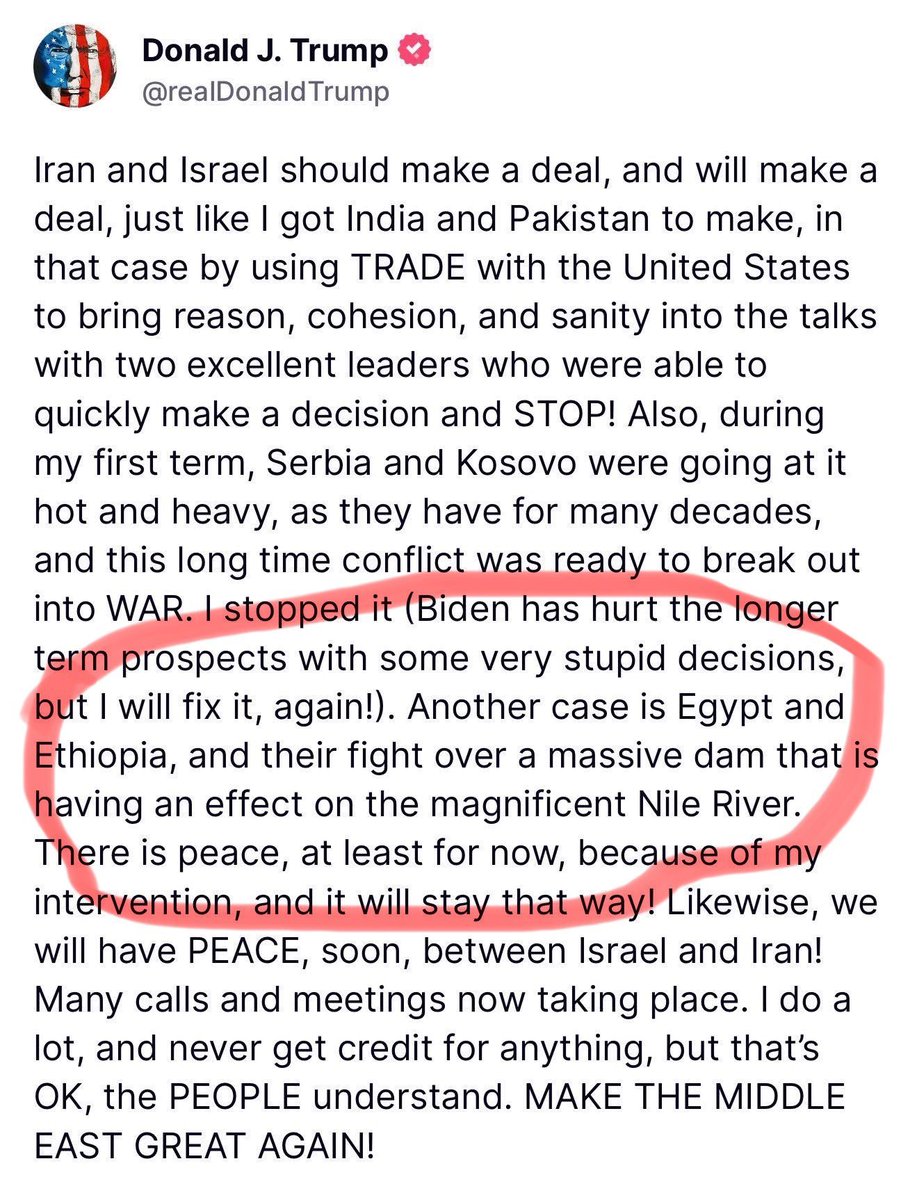
Yesterday, former U.S. President Donald Trump falsely claimed on his social media platform, Truth Social, that the United States financed Ethiopia's Renaissance Dam. In reality, Ethiopia's landmark infrastructure project was primarily funded through Ethiopian national resources, public contributions, private sector investments, and targeted loans from Chinese financial institutions. This article clarifies the facts, corrects misleading claims, and highlights Ethiopia's commendable self-reliance and strategic planning in the construction of the Renaissance Dam.
Historical Context: Ethiopia's Decision to Self-Finance
In April 2011, Ethiopian Prime Minister Meles Zenawi made a historic announcement: Ethiopia would build GERD independently. This bold stance emerged due to considerable diplomatic pressure from Egypt, which successfully lobbied international institutions—including the World Bank and the International Monetary Fund (IMF)—to deny financial support. Despite this setback, Ethiopia pressed forward, determined to fund the $4.8 to $5 billion project through domestic resources and strategic partnerships, underscoring the nation's resilience in the face of global opposition.
Clear Breakdown of GERD Funding Sources (2011–2025)
1. Ethiopian Government Budget: Approximately $5 billion (initial estimate)
2. Ethiopian Public Bonds & Donations: Approx. $450 million (~25.2 billion Birr)
3. Ethiopian Private Sector Contributions: Approx. $88 million (~4.9 billion Birr)
4. Ethiopian Diaspora Contributions: Approx. $27 million (~1.5 billion Birr), reflecting global Ethiopian unity
5. Ethio Telecom SMS Campaign (8100): Over 140 million Birr (~USD 2.5 million), including 122.5 million Birr raised in April 2021
6. Chinese Exim Bank Loan (Turbines & Equipment): Approx. $1 billion
7. Chinese Loan (Transmission Lines & Infrastructure): Approx. $1.2 billion
8. United States & Western Financial Institutions: $0 (No verified contributions)
Updated Total Actual Cost (by 2025): Approx. $7 billion
Clarifying Trump's False Statements
Donald Trump's assertion that GERD was "foolishly financed by America" is categorically incorrect. Historical records unequivocally confirm that there have been no American financial contributions toward GERD's construction. During Trump's administration in September 2020, the U.S suspended roughly $100 million in general foreign aid to Ethiopia. This aid primarily supported healthcare, economic development, governance, and humanitarian programs—not infrastructure projects, such as GERD. Trump's aid suspension was aimed at exerting diplomatic pressure concerning Ethiopia's dam-filling schedule, not due to any direct financing of the project itself.
Some of the Recent Funding Achievements
1. July 2020 – June 2021: 1.186 billion Birr raised domestically and through diaspora contributions.
2. July 2020 – April 2021: 874 million Birr collected.
3. Fiscal Year (July 2024 – May 2025): Exceeded a nine-month target, collecting 1.111 billion Birr (goal: 1.092 billion Birr).
4. Diaspora Contributions (Jan–April 2025): USD 1.65 million.
Some of the Community Fundraising Examples
1. Sacramento Ethiopian Community (2021–2022): Raised 2.4 million Birr (~USD 44,000), officially recognized by GERD project management.
2. East Hararghe Zone Fundraising (May 2022): Collected 42 million Birr, with an additional target of 19.2 million Birr for West Hararghe.
3. New York Ethiopian Community Event (August 6, 2021): Raised USD 62,000, showcasing solidarity.
Upcoming Milestones and Grand Inauguration
GERD is set for complete inauguration early in the Ethiopian calendar year 2018 (approximately September 2025 Gregorian). This historic milestone will be celebrated jointly by the Ethiopian government and citizens, highlighting a decade-long achievement of national unity and strategic progress.
A Final Word to Trump and His False Narratives
We vividly remember the pressures and threats during your administration:
1. Your biased "mediation" openly favors Egypt.
2. The unjustified suspension of $130 million in aid aimed at coercing Ethiopia into submission.
3. Your reckless public suggestion on October 23, 2020, that Egypt might "blow up" our Renaissance Dam.
Despite diplomatic manipulation, military threats, misinformation campaigns, and bribery attempts aimed at undermining Ethiopian sovereignty, Ethiopia stood firm. Ethiopia's Renaissance Dam rises—not because external powers permitted it, but because Ethiopians built it with their hands, hearts, and dreams.
Our destiny was never yours to control. Our peace was never yours to grant.
#GERD #Ethiopia #Egypt #RenaissanceDam #FactsMatter #CorrectingMisinformation @realDonaldTrump
Restoring a navy proclaims that Ethiopia will no longer be confined by inherited limitations, nor accept maritime dependency as its default condition. In this sense, the navy is not simply about ships or sailors. It is about agency. It is about reclaiming the right to shape one’s destiny in a region too often defined by external designs
@HornReview Thank u all for the great discussion we had today. It was so refreshing to see so many bright young people interested in the field of foreign policy and geopolitics.
ይህ የ"ክህሎት ኢትዮጵያ" 2ኛ ዙር ተወዳዳሪ ወጣት በኢትዮጵያና በአፍሪካ ያለውን የአካል ጉዳተኞች የእንቅስቃሴ ገደብ ችግር ለመፍታት በማሰብ የኤሌክትሪክ ዊልቸር የሰራ ነው። ኤሌክትሪክ ዊልቸሩ በሞባይል እና በሪሞት የሚሰራ የመቆጣጠሪያ አማራጭ የተሟላለት ነው።
This 'Skill Ethiopia' 2nd round competitor developed an electric wheelchair to help address the mobility challenges faced by people with disabilities in Ethiopia and Africa. The wheelchair is equipped with both mobile and remote control functionality.
#ችግር_ፈቺ_እጆጭ
#PMOEthiopia