BREAKING NEWS | ANALYSIS
@MirwaizKashmir
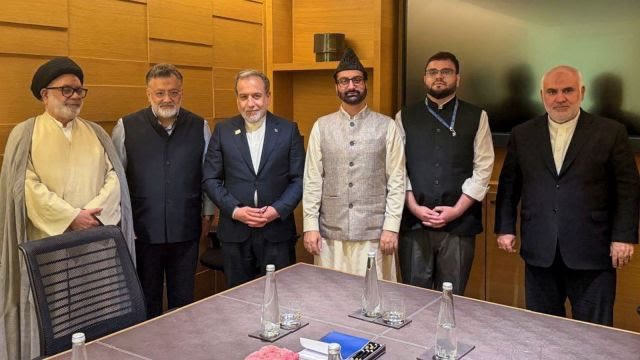
Mirwaiz Umar Farooq Meets Iranian Foreign Minister Abbas Araghchi in Delhi
Mirwaiz Umar Farooq’s meeting in Delhi with Iranian Foreign Minister Abbas Araghchi is an important development that deserves to be viewed positively, seriously, and with care.
A Kashmiri leader who is often restricted from delivering Friday sermons and carrying out his political and religious role in Kashmir does not simply meet a major foreign minister in Delhi without the permission, or at the very least the non-objection, of the Indian authorities.
For that reason, I see this as a potentially important opening. I am not expressing suspicion about the meeting. On the contrary, I believe such political and diplomatic space should be welcomed if it can contribute to a wider process of dialogue.
Mirwaiz Umar Farooq spoke in the language of dialogue, diplomacy, wisdom, restraint, and unity rather than confrontation. That is the right language.
Whether the conflict is in West Asia or South Asia, lasting political disputes cannot be resolved permanently through force and confrontation alone. I have long believed that the Jammu and Kashmir dispute will ultimately have to be addressed through dialogue.
That dialogue may be bilateral, trilateral, or part of a wider multilateral political process. But one principle must remain clear:
The people of Jammu and Kashmir and their genuine political leadership cannot be excluded from any meaningful peace process.
Mirwaiz Umar Farooq remains one of the most prominent political and religious voices associated with the Hurriyat Conference. At the same time, many Kashmiri political leaders and activists remain imprisoned.
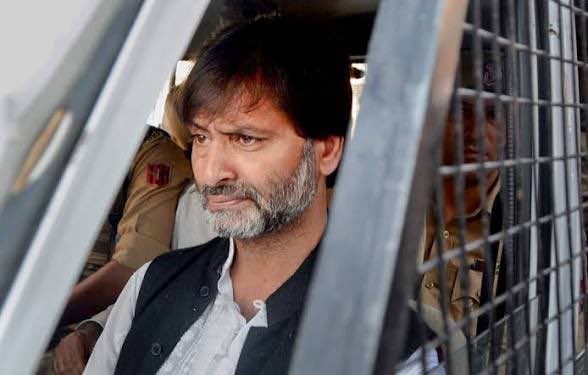
The continuing cases against Yasin Malik, the prolonged imprisonment of leaders including Shabir Ahmad Shah, Masarat Alam, Asiya Andrabi, Nayeem Khan, and the continued legal ordeal of human rights defenders such as Khurram Parvez illustrate a serious contradiction: some diplomatic space may be emerging, while the political space inside Kashmir remains deeply restricted.
The political process connected with Kashmir is not new. During the period of Prime Minister Atal Bihari Vajpayee, an important peace process and political engagement began. Any renewed initiative today should learn from that experience and must be inclusive, transparent, credible, and comprehensive.
If Delhi has permitted political space for this meeting, then the real test begins now.
Will this remain only a diplomatic photograph during the Iranian delegation’s visit?
Or could it become the beginning of something more meaningful — the restoration of political space in Kashmir, confidence-building measures, the release of political prisoners, and genuine dialogue?
I welcome this development.
But the seriousness of any new political opening will ultimately be judged not by statements or photographs, but by practical steps and political outcomes.
— Raja Muzaffar
Source: The Indian Express
https://t.co/6RbRHzZJkE
According to UN new world map Kashmir is neither jugular vein of Pakistan nor intergral part of India , but a disputed territory between India,Pakistan and China .
Every supporter of democracy, human rights and justice in the world, regardless of color, race, religion, nationality, should raise their voice for the release and end of the unjust punishment of innocent Kashmiri Hurriyat leader #Yasin_Malik, who has been imprisoned for decades.
Indian civil society is also appealed to play an effective role.
#Release_Innocent_Yasin_Malik
@Hestia2007 If electricity and floor is expensive in Pakistan that is poor governenc of your leadership and if flood come every year in Pakistan why not they make strategy to handle it for next year.
@Hestia2007 What about Kashmires leaving abroad only in one bank United bank limited that hold 13 billion of dollars as Kashmires people reserve in Pakistani banks and in only one city there is more than 10 branches of each bank of Pakistan how you can say that Pakistan feed Kashmires.