Macroeconomist | Award Winning Author in Finance
Interest - Food 🍜, Music 🎧, Reading 📚, Football 🥅 and Comedy 🫡
|Global Icon|
|Goal Achiever|
|Conservative|
Every macro trader knows the feeling. It's 8:29 AM ET on the first Friday of the month, the countdown is on, and the charts are completely still. Then, the numbers drop. 🚨
My debut book, First Friday Fever: Inside the United States Non-Farm Payrolls Phenomenon, is officially live on Amazon and all other wholesale, retail, and online bookstores worldwide!👇
If you trade Forex, Gold, or Indices, you know that the NFP report is the ultimate market mover. This book is an in-depth look at the mechanics behind the data, the Federal Reserve’s reactions, and the psychology of the market's most chaotic morning.
Whether you love the volatility or hedge against it, First Friday Fever breaks down exactly how this economic engine works behind the scenes.
Grab your E-book and Paperback copy on Amazon today and master the macroeconomic cycle! 📖📉📈👉 [https://t.co/kxQMzWAPWF]
Apple Books, Barnes & Noble, Fable, Gardners, Kobo, Tolino etc.
[https://t.co/OdiUyP6Cgy]
#NFP #ForexTrading #Macro #GoldTrading #Finance #Investing #BookLaunch #AbrahamKudadze #FirstFridayFever
Bill Gates offered his childhood friend Paul Allen $5 per share to buy him out of Microsoft. Allen refused and kept the stock that would eventually help make him worth an estimated $40B.
Months earlier, while Allen was undergoing cancer treatment, he had overheard Gates and Steve Ballmer discussing how to reduce his ownership in the company they had built together.
The 2 had known each other since school.
Allen was 15 when he met 13-year-old Gates. They spent their teenage years working with computers and eventually founded Microsoft in 1975.
But the ownership split had been a source of tension from the beginning.
Gates initially wanted 60% of the company.
Allen got 40%.
Later, Gates pushed for another adjustment.
64% for himself.
36% for Allen.
Allen agreed.
Microsoft kept growing. Its deal to supply software for IBM's personal computer put the business on a completely different trajectory.
Then, in 1982, Allen was diagnosed with Hodgkin's lymphoma.
He began radiation treatment and gradually reduced his involvement in the company.
One evening in December, he walked past Gates' office.
Gates was talking with Steve Ballmer.
According to Allen, they were discussing his reduced productivity and how they could dilute his Microsoft equity by issuing stock options to themselves and others.
Allen stopped outside the door and listened.
Then he walked in.
He confronted both men and left.
That evening, Ballmer came to his house to apologize.
Days later, Gates sent a handwritten apology.
6 pages long.
But Allen had decided to leave.
In February 1983, he resigned from Microsoft.
Gates offered to buy his shares for $5 each.
Allen wanted at least $10.
Gates wouldn't pay it.
So Allen kept his stock.
When Microsoft went public in 1986, Allen still owned roughly 25% of the company.
As Microsoft grew into one of the world's largest businesses, his shares made him one of the richest people alive.
At one point, his fortune was estimated at $40B.
The 2 friends eventually repaired their relationship.
But Allen never forgot the conversation he overheard during his cancer treatment.
Gates had offered him $5 a share to leave.
Allen left.
His shares stayed.
@elonmusk Yes. Prime Minister Ambani. Please, allow Starlink to carry out operations in India. When there was undersea cable cut in my region, Starlink helped me to continue working without any problems. The remote locations in India would be thankful for your support. 🙏🏽
BREAKING: President Trump awarded Elon Musk the National Medal of Science today, America’s highest honor for scientists and engineers.
Trump called Musk a “national treasure.”
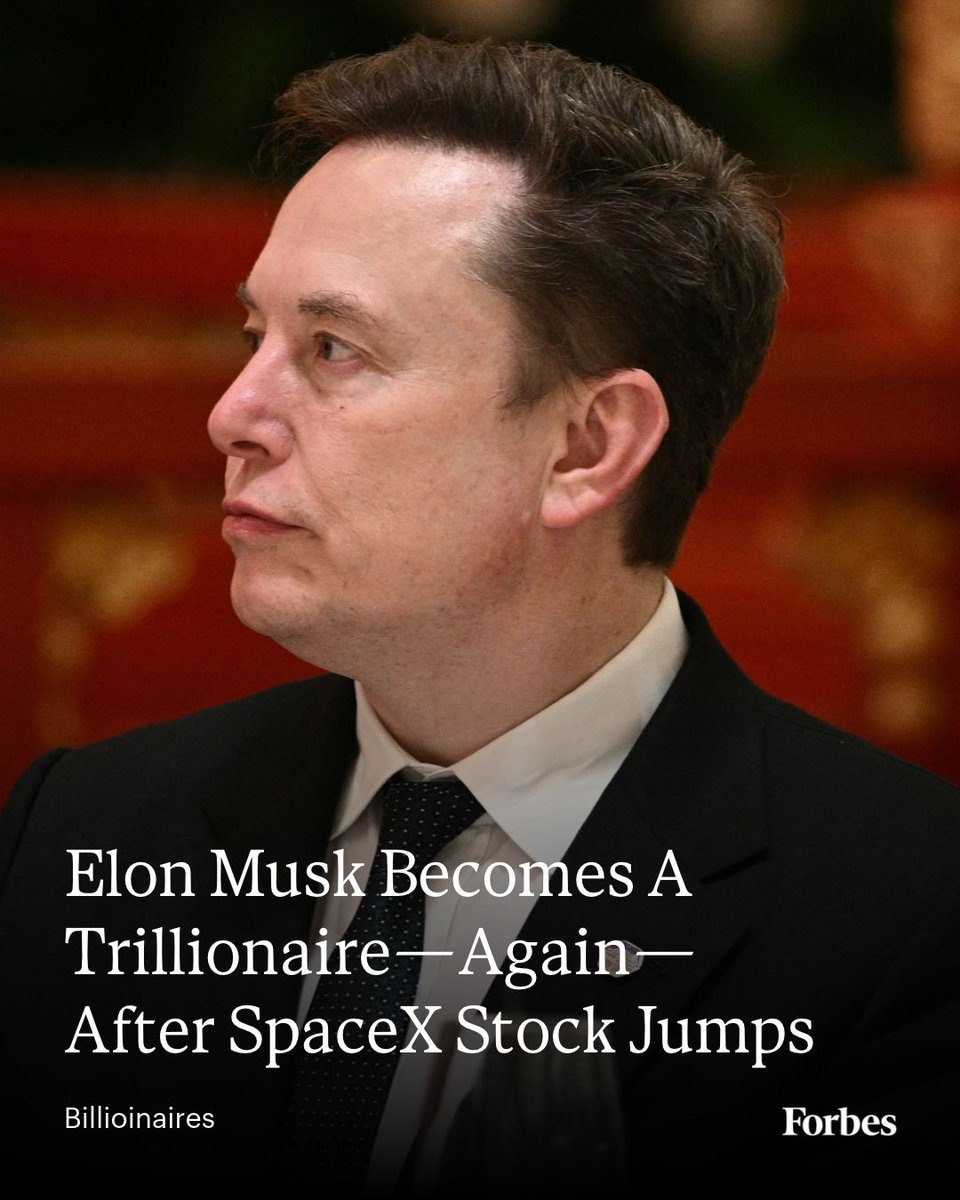
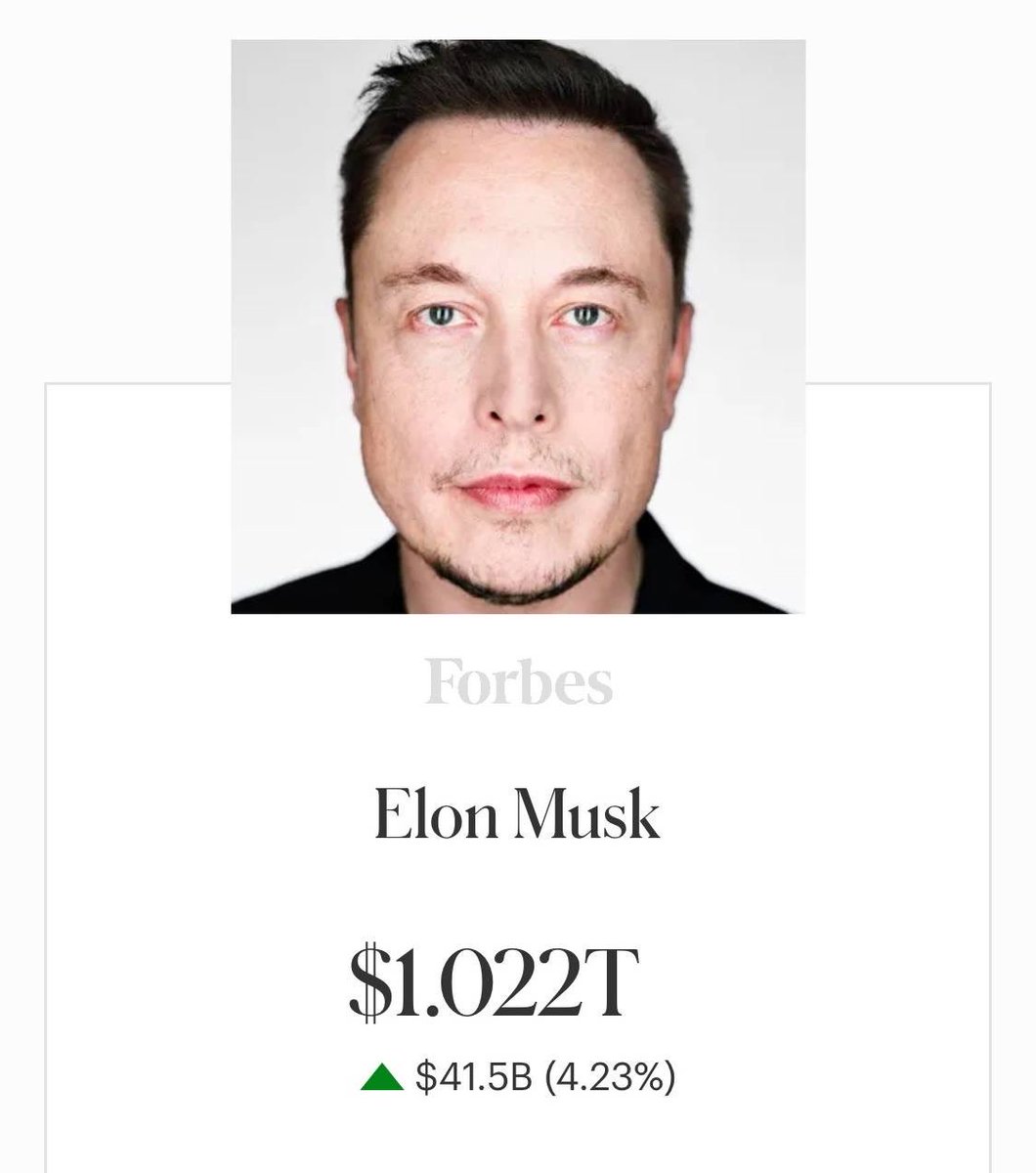
Elon Musk’s net worth topped $1 trillion Monday morning as stocks for his companies SpaceX and Tesla climbed after the stock market opened.
Read more: https://t.co/zj5LlsPQPe
📸: Brendan Smialowski/AFP via Getty Images
Young men need to stop feeling like they're behind in life. When Julius Caesar was in his thirties, he was reading about Alexander the Great and began to cry. His friends asked him what was wrong. He said: “Do you not think it is matter for sorrow that while Alexander, at my age, was already king of so many peoples, I have as yet achieved no brilliant success?” Alexander had built an empire from Greece to India and died at 32. Caesar was older and had done nothing worth remembering. In his forties, he conquered Gaul. At 50, he crossed the Rubicon and took Rome. He became the most famous Roman who ever lived. Caesar thought he was behind, but he was only getting started. You are not late.


![Abkmawutor's tweet photo. Every macro trader knows the feeling. It's 8:29 AM ET on the first Friday of the month, the countdown is on, and the charts are completely still. Then, the numbers drop. 🚨
My debut book, First Friday Fever: Inside the United States Non-Farm Payrolls Phenomenon, is officially live on Amazon and all other wholesale, retail, and online bookstores worldwide!👇
If you trade Forex, Gold, or Indices, you know that the NFP report is the ultimate market mover. This book is an in-depth look at the mechanics behind the data, the Federal Reserve’s reactions, and the psychology of the market's most chaotic morning.
Whether you love the volatility or hedge against it, First Friday Fever breaks down exactly how this economic engine works behind the scenes.
Grab your E-book and Paperback copy on Amazon today and master the macroeconomic cycle! 📖📉📈👉 [https://t.co/kxQMzWAPWF]
Apple Books, Barnes & Noble, Fable, Gardners, Kobo, Tolino etc.
[https://t.co/OdiUyP6Cgy]
#NFP #ForexTrading #Macro #GoldTrading #Finance #Investing #BookLaunch #AbrahamKudadze #FirstFridayFever](https://pbs.twimg.com/media/HMQaI51XcAEG1QV.jpg)