Editor-In-Chief, Past President @ American Society of Brewing Chemists | Program Coordinator @ Johns Hopkins University | Microbiologist 🧫 | Traveler & Foodie
Carbonation 🫧🫧 is NA beer’s built-in bouncer 🍺 A new study demonstrates E. coli & Salmonella are inactivated in fully carbonated NA #beer — but both grow when CO₂ drops in #draught lines. Lose the fizz, gain a problem. https://t.co/nD5Je0gTkg #brewing https://t.co/gntou0sRSd
Just 3 g of barley‼️ This study shows a benchtop #malting system strongly correlates with micro-malting for DP, TMP & malt extract — enabling early-gen screening with minimal grain. Small batch, big malt! https://t.co/52R3DhI7TJ #brewing#beerscience https://t.co/fmDkWjA2H5
Carbonation 🫧🫧 is NA beer’s built-in bouncer 🍺 A new study demonstrates E. coli & Salmonella are inactivated in fully carbonated NA #beer — but both grow when CO₂ drops in #draught lines. Lose the fizz, gain a problem. https://t.co/nD5Je0gTkg #brewing https://t.co/gntou0sRSd
👨🏼🔬⚗️ Turning up the heat 🔥 New in JASBC: 80 °C HS-SPME extraction rescues β-myrcene linearity (R² 0.94 → 0.9992) while keeping #linalool, #geraniol & #β-citronellol on point. One method, four #terpenes. Check it out!
#brewingscience#hops#beer https://t.co/pmnXpBES7o
Where there’s smoke, there’s ruin — or is it BBQ? 🔥🍺 New research reveals not all wildfire smoke compounds in #hops drive negative #beer flavors equally — some bring BBQ notes, others bring barnyard. Know the difference. Check out the research below 👇🏻 https://t.co/aiS2LbC3gn
Non-alcoholic #beer foam: all froth and no substance? 🍺 New @KULeuven research confirms dealcoholised #NABs have significantly lower #foam capacity, stability, and coarser #bubbles than their alcoholic counterparts — and now we know why. See link below👇🏻 https://t.co/ahZ8uDfB33
It’s a mold new world 🌎 for specialty #malt 🌿. Barley #koji malt hits 84-86% extract, achieves Munich-range color in just 3 days, and packs a metabolite profile no standard malt can touch. Japan’s oldest secret 🤐 meets your mash tun. Check it out today. https://t.co/fngmmQoUjt
Where you grow hop-parently matters!🌿 New @OregonState study finds regional chemical identity persists in some #hop varieties across two Pacific Northwest harvest years — but some hold their #terroir more steadily than others. See the 🔗 below 👇🏻 https://t.co/z89nffHFFK
We’re fermenting some excitement! New open-access research just mapped the #microbiota of #Boj & #Suchiles - traditional Guatemalan #fermented#beverages - using rDNA sequencing & MALDI-TOF MS. Turns out good beverages really do take the right culture. 🧫 https://t.co/tB5s7OM4fP
That’s the #spirit - but is there methanol in it? 🥃 In this article, Raman + deep learning detects methanol in spirits below safety limits. Neural nets beat traditional methods 2X in accuracy. Check the link below 👇🏻 #distilling#foodsafety#science https://t.co/N0C8pRx72D
📏Size matters in the mash🍺 This new research from KU Leuven shows small #starch granules and high gelatinization temperatures 🔥 hurt #fermentation yields. Maybe #malt spec sheets need to go beyond the usual suspects. Check the article out today! https://t.co/fiU0okj4R2
🌳🍺 Wild yeast, tamed for low-ABV beer!
Researchers at isolate two Torulaspora delvrueckii strains from a White Oak tree — and they naturally cap out at 1 - 2 % ABV, while producing a tasty, aromatic beer.
Oak-asionally nature just brews it right 😉🍺 https://t.co/KaAVfBsfB2
🍻 Are IBUs telling the full story of beer bitterness? Maybe not…
This new open access article explores how dry-hopping introduces phenolics that can rival (or exceed) traditional bittering compounds. Seems like there’s more brewing than meets the IBU 😉 https://t.co/8YRaxtYJ9d
New #beer#science just dropped 🍺🔬
This latest study uses UPLC-Q-ToF to map the complex world of #hop#bitter compounds—revealing how profiles differ in lager/pilsner vs. dry-hopped beers and how aging reshapes #bitterness.
https://t.co/j4trKR5qcv
🚨New Research Alert!
A new open access article from UC Davis shows that hops may contain hidden sugars bound to plant metabolites that can be released during hydrolysis — adding another potential driver of hop creep hiding in plain sight. Take a look👇🏻 !
https://t.co/p6aA6BvLxR
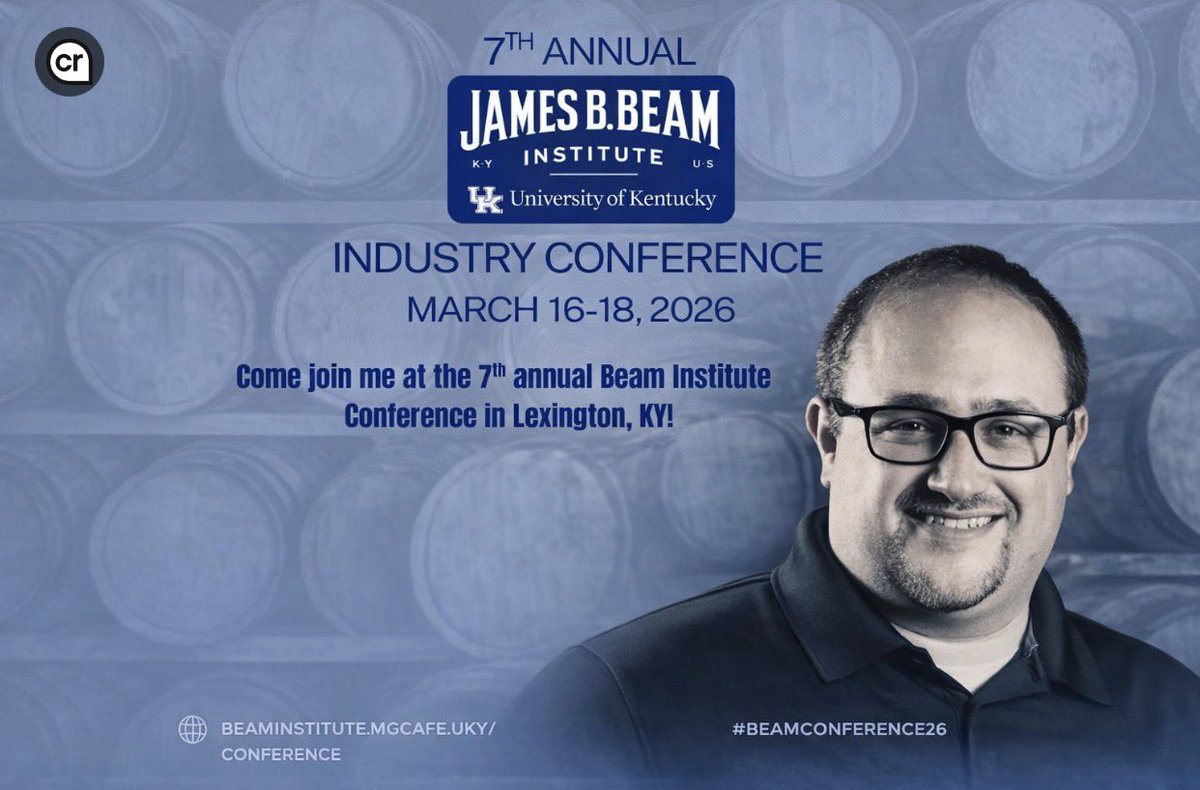
Barrels. Breakthroughs. Bourbon. 🥃
I’ll be at the 7th Annual James B. Beam Institute Industry Conference (March 16–18, 2026) and look forward to connecting with the #distilling community on emerging #spirits#research and #innovation
Can a drop💧of Mezcal tell its age 👵🏻? This study demonstrates that evaporative droplet patterns + PCA-SVM classify young vs >12-month aged #Mezcal . Sometimes the answer is right there in black in white…just read between the drops. Check out below! https://t.co/zMxSuC83Ty
🚨 Don’t let your NABLABs be the wild kind of ferment. 🚨 This newly published open-access article explores a rapid, brewery-friendly solution for pathogens detection. Check it out below 👇🏻 https://t.co/6JnWrX0Jd6
🚨🍻NA #beer is low alcohol — but food #safety shouldn’t be low priority. New #openaccess research shows that under low #pasteurization, Salmonella persisted in NA beer. As NA grows, safety cannot go flat. Check out the article 👇🏻 #brewingscience https://t.co/w9IONguzxC
🚿🍺 Can shower water sneak into your beer during pasteurization? This #openaccess study shows the risk is very low — but CO₂ loss occurred in crown-cork bottles! Closure type matters. 💨
#beer#brewing#brewingscience https://t.co/CTi01sYZYO