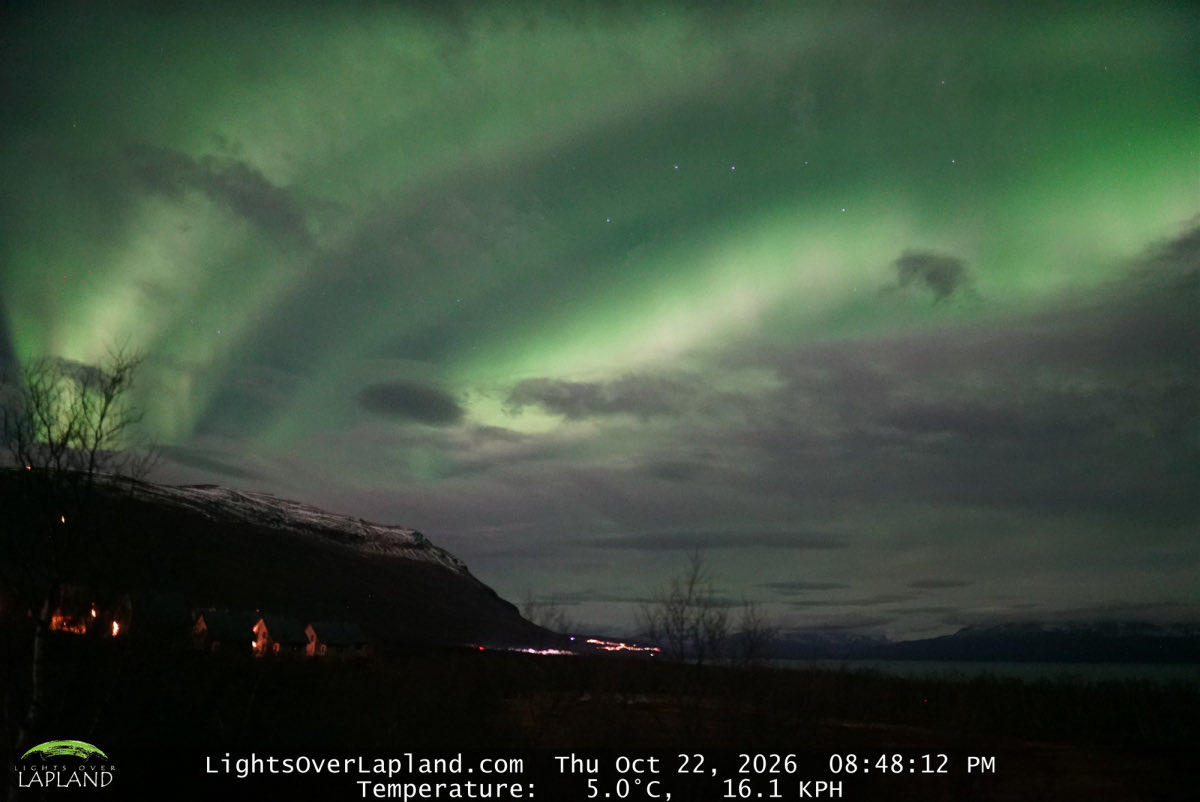
Fancy having a bespoke Aurora system installed in your Hotel, lodge, business, we provide bespoke camera and Aurora Alert app just for you, with installation and personalised App just for your customers. Get in touch to find out more info.
Amazing week for Aurora, when the sky erupts in dancing Aurora is just epic, like magic in the sky, we would love to see your favourites. Best ones get a repost.
A coronal hole is directly facing Earth today! We may see fast wind from this open patch of magnetic fields sweep past Earth and trigger minor geomagnetic storming around 10/20 or 10/21.
High-latitudes may be in for quite a show of active and exciting auroral displays. Mid-latitudes, too just a bit more sporadic of chances with displays lower on the poleward horizon. Let’s wait and see!
Two more solar storms plus some fast solar wind will impact Earth over the next couple of days, continuing this week's storming and extending aurora chances through October 14. I will do a storm impact wrap up and discuss what's next in my full forecast, out later this week.