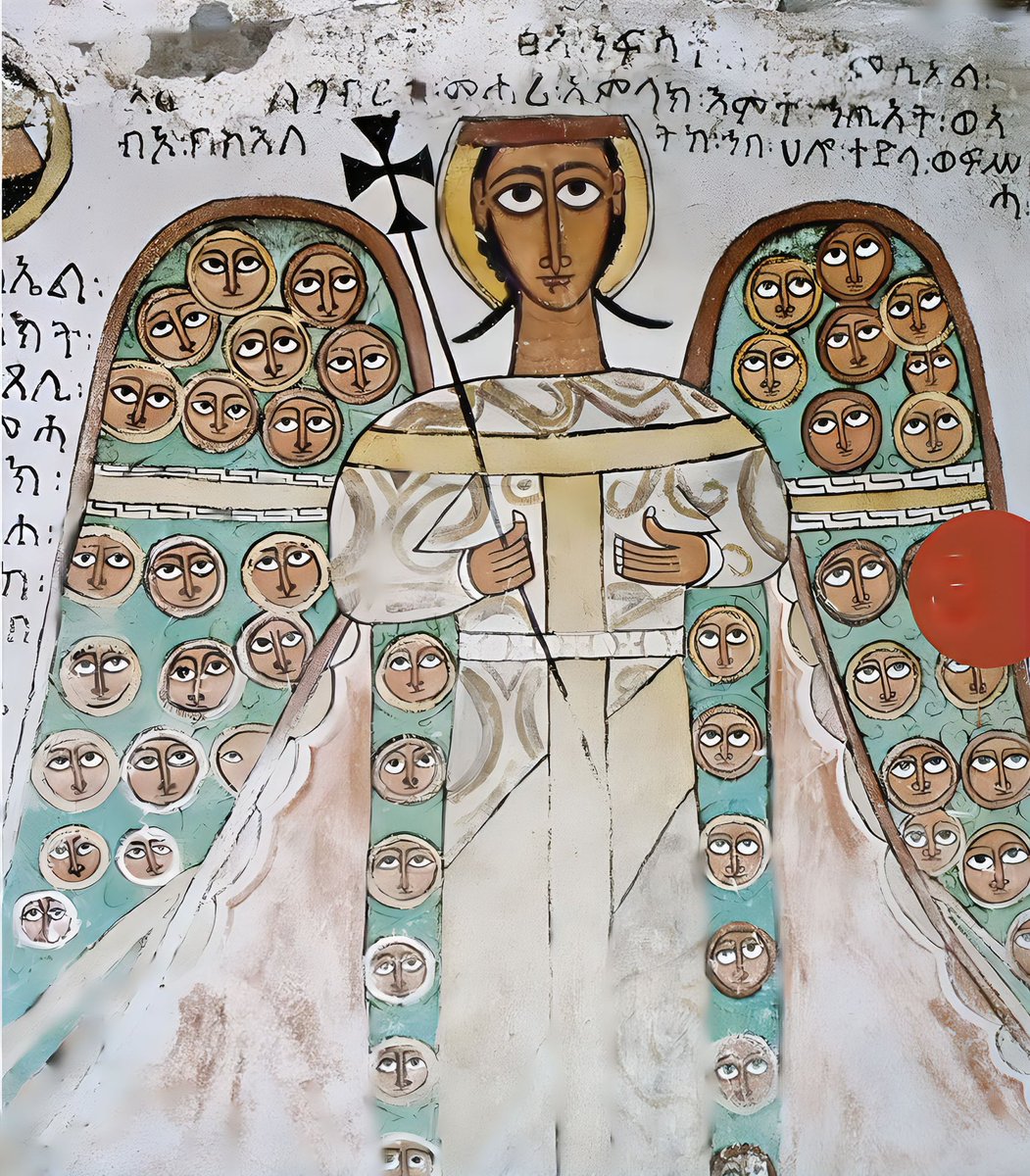
The breathtaking ceiling of Debre Berhan Selassie Church in Gondar, Ethiopia, features iconic angelic faces that symbolize divine protection. Built during the reign of Emperor Iyasu I (1682–1706) #Ethiopia#GondarianPeriod
18th-century Ethiopian manuscript illumination showing Jesus entering Jerusalem on a donkey, welcomed by crowds laying down cloaks and palms. Rendered in traditional Ethiopian Christian style with Ge’ez script above. #PalmSunday2025#ሆሳዕና#Orthodox
This Ethiopian Gondarine-period illustration from The Four Gospels (1664–1665), titled Flight into Egypt, portrays Mary and baby Jesus seated on a donkey, accompanied by Joseph, as they flee into Egypt. #Orthodox#Ethiopia
The artwork depicts Ethiopia’s adoption of Christianity around 330 CE during the reign of the royal brothers, Ezana and Saizana, who ruled from 320 to 360 CE. They are shown with Abba Salama (Frumentius) in a painting at the 10th-century Orthodox Church of Abreha wa Atsbeha.
A 1000 CE illustration from the Byzantine Menologion of Basil II depicts Philip baptizing the Ethiopian eunuch, an Ethiopian official in charge of the Treasury, who met Philip in the 1st century CE, as described in Acts 8:26-40. #EthiopianOrthodox#Byzantine
The faithful of the Ethiopian Orthodox Tewahedo Church gathered at Bole Medhane Alem (The Savior of the World) Cathedral to joyfully celebrate the Resurrection of Jesus Christ. #መድኃኔዓለም#Easter
A late 1800s Ethiopian painting of the Crucifixion shows Christ on the cross , flanked by two thieves. At the foot of the cross stand the Virgin Mary, St. John, Mary Magdalene, and Mary of Clopas. Below His feet, Christ’s blood falls into Adam’s skull, symbolizing salvation.
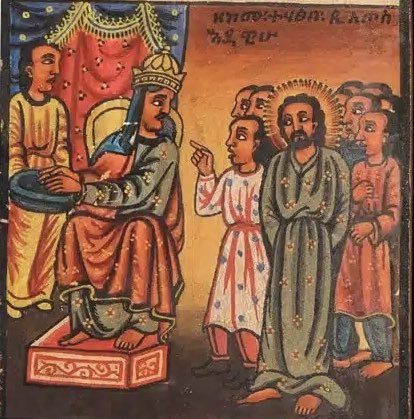
A 19th-century Ethiopian painting depicting the moment Jesus Christ is brought before Pontius Pilate, who ceremonially washes his hands to absolve himself of responsibility. #Orthodox
This late 14th-century Ethiopian manuscript illumination depicts the Transfiguration of Christ, with Jesus standing alongside Moses and Elijah, while Peter, James, and John witness His face shining with divine light.
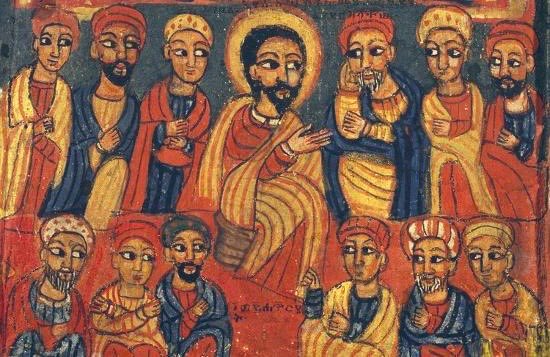
This late 18th-century Ethiopian painting depicts Jesus Christ sharing the Last Supper with His twelve apostles. Rendered in the distinctive style of Ethiopian Orthodox iconography, the scene is rich in color, symbolism, and spiritual intensity. #Orthodox
18th-century Ethiopian manuscript illumination showing Jesus entering Jerusalem on a donkey, welcomed by crowds laying down cloaks and palms. Rendered in traditional Ethiopian Christian style with Ge’ez script above. #PalmSunday2025#ሆሳዕና#Orthodox
The 1400s Ethiopian illuminated Gospel Book depicts Christ’s arrest and was commissioned by Princess Zir Ganela, granddaughter of Emperor Amda Seyon I and daughter of Emperor Newaya Krestos (r. 1344–1372).Her brothers, Newaya Maryam and Dawit I, ruled from 1372–1382 and 1382–1413
Dating to 1398–1409, this illumination from Beta Lahem Church in Gaynt Province, South Gondar, Ethiopia, depicts the infant Virgin Mary held by her parents, Joachim and Anna, reflecting the era’s spiritual and artistic traditions. #ETOC#Ethiopia
This depiction of the archangel Michael dates back to the reign of King Yekuno Amlak (1270–1285) in Ethiopia and was commissioned by Mahari Amlak. The inscription requests the saint to intercede on behalf of the patron. #Abyssinia_Archives
This Ethiopian manuscript illumination, dated between 1667 and 1706, depicts the Dormition, where Mary receives the Covenant of Mercy from Jesus. The figures present are Mary, Jesus Christ, King David, prophets, angels, and saints. #Orthodox
A late 17th-century portrait of the Ethiopian Saint Abba Giyorgis of Segla (1365–1425), also known as Giyorgis of Gasicha. A prominent 15th-century Ethiopian Orthodox author, his notable works include the Book of Hours, Hymns, and Mystery in Gə’ez, the liturgical language of EOTC
@humethio Tadbaba Maryam, originally called Tadbaba Tsion (Zion), was established as an Old Testament-era temple in 982 BCE. However, the current structure was built during the reign of Emperor Gelawdewos (1540–1559).
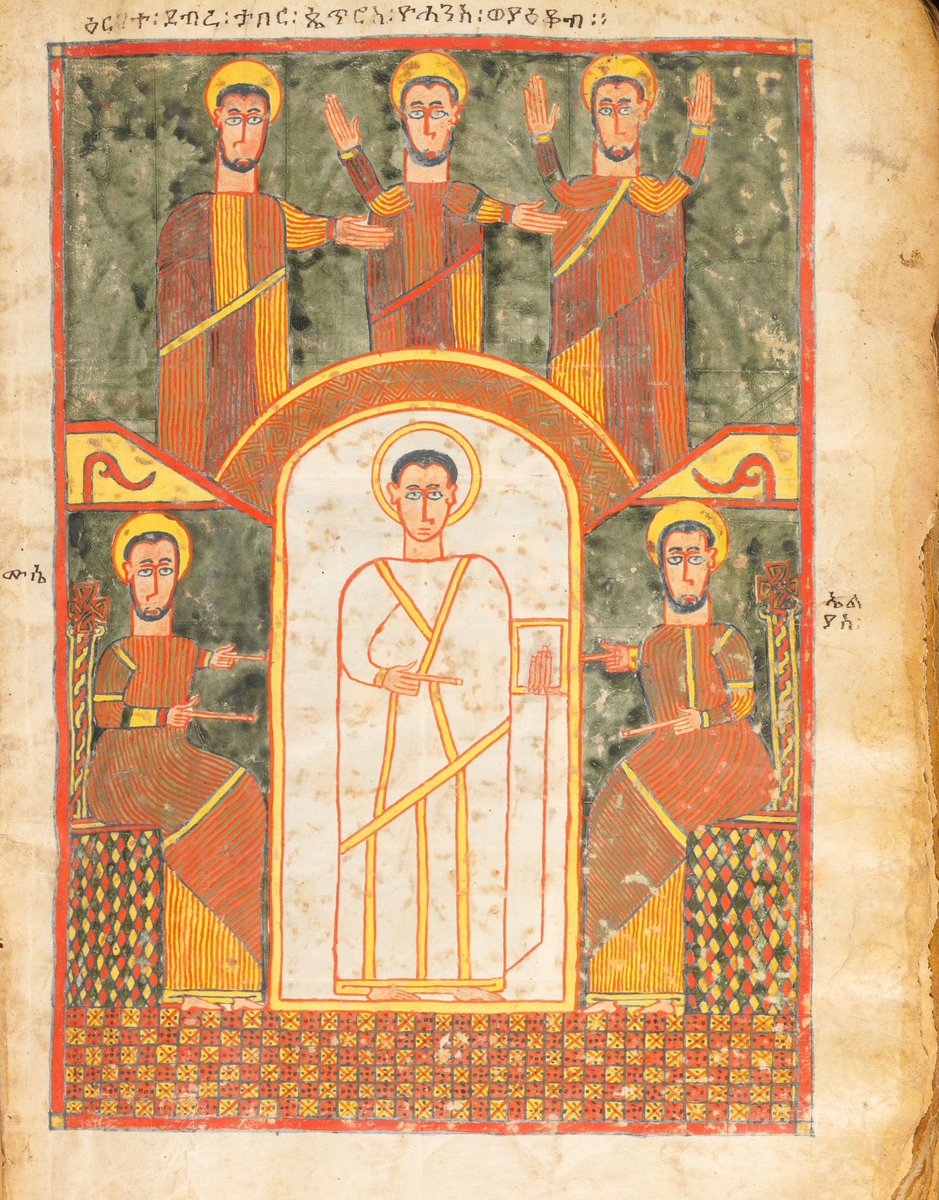
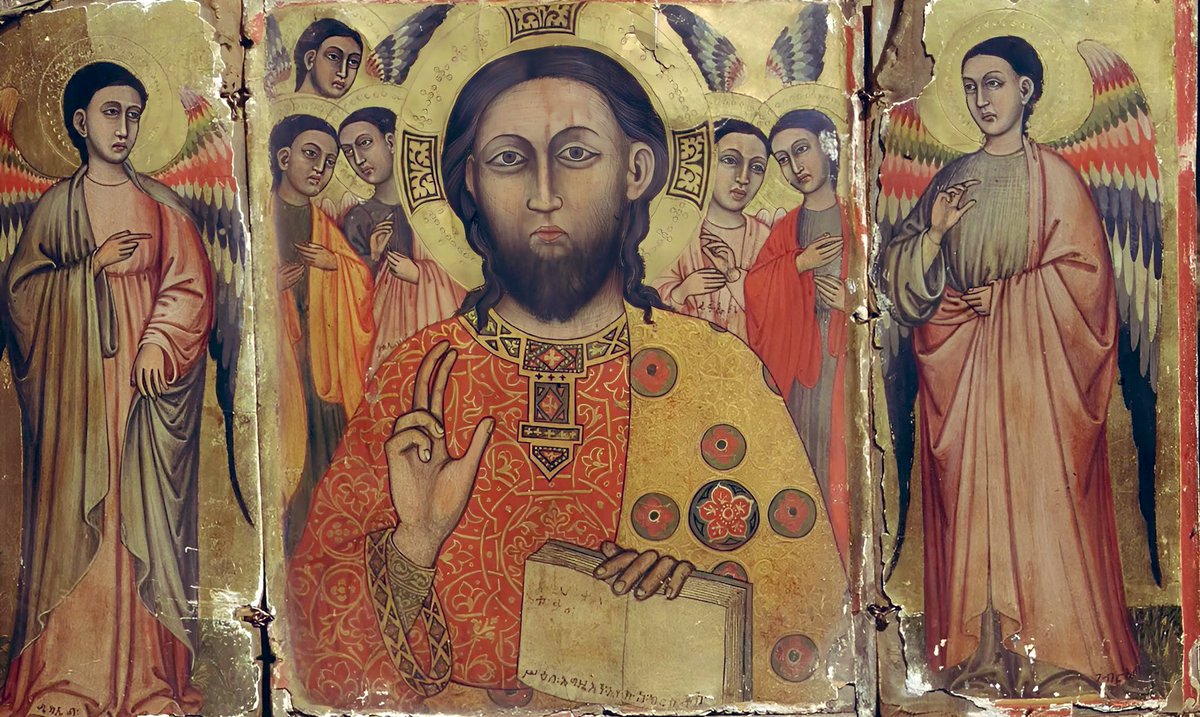
The 14th-century Byzantine-style triptych, which belongs to the Church of the Saviour of the World (መድሀኒአለም), near the 982 BCE Tadbaba Maryam Monastery in Wollo, Ethiopia, shows Christ blessing with his right hand while holding a Gospel, flanked by archangels. #Orthodox
This 1468–1478 Ethiopian manuscript illumination depicts Saint Anthony the Great, an Egyptian hermit and the founder of Christian monasticism, alongside Saint Macarius, an Egyptian monk known for his spiritual teachings. #EthiopianArt#Orthodox
This 1400 Ethiopian manuscript illumination depicts the Annunciation. St. Gabriel appears to Mary, delivering the divine message as she spins linen, while the Holy Spirit is represented as a dove. The manuscript was likely created in Wallo, Ethiopia. #Orthodox