From WAMC Northeast Public Radio, The Academic Minute allows professors from top institutions to keep listeners abreast of what’s new & exciting in the academy.
What can we learn to prevent college athlete suicides in the future?
Elaine Anton-Lotruglio, doctoral candidate in the School of Social Welfare at @ualbany, examines this.
https://t.co/EfRs5c7qo9
It’s risky to inject yourself with GLP-1 peptide at home, so why do people do it?
Michael White, distinguished professor of pharmacy at @UConnPharmacy, examines this.
https://t.co/rBOrYT5swG
On @LafCol Week: Soccer had a moment during the World Cup. Will the momentum persist?
Abraham Seda, assistant professor of history, details the possibilities.
https://t.co/6BamgAqSZH
On @LafCol Week: Child care tax credits have a surprising impact.
Susan Averett, Charles A. Dana professor of economics, explores why.
https://t.co/H9izS3XpFS
On @LafCol Week: Engineering solutions reshape societies in unexpected ways.
Jenn Rossmann, William Jeffers Dean of Engineering, explores some from our past.
https://t.co/E95t3W0mNl
On @LafCol Week: Not everyone benefits equally from an education and a higher income.
Carlos Tavares, associate professor of sociology, says race also plays a part.
https://t.co/3xs23oELjS
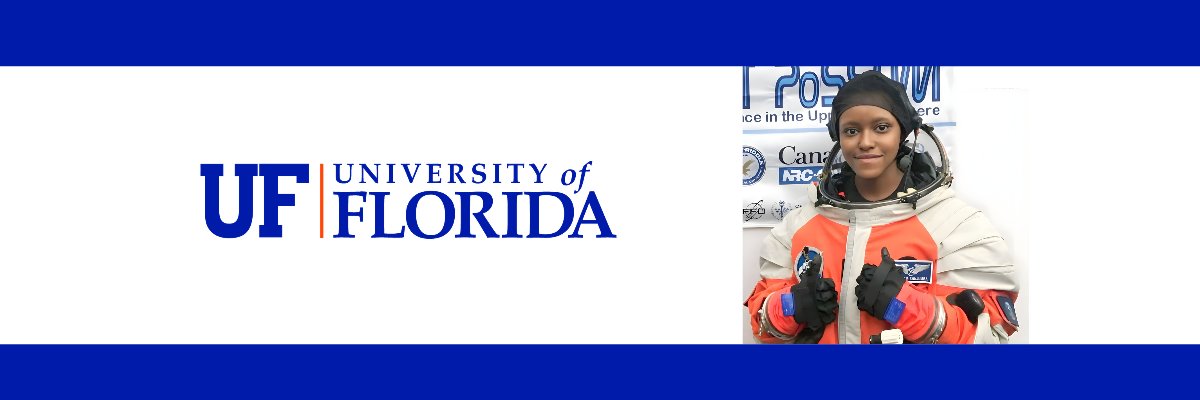
How do we capture tumbling satellites in outer space?
Wanjiku Chebet Kanjumba, PhD candidate in aerospace engineering at the @uflorida, looks at how to bring them under control.
https://t.co/XJGwkQbdSz
Employers may look for different things on resumes than you might think.
Murugan Anandarajan, professor of decision sciences at @DrexelUniv, discusses this.
https://t.co/Lfmv3N1JSr
Mental health is especially important during pregnancy.
Rachel Eakley, clinical assistant professor at the Rory Meyers College of Nursing at @nyuniversity, determines why more support is needed.
https://t.co/hpey508KNM
What if you could improve your brain health throughout your lifespan?
Lori Cook, director of Clinical Research at the Center for BrainHealth at @UT_Dallas, says it’s possible.
https://t.co/Pk8xtciW7u
How does obesity in midlife affect your chances of developing Alzheimer’s disease?
Stephen Wong, professor of radiology and medicine at @HMethodistMD, looks into the links.
https://t.co/b5qeOlA5O0
Can self-control in third grade predict your success later in life?
Andrew Koepp, assistant professor of applied psychology at @nyuniversity, examines whether it can.
https://t.co/la8b5jF6x8
Term limits in politics open doors for more women candidates. Why is this?
Samantha Pettey, professor of political science at MCLA, examines the data.
https://t.co/FyPzVpd3lC
What is the Greek virtue of sophrosyne and why is it important today?
Ross Channing Reed, assistant teaching professor of philosophy at @MissouriSandT, tells us.
https://t.co/US1GmDLxyc
Do you have to sleep to dream?
Nicolas Decat, PhD student in cognitive science at the @InstitutCerveau, examines this question.
https://t.co/Hv2ev95s3R
What happens to your brain under anesthesia?
Janna Helfrich, assistant professor at the Department of Anesthesiology at @Yale, says it’s not quite what we expected.
https://t.co/en2doUI1Bf
Many people use cannabis as a sleep aid, but can it be dangerous?
Joanna Fong-Isariyawongse, associate professor of neurology at @PittTweet, examines the risks.
https://t.co/r9ahNiQ5EK
Poor sleep is tied to Alzheimer’s risk in older women.
Kitty Lui, doctoral student in clinical psychology at @UCSanDiego, discusses these findings.
https://t.co/jVJ2Ph6u9x
One bottle of water can reveal the secrets of an entire ecosystem.
Jenny Whilde, adjunct research scientist at @UF, explains how.
https://t.co/plVvCmRuJf