Introducing Apex Arena.
We know what building actually looks like. You get the product to a place you are proud of, then realize building was the easy part. After that comes everything around it. You show up to Demo Days where your pitch gets more slides than views. Hackathon applications hoping the right person notices. And somehow, in the age of AI, still cold messaging strangers on Telegram. Soon you are juggling funding, partnerships, and distribution across ten different conversations, calls, and follow-ups while the product waits for you to come back. Days disappear into scattered group chats and the same questions on repeat. From people who barely skimmed the docs.
We built Arena to end that.
Apex Arena is one address for every founder need. Capital, intros, collabs, co-founders, audits, legal, listings, MM, treasury, GTM. Every Apex service, every partner. Nothing cold.
At the center is Apex Copilot, a skill running natively in Claude Code, Codex, OpenClaw, and any MCP.
Copilot knows the full Apex stack. It pressure-tests your idea against our pipeline, portfolio, and advisor knowledge base. Runs due diligence so you see the real gaps before we touch anything. Finds which funds in our network fit your round and connects you directly. Maps potential collabs. Reads your legal structure and recommends the right entity. Audits your code. Scores your market signal. Cross-checks against global hackathon databases so you know if someone already built it.
When your project clears, Apex invests directly. RFQs go out automatically to partner funds who trust our dealflow. Capital stops being something you chase.
The rest of Arena runs on the same logic. A verified co-founder registry with encrypted on-platform messaging. Your acceleration stages tracked in real time, milestone by milestone. Funding, intros, collabs, listings, MMs, treasury structuring, legal, GTM and all other values. One dashboard. Nothing scattered. Nothing starting from zero.
Now, every conversation that used to live somewhere else stays in one place.
This is what full-cycle looks like when it is actually built for founders.
→ https://t.co/KK6KfOCiud
A fund opens your profile, sees the follower count, and quietly divides it by something. They never tell you the divisor.
Twitter Audit is the divisor. Point it at any handle and it breaks the audience down into what is actually there: real accounts, inactive ones, likely automated, and the cluster seeded weeks before a token launch to auto-follow on first transaction.
A sample read:
real 62 · inactive 18 · likely automated 12 · cluster-seeded 8
Founder-side, you run it on yourself before a fund does, and you walk in already knowing what they will find. Counterparty-side, you run it on a KOL before you pay them, or on a project before you co-market.
Twitter Audit sits inside Apex Copilot, a skill running natively in Claude Code, Codex, OpenClaw, and any MCP-aware client. Copilot lives in Arena alongside Score, Code Review, Fund Match, Portfolio Match, Jurisdiction, and Hackathons. One address. Every tool. Free for any founder.
You run the number yourself, before anyone runs it on you.
→ https://t.co/KK6KfOCiud
As Head of Grants at Apex Accelerator, I review dozens of projects a month.
Before any allocation conversation, the project needs to be in Arena. The founder uploads, runs Copilot, and the picture is on the table before we open a call.
Nora Finance came through last week. apex_score returned 79 out of 100. The thesis is strong: a BRL stablecoin built for neobank rails. The team is solid. Three flags surfaced on the first pass.
Emission and vesting mechanics were structured in a way that would have complicated any meaningful grant before they were tightened. The legal setup created friction with Brazilian regulated entities, workable but only with a specific entity adjustment. And the Twitter narrative ran too deep on the protocol layer for the LatAm audience they were trying to reach.
We worked through each one inside Arena. Two were resolved within days.
That is the value of doing this in shared infrastructure. Before grants move, before treasury commits, before any intro lands in someone's inbox, both sides see the same project, the same score, the same flags. There is no version mismatch. There is no waiting on a follow-up call to align on what the picture actually looks like.
Nora is moving quickly now. Decisions on this kind of project no longer take weeks of back-channel diligence.
If you are building in stablecoins, RWA, or LatAm infrastructure and want a serious read on where your project stands, Arena is open.
- https://t.co/fjoRJwwdR9
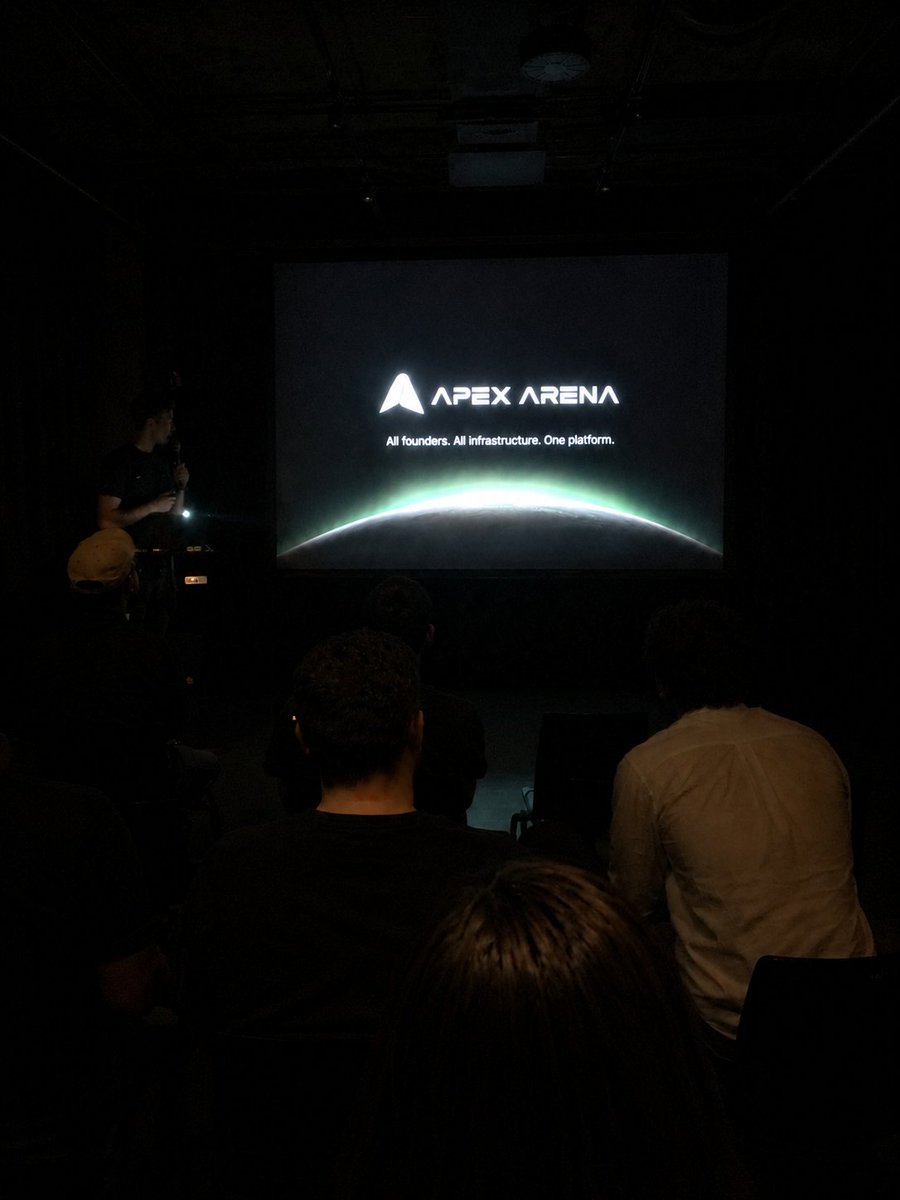
Quick recap of our latest gathering.
Brought together our closest partners and founders we’ve been building with for years for the Apex Arena intro.
Second in-person event after the yacht meetup in Buenos Aires. Tight invite list only.
We talked the infrastructure headaches every founder hits and why fragmented tools slow you down. One platform with all the infrastructure you actually need.
Thanks to everyone who showed up. This format always earns the conversations that matter.
Fundraising in 2026 opens with the same move as fundraising in 2020. A spreadsheet, a list of funds, and a guess about who actually writes checks at your stage. By the end of the month, half the names on the list have already passed on your category, and you do not know which half.
Fund Match, our Apex Arena Copilot tool indexes the 120+ active crypto LPs we track and ranks them against your raise. Thesis, stage, recent investments, partner relationships. Apex partners surface on top, because a warm intro through us moves on a different timeline than a cold inbound.
You describe what you are building and what you are raising. The brief comes back ranked.
Forward a match to our desk and the introduction goes out the same day. Decline and the rest of the list stays in your queue. Data refreshes weekly, stale rankings get flagged.
Fund Match sits inside Apex Copilot, a skill running natively in Claude Code, Codex, OpenClaw, and any MCP-aware client. Copilot lives in Arena alongside Score, Code Review, Portfolio Match, Jurisdiction, Audience, and Hackathons. One address. Every tool. Free for any founder.
→ https://t.co/KK6KfOCiud
Most contract audits in 2026 spend the first week on what a checklist would have caught. The bill comes anyway.
Five categories account for most of the findings. Reentrancy, access control, integer overflow, oracle exposure, MEV surface. Across Solidity, Rust, and Move, the categories repeat. The findings rotate.
Code Review, our Apex Arena Copilot skill runs that checklist on your file before the firm sees it. You drop the file in your editor and the brief comes back the way an auditor would write it.
high · Withdraw missing reentrancy guard, Vault.sol:218. External call before state update. Use ReentrancyGuard or follow checks-effects-interactions.
The firm engages on the harder layer underneath. For portfolio projects, we cover the firm cost through a retained-fund arrangement.
Code Review sits inside Apex Copilot, a skill running natively in Claude Code, Codex, OpenClaw, and any MCP-aware client. Copilot lives in Arena alongside Score, Fund Match, Portfolio Match, Jurisdiction, Audience, and Hackathons. One address. Every tool. Free for any founder.
Fifteen seconds. One hundred points. Five dimensions: team, product, traction, market, tokenomics.
That is the read funds run on your project before deciding whether to take a call. Until now, you only saw the outcome.
We built Copilot · Score, our diligence tool, into your AI assistant. Claude Code, Cursor, any MCP-aware client. Same checklist we use internally. Available on Apex Arena.
A live run on a real project came back:
team 74 · two prior exits, no token launch yet
product 68 · live mainnet, retention curve flattens at week six
traction 59 · revenue real, growth concentrated in three wallets
market 81 · category timing favourable, two credible competitors
tokenomics 52 · vesting cliff cosmetic, treasury policy missing
composite 68 / 100
Score above 85 on our side skips manual diligence and goes straight to terms. Score below shows you what to fix before any fund sees it.
The opacity of fundraising stops being a discipline problem and starts being a number.
Introducing Apex Arena.
We know what building actually looks like. You get the product to a place you are proud of, then realize building was the easy part. After that comes everything around it. You show up to Demo Days where your pitch gets more slides than views. Hackathon applications hoping the right person notices. And somehow, in the age of AI, still cold messaging strangers on Telegram. Soon you are juggling funding, partnerships, and distribution across ten different conversations, calls, and follow-ups while the product waits for you to come back. Days disappear into scattered group chats and the same questions on repeat. From people who barely skimmed the docs.
We built Arena to end that.
Apex Arena is one address for every founder need. Capital, intros, collabs, co-founders, audits, legal, listings, MM, treasury, GTM. Every Apex service, every partner. Nothing cold.
At the center is Apex Copilot, a skill running natively in Claude Code, Codex, OpenClaw, and any MCP.
Copilot knows the full Apex stack. It pressure-tests your idea against our pipeline, portfolio, and advisor knowledge base. Runs due diligence so you see the real gaps before we touch anything. Finds which funds in our network fit your round and connects you directly. Maps potential collabs. Reads your legal structure and recommends the right entity. Audits your code. Scores your market signal. Cross-checks against global hackathon databases so you know if someone already built it.
When your project clears, Apex invests directly. RFQs go out automatically to partner funds who trust our dealflow. Capital stops being something you chase.
The rest of Arena runs on the same logic. A verified co-founder registry with encrypted on-platform messaging. Your acceleration stages tracked in real time, milestone by milestone. Funding, intros, collabs, listings, MMs, treasury structuring, legal, GTM and all other values. One dashboard. Nothing scattered. Nothing starting from zero.
Now, every conversation that used to live somewhere else stays in one place.
This is what full-cycle looks like when it is actually built for founders.
→ https://t.co/KK6KfOCiud
THE COMMUNITY THEATER PROBLEM
50,000 Discord members.
147 active users.
This is 80% of crypto "communities"
Spectators, not participants.
Lurkers, not builders.
You don't have community. You have an audience watching you fail.
Here's how to tell the difference 👇
THE THEATER METRICS:
Discord: 50K members
→ 500 sent message in last 30 days (1%)
→ 50 sent message in last 7 days (0.1%)
→ Same 20 people active daily
Product: 147 monthly active users
→ Maybe 10 overlap with Discord
→ Most "community" never used product
X: 100K followers
→ 200 average impressions per tweet
→ 5 replies from real accounts
You have DISTRIBUTION, not COMMUNITY.
WHY THIS HAPPENS:
❌ Optimized for vanity metrics
→ Ran Discord raids for members
→ Gave roles for invites
→ Now: 98% dead weight
❌ Airdrop farmers inflated numbers
→ Joined for free money
→ Zero interest in product
→ Leave once they can't extract value
❌ Content = announcement theater
→ "GM everyone! 🌞"
→ "Big things coming soon! 👀"
→ "WAGMI fam! 💪"
→ Nobody cares. Everyone's numb.
❌ No reason to participate
→ What do members GET from being active?
→ Nothing. Just more announcements.
→ They become spectators
REAL COMMUNITY vs THEATER:
🎭 THEATER:
"Drop a 👀 if you're excited for launch!"
→ 50 emoji reactions
→ 0 people actually excited
💎 REAL:
"We need beta testers, bugs = rewards"
→ 50 people actually testing
→ 0 emojis needed
🎭 THEATER:
"Thanks for 50K members! 🎉"
→ Celebrating a vanity metric
→ Members = meaningless number
💎 REAL:
"Thanks to 47 users who gave feedback this week"
→ Celebrating actual participation
→ Users = people who care
THE CONVERSION TEST:
Ask your "community" to do something:
→ "Test this feature"
→ "Share feedback on X"
→ "Invite one friend who'd actually use this"
Real community: 5-10% do it immediately
Theater: 0.01% do it, rest ignore
If <1% participate when asked:
You have an audience, not community.
HOW TO CONVERT SPECTATORS → PARTICIPANTS:
✅ GIVE THEM AGENCY
→ Not: "What do you think? 👀"
→ But: "Vote on next feature: A, B, or C"
→ Make their input MATTER
✅ CREATE CONTRIBUTION PATHS
→ Bug bounties (paid)
→ Content creation (rewarded)
→ Governance (real power)
→ Moderation (recognition)
✅ KILL ANNOUNCEMENT-ONLY CHANNELS
→ Make 80% of channels user-to-user
→ Team barely posts
→ Community runs itself
✅ REWARD ACTIVITY, NOT MEMBERSHIP
→ Active contributors get alpha
→ Lurkers get announcements
→ Participation = access
✅ MAKE IT EXCLUSIVE AGAIN
→ Remove inactive members monthly
→ 1,000 active > 50,000 dead
→ Scarcity creates value
THE HARD TRUTH:
Most founders prefer theater metrics.
"50K Discord" sounds better than "487 active"
But theater metrics = false confidence
When you launch, theater doesn't convert.
→ "50K community" results in 100 users
→ Investors see the gap
→ Project looks like fraud
BETTER:
487 active, engaged members
→ 200 actually use product
→ 50 contribute actively
→ 10 are evangelists
That's a REAL community.
50K lurkers = 0 value
500 engaged = everything
Quality > Quantity is a cliché.
In community, it's a survival law.
If your Discord has 10K+ members but <100 active:
You're running a theater.
And the audience is about to leave.
Builders, if you’re working on something serious in Web3, this is worth checking out.
Applications are open for the @AcceleratorApex program.
~ Funding opportunities
~ Strategic partnerships
~ Access to investors, exchanges & ecosystem partners
~ Support across DeFi, RWA, AI & infrastructure
If you’re building, this is a great opportunity to scale your project.
Apply now:
https://t.co/fnQdLsk5l7
Ethereum L1 needs to keep both high TVL and an active user base.
More TVL and users → more address poisoning transactions → more ETH burned.
If liquidity and activity migrate to L2 solutions or alternative L1 chains, then dusting attacks will likely move there as well.
On a serious note, the success rate of these attacks is extremely low — around 0.01% (roughly 1 successful case per 10,000 transfers). However, as Ethereum L1 continues to scale, the cost of performing address poisoning drops, which has led attackers to run these operations at industrial scale.
After the Fusaka upgrade, which reduced attack costs by as much as 600%, the number of sub-$0.01 dust transfers increased significantly. Activity cooled down later but still remained above pre-Fusaka levels.
Is there a possible fix?
One idea could be raising gas costs for very low-value transactions.
But that’s unlikely to happen. In practice, it's easier for users to improve address management habits, while centralized exchanges and wallets like Rabby continue developing features that make sending transactions safer.
THE PIVOT PARALYSIS
Watched 100+ founders kill their projects by pivoting too much.
"We need to pivot" becomes the default response to any friction.
6 pivots in 18 months = 0 pivots actually executed well.
Here's how to know when to pivot vs when to push through👇
THE SERIAL PIVOTTER PATTERN:
Month 1-3: Build product A
→ Launch, slow growth
→ "Market isn't ready"
Month 4-6: Pivot to product B
→ Rebuild from scratch
→ "This is the one"
Month 7-9: Pivot to product C
→ Team exhausted
→ "Third time's the charm"
Month 10-12: Pivot to product D
→ Out of money
→ Shut down
What actually happened?
They never stayed long enough to learn if A, B, or C would work.
WHEN TO ACTUALLY PIVOT:
✅ Fundamental assumption proven wrong
→ Not "growth is slow"
→ But "users physically cannot do what we thought"
→ Example: regulation makes core feature illegal
✅ 12+ months, tried everything, zero traction
→ Launched 5 different go-to-market strategies
→ Talked to 100+ users
→ Changed pricing 10 times
→ Nothing worked
✅ Market disappeared
→ Not "market is hard"
→ But "market literally doesn't exist anymore"
→ Example: ETH merge killed your MEV product
WHEN NOT TO PIVOT:
❌ It's been 3 months and growth is "slow"
→ Slow compared to what?
→ Your unrealistic expectations?
❌ A competitor raised more money
→ That's not a reason to pivot
→ That's a reason to differentiate
❌ Team is bored
→ Building is supposed to be hard
→ Pivot = reset to zero
❌ VC said "interesting but..."
→ One VC opinion ≠ market reality
→ VCs are wrong constantly
THE PERSISTENCE TEST:
Ask yourself:
"Have I actually tried everything, or just some things?"
Most founders who pivot:
→ Tried 2-3 marketing channels
→ Talked to 10-20 users
→ Ran 1-2 experiments
→ Then concluded "it's not working"
Real persistence looks like:
→ 10+ distribution channels tested
→ 100+ user conversations
→ 50+ experiments run
→ 12+ months of iteration
The best founders have "pivot scars" = bad pivots they regret.
They learned: pivoting is expensive.
→ Resets momentum
→ Confuses community
→ Demoralizes team
→ Burns capital
Better to push through discomfort than restart from zero.
HARD TRUTH:
Most "pivots" are just founders avoiding the hard work of distribution and iteration.
It's easier to blame the product than fix your go-to-market.
Pivot paralysis = constantly restarting instead of finishing.
The graveyard is full of projects that pivoted their way to zero.
Don't be one of them.
We want to hear YOUR 🫵 voice.
Write about Sui - the tech, the ecosystem, the vision - for a chance to win $10,000 in SUI.
To enter:
📝 Write an 𝕏 article about Sui (800 words minimum)
💬 Post it in the replies by Feb 27
One winner. Judged by the Sui team. Open to all.