Congratulations to our Research Assistant, former undergraduate researcher, and one of the very first David Lab members Austin Martin on his acceptance to medical school at @OHSUSOM! We're all very proud of you Austin!! 🎉🎉🎉
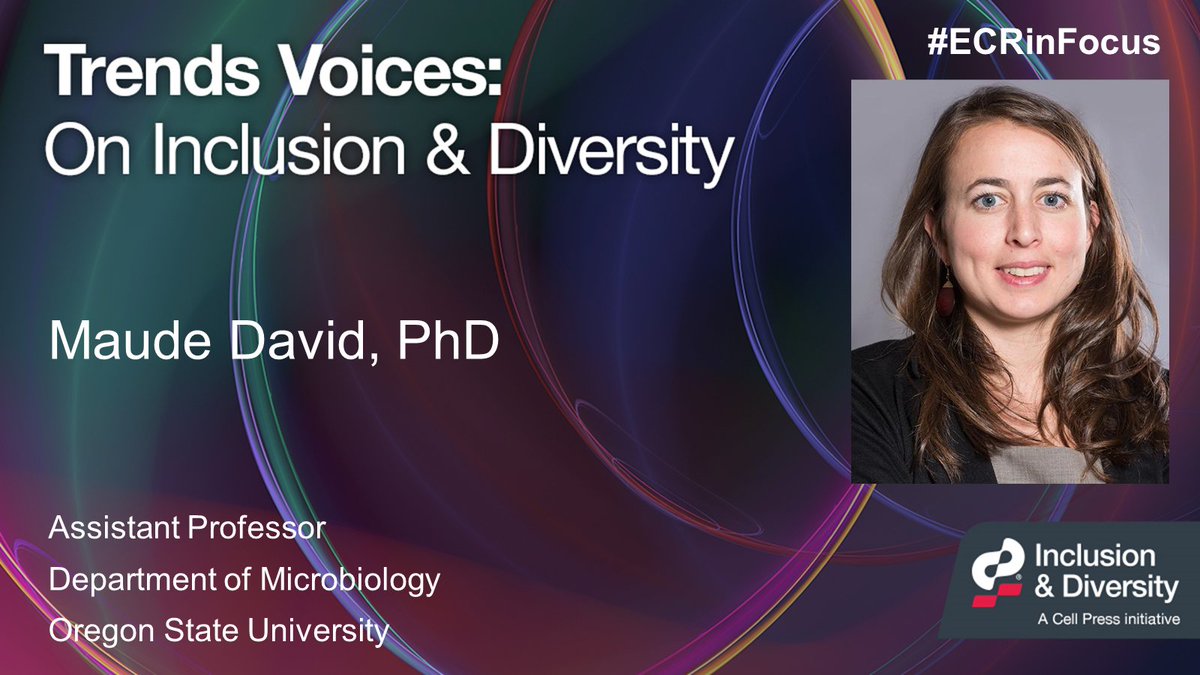
Dr. David has also been awarded an SBIR phase 1&2 by @NIDAnews in collaboration with @SecondGenome and @StanfordMed, and recently funded by @NSF for her lab’s work on natural language processing #NLP and microbiome datasets
https://t.co/kbfx4GkEc2
In 2020, Dr. David was awarded the Breaking Barriers in Education award for her impact through teaching and #mentoring on paving the way for #genderequity.
The David Lab is currently made up of 4 PhD students, 2 Masters students, one research assistant, and a team of three undergraduate students: https://t.co/v9cbKS7gPb
@ChristineTataru@dna_heligrace@AcetylCoAlex@nazbijar @Carolin01707596
The David Lab also study how changing the microbiome alters behavior in an ASD mouse model in male/female animals. The lab is also pioneering new methods for co-culture of vagal neurons/enteroendocrine cells to identify bacteria that modulate vagal responses with the Hokanson lab
They showed that dietary and lifestyle features were explanatory of ASD phenotype using logistic regression. Leveraging longitudinal behavior questionnaires, they identified 11 ASVs associated with changes in reported anxiety over time within and across all individuals.
The group recently published the results of a large longitudinal study on the microbial structure in children with autism compared to non ASD diagnosed siblings: https://t.co/vUAyi3YwUL.
Dr. David's interest lies in using machine learning, more specifically natural language processing to extract information from public datasets and produce more generalizable prediction models: https://t.co/6lPgYKgaz7
The lab work on identifying bottlenecks in microbiome data exploration and develop new biocomputing methods to improve sequence data annotation & analysis.
The David lab study how gut microbiota can modulate behavior via the #GutBrainAxis+biocomputing methods to utilize massive #microbiome datasets. They use an interdisciplinary approach incl. mouse models, in vitro cell culture, anaerobic bacteria culture, bees and #machinelearning
What sucks about being consistently burnt out is that a rest day or weekend isn’t enough and I can’t self care my way out of it. If you’re also struggling with this, know you’re not alone ❤️
#AcademicMentalHealth
Time to start being a real adult and twitter-fy my life... My first authorship from December 2021! https://t.co/HO4TpZM6SY extremely greatful to the team and authors for allowing me to be part of the process