@Frontieresmedia C’est une honte de se comporter comme ça, c’est avec nos impôts que ces gens se verse un salaire. Le respect et la déontologie n’existe-t-il plus sur le service public ?
@Vatp8f@VincLapierre Ce pays est fou et les gauchistes sont complètement dément. On vit littéralement dans un hôpital psychiatrique à ciel ouvert. Il y a rien de cohérent dans leurs propos.
@nahaa_a1 1200€ quasiment certain. Les gens achètent des iPhone duo à 2400€ , Sony vont pas ce priver et il ont raisons , les gens achèterons quand même.
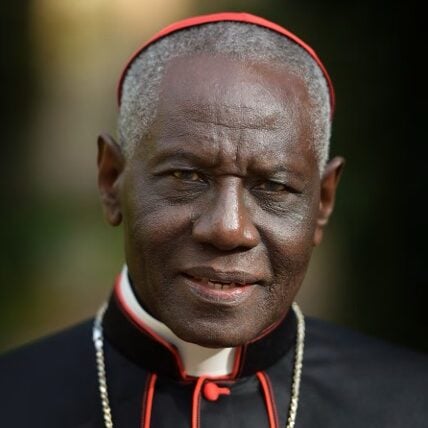
“El socialismo promete el paraíso en la tierra, pero siempre termina construyendo un infierno; sin Dios, sin libertad y sin alma”.
- Cardenal Robert Sarah -
@Geronimuslll Et il lâcheront le même bulletin qu’il y a cinq ans en croyant faire une bonne action. Pas d’amalgame et vous aurait pas ma haine bla-bla-bla …
Nous méritons ce qui nous arrive , il doivent bien ce marrer les pti hommes gris 👌 continuer à creuser on est presque au fond.
@SpiriTfitT Luc 6:22
Heureux serez-vous, lorsque les hommes vous haïront, lorsqu'on vous chassera, vous outragera, et qu'on rejettera votre nom comme infâme, à cause du Fils de l'homme
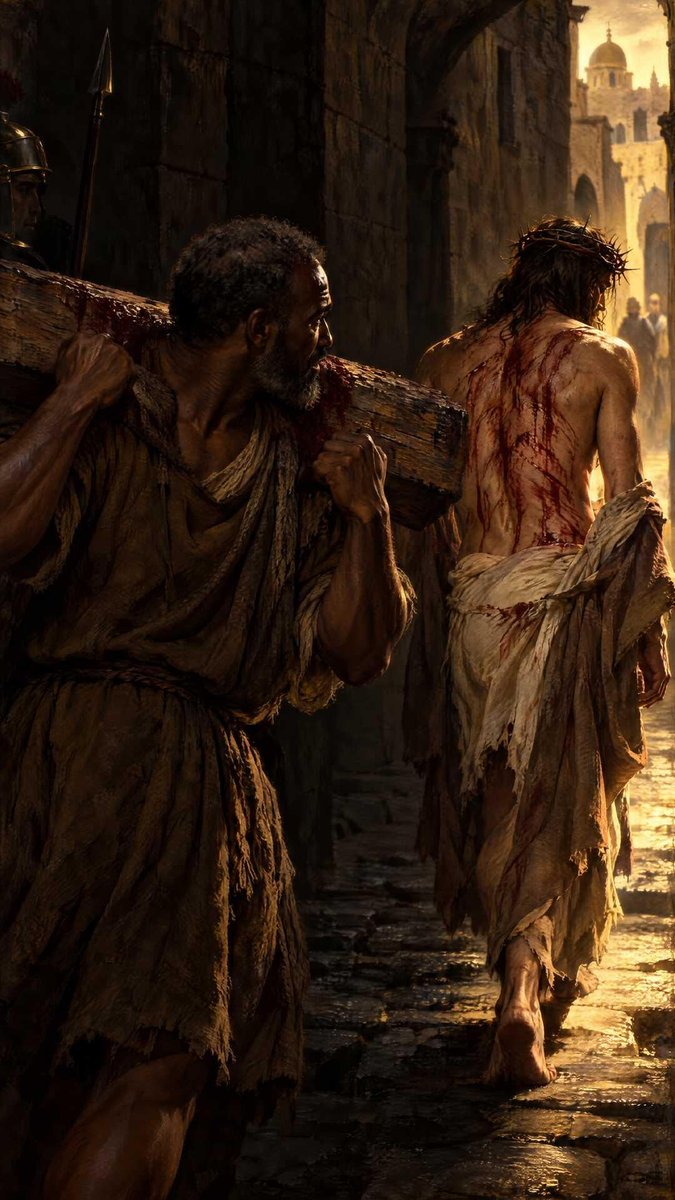
The man who carried the cross for Jesus didn't volunteer.
He was grabbed.
Mark 15:21. And they compelled one Simon the Cyrenian, who passed by, coming out of the country, the father of Alexander and Rufus, to bear his cross.
Picture it. A man walking into Jerusalem from the fields, minding his own business, and a Roman soldier's hand lands on his shoulder. You. The beam. Now.
Cyrene was in North Africa, modern Libya. Over a thousand kilometers from Jerusalem. Simon had made that journey for Passover, the holiest week of the year, and on the biggest morning of the feast he took the wrong street.
Now look at the word Mark uses. Compel.
In Greek it's angareuō. It comes from the old Persian courier system: a royal messenger could stop any civilian and requisition his horse, his cart, his back. Rome kept the custom. A legionary could grab any man on the road and make him carry the army's load, no questions asked. It was the most hated power the occupier had.
You've heard that word before. Jesus used it.
Matthew 5:41. And whosoever shall compel thee to go a mile, go with him twain.
Same verb. Angareuō.
Jesus stood on a hillside and told a crowd: when the soldier grabs you and makes you carry his load, don't just go the one mile the law requires. Go two.
Two years later, a soldier grabbed a man who had never heard that sermon and made him carry the Preacher's own cross.
Then Luke adds his detail.
Luke 23:26. On him they laid the cross, that he might bear it after Jesus.
After Jesus. Behind Him. Following.
Now flip back fourteen chapters in the same book. Luke 9:23. If any man will come after me, let him deny himself, and take up his cross daily, and follow me.
Luke wrote both sentences. He knew exactly what he was doing. Jesus preached take up your cross and follow me and the first human being in history to do it literally was a stranger from Libya who was forced.
Think about what Simon actually carried.
By the time the soldiers grabbed him, Jesus had already been scourged. Roman whips had lead and bone in the tips. His back was open. He'd been carrying the beam on it. The wood was wet.
Simon put that wood on his own shoulders. And walked behind Jesus, close enough to watch His back, the back Isaiah had written about seven hundred years earlier. I gave my back to the smiters.
He went to Golgotha with the blood of Christ soaked into his clothes.
Not a disciple. Not a believer. Not a volunteer. Just the man closest to the wrong soldier at the wrong moment.
And then Mark does something strange.
He names Simon's sons. Alexander and Rufus.
Why? Mark doesn't name the thieves on the cross. He doesn't name the centurion. He doesn't name the servant girl who broke Peter. But he stops the crucifixion narrative to tell you who Simon's kids were.
There's only one reason a writer does that.
His readers knew them.
The early church was unanimous that Mark wrote his gospel in Rome. And Paul, writing to the church in Rome, ends his letter with a list of greetings.
Romans 16:13. Salute Rufus, chosen in the Lord, and his mother and mine.
Rufus. In Rome. A man Paul singles out as chosen. And a mother Paul says had mothered him too.
Many scholars think that's Simon's son and Simon's wife.
If they're right, and it is the simplest explanation for Mark's detail, then here is what happened to the man who was grabbed on the road.
He went home to a wife and two boys, with another man's blood on his coat, and something he saw on that hill went through the whole household. Thirty years later his sons are known by name in the church in the capital of the empire. His wife is looking after the apostle Paul like a son.
Simon never says a word in the Bible. We have no record of his conversion, no sermon, no prayer. We only have the fruit. Two boys the church knew. A mother Paul loved.
He was forced to carry the cross one mile.
His family carried it for the rest of their lives.
Now you.
You didn't volunteer for the thing on your back either. Nobody does. You were walking in from the country, minding your own life, and a hand landed on your shoulder. The diagnosis. The child who needs more than you have. The grief you're still standing in. The debt. The parent who can't remember your name.
Ask Simon how it felt on Friday morning. Worst luck of his life. Ruined his Passover. A stranger's blood on his shoulders.
Ask him by Sunday.
The thing you were forced to carry is the only reason his name is in the Bible.
And notice where he was standing while he carried it.
Luke told you. After Jesus.
The forced cross is never carried alone. You're behind Him. He's already walked that road with a worse version of the same beam, and He's in front of you right now, close enough to see His back.
You didn't choose it.
Pick it up anyway.
He's in front of you.