13y in institutional trading.
Running Achilles Capital family office on undervalued stocks. Sharing analysis & ideas.
DM for connections. Not financial advice
Summary – Market Axes Today
Equities: Mixed but broadly positive leadership in tech and selective emerging markets.
Commodities: Metals and oil rebounding from swings; positioning plays dominant.
Currencies: Dollar softens; yen and commodity FX strengthen; sterling under pressure.
Bonds: Yields drift lower amid cautious growth sentiment and data focus.
$HOOD is aggressively expanding in the UK, which we've been waiting for a long time.
This week they introduced ISA accounts, the tax-free accounts in the UK that almost everyone here has. Even my 2yrs son already has one.
I forecast that this will attract a lot of new customers – my wife is next in line :-).
If they also introduce the SIPP (UK Self-Invested Personal Pension), which I'm sure they will, many more customers will join $HOOD. And here we're talking about accounts worth also ~£1M+.
Definitely not so bearish on the company.
Agreed.
$MSFT stock took an 11% hit right after its latest earnings report because Azure cloud growth came in a tad short.
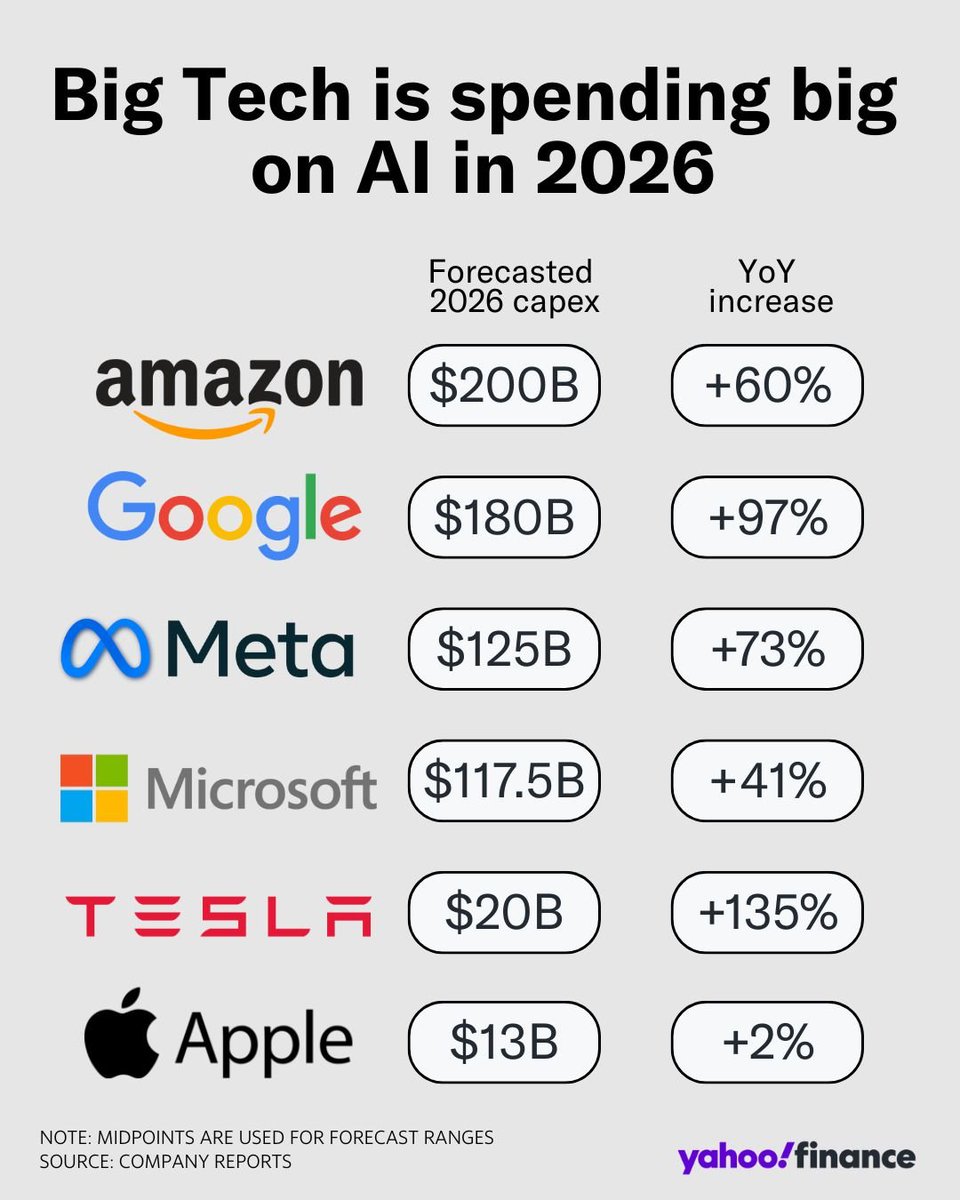
Cloud business is slowing a bit and they're pouring huge money into AI stuff ($37.5 billion, up 66% from last year) which is hurting cash flow, and they're leaning too much on OpenAI, making investors worry about spending too much without fast payoffs.
However at just ~25 times next year's earnings, the lowest among the big tech crowd, Microsoft has a strong edge in cloud and AI, solid 17% sales growth, and it'll rule the roost long term. This dip's just the market overreacting, so it looks like a bargain.
Question to the investing community:
Has anyone invested in Evolution Gaming Group AB $EVO.ST, $EVVTY?
Evolution was a key investment in my portfolio but turned out to be not as successful as I initially forecasted.
Would love to hear other people's views.
Terry Smith, the mind behind Fundsmith, is famous for stripping the complexity out of wealth creation.
While the rest of the market is busy chasing the "next big thing," Smith has built a career on being intentionally "boring."
Here is the 3-step blueprint for his "Quality Investing" strategy:
1. Buy Good Companies
Smith doesn't care about "cheap" stocks; he cares about quality stocks.
A "good" company must have:
- High ROCE: Ideally ROCE > 15\%. He wants businesses that generate massive profit for every dollar invested.
- Pricing Power: Look for high Gross Margins (>40%). If they can't raise prices without losing customers, they don't have a moat.
- Recurring Revenue: Think soap, software, and medical supplies. People buy these regardless of the economy.
2. Don’t Overpay
Even a great business is a bad investment at the wrong price.
Forget P/E ratios; Smith looks at Free Cash Flow (FCF) Yield.
He compares this to bond yields. If the FCF yield is attractive and the business is growing, it’s a go.
3. Do Nothing
This is the hardest part. Once you own a great business, get out of your own way
- Minimize Turnover: Trading costs and taxes are the "silent killers" of compounding.
- Ignore the Noise: Don’t try to time the market. Smith’s advice? "There are two types of people: those who can’t time the market, and those who know they can't."
The Terry Smith "Anti-Portfolio" (Avoid these):
❌ Banks: Too much leverage.
❌ Airlines: Too capital intensive.
❌ Miners: Price takers, not price makers.
Bottom line: Find a company that "money-prints" while you sleep, pay a fair price for it, and then go for a very long walk.
Achilles Capital follows these principles.
Back in December, for the first time, we started building a few positions in silver, gold, and now also copper.
Gold and silver are signalling structural dynamics beyond a simple cyclical rally.
Physical inventories are tightening and delivery lead times are extending materially, while official sector demand remains elevated.
Central banks continue to accumulate gold at multi-year highs, reinforcing its reserve asset status, and bullion markets are increasingly dominated by physical delivery demand.
From a macro perspective, persistent inflationary pressures, elevated debt levels, and heightened geopolitical risk are driving real asset hedging.
This is reflected in precious metals outperforming traditional risk assets and accelerating record price action.
Investors should consider:
• Real asset supply/demand imbalances in gold and silver
• Persistent safe-haven flows amid macro uncertainty
• The structural backdrop of monetary policy and global reserve strategy
• Risks associated with liquidity, positioning, and inventory tightness in physical markets
While speculative narratives gain traction, core drivers remain macroeconomic risk premia and strategic reserve allocation. A disciplined view on positioning, liquidity, and risk management is essential as markets price volatility and alternative store-of-value assets.
$SI $SSLN $GC $GLD $COPX
Agreed. Avoiding options early probably saved you a lot of money.
Options aren’t bad by themselves, but they’re often misunderstood. Used the right way, like buying long-dated puts, they can act as insurance for a long-term portfolio.
The issue is how they’re marketed. A lot of people sell the idea that covered calls or option selling are “easy income,” when in reality they carry real risk and aren’t as safe as they sound.
Options aren’t the problem. Using them without fully understanding the risk is.
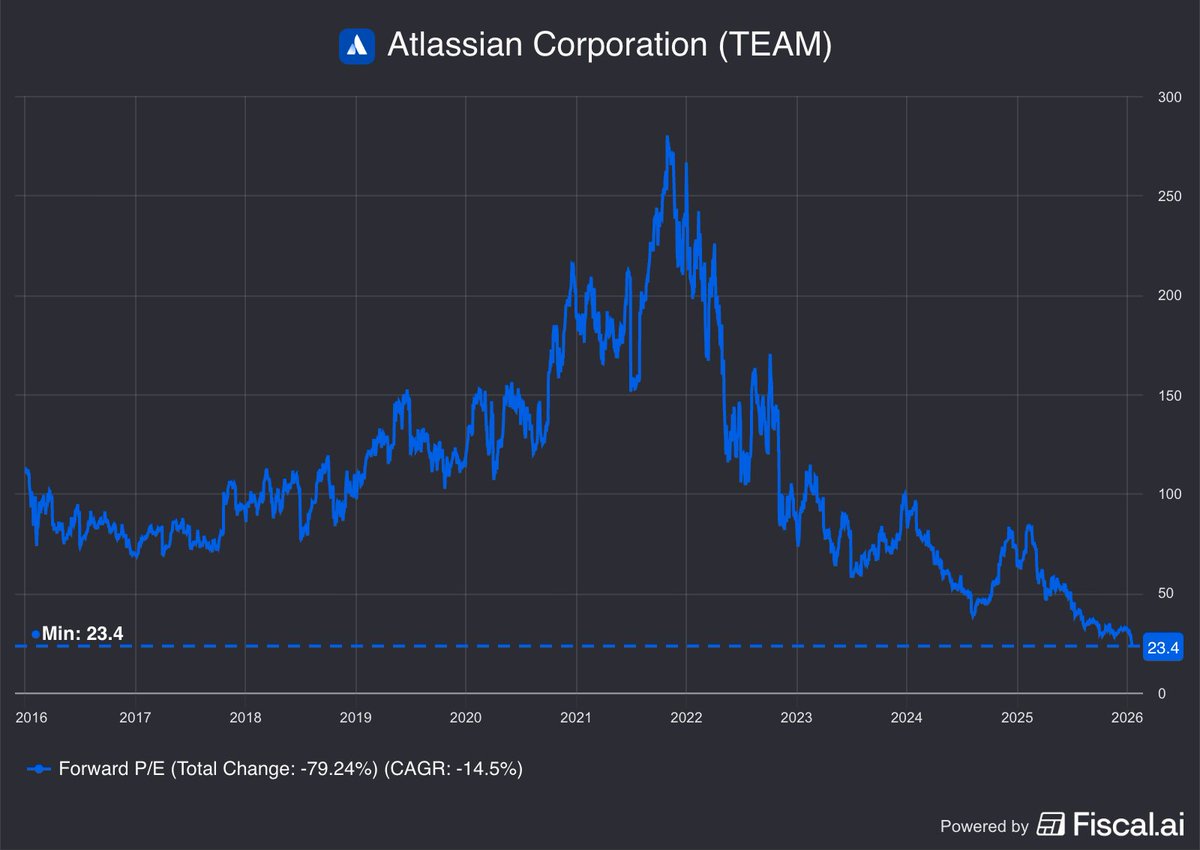
The AI evolution uncertainty is killing software businesses.
Some, such as $NOW trading at a forward P/E of 32.8x and $ADBE at 12.6x.
Not to mention the "Berkshire of software" $CSU at 18.4x.
Is this really the end for these amazing companies?
Some cannot be ignored at their current valuations.
@TaviCosta Agreed. 2026 is the commodity year. Silver and copper in the favorite list.
Indeed today I started a position on $SI and $COPX.
Both are key for the AI evolution.
New $COPX Position
Today we added exposure to Global X Copper Miners ETF as a satellite holding.
Copper supercycle: still early innings.
Investment Thesis 👇
Risks are real: China slowdown. Global recession. Commodity mean reversion. Political shocks in mining jurisdictions. High beta (σ>30%) means 30-40% drawdowns are possible.