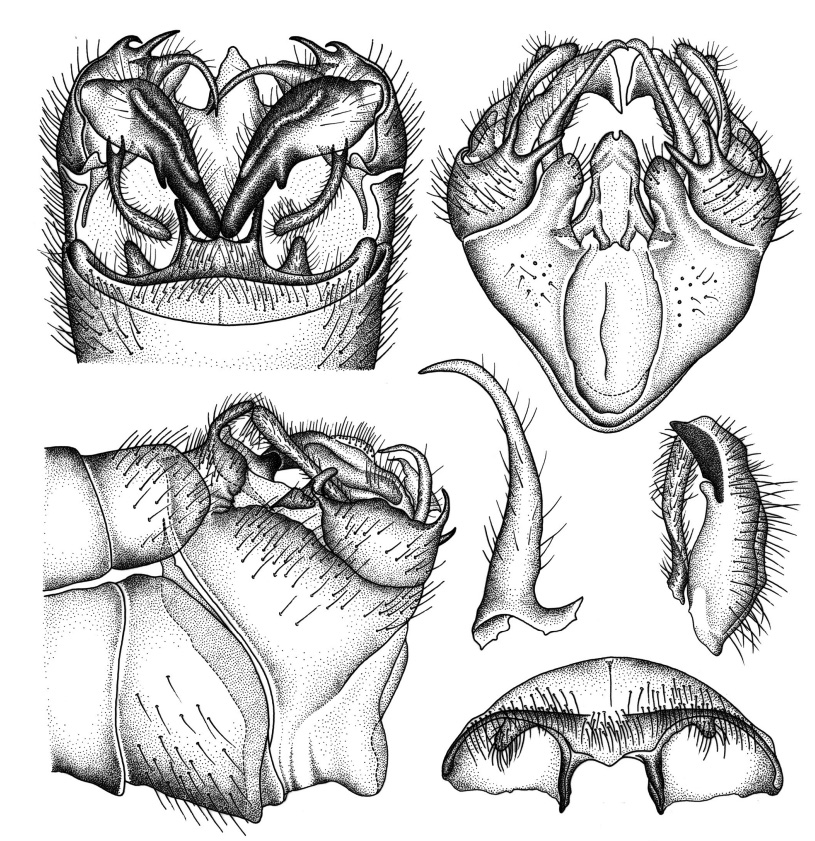
Athetini are the craziest rove beetles - they are numerous, tiny, inhabit very diverse habitats and not many people study them. The study just published in Acta Entomologica clarifies a lot about Japenese Eubadura inhabiting the intertidal zone.
https://t.co/FOyYU8MAum
It was a mysterious animal described from Swat Valley in Pakistan. The new findings now indicate that Pakistatyrus, a huge pselaphine beetle of the tribe Tyrini, actually lives in the southern part of the whole Tibet-Qinghai Plateau. https://t.co/7k3Gbk0uf5
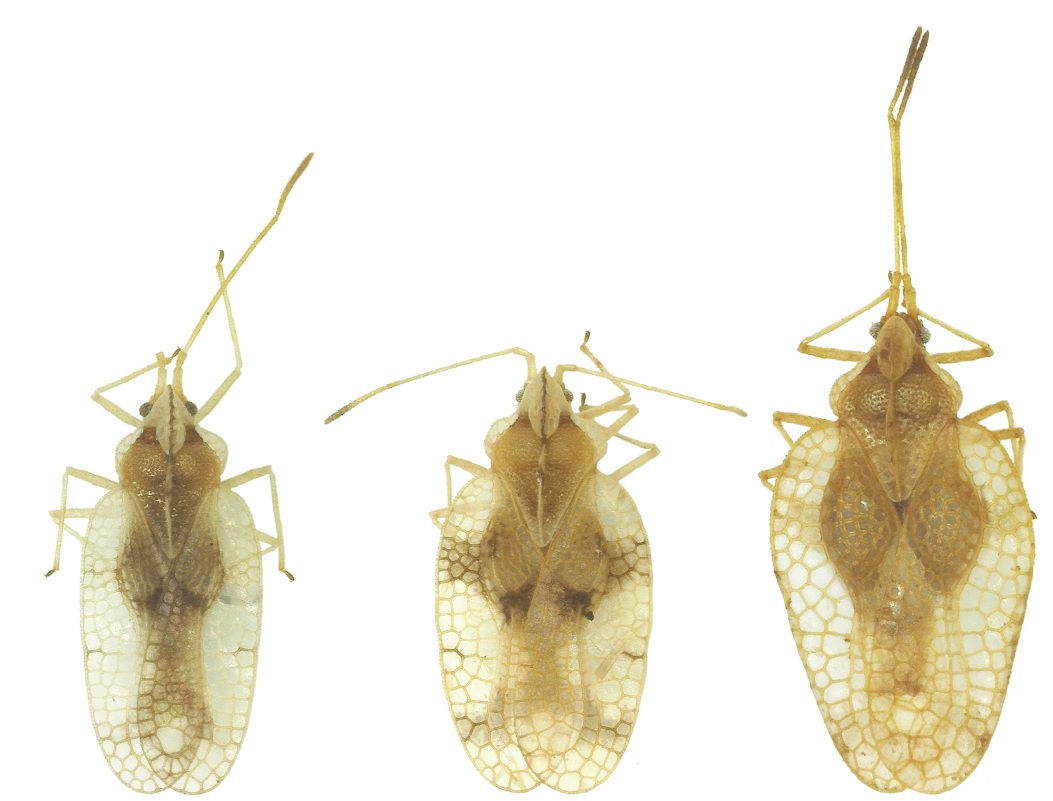
Ogasawara Islands are small subtropical islands in the Pacific, 1000 km south of Tokyo. Little is known about their insect fauna, but the paper just published in Acta Entomologica reports two new lace bugs (Tingidae) species.
https://t.co/HU5tO0sbDy
Just published! Studies of flightless Lamiinae longhorn beetles in Yunnan and Hainan, China, brought surprising results, including a new species!!
https://t.co/eiF5aIAReQ
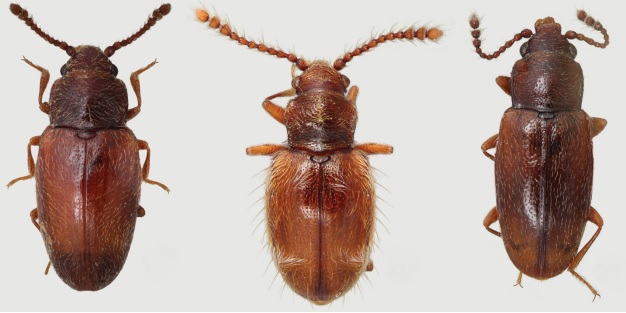
Just published! A huge nicely illustrated revision of the genera of the Cryptophagidae tribe Picrotini - poorly known spore-feeding beetles living in cool places like New Zealand, Tasmania, Chile or Juan Fernandez Island!!
https://t.co/ay0E9JeQC8
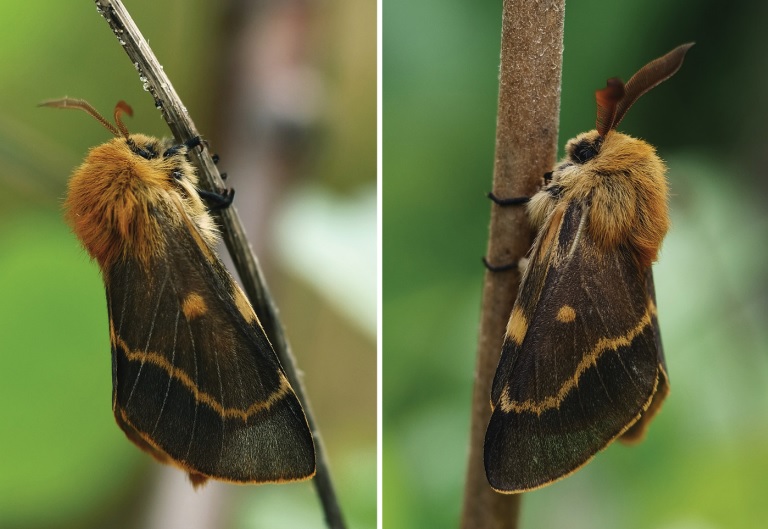
Our Christmas present is Lemonia batavorum, a new species of a large moth which remained overlooked in Europe until recently, despite all the intense lepidopteran research! Discovered by DNA barcoding, but morphological differences were very easily found!
https://t.co/1CxWCJIVXH
Beautiful things are usually the hidden trouble-makers, Phanaeus beetles included! The latest analysis in @ActaEntomol supports the existence of many species with conservative morphology, variable coloration, and exclusive ecological niches!
https://t.co/WSwaE2eZcX
Bristletails (Archeognatha) is a very poorly studied group of basal, primarily wingless insects. The less is known from Kazakhstan, a very poorly studied region for most insect groups. The paper in @ActaEntomol combines the study of both!
https://t.co/5EX1yfJ5O3
Anthocorini is a group of true #bugs with species feeding on aphids or psyllid and hence used for pest control. Its #Japanese fauna was just reviewed in @ActaEntomol, with two #newSpecies and the first record of #introduced Anthocoris nemoralis in Asia.
https://t.co/qu4G3Ba8Hn
Deep soil weevils are all blind flightless yellowish and tiny, but they colonized the underground habitats more than five times independently! Check the latest paper in @ActaEntomol:
https://t.co/HP8F3OWMPM
Te crane fly Tipula (Vestiplex) is especially diverse in China, but the fauna was not properly investigated in the mountain and high-altitude areas in Yunnan and Tibet. The study revising the fauna of these regions was just published in @ActaEntomol:
https://t.co/txaEmVtNUP
Ricaniidae is a tropical family of planthoppers, often large, colorful, and butterfly-like. Madagascar fauna seems to be far richer than expected, and a new genus was just described in @ActaEntomol:
https://t.co/SMUEVNZne3
Some Reduviidae bugs are slender, long-legged, and apterous, as this Philippine endemic genus Ischnobaena. Hard to collect, and with very little known about their biology, the genus was just revised taxonomically in @ActaEntomol:
https://t.co/C8CKcVLkKB
We still know so little about insect diversity in the tropics. And it is not surprising when a group believed to contain a single species is found to be much more diverse. This just happened with Hypoxys bugs from Brazil, see @ActaEntomol:
https://t.co/kZ8tywx1KF
Anthomyzidae is a small group of tiny flies which can be most easily collected by sweeping grasses because larvae of most species develop in decaying grass tissues. New results concerning the fauna of Palearctic Asia were just published in @ActaEntomol: https://t.co/CSSJYNUEMZ
The species diversity of #marine rock pools Ochthebius #beetles remains largely overlooked. But when understood correctly, sea currents are found responsible for today´s #distribution. Just published in @ActaEntomol: https://t.co/2ONnrmiaBB
#NewZealand has very few #waterBeetles, so it was surprising to discover that there are four #endemic species of water scavenger beetle genus Berosus and that they hide a lot of New Zealand's ancient history. Just published in @ActaEntomol:
https://t.co/7RyaH1TgZs
Chalcidoid wasps parasitize in insect eggs or larvae. Hence, they are often tiny, hard to study, and omitted by entomologists. Happy to announce that the Indian species of Closterocerus parasitizing scale insects and jumping plant lice were just revised:
https://t.co/Z69o4jLovO
Very few insects inhabit marine habitats, but Haloveliinae is the rare exception: you can find them in mangroves and Nypa swamps. Species of Xenobates of the Philippines were just revised in @ActaEntomol:
https://t.co/MUepTz8IJZ
#Himalaya Mts. is a hotspot of diversity for virtually all insect groups, and scorpionflies are not an exception! 21 species of the genus Neopanorpa are occurring exclusively in this area, including three species newly described in @ActaEntomol:
https://t.co/f3SNOmP61p