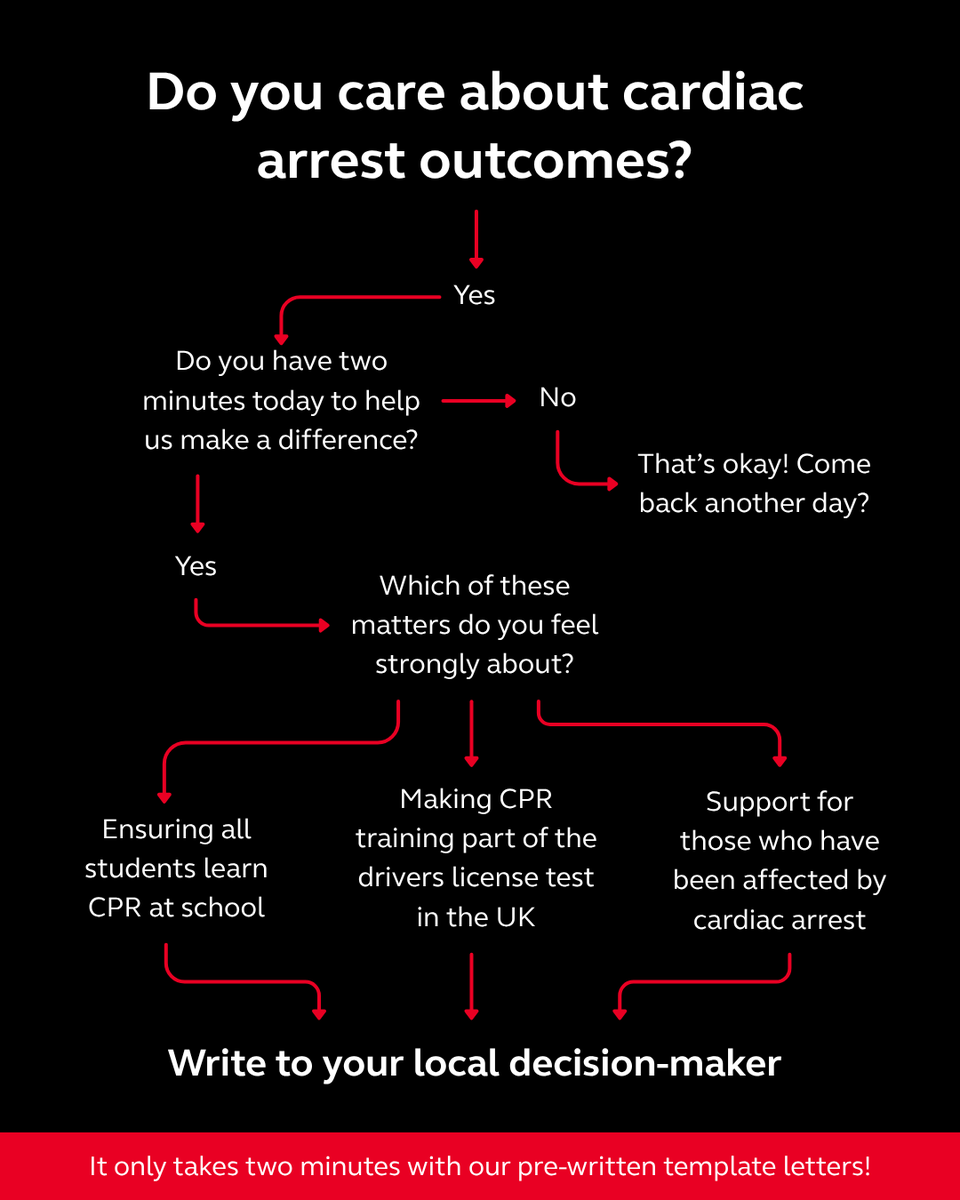
Change happens when people speak up.
If improving cardiac arrest outcomes matters to you, our template letters can help you contact your local decision‑maker and advocate for meaningful change.
It only take a few minutes: https://t.co/XvEDlYXiec: https://t.co/XvEDlYXiec
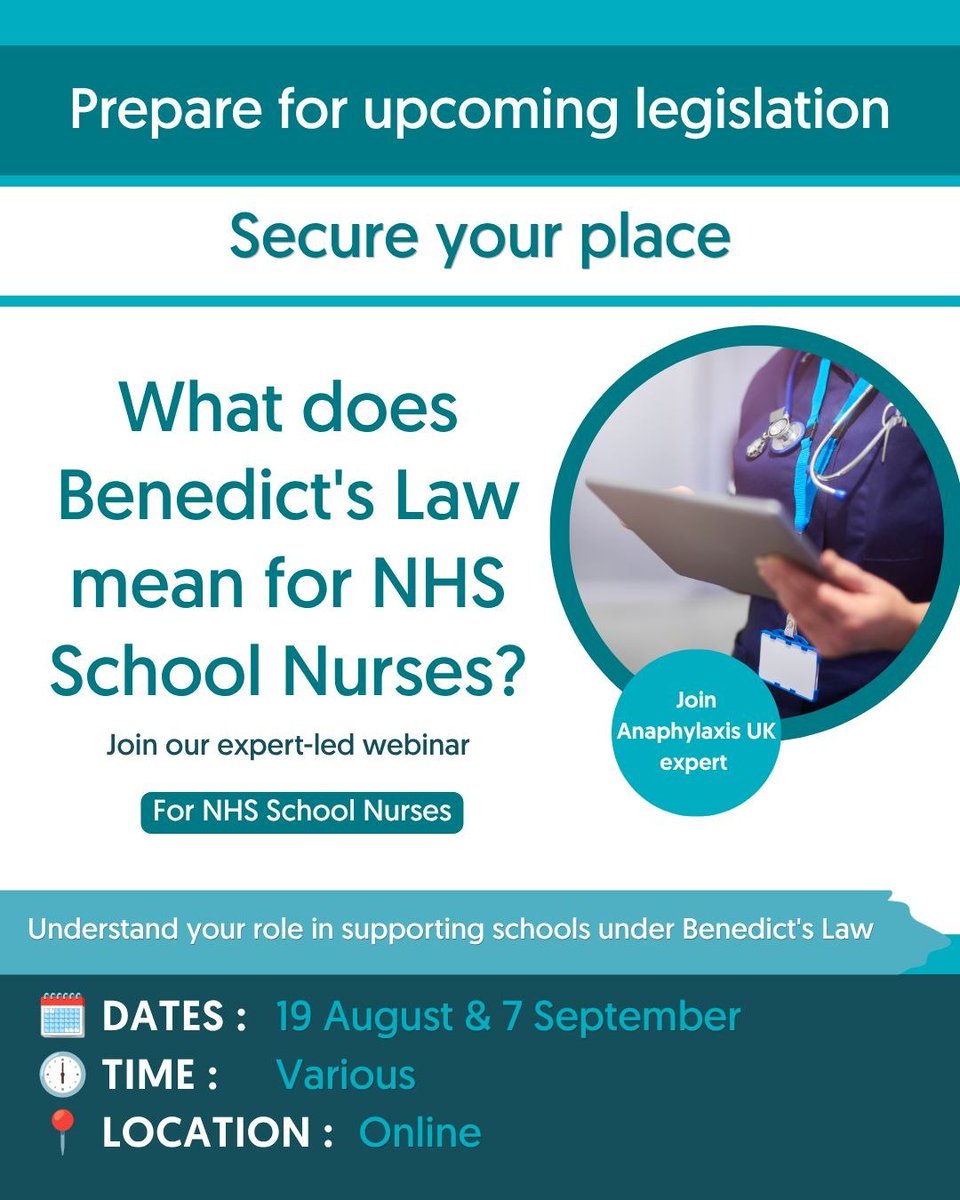
@NHSDorset school nurses!
Join @AnaphylaxisUK for an informative webinar designed to help gain a clear understanding of the latest guidance relating to child allergies.
DATES:
Wed 19th Aug - (17:30 - 18:30)
Mon 7th Sept (09:30 - 10:30)
Secure places: https://t.co/pWCSMC0H32
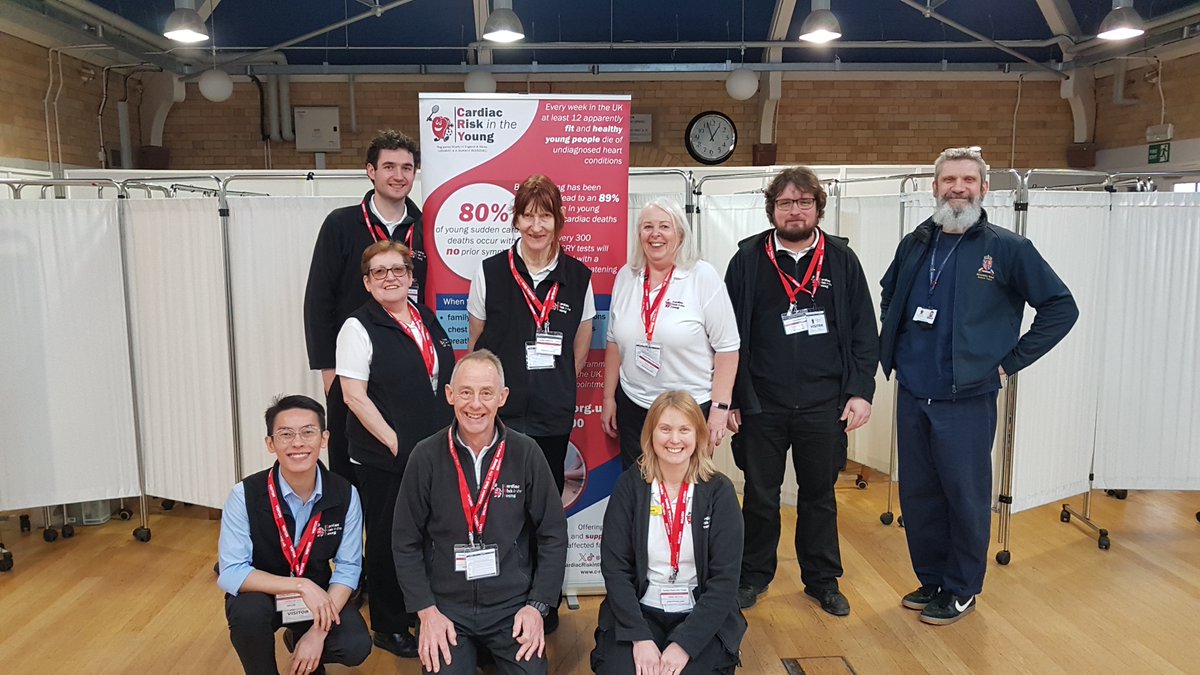
Thanks to our supporters and families, we held 29 screening days in February with 2,692 young people screened.
CRY's screening events are mostly funded by CRY supporters often in memory of someone who has died from a sudden cardiac death. Help CRY carry out more screening events across the UK by donating, fundraising or sharing this message.
For more information about CRY's cardiac screening programme or to look for an event near you please visit: https://t.co/EcHW6yNbCV to see all our upcoming screenings. #TestMyHeart #RaisingAwareness
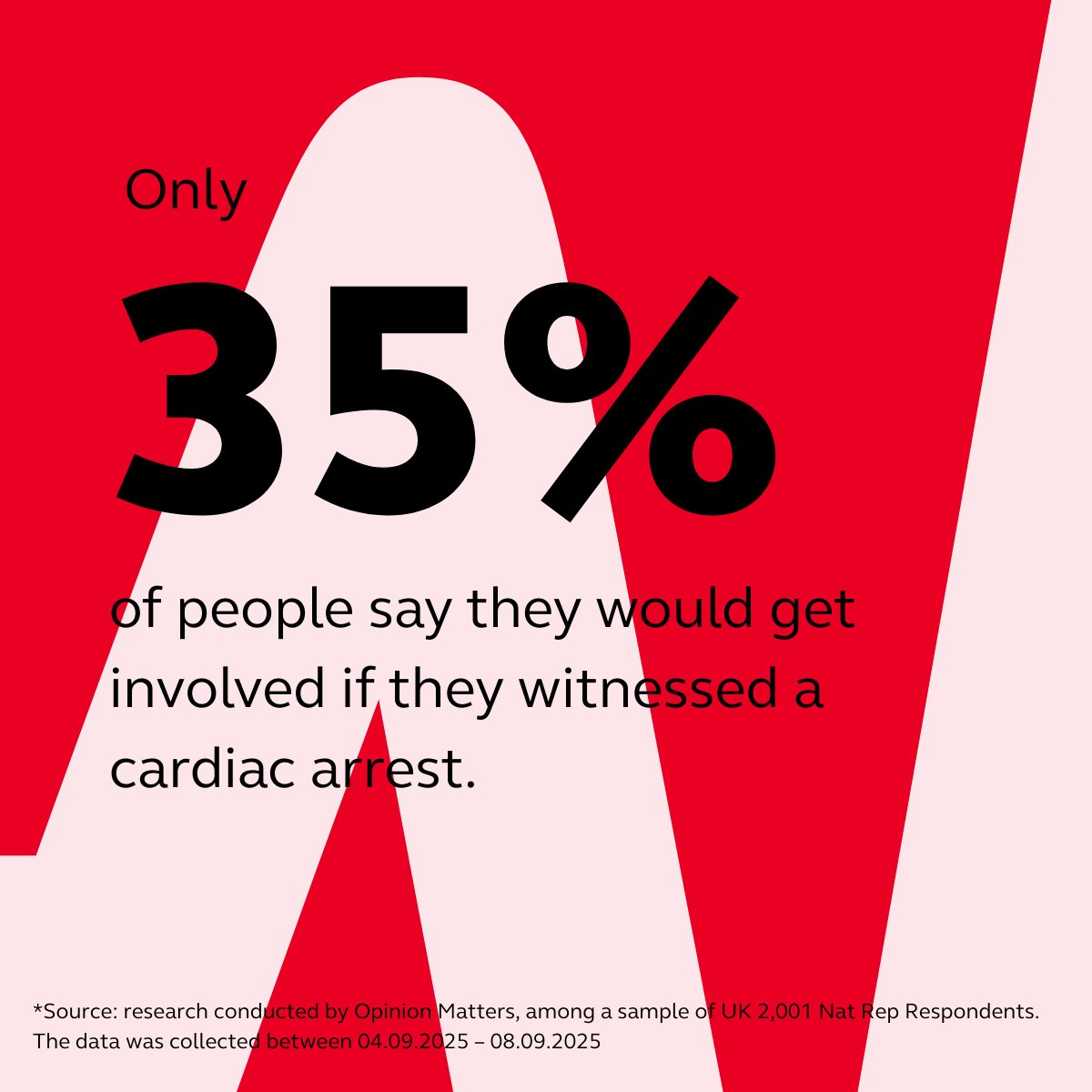
When it comes to cardiac arrest, quick action = a stronger chance of survival.
But only 35% of people feel confident stepping in during an emergency like this.
We need to change this. Building CPR confidence and knowledge across the public can help save more lives.
To help improve respiratory care and outcomes across the nation ahead of the May elections, we have launched our manifesto for lung health.
To read 'Our Battle for Breath', go to: https://t.co/BPYUyyt4mX
Welsh language version: https://t.co/pqtRovEnCm
When people accept the unacceptable, it quietly becomes acceptable.
And that, to me, is the most unacceptable thing of all.
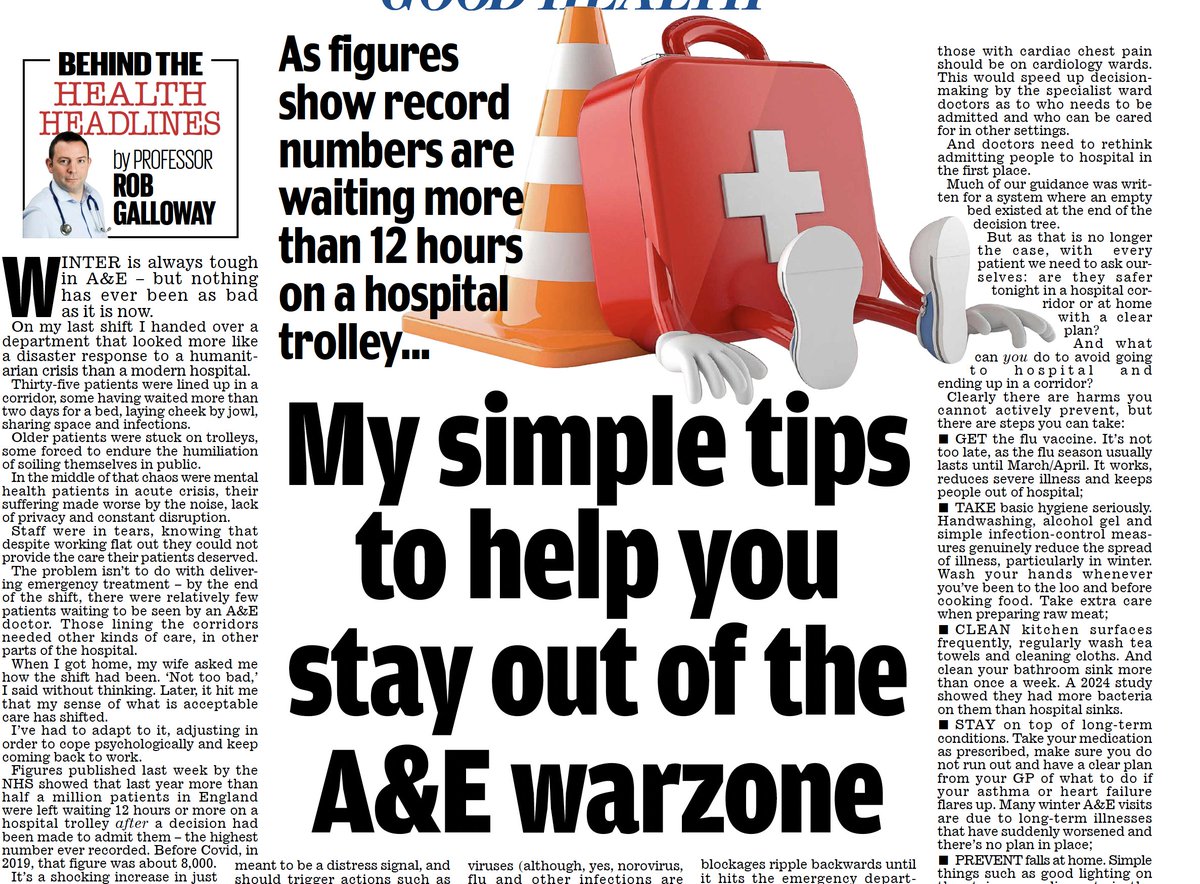
Right now, in A&E departments across the country, patients who should be in proper hospital beds are being cared for in corridors. This isn’t a rare emergency measure. It isn’t a winter-only phenomenon. It isn’t a sign that “things are stretched today”.
It is normal practice. In my latest article for the Mail Health section I explain the reality of what is actually happening in A&E departments. Its truly awful…..
Older patients lie on trolleys for days. Frail people wait without privacy, dignity or rest. Some soil themselves in public. People with dementia or delirium become more confused. Patients with mental health crises sit in noise and chaos that actively worsens their distress. Infections spread. Pain goes untreated for longer than it should. Families watch, helpless and shocked.
And yet, outside the hospital walls, almost nobody notices.
That is what frightens me most.
Inside A&E, staff are working flat out. They are not lazy. They are not indifferent. They are doing everything they can to deliver safe care in a system that no longer allows it. I have seen experienced, resilient clinicians cry at the end of shifts. Not quietly upset, but broken by the feeling that they are participating in something unsafe and degrading despite their best efforts.
But here is the uncomfortable psychological truth: to survive, we adapt.
You come home after a shift like this and someone asks how work was. You say, “Not too bad.” And you mean it. Because if you let yourself fully feel how bad it really was, you wouldn’t be able to go back the next day.
Your internal bar for what counts as acceptable care quietly drops.
Once that happens, the system stops screaming. Corridor care stops being a scandal and becomes background noise. “Critical incidents” lose their meaning because the pressure is no longer exceptional – it is constant.
And because this suffering is largely hidden inside hospitals, it slips out of the news cycle. No dramatic single event. No clear villain. Just a grinding, everyday erosion of standards that would once have been unthinkable.
The truth, which we need to say out loud, is this: A&E is not coping. The situation is not meaningfully improving. And comforting narratives about “recovery” do not match what staff and patients experience on the ground.
If we want this to change, three difficult things have to happen.
First, we have to change how the NHS is run.
This is no longer simply a funding argument. The NHS is receiving more money than it ever has. But it is using that money badly, and in the wrong places. We have built a system obsessed with hospitals, expensive interventions and downstream fixes, while hollowing out the parts of the system that prevent people needing hospital care in the first place.
We are losing experienced generalists – particularly GPs – who know their patients, understand risk, and can safely manage uncertainty in the community. They are being replaced by less experienced doctors working under impossible pressure, with fewer appointments and less continuity.
In that environment, risk is pushed uphill. Patients are referred to hospital “just in case”. And once someone crosses the hospital threshold, everything becomes harder. Beds don’t exist. Discharges are delayed. Social care isn’t there. Those blockages ripple backwards until they hit A&E, where the pressure finally becomes visible as corridor care.
If we are serious about fixing A&E, we have to stop pretending hospitals alone can absorb unlimited demand. Investment has to move upstream. Community care has to work. Care packages need to be available in hours, not weeks. Experienced clinicians need to be retained, not driven out.
Second, we have to change how doctors think about risk.
This is deeply uncomfortable for the profession, but unavoidable. Much of our clinical guidance was written for a system where an empty bed existed at the end of the decision tree. That assumption is now false.
Doctors are already doing everything they can to avoid admitting patients to hospital, not because they are negligent, but because admission itself has become risky when patients are destined for corridors rather than wards.
We now have to ask a brutally honest question with every patient: are they safer tonight in a hospital corridor, or at home with a clear plan, safety-netting and follow-up?
That feels wrong. It goes against decades of training. But pretending that hospital is always the safest place is no longer true when the system is overwhelmed. This requires courage, honesty with patients and families, and a shift away from defensive, default admission that the system can no longer sustain.
Third, we have to be honest with the public about what patients themselves can do.
This is not about blame. It is about realism. Overwhelmed hospitals are dangerous places. There are harms you cannot control, but there are things people can do to reduce their chances of ending up in A&E in the first place.
In my latest article for the Daily Mail health section, I set these out clearly. Get vaccinated. Take basic hygiene seriously. Manage long-term conditions properly and have a clear plan for flare-ups. Prevent falls at home. Go easy on alcohol. Keep simple medications at home. Think carefully before defaulting to A&E when safer alternatives exist.
And crucially, if a doctor says a relative needs to stay in hospital, it is reasonable to ask why. If the reason is simply waiting for tests or reviews, it is fair to ask whether this could be done safely as an outpatient instead.
None of this is easy to hear. None of it fits neatly into slogans or soundbites.
But honesty is not disloyal. It is not anti-NHS. It is not pessimism.
Honesty is the only route to change.
Silence is how the unacceptable becomes normal.
And once that happens, it becomes very hard to remember that it does not have to be this way.
https://t.co/q2MCX8nSJa
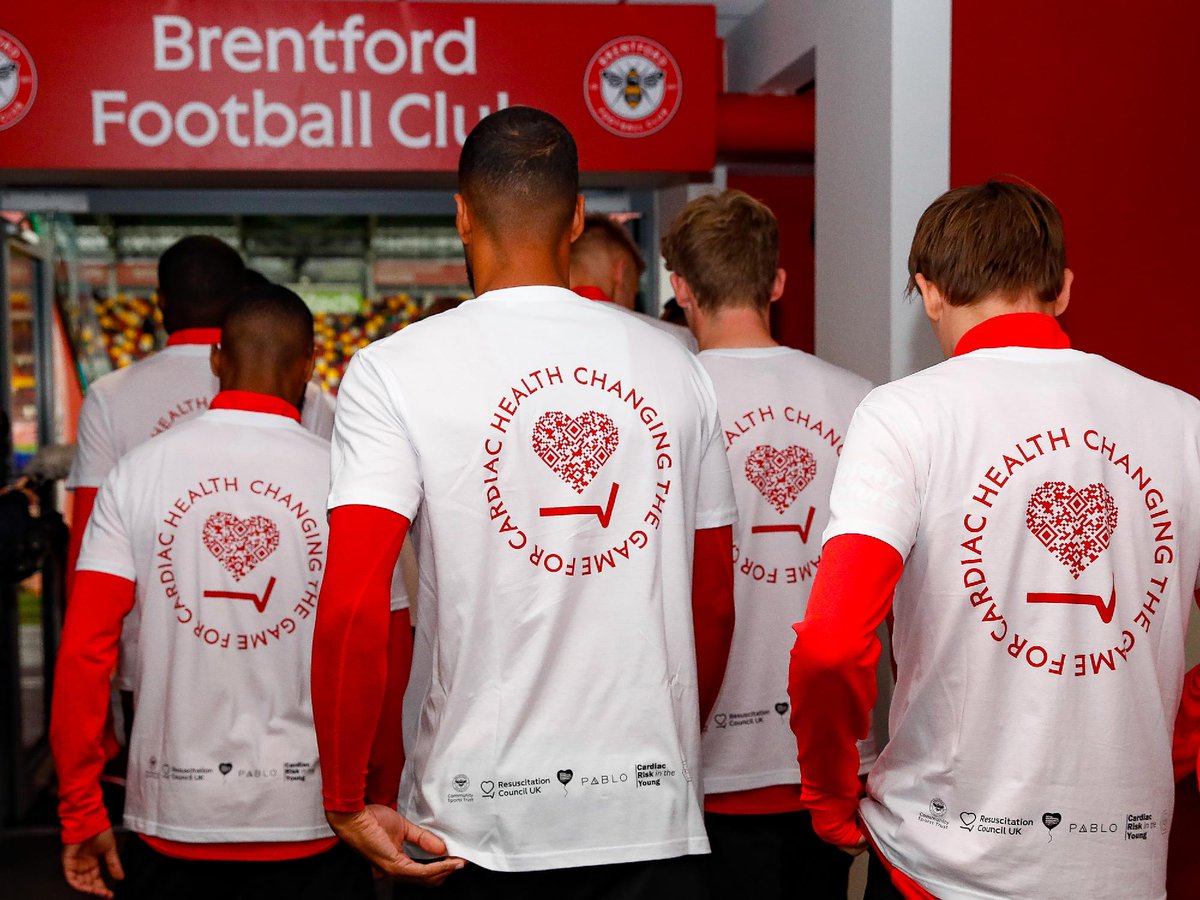
Will you be watching @BrentfordFC take on @ManCity this Sunday?
Keep an eye out for our CPQR code around the stadium and scan it to learn the skills to help save a life!
It’s #RestartAHeart month!
Every October, we lead this lifesaving campaign to raise awareness of cardiac arrest and get more people learning CPR.
Fewer than 1 in 10 survive an out-of-hospital cardiac arrest in the UK - learning CPR can help change that 👉 https://t.co/tMIX867Va1
☀️🌊 Enjoy the sea breeze and stunning views at our first Seaside Scramble – a 5km obstacle fun run!
📅 Sat 27th Sept | Baiter Park, Poole
🎟 £20 Adult | £12.50 Child | £60 Family
Will we see you at the start line? 👇
https://t.co/dnEqGxxwr1
📺Many thanks to @ITVWales for featuring our story about the rise in hospital admissions of children with asthma once they return to school after the summer break.
Great to have Bec and son Berin talking about their experience.
https://t.co/rqaGJPATnM
Volunteers are invaluable at CRY and without them, many CRY services and events could not be offered.
If you are interested in joining #TeamCRY as a volunteer so that we can continue to save young lives, click here 👉 https://t.co/2RiAqsIIZY
Sport clubs, we need your help!
September is Sepsis Awareness Month, and we need you to help us raise lifesaving sepsis awareness.
Share our resources, promote our campaign in your comms, visit our website for more: https://t.co/EB16Z4mEwi
#SepsisAwarenessMonth#SepsisSavvy
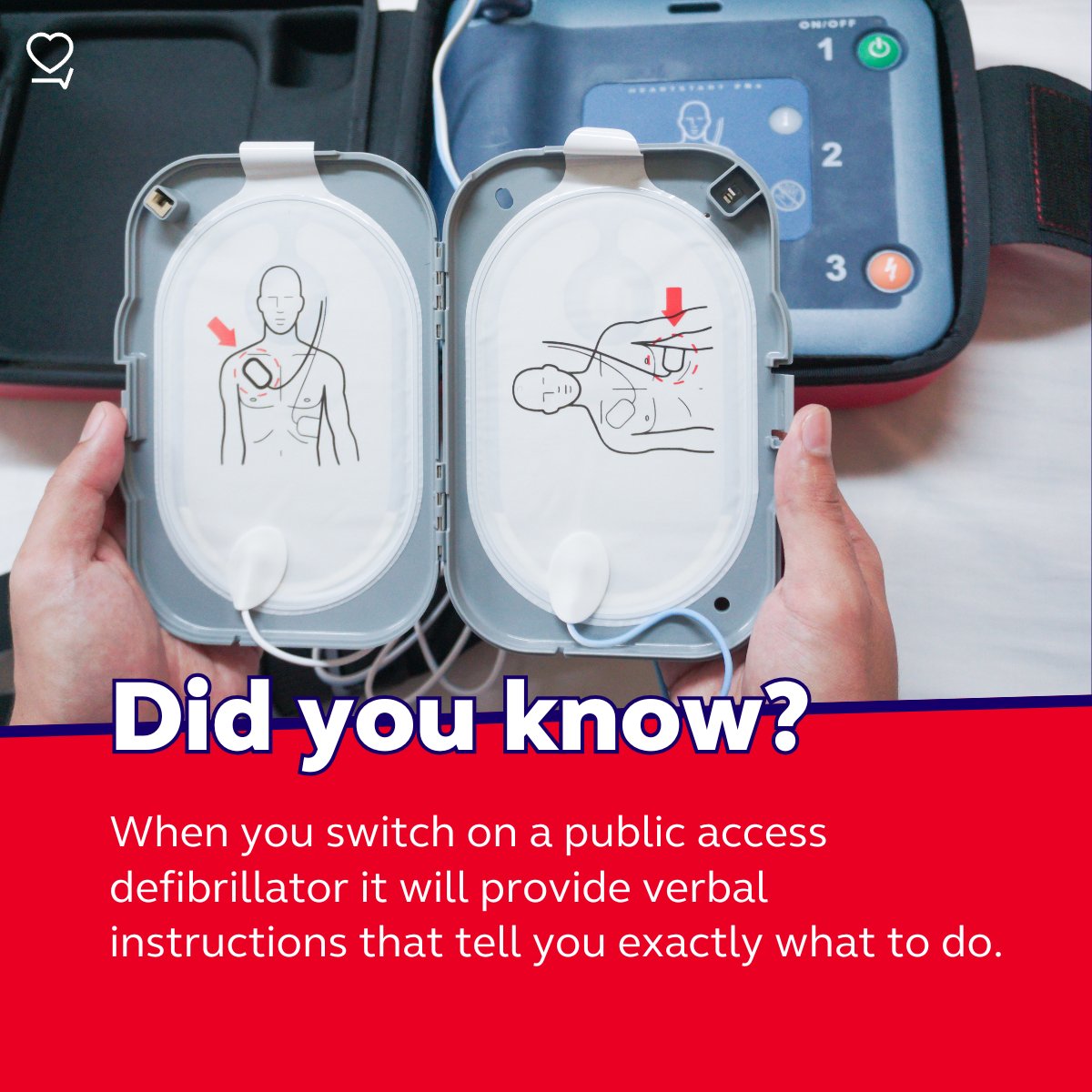
If you ever need to use a public access defibrillator (PAD) but aren’t sure how, just turn it on and listen.
The built-in voice instructions will guide you through each step, so anyone can use one to help save a life.
A cheek swab test, developed with funding from us, could identify potentially deadly heart condition in children, according to research from @CityStG_Health and @GreatOrmondSt presented at #ESCCongress in Madrid https://t.co/tCT7jxfu5Y
We can't afford to stop funding medical research. The UK is rapidly losing medical academics and without them the NHS 10 year plan is at risk. https://t.co/6SUVg0aztp
In yesterday’s Mail I shared the story of a man who came to A&E unable to swallow. His diagnosis was advanced oesophageal cancer, all because his reflux had been dismissed as “indigestion” for years.
It was heartbreaking — but also avoidable.
Working in A&E, I’ve learnt that every patient has something to teach us about living better and longer. Longevity isn’t just about new drugs or supplements; it’s about listening to the warnings our bodies give us, and acting early.
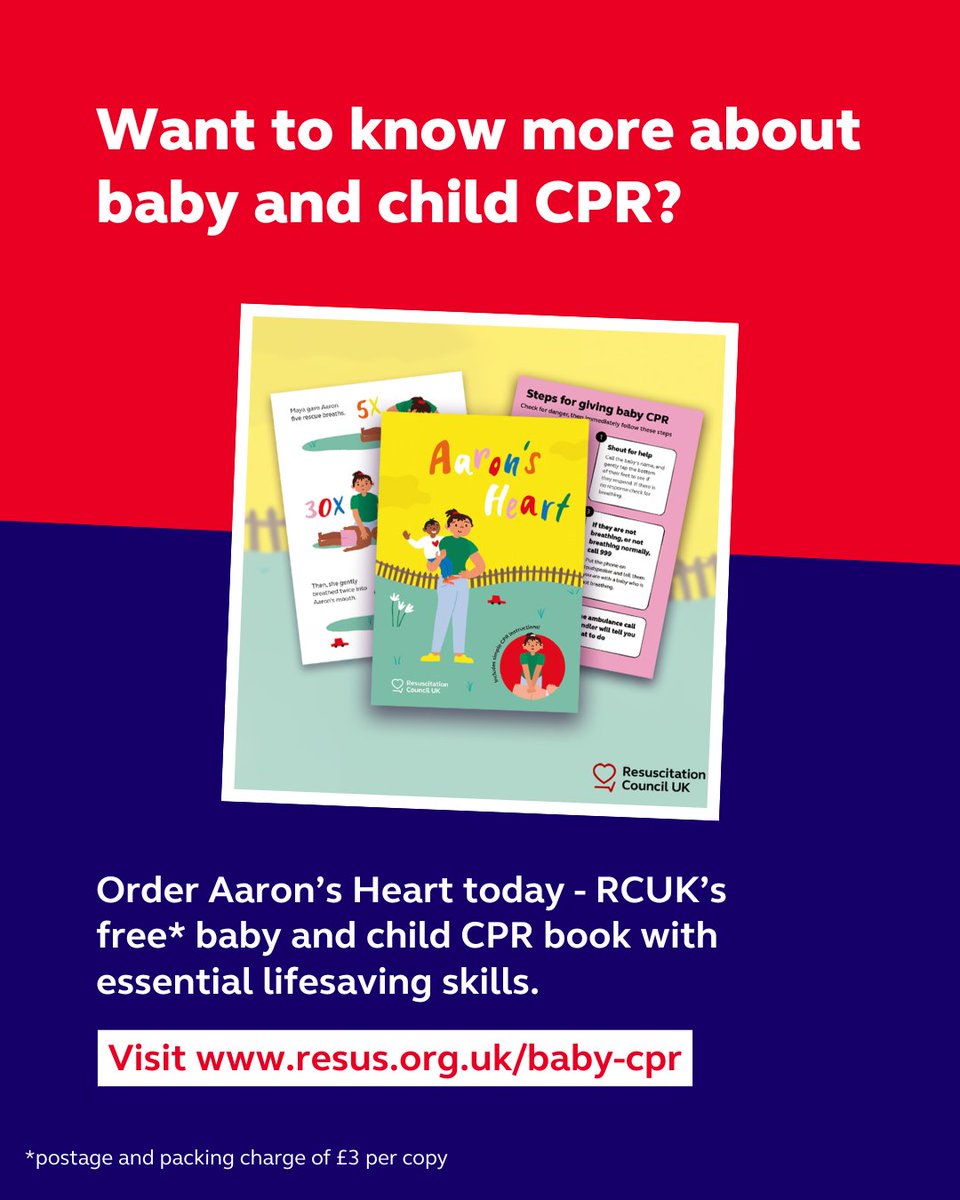
Let’s talk about rescue breaths on babies and children.
Are they necessary?
What do the official guidelines say?
Learn more about baby and child CPR with our free book, Aaron’s Heart: https://t.co/YmMA1CvFUB
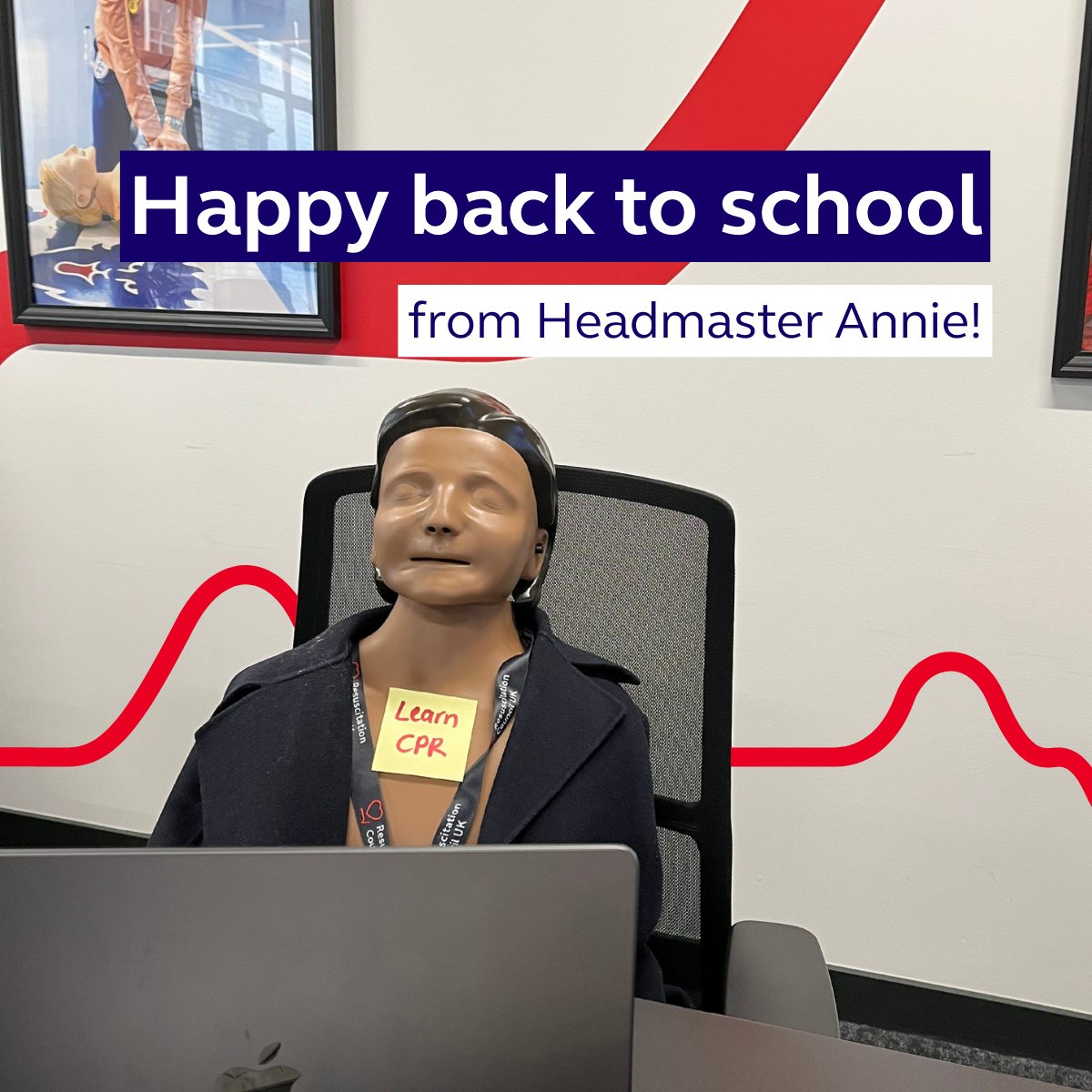
Back to school means new learning, but for many students, that doesn’t include CPR.
Although it’s on the curriculum, there’s no system to ensure training is delivered. It's time to change that.
✍️ Sign our petition: https://t.co/sduxfkZYbb