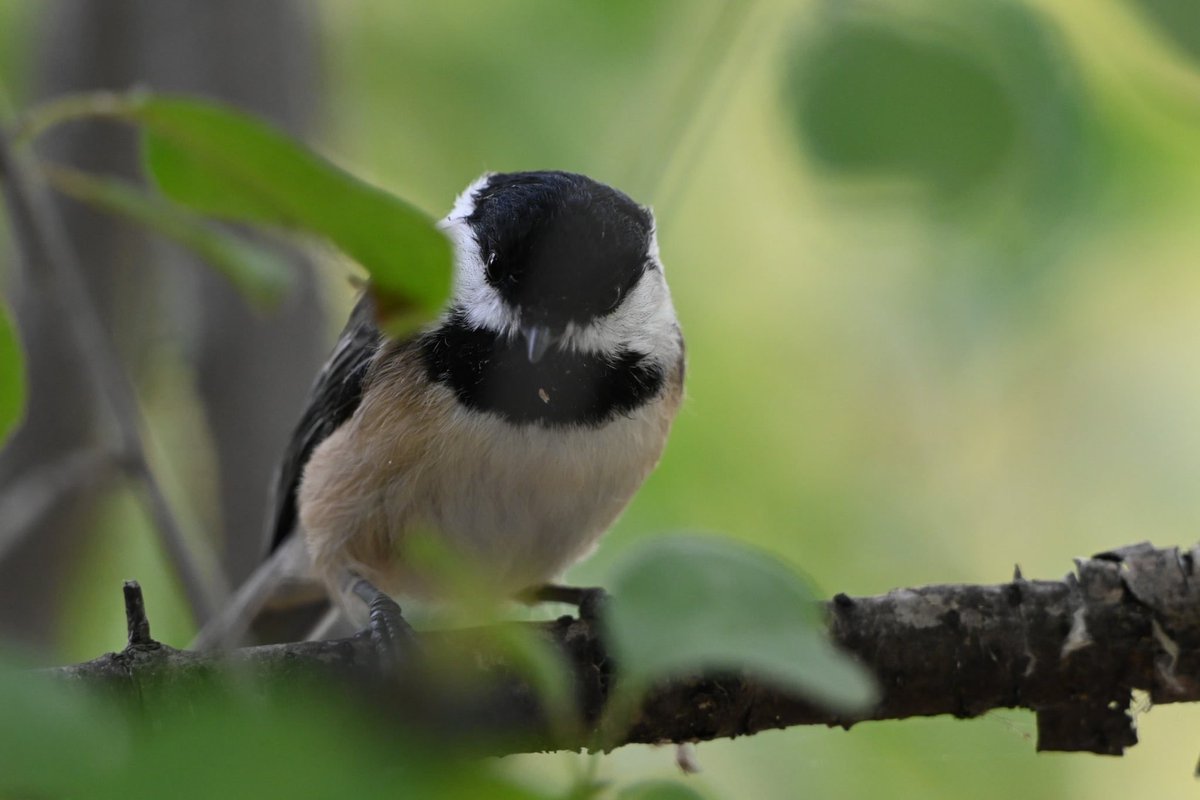
Tufted Titmice, Black-capped Chickadees, and a White-breasted Nuthatch visit the Hand of Snacks. It’s that time of year when the Tufties get extra sassy
really starting to think chickadees are being paid by some shadow fast food government. theres no way all they naturally say is “cheeseburger” they have to be earning some sort of compensation
In one study, most chickadees without a bird feeder present didn’t make it to spring. Most with one did.
A Wisconsin study followed hundreds of marked chickadees over three winters. 69% of the birds with feeders readily available survived. Only 37% survived without.
A chickadee lives on the edge in winter. Every day, it eats about 10% of its body weight, then burns all of it shivering through the night. Every morning, it starts near empty.
About half of what it eats in winter is insects: eggs and pupae tucked into bark and twigs, waiting out the cold.
Those insects come from native trees. An oak feeds hundreds of kinds of caterpillars. A Bradford pear or a crape myrtle feeds almost none.
Now picture the average subdivision. Lawn, a Bradford pear out front, a row of boxwoods. A chickadee working that yard in January is picking through a nearly empty pantry.
Don't beat yourself up. Most of us didn’t choose those plants. The builder did. Here's what you can do:
Stock a feeder with black oil sunflower or put up a plain suet feeder.
Plant one native tree. Fall is the best time to do it. Oaks are the gold standard, with native cherries and willows close behind. The National Wildlife Federation’s Native Plant Finder shows which plants feed the most caterpillars where you live.
And leave the leaves under it. A lot of moths spend the winter as pupae in leaf litter, and those make next spring’s caterpillars.
You don’t need a perfect yard. Researchers point out that a neighborhood where lots of people plant some natives does more than one person going all-native.
Just do what you can, the chickadees will appreciate it.