VP of Strategic Initiatives, @TheFIREorg. Oh I'm an anti-hero again, neat! For me, anyway. Opinions are my own until I turn them into in-game currency.
I tried feeding Midjourney (and sometimes DALL-E) lines from country songs with no context to see what I'd get. No context was provided, only the lyric.
"[Macron] will come to discover that the problem with threatening to punish misinformation is that it requires appointing an arbiter of truth. And the problem with appointing an arbiter of truth is that humans have a tendency to be not quite perfect. (Not me, of course. Y’all.)"
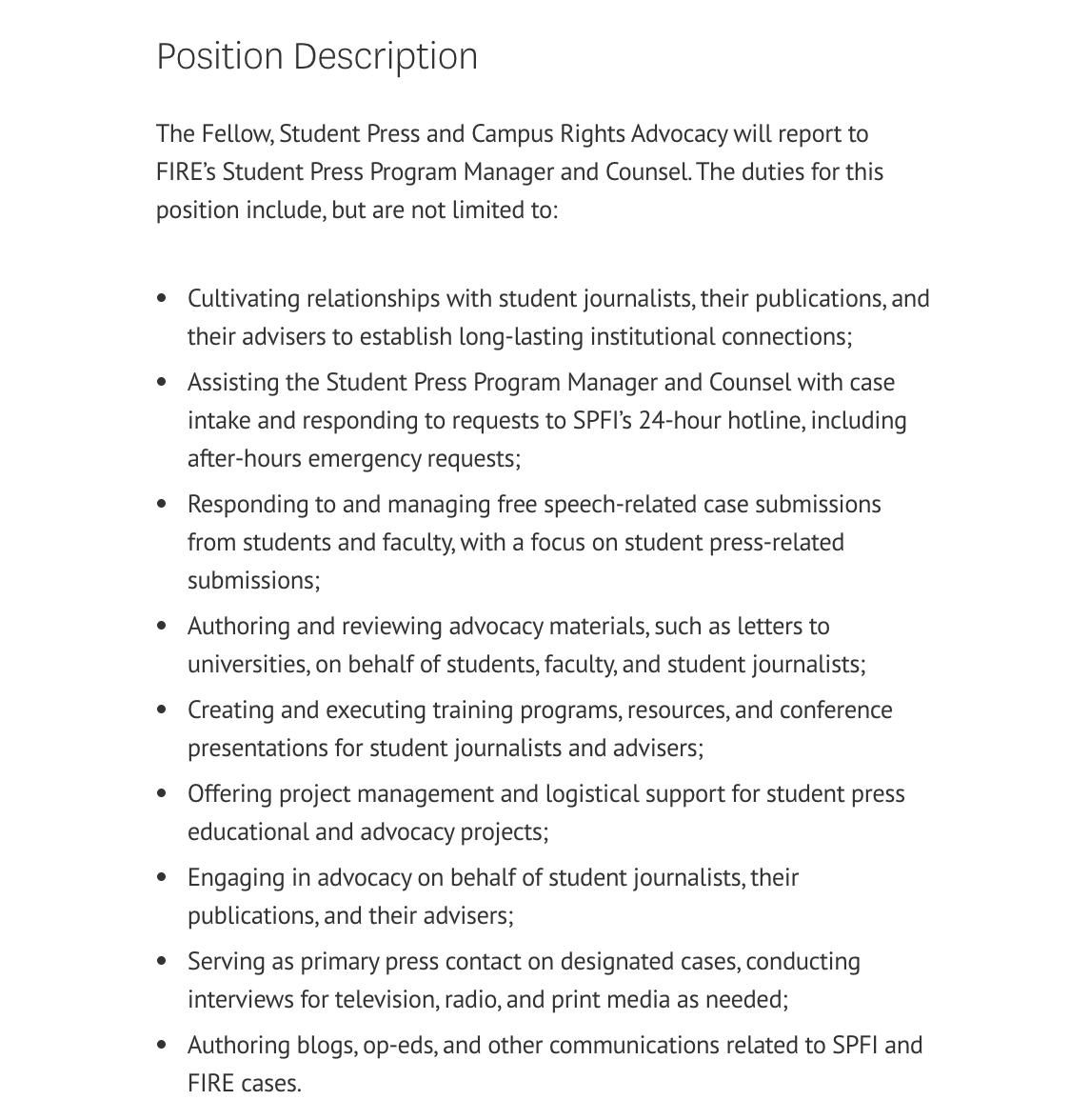
Want to defend student journalists and campus free speech before heading to law school, grad school, or your next big step?
@theFIREorg is hiring a Fellow for our Student Press Freedom Initiative and Campus Rights Advocacy team.
I’m all for giving AI access to the world’s knowledge.
I’m a little less enthusiastic about giving it my bank account, passwords, machinery, and the ability to order 1,000 pizzas in my name.
That distinction is more important than it sounds.
On some level, trying to revoke a visa because you don't like what someone says is like trying to return a cake because it gave you heartburn. That's not how the world works so you should make better choices.
We should vet people seeking visas carefully and as far as I know we can make those calls for any reason or no reason. But if we give them a visa and they come here, we've ended the argument about their speech rights while they're here.
Everyone should read @Tyler_A_Harper’s extraordinary Atlantic cover story, “Confessions of a Token Black Professor.”
It is one of the best accounts yet of how bad American campuses became between roughly 2015 and 2025, peaking from 2020 to 2023. It was a disaster for academic freedom, free speech, and higher education’s credibility. It also helped destroy trust in shared facts, because people stopped believing that our supposed referees would scrutinize claims that fit their own ideology as aggressively as claims from the other side.
Now there is a concerted effort to pretend either that none of this happened, or that it was merely a strange youthful indiscretion we can laugh off, much as people tried to do with the first great age of political correctness.
We must not let them wish it away.
If you experienced the quasi-religious groupthink that overtook institutions supposedly devoted to inquiry, write about it. Record what happened, what people were afraid to say, and why. Otherwise, this period will be rewritten by many of the same people who defended the status quo while casting themselves as brave underdogs. Looking at you, @rottenindenmark, among others. Doing PR work for a $1 trillion industry is not exactly fighting for social justice.
I also have always seen this through a class lens. Elite higher education is a gigantic industry that disproportionately benefits people who are already well-off. Yes, people like me can get through it and have our lives transformed. But we are a small part of the story.
There is an older intellectual history here. Thinkers such as Herbert Marcuse confronted a frustrating problem: the working class often failed to behave as intellectuals expected and an awful lot of working people hated intellectuals. Ordinary Americans liked their country, distrusted elites, and seemed perfectly capable of living without philosopher-kings directing them.
The solution was an newideology that allowed highly educated elites to regard working-class people with contempt while still seeing themselves as champions of the oppressed.
That became academia’s problem when universities built departments, bureaucracies, hiring systems, and professional cultures that treated deeply contestable political doctrines as moral dogma.
You can see the results throughout Tyler’s story: classism, utter contempt for locals, exaggerated self-importance, ordinary disputes transformed into battles of good and evil, and politicized administrators remarkably skilled at weaponizing elite ideology against their own institutions.
Tyler’s piece is both testimony and warning. There are excellent university presidents trying to right the ship, but too many faculty organizations and professional associations still seem to believe the ideology was never the problem—it simply wasn’t imposed consistently enough.
We need to document what happened and build institutions less vulnerable to another episode like it.
Because this was never some weird, isolated campus disaster. It spread into journalism, science, philanthropy, corporations, K–12 education, government, and politics. It damaged the credibility of the institutions we depend on to tell us what is true.
A society that loses faith in its knowledge-producing institutions eventually loses something more important than the reputation of its universities: its ability to see the world as it is.
Ok, after this week of First Amendment threats from the administration (and it's only Tuesday!), the government should start paying @TheFIREorg overtime.
Looks like Colorado’s AI law SB24-205 is on pause for now, and so is xAI’s lawsuit challenging it.
On Friday, the parties jointly agreed to suspend all case deadlines while Colorado works through potential changes to the law. Enforcement is also on hold during this process.
A state working group has proposed amendments to SB 24-205, and the legislature now has time to consider those changes. Depending on what happens next, and whether revisions address the constitutional concerns raised, this case could resume later.
As we’ve repeatedly said, Colorado’s law has major First Amendment problems, including how the law defines "algorithmic discrimination.” In its current form, AI developers are at risk of punishment for outputs the state deems discriminatory, while carving out exceptions for outputs that “increase diversity or redress historical discrimination.”
Functionally, that means access to the knowledge that these tools provide is at risk of being filtered through approved state messaging.
Speech being violence is one of the oldest arguments in the book.
People discover that the line between speech and violence is a social construct, then decide that means they can redraw it however they like. Usually in a very convenient way.
"'Algorithmic discrimination' law threatens to do the opposite. It offers governments a way to pressure AI developers to treat contested moral, political, and empirical questions as though they had already been settled. It threatens to do to AI what speech codes did to campuses: use the language of protection to narrow the range of permissible thought." 🎯
Read every word of it 👉