Key Risks of Shadow AI:
Data leaks: Employees pasting sensitive data, code, customer info, or IP into public AI tools.
Compliance violations: Breaches of GDPR, CCPA, HIPAA, or industry regs.
Security vulnerabilities: Hallucinations, poisoned outputs, supply-chain risks in code
Shadow AI isn’t going away.
The winners will be organizations that harness AI responsibly with visibility, control, and trust.
What’s your biggest Shadow AI challenge right now — data leakage, governance gaps, or something else? Drop your thoughts below #ShadowAI#AISecurity
@Doctor_amirah This is when employees use AI tools to work without the management knowing. So important company files are fed to these tools, without the knowledge of the management
Action steps for leaders:
Conduct an AI usage audit.
Build cross-functional AI governance (IT + Security + Legal + Business).
Deploy data loss prevention tailored for AI.
Offer sanctioned alternatives that match or beat public tools in productivity.
Measure and iterate
Don’t just say “no” — say “how."
Banning AI outright drives more shadow usage and kills innovation.
Forward-looking organizations are: Defining clear acceptable-use policies.
Approving and securing enterprise-grade AI tools.
Implementing discovery/monitoring solutions for AI
Real-world impact is already here:
Significant % of organizations have faced data exposure events linked to public GenAI.
Insider risks now outweigh external threats for many CISOs.
Shadow usage creates blind spots in auditing, logging, and incident response.
Why is it exploding?
67-75% of employees now use AI at work.
Many do so via personal accounts or unapproved tools.
Only ~18% of organizations have mature AI governance policies in place.
The result? A massive visibility gap that traditional security tools often miss.
Why is it exploding?
67-75% of employees now use AI at work.
Many do so via personal accounts or unapproved tools. Only ~18% of organizations have mature AI governance policies in place.
The result? A massive visibility gap that traditional security tools often miss.
Shadow AI is one of the fastest-growing risks in enterprises today. It refers to the unauthorized or unsanctioned use of AI tools by employees without IT, security, or governance oversight. Employees are turning to these tools to boost productivity- at the expense of security
:date: *Content #1 — Monday, May 18 | Pillar 6: Fintech*
*Theme: Agentic Payments Are Here — 1 in 3 B2B Payment Operations Will Run on AI by End of 2026*
1 in 3 B2B payment operations will run on AI by the end of 2026. Invoice matching. FX optimization. Reconciliation. All autonomous.
@SalesVaultBrand #FinTech #AgenticAI
Exactly, Cloud handoff is the easy, clean part — the agent lives in the nice, controlled sandbox, spins up tools, calls APIs, whatever. Browser handoff is where everything turns into a security and UX nightmare, and you're right: that's precisely where the product either ships or dies.
The core tension is brutal:
- The agent needs the real logged-in session (cookies, 2FA state, MFA tokens, org permissions, etc.) because most real work happens inside apps that don't expose clean APIs (or the APIs are rate-limited/gated).
- But you cannot give it, "just click whatever" access. One wrong prompt and it's deleting your emails, posting on your LinkedIn, or wiring money. Even with perfect alignment, the model can hallucinate a step or misread the DOM.
This is the exact boundary that separates toy agents from production ones.
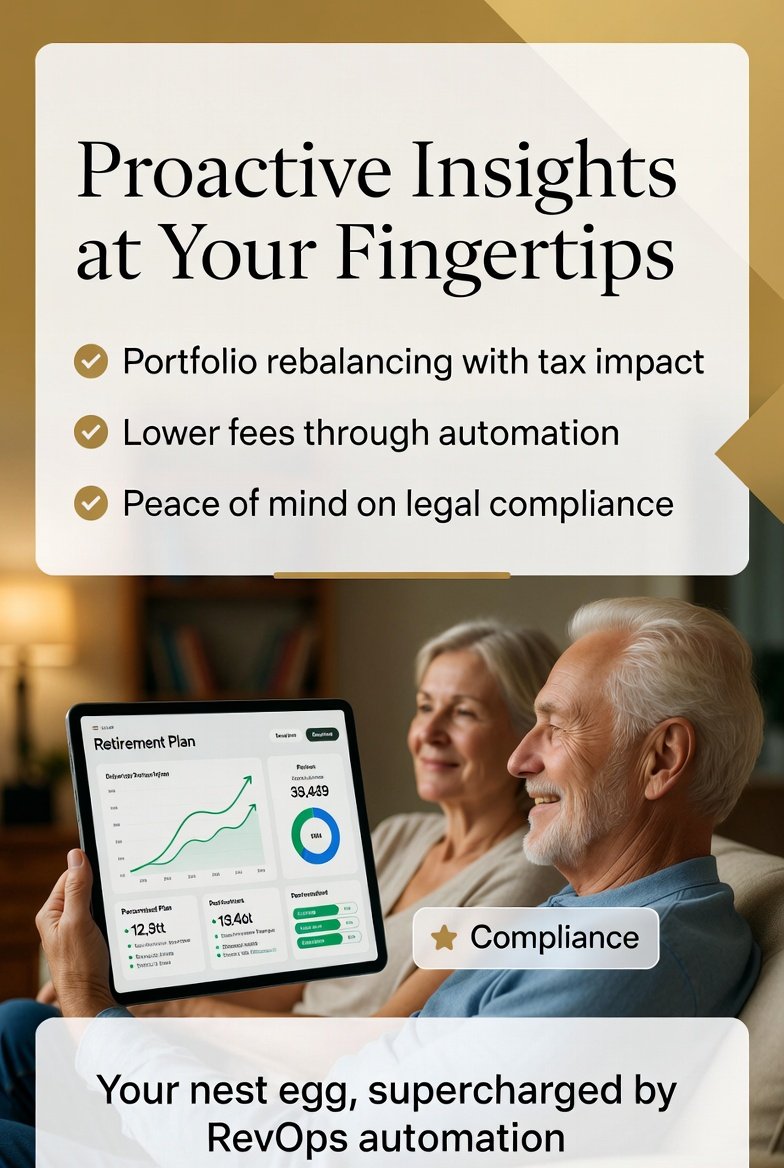
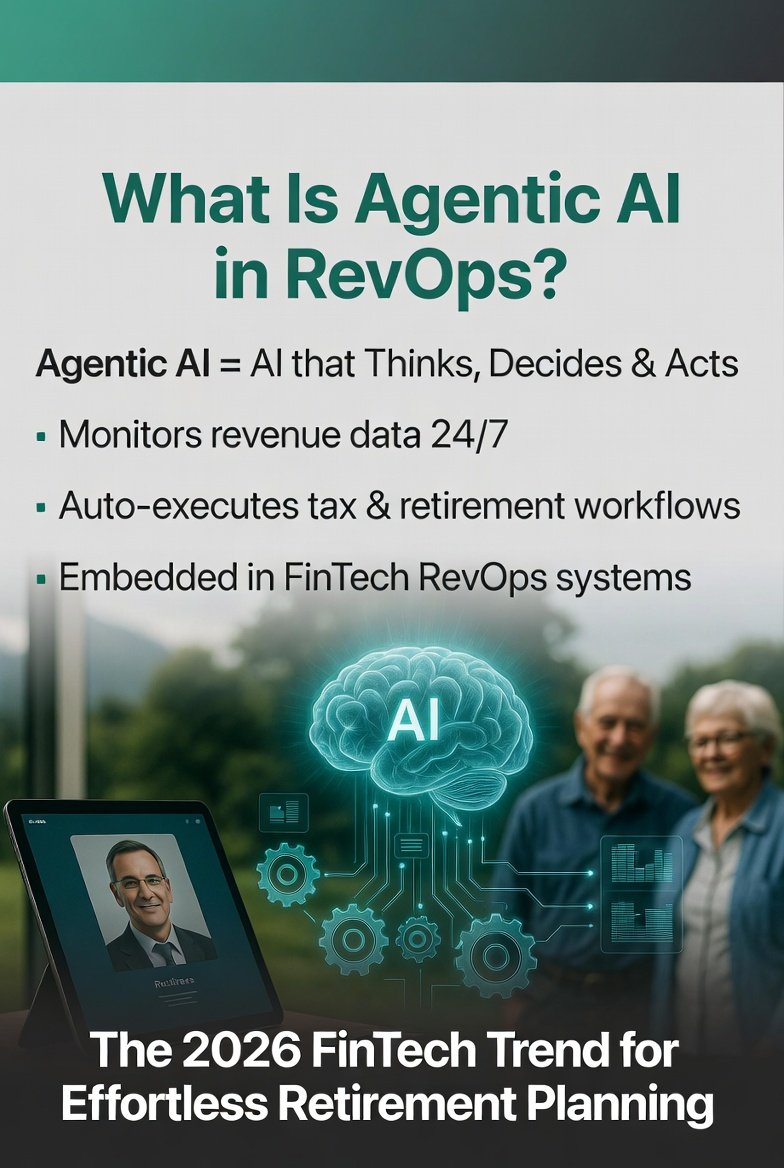
2026 FinTech trend alert: Agentic AI + RevOps is changing retirement taxes forever .
Hey everyone—whether you’re a retiree juggling RMDs and tax-loss harvesting or a FinTech leader building the next big wealth app, 2026 is the year **agentic AI** quietly becomes your smartest revenue (and retirement) partner. As a writer and researcher in taxation, I’ve been tracking how RevOps automation is evolving fast.
The hottest subniche right now? Agentic AI-powered RevOps in FinTech—autonomous AI agents that don’t just analyze data… they *act* on it in real time to streamline tax workflows, boost retirement outcomes, and lock in compliance.
Forget basic chatbots. Agentic AI in revenue operations means self-directed systems that handle multi-step tasks across your entire stack—CRM, billing, compliance engines, and even tax-form generation—without constant human babysitting. In FinTech serving everyday Americans (especially retirees), this is massive. Think AI agents that automatically flag a missed RMD, pre-fill your 1099-R, sync it with your retirement app, and trigger a compliant alert to your advisor—all while updating revenue forecasts in the background.
Why Agentic AI + RevOps Is Trending
According to 2026 finance and tax tech reports, we’re moving from “AI answers questions” to “AI executes compliant workflows.” In taxation, 1040 automation and AI research tools are exploding because manual data entry is finally dying. For retirement finance, agentic systems now simulate life events (“What if rates rise and I need to rebalance my IRA?”) and push personalized, IRS-safe recommendations directly into user apps.
FinTech companies with mature RevOps functions are already seeing 36% higher revenue growth—and when you layer in agentic AI, that compounds. Why? Clean data + autonomous agents = faster pipelines, zero revenue leaks, and products retirees actually trust. No more “call your advisor” delays when a new tax law drops or your portfolio needs a quick compliance check.
Real-World Wins Retirees and FinTech Teams Are Seeing in 2026
1. Tax Strategy on Autopilot — AI agents scan your FinTech dashboard, detect harvest opportunities, generate accurate forms, and even draft explanations for your CPA. Legal compliance? Built-in audit trails keep everything regulator-ready.
2. Seamless Retirement Journeys — From lead capture to funded IRA, quote-to-cash now runs end-to-end with agentic handoffs. Retirees get proactive RMD alerts and tax-efficient withdrawal plans without lifting a finger.
3. Compliance That Scales — KYC/AML checks, revenue recognition, and regulatory reporting happen automatically. FinTech leaders report slashing manual work by 50%+ while staying ahead of evolving IRS and SEC rules.
Bottom line: Agentic AI isn’t replacing your team or your trusted advisor—it’s removing the drudgery so humans focus on what matters: building relationships and making smarter money moves.
Quick Start Guide for FinTech Builders & Retirees.
- For FinTech teams: Audit one high-pain workflow (tax reporting or retirement onboarding) and pilot an agentic RevOps tool that integrates with your CRM and billing stack. Start small, measure forecast accuracy and user retention.
- For retirees: Look for apps advertising “agentic AI” or unified revenue engines—they’re the ones delivering truly set-it-and-forget-it tax and retirement tools.
What’s one tax or retirement workflow you wish was fully automated? Drop it in the comments—I read every one and love turning real pain points into targeted content.
#revop #TaxBillionaires #fintech
Workflow Automation Fix
Tired of data silos killing your pipeline velocity?
2026 RevOps winners automate the chaos: lead scoring, routing, CRM hygiene, and customer health scoring—all in one flow.
Single source of truth = aligned sales, marketing & CS. What’s the #1 manual task draining your team? Reply & I’ll share a quick automation blueprint. #RevOps #Automation #GTM #RevenueIntelligence
RevOps as Revenue Architect
2026 isn’t about managing systems anymore—it’s about designing how revenue actually grows.
The most effective RevOps leaders I’m seeing are now focused on:
• Cross-functional alignment around shared metrics
• Governance that enables (not blocks) automation
• Turning customer data into proactive revenue plays
The payoff? 36% higher revenue growth and teams that scale without adding headcount.
If you’re in sales, RevOps, or automation and want to stay ahead, let’s connect. What’s one RevOps best practice you’re doubling down on right now?
#RevOps #Sales #RevenueOperations #GTMStrategy