My wife and I spent the last month planning a surprise birthday for one of my closest friends, and it taught me more about waiting on God than any sermon ever could.
He hadn’t celebrated his birthday or even had a cake in six years for various reasons. He had zero expectations. So over a month ago, we quietly rallied a few friends to fund an expensive gift that would solve a major, pressing need he had.
In other words, his problem was already solved weeks before his birthday. He just didn’t know it yet.
And because he didn’t know, the waiting period was brutal.
Since we work closely together, he kept bringing up that exact need to me. Pressing, nagging and growing visibly discouraged. Every time he complained about how stuck he was, I had to bite my tongue and suppress my irritation knowing the answer was already sitting there, waiting for the calendar to catch up.
It got worse on the day itself.
While my wife and I were out picking up his cake from the bakery and dropping it off at the restaurant, he called asking me to meet him somewhere for a genuinely important reason. I had to turn him down.
From where he was standing, I was letting him down when he needed me. He couldn't see that saying yes to his urgent request meant ruining the thing we had spent a month building for him.
Later that evening, a few guests were running late. To keep the surprise intact, I had to intentionally leave him wandering around aimlessly for a while. That was the hardest part. Watching someone you care about grow frustrated, for completely valid reasons, because from their side of the curtain, your stalling just looks like carelessness.
Then the appointed time finally arrived.
We got the surprise out of the way and sat down for dinner. At the end of the night, we brought out the gift, and he stood there on the brink of tears.
If I had caved to his nagging three weeks ago and handed it over early, it still would have been useful. It would have solved his logistical problem. But it wouldn’t have restored something in him. Timing didn’t just delay the blessing; timing was what made the blessing whole.
Looking in the mirror later that night, I couldn't stop thinking about how much of my own spiritual life looks just like his past month.
How many of my prayers have already been answered on the other side of the curtain, while I pace the hallway complaining about the silence? How many times have I misread God’s "not yet" as neglect, or assumed He was dropping the ball because He wouldn't abandon a better table just to answer an urgent call?
And then the most humbling realization of all was that even while trying to do something good for my friend, I hit my human ceiling. Halfway through the month, I was annoyed. There were moments I wanted to snap, "Just shut up and wait, I’ve already handled it," purely to relieve my own frustration, even if it ruined the moment for him.
Human love grows impatient with the people it is trying to bless. We resent them for not seeing what we see.
God doesn't. He carries the full weight of our misreadings, our pacing, and our tears, and instead of blowing the secret out of irritation, He draws near to us in love while He finishes setting the room.
A lot of people have real trouble thinking about the aggregate behavior of groups. They can only think about individuals.
So they think about Elon Musk as an individual. Maybe they think that he must be retarded, because they need that for emotional reasons. Or maybe they think he is a talented rocket designer.
But even if they realize he understands rockets, they can only think about him as an individual doing tasks. Not about his impact on what the whole company does.
If Elon Musk is just a talented rocket designer, then he can spend all day, every day, improving rocket designs.
But he is just one of 7000 engineers. So even if did a perfect job, he would only improve progress by about .014%
So, when a midwit looks at SpaceX, he sees 7000 engineers, and says to himself "Elon Musk cannot possibly be designing the whole damn rocket himself. These people are giving him too much credit."
This would be absolutely true if Musk were just a some random SpaceX engineer. But he isn't. He's the absolute dictator of the whole damn company.
He decides, with absolute and unquestionable authority, which behaviors are punished and which are rewarded.
Why is this important?
When I worked at Boeing, on various classified projects, I naively came in with the assumption that I was a software engineer, employed to design and build functional software as quickly and cheaply as possible.
Because of this, I focused on functionality and efficiency, for example suggesting changes that would obviate the need for entire projects and software components.
And I very rapidly became persona non grata.
At first, this caused me to adopt an air of aggrieved innocence. I was just trying to do my job well, and I was being punished for it.
Then I gradually came to realize that I hadn't properly understood what my job was, or what the actual mission of Boeing Defense, Space, and Security was.
Boeing DSS was not an aerospace company. Boeing DSS was a fraud company.
Its goal was twofold. First, to maximize transfer of public tax dollars to stockholder pockets. Second, to maintain the appearance of being an aerospace company, to prevent the fraud from being exposed.
Which meant that my real job was twofold. First, to generate billable hours. Second, to look busy.
This is why Space Launch System sucks. Why it is always late when it doesn't fail outright. Why it is at 300% of its target budget. Why it leaves American astronauts stranded and needing a lift from SpaceX.
That's because, for Boeing, building rockets is a side quest. Something they have to do to look busy. Yes, a rocket does occasionally fly, but that's just happening so programs don't get shut down.
For Boeing, coming in early and under budget would actually be failure. The system is functioning exactly as designed.
The cost, not the rocket, is the goal.
Musk and SpaceX don't work like that.
Unlike Boeing executives, Musk is not a useless grifter asshole. He is an entirely different kind of asshole... a rocket obsessed sperg.
So, at SpaceX, engineers do not get rewarded for generating billable hours. They get rewarded for making rockets fly. And for all the subtasks of this, like figuring out how to make rockets lighter, figuring out how to make engines reignite better, figuring out how to make rocket exhaust not destroy launch pads, etc.
And this attracts engineers who care about rockets. You've seen them on broadcasts, crying on open microphones because they dedicated their lives to something and it just flew.
As a rocket engineer, who designs rockets, Musk is probably replaceable. As a rocket company engineer, who designs rocket companies, he is not.
For over 50 years, the US space industry stagnated precisely for the lack of a Musk-like figure, who could not only create an effective aerospace company, but who could thereby demonstrate what an effective aerospace company looks like.
Which makes it much more difficult for fraudsters to get away with fraud.
I'm envious. I wish I could have worked for an aerospace company instead of a fraud company.
But what's more important is that some of us now no longer have to play "who gets the most cheese?".
They get to play "What can we build today?".
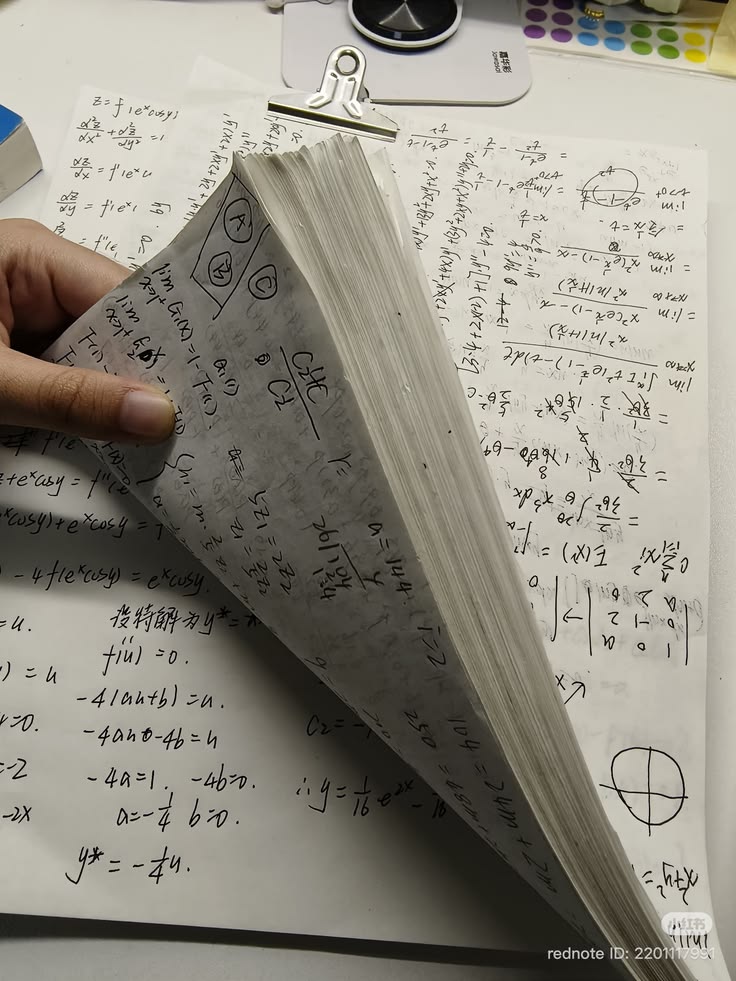
Do as much math as you can in your 20s.
not for exams.
not for grades.
but to fundamentally change how you think.
• algebra → recognize patterns and relationships
• geometry → develop spatial reasoning
• calculus → understand change and accumulation
• linear algebra → think in vectors and transformations
• probability → reason under uncertainty
• optimization → find the best solution under constraints
> solve problems.
> derive equations.
> write proofs.
> simulate what you learn.
math trains you to think in abstractions, recognize hidden structures, and break complex problems into simpler ones.
the real advantage isn’t knowing more formulas.
it’s developing a mind that can model almost anything.
Marriage will humble you because eventually your spouse will see you fail.
They will see you when you're broke, sick, stressed, insecure, unemployed, overweight, depressed about life or completely unsure about what to do next.
The question is not whether your spouse will ever see you at your lowest.
They will.
The real question is what kind of person they become when you are no longer impressive.
Anybody can love you when life is easy character is revealed when life becomes ugly.
Yes: handwriting still matters.
A new study has confirmed that writing by hand activates far more complex and widespread neural networks in the brain than typing, underscoring its importance for learning and memory.
Researchers at the Norwegian University of Science and Technology used a high-density EEG cap with 256 electrodes to record brain activity in university students. They found that the intricate, sensory-rich movements involved in handwriting, especially cursive, trigger highly synchronized brain waves across extensive areas of the parietal and central regions. These coordinated patterns are strongly linked to memory formation, cognitive processing, and encoding new information.
In contrast, typing, which involves repetitive, simpler finger movements, produced significantly less neural connectivity and engagement. The difference was striking: the brain appears much less active during digital writing.
The researchers conclude that the unique motor and sensory experience of holding a pen plays a key role in brain development and learning. As a result, they argue that handwriting instruction should remain a core part of education to support deeper comprehension and cognitive growth in the next generation.
[ “Handwriting vs. Typing: A High-Density EEG Study on Brain Connectivity During Learning” — Norwegian University of Science and Technology (published in Frontiers in Psychology, 2025)]
Ghana just built its first precast rammed-earth tennis court, and it does more for talent development than most concrete stadiums ever will.
Backyard Community Club sits in Osu, Accra, designed by DeRoche Projects, led by Glenn DeRoche. The court itself is red clay, built to international standards, but the real innovation is the walls around it. Four-metre-high rammed-earth panels, precast off-site for tighter tolerances and faster build times, enclose the space in a rhythm of triangular cutouts that block crosswind while still keeping the court open and breathable.
Ghana has never used a precast rammed-earth system at this scale before. DeRoche designed it specifically to sidestep what usually kills rammed-earth projects at scale, slow labor, weather dependency, inconsistent quality, while keeping the low embodied carbon that makes the material worth using in the first place. A fraction of concrete’s carbon footprint, built faster, with less waste.
But the part that matters most for what you’re building toward: this isn’t a private club. It offers free lessons to local kids alongside professional-grade training for young athletes, and it’s wrapped in a 230-square-metre garden growing guava, banana, lemongrass, and other edible plants that the athletes themselves tend and eat from. Access and self-reliance, built into the architecture, not bolted on as a side program.
This is the model. Not another glass office tower proving Africa can build “modern,” but civic infrastructure that gives young people a place to train, a skill to develop, and access they wouldn’t otherwise have. If more cities built recreational and cultural spaces this way, sustainably, locally sourced, genuinely open to the public, we wouldn’t just be producing better buildings. We’d be producing more of the talent leaving the continent to find opportunity elsewhere.
Accra, Ghana · Architecture: DeRoche Projects · Completed 2025 · Photography: Julien Lanoo
Few architects have shaped the conversation around contemporary African architecture the way Diébédo Francis Kéré has, a Pritzker laureate who’s spent his career proving that laterite, brick, and climate logic can produce buildings as sophisticated as anything built in glass and steel.
His latest project, the Centre des Cultures et Spiritualités Ewés, is rising in Notsé, Togo, commissioned by the Kothor Foundation to honor the Ewé people’s history and spirituality. The masterplan wraps around the historic Agbogbo wall and the Agbogbodzi Sanctuary, sacred sites the design was built to protect and elevate, not compete with.
Red laterite brick carries the whole complex, low-rise, fluid forms shaped for natural ventilation, with courtyards and light shafts doing the cooling work instead of mechanical systems. A spiraling tower rises at the center, meant to symbolize the link between ancestors, divinity, and the heavens, while the main gateway takes its form from the Ewé royal stool, a symbol of authority reimagined as architecture.
Inside, the center holds a sanctuary, temples, an open-air amphitheater, exhibition halls, an auditorium, and a reconstructed royal palace, a full cultural ecosystem, not a single museum building.
7,000 m², under construction since October 2024, expected complete February 2026. This is Kéré’s first project in Togo, joining an expanding body of work across West Africa that includes the Benin National Assembly and Thomas Sankara’s mausoleum in Ouagadougou, proof that this design language isn’t a one-country experiment. It’s becoming a continental architectural voice.
Notsé, Togo · Architecture: Kéré Architecture · Client: Fondation Kothor · Under construction, completion expected 2026
Most people who get good grades are just good at memorization, not actually smart, they just have a neat stack of flashcards for a brain and they can sort through them quickly. pure intelligence is about accessing the subconscious directly. its like a dark cavern underneath your thoughts and when you shine the right light down there, surprising shit comes out. connections that you wouldnt make on your own, insights that feel like they came from somewhere else, because they did. the mind is a lot bigger and deeper than most people use, they just skate on the top layer. but there are fucking cathedrals down there man, temples buried in the mud, and all kinds of wild animals that you can catch and harness if youre not scared to climb down the ladder into the dark
This Greek restaurant has no AC. It stays cool all summer on sea breezes alone, via fabric panels that scatter sunlight and move air around. Ancient Persians took the same principle so far they produced ice in 45°C (113°F) desert heat, without electricity.
The Persian wind catcher, known as a badgir (literally "wind catcher" in Persian), is one of the oldest cooling systems on earth. Archaeologists found evidence at Tappeh Chackmaq, a site near Shahrood, Iran, dated to roughly 3,000 years ago. They work on simple physics: a tower rises above the roofline, catches prevailing winds through angled openings, and funnels cooled air down into rooms below. Yazd, Iran still has 700 of them. UNESCO added the city to its World Heritage list in 2017, calling it "a living testimony to intelligent use of limited available resources in the desert." The Egyptians had their own version, the malqaf, shown in 1300 BCE artwork near Luxor.
Persians combined wind catchers with underground chambers to create the yakhchal, an ancient refrigerator. During cold desert nights, shallow pools of water froze solid. Badgirs then kept the chambers cold enough to store that ice through summer, in a desert regularly hitting 45°C. Inside, temperatures ran 15-20°C below the outdoor air, held there by thick insulating walls, steady airflow from the wind towers, and the cool ground beneath. This is how Persians made faloodeh, a frozen dessert, in a climate with no business producing frozen anything.
Willis Carrier designed the first modern air conditioning system on July 17, 1902, at a printing plant in Brooklyn. AC spread fast. Passive cooling vanished from new construction. Air conditioning and fans now consume 20% of global building electricity.
K-Studio, an Athens-based architecture firm, designed the Barbouni beach restaurant at Costa Navarino, Messinia. The fabric ceiling does two things at once: it breaks up direct sunlight before it heats the floor below, and its wave motion keeps air moving on top of basic convection (warm air rises, cooler outdoor air rushes in). K-Studio principal Dimitris Karampatakis: "We didn't want to have a static structure right in front of this dynamic landscape." Afternoon sea breezes at the Navarino coast arrive reliably each day, generated by land heating faster than the sea and drawing cooler air in from the water. The ceiling was designed around that daily rhythm.
Wind towers drop indoor temperatures by up to 22°F (12°C) with zero electricity and no maintenance. Yazd's badgirs have been running continuously for 700+ years. A Greek restaurant just did a simpler version, and 324,000 people acted like it was a new idea.
Most public spaces built around African peri-urban areas are built as afterthoughts. Cheap finishes, no identity, a gym and a pool dropped into a building that was never designed with the people who would use it in mind.
This one was built differently.
The Street is a community clubhouse on the outskirts of Pune, designed for 240 families building their own homes on modest plots. Constructed with locally sourced red clay brick, Indian limestone and IPS flooring, the buildings are partially submerged into the earth using traditional cut and fill construction to minimise their visual impact on the landscape.
The layout mimics the bylanes of an Indian city. Winding paths, perforated brick walls, open courtyards, arcades and changes in level that make you feel like you are moving through a neighbourhood rather than a facility. A gym, restaurant, multipurpose hall, amphitheatre and pool, all connected by streets designed to make people stop, talk and stay.
The architect Deepak Gugarii said it himself. “Meaningful architecture does not need to be flashy or expensive. It needs to be thoughtful, rooted, and human.”
That sentence should be printed and pinned in every planning office on this continent.
Studio VDGA | Pune, Maharashtra 🇮🇳 | 15,000 m² | 2024
📸 Edmund Sumner
You will never outperform your self-image, this is one of the most important things ever said about human behavior and almost nobody understands what it really means, your self-image is the picture you carry inside your head of who you are, what you're capable of, what you deserve, and what's possible for you, and your entire life is just your nervous system executing the orders of that picture, you don't behave according to what you want, you don't behave according to what you say, you don't behave according to your goals, you behave according to who you secretly believe you are, and the gap between where you are and where you want to be is almost always the exact gap between your real self-image and the one you keep trying to talk yourself into.
The plastic surgeon Maxwell Maltz figured this out in the 1950s when he noticed that some patients, even after he fixed their face perfectly, still walked out of his office feeling ugly, and others with minor cosmetic changes walked out feeling brand new, the surgery didn't matter, what mattered was whether the internal picture had changed, and he wrote a book called Psycho-Cybernetics in 1960 that became the foundation of basically every self-development book that came after it, his point was simple, the brain operates like a guided missile that locks onto whatever self-image you've installed, and it will steer you, sabotage you, and bring you home to that image no matter how hard your conscious mind fights, you can win the lottery and end up broke again in two years if your self-image is "poor person," you can lose 50 pounds and gain it back if your self-image is "fat person," you can land your dream job and quietly destroy it if your self-image is "not good enough," because the brain experiences any mismatch between reality and self-image as a problem to be corrected, and it always corrects toward the image.
This is why goal-setting, willpower, motivation, and discipline almost always fail in the long run, they're all happening at the level of behavior while the self-image underneath stays exactly the same, you can't out-discipline a self-image, you can't motivate yourself past it for more than a few weeks before it pulls you back, the only real way to change your life is to change the picture first, and the picture changes through repeated vivid imagination, especially in the relaxed state right before sleep and right after waking, when the critical part of your mind goes quiet and the subconscious actually listens, you spend ten or fifteen minutes a day living inside the version of you you want to become, with full sensory detail, with the feeling of it already being true, you do that consistently for a few months and the internal picture genuinely shifts, and once the picture shifts the behavior follows by itself, no daily battle required, because now your subconscious is steering you toward a different home.
Africa’s mud houses and thatched roofs have been spoken of in derogatory ways for decades. Sadly, even by Africans themselves. The same forms dismissed as primitive are what the rest of the world pays premium rates to sleep inside when they are refined and taken seriously.
This is Bisate Lodge, Ruhengeri, Rwanda. Twelve spherical thatched villas woven into the slopes of an eroded volcanic cone adjacent to Volcanoes National Park. The form is taken directly from the King’s Palace at Nyanza, a precolonial Rwandan royal structure. The thatching is done entirely by hand using traditional technique. The stone references the volcanic landscape surrounding the site. The entire complex runs off-grid.
This is not wildlife tourism. People come here specifically for what the building is and where it comes from. That is architectural tourism. And Africa is sitting on an enormous, largely untapped version of it.
Our vernacular forms are climatically intelligent, culturally rooted and visually extraordinary. The only thing standing between what we have and what the world will pay for is the decision to stop being embarrassed by our own heritage and start refining it.
Rwanda made that decision. The world showed up.
Nicholas Plewman Architects | Ruhengeri, Rwanda 🇷🇼 | 2018
📸 Crookes and Jackson
This is free advice from an expensive psychologist. If you’re an anxious person, do everything for fun. Go to a job interview for fun. Submit documents for fun. Start a blog for fun. Anxiety feeds on importance. Don’t make everything a matter of life and death.
If you’re African, develop a habit of reading research papers in your domain, especially now in the AI era.
Courses are great and all but you get to a point you start to see patterns emerge, things become cyclical and repetitive especially if you’re like me and you care more about the knowledge.
Research papers show you what people are experimenting with and what their results are.
They show you where the industry is headed and the pieces being figured out and if you’re lucky or simply just badass enough, you’ll see a connection that nobody else has seen and you just might be positioned to act on it faster or in a better way than most since it’s in your domain anyways.
If you want to be an innovator, you have to be comfortable looking stupid for a long time.
You’re going to piss some people off and you’re going to get a lot of nos. That’s the only way to start having valuable breakthroughs.