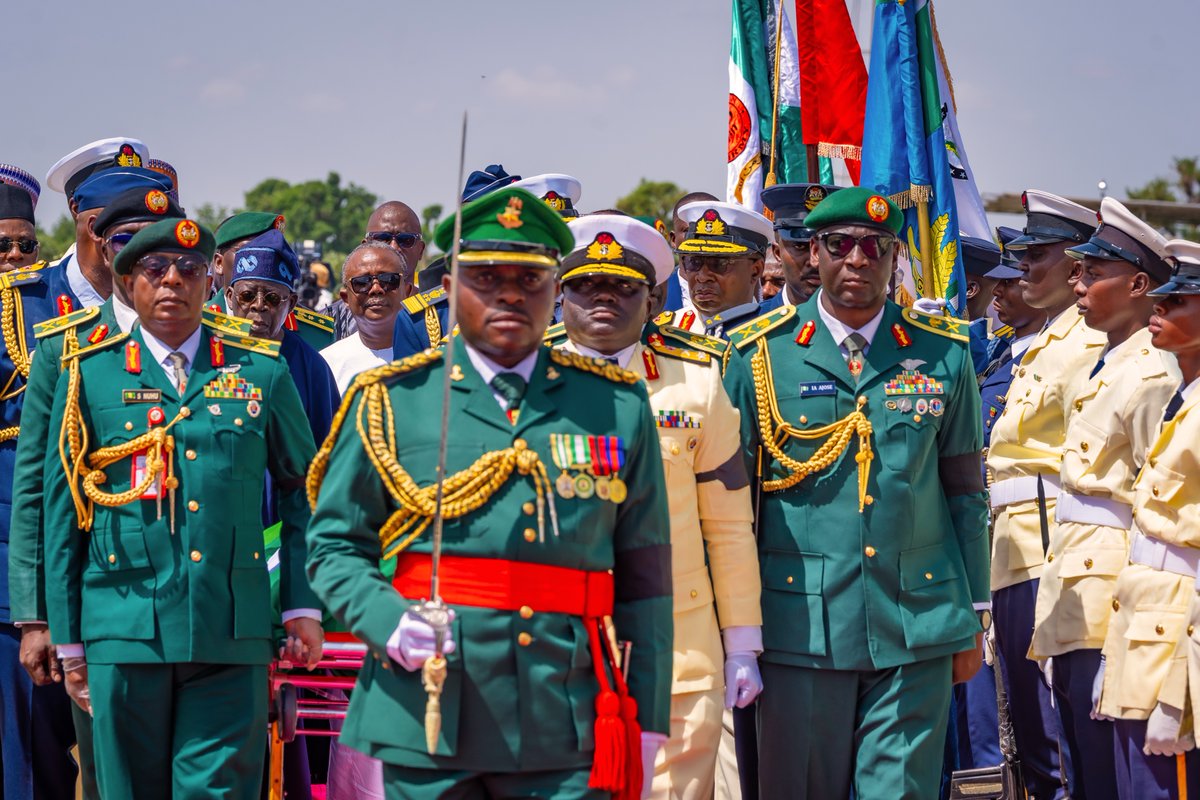
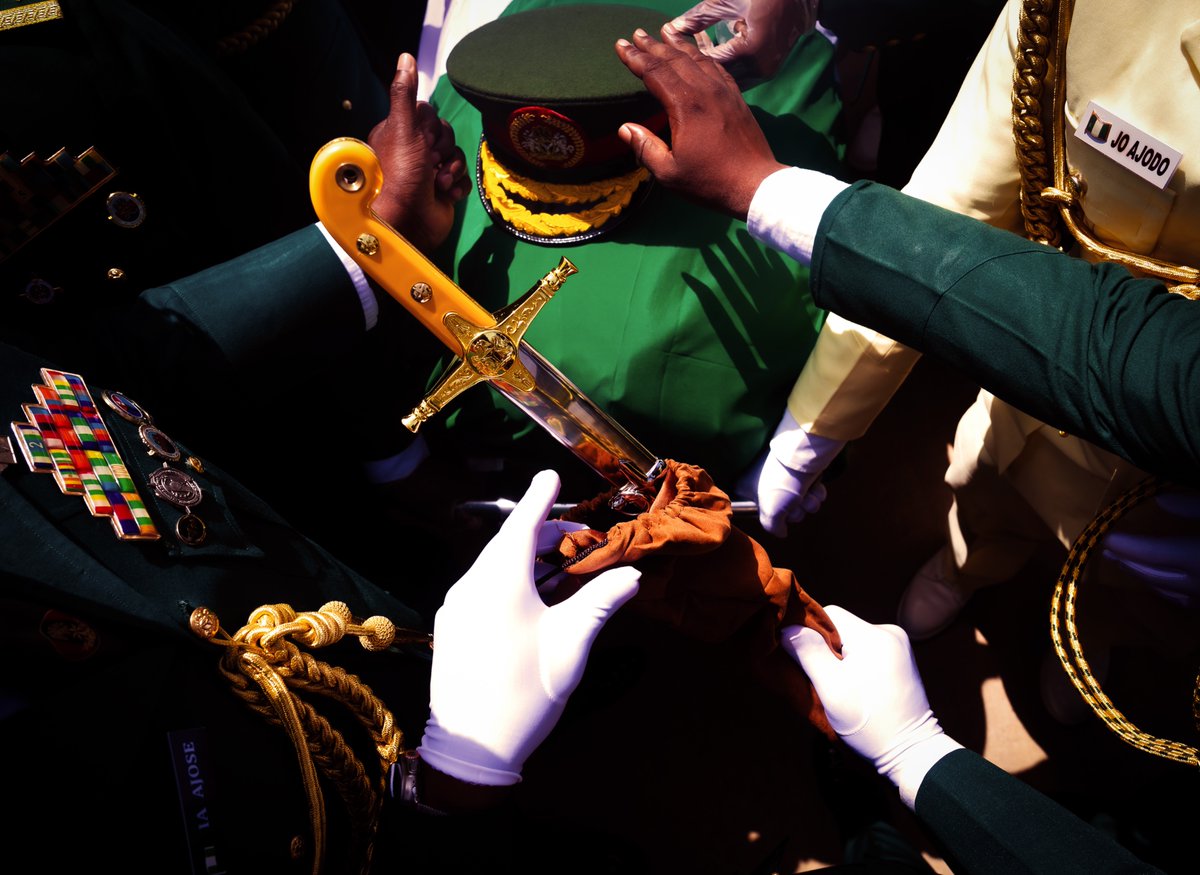
Yesterday was a solemn and deeply emotional day for me.
We laid to rest a man I was proud to call a friend, a brother, and a patriot… His Excellency, Muhammadu Buhari, GCFR.
Mai Gaskiya was not just a former president. He was a man of rare discipline and quiet strength, whose love for Nigeria shaped every decision he made, even in the face of criticism.
I mourn him deeply, not just as my predecessor, but as a comrade in the long and often lonely journey of nation-building.
To his beloved wife, Hajiya Aisha Buhari, and the entire family, I offer my heartfelt condolences. May you find comfort in the honour and legacy he leaves behind.
Nigeria has lost a true son. I have lost a friend in former President Buhari.
May Almighty Allah grant him Aljannah Firdaus.
Rest well, ‘Baba Buhari’
He who has died has met his reality, the living should sympathize with the dead by praying for Allah’s forgiveness and mercy for them. We don’t know what fate awaits us. May Allah forgive and have mercy on the soul of President Muhammadu Buhari
I am deeply saddened by the news of the passing of former President Muhammadu Buhari, a man whose life was defined by unflinching patriotism, stoic discipline, and a lifelong commitment to the sovereignty and unity of our great nation.
President Buhari was not just a former Head of State, he was a symbol of Nigeria’s resilience. From the battlefield to the corridors of power, he served with the kind of austere conviction and firm belief in duty that marked him as a soldier of principle and a leader of formidable will.
His death is not just a loss to his immediate family and the people of Daura, it is a profound national tragedy. Nigeria has lost a statesman who bore the burdens of leadership in both turbulent and triumphant times and whose legacy will be remembered for generations to come.
To his beloved family, I offer my deepest condolences. I pray for strength and comfort in this time of grief. To the people of Katsina State and the entire nation, I mourn with you. May we all take solace in the knowledge that he gave his life to the service of Nigeria and never wavered in his belief in her promise.
May Allah, the Most Merciful, forgive his shortcomings and grant him eternal rest in Aljannah Firdaus. -AA
Hi @sowore,
Your father (an unknown animal) died unknown, unmentioned and useless. Gave birth to bitter animals with zero brain & no sense. We understand how hard that is for someone like you.
Even the name alone, BUHARI, living or after his demise will continue to be more relevant, more dignified and honoured than all your generations of the past, living and those yet to come.
"After messing up our education, they distracted us into sports and entertainment. You look at grown up bearded men spending the day discussing soccer when the world is in flames. Here are real men (Ibrahim Traore) transforming the world." ~ Maponga Joshua III
WHEN SYCOPHANTS RUIN A NATION - By O.A. Ayinde, PhD - Part 1
In the life of every nation, it is tempting—perhaps even convenient—to focus blame solely on those in formal positions of power. Yet history suggests a more layered truth: the slow unraveling of societies often begins not at the center, but around it—among those who whisper influence without bearing its weight, who possess access without accountability. These are the polished minds, the lettered elites, the eloquent voices who, rather than challenge the system, cushion it with compliments and curated applause.
Leadership, at its core, is not only a matter of policy—it is shaped by perception. And perception is, more often than not, sculpted by those behind the scenes. When professionals, intellectuals, and technocrats choose flattery over frankness, they do not simply endorse decisions—they shape destinies. What is often praised as loyalty may, in truth, be fear in fine clothing. What is framed as diplomacy may, in some cases, be silence negotiated for convenience.
As the Yoruba wisely put it, “Bí a bá rí òtítọ́, kà sọ́ ọ́; òtítọ́ kì í bàjé”—if we see the truth, let us speak it; truth does not decay. And yet, in our civic space today, truth is increasingly treated as an unwelcome guest. We are not witnessing a crisis of knowledge, but a crisis of courage—where understanding abounds, yet the willingness to speak with integrity wanes.
It is deeply unsettling to watch a nation in distress while many of its brightest minds remain silent or choose abstraction over advocacy. These are not the uninformed—they are professionals, consultants, and policy shapers who frequent the halls of influence. Yet, in the moments that matter most, they master the art of polite evasion: never too sharp to offend, never too firm to confront. As the Igbo proverb reminds us, “He who holds the knife and the yam must not pretend to be a victim.”
What we observe daily is not merely weak governance—it is a broader culture of institutional ambiguity. Hardship is explained away with polished data, and national pain is often reduced to policy terminology. But are these truly misunderstandings, or carefully managed narratives? Where are the moral compasses? Where are the dissenting voices grounded in patriotism? Have they all become muted in the comfort of proximity to power?
We must remember: no position is permanent. The reins of authority are always temporary. As the Hausa say, “Sarakuna na da iyaka, amma gaskiya tana dawwama”—kings have limits, but truth endures. One day, when influence has faded and relevance is past, the question will remain: with all your knowledge and access, did you challenge or conform? Did you offer light, or did you help shade the truth?
A more pressing tragedy looms: the gradual disillusionment of the citizenry. The people no longer demand transformation—they simply hope for survival. The despair is not only economic, but existential. It is the kind of weariness that comes when those who should speak boldly have chosen instead to whisper, or worse, to say nothing. Silence, in moments of moral urgency, is not neutrality—it is abdication.
This is a form of poverty not captured by any economic index—the poverty of principle. We are nurturing graduates with technical proficiency but shallow conviction. We are raising professionals who pursue influence but flee from accountability. Then we ask ourselves: why does our society remain fragile? As the Yoruba caution, “Ẹni tí kò ní i tìkára rẹ̀, kò le kó’lé”—he who has no backbone cannot build a house.
Still, time watches. The masquerade may dance with grandeur, but it must retire. The rains may fall with force, but they never fall forever. History does not rush, but it remembers. And when power passes—as it always does—the enduring question will be: what did you do with your moment? Did you heal wounds or merely dress them with words?