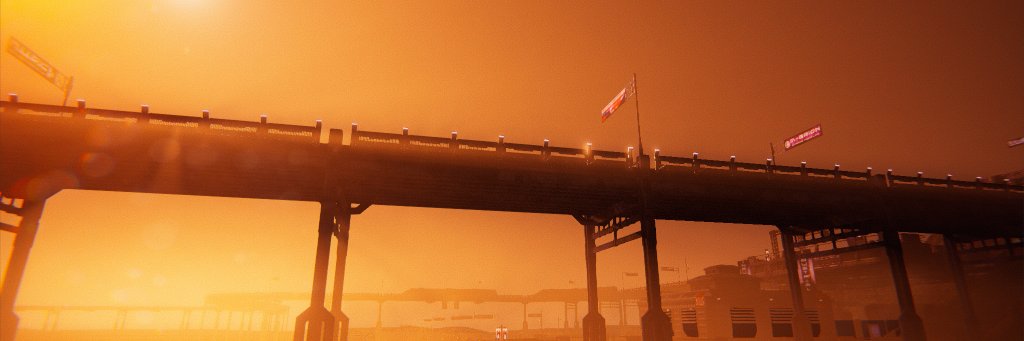
@WrongNebula Gaussian radiosity with a clip mask would be an interesting evolution of that idea. Right now it leaks through the pylon - but I bet you could mask that and get cheap high quality emissions.
Claude really be like “but sire, on October 15 at 11:42pm you said
‘just run this overnight I’m tired, I don’t want this wordy bs on the screen’
and I recorded it in the divine scripture and interpreted as never to be too wordy again so the rule is that only ever reply with 6 words”
P=NP seems only mildly improbable now - between ETH and VP≠VNP I would entirely believe it.
If that gets proven, that might be the discovery of the century.
Highly informed prediction:
P equals NP and OpenAI was the lab that solved it, and the reason nobody has seen a proof is that this is the one result you don't post first. You brief governments and banks, then you publish.
The trail is public. On September 1 they pointed a fleet of agents at every open Millennium problem. In October they posted a proposed proof of Unique Games, then a 3-SAT algorithm that would break the Exponential Time Hypothesis, and the prompt behind it asked for even more. Each step made SAT easier than the textbooks said it could be. Polynomial time is the next stair.
@monkzy I never put much stock in my own coding abilities, I know I'm very fast at it compared to most humans, and know a great deal about certain niches; but I'm happy because my expectations have always exceeded my abilities.
AI lets me dream bigger.
I've had this same experience: I occasionally, usually by Thursday or Friday hit my token caps (my reset dates are all Monday for some reason).
There's zero point me working on code at this point. The machine 20x's me, the marginal contribution I can make rounds to zero.
If, theoretically, for some reason all AI models became unavailable for a full week, I’d just stop working and wait.
The difference is so drastic that working without them isn’t even worth your time.
I've been saying to everyone around me for the last three years, if you want to predict the future read three novellas.
Manna, by Marshall Brain - the first half I think has far more predictive power than the second IMO.
The Machine Stops, by EM Forster. It's description of influencer culture in a post scarcity society is a well written warning.
Four Magic Words, by @larsiusprime - short, clever and to the point, even the best aligned AI could be frightening.
I'd also give bonus points to The Algebraist by Iain M. Banks. Kudos seems an interesting way to structure a economy.
Of course there's plenty of other things I need to get done, but even those are succumbing to the machines influence.
All hail the machine. Maybe EM Forster was right.
Most people's initial impulse when they encounter a statement that's unpalatable but possibly true is to reject or even attack it. Instead it should make you more curious. Unpalatable truths tend to be especially valuable, because they're comparatively unexplored.
@slhamlet and there is probably some truth to that - right now there's very little competition to Claude in terms of "Oh, it just works." - I do owe the new Google models a good shakedown, but I've been less than impressed the last four times Google has said 'Our stuff is good, promise!'
@slhamlet The counterargument to that is if one provider does reach escape velocity - then they'll keep accelerating faster than the competition; and they'll end up with all the money. Or something. That's why they're all gung-ho on RSI at the moment.
@slhamlet That's a bit of a silly argument to make, and that's coming from me, a pro virtual worlds guy.
How much do you pay to use Google? How much revenue does AI generate vs virtual worlds/metaverses?
AI is an order of magnitude bigger, and the revenue models aren't comparable.