@xumas_iq He’s willing to talk about anything and everything and hang around anybody and everybody just for clout. He’s loving that he’s going viral over this💩4 sure
It’s only a matter of time till he’s truly exposed like Tate was, and all those who promoted him will regret doing that
@sneako Don’t mind the 80-85% of Muslims worldwide Grand Mufti Sheikh Sneako.
You’re the true leader of the ummah sheikh. The one who figured out how to unify the “ummah” of those who worship one God alone with no partners, and those who associate 12 human gods with him
@palshear بغرض النظر عن سبابها الذي لم نتبين منه من عدمه، لكن هذه نظرة مستقبلية سريعة عن تصرفات آباء المستقبل لجيل Z, جيل الهواتف وتطبيقات بيع الروح مقابل المشاهدات….
No, Sneako. Nationalism can absolutely divide Muslims, but reducing the fragmentation of the Ummah to nationalism is the kind of conclusion you reach when confidence has travelled considerably further than knowledge.
Those first Muslims were not powerful merely because they possessed the same passportless political identity. They were the Sahabah رضي الله عنهم, raised upon tawheed and Sunnah, taught directly by the Messenger of Allah ﷺ. They understood that unity was not simply gathering everyone who pronounced the word Muslim underneath one political banner while pretending profound differences in belief did not exist.
They did not have people claiming Islam while ritualistically cursing or reviling Abu Bakr, Umar, Uthman رضي الله عنهم or attacking our mother Aishah رضي الله عنها. They did not believe that preserving “unity” required remaining silent about deviations in aqidah. When later appeared the Khawarij, the extreme Murjiah and other sects, Ahl al-Sunnah did not respond by pretending doctrine was irrelevant. They identified falsehood and preserved the religion.
And this is precisely why someone who has barely begun learning Islam should exercise enormous humility before explaining why fourteen centuries of Muslim history went wrong.
You struggle with the Quran yet speak casually about aqidah, sectarianism, Muslim blood, Syria and the political future of nearly two billion Muslims. That should produce silence and study before it produces another livestream.
The Sahabah رضي الله عنهم knew their rank. They asked when they did not know. They were educated before becoming teachers. They possessed the greatest teacher mankind has known, Muhammad ﷺ, and they were not constructing personalities for an algorithm, chasing clips or measuring truth according to audience reaction.
Even more ironic is that when scholars and students of knowledge actually call Muslims back to tawheed, Sunnah and the methodology upon which the earliest generations were united, sections of this same internet culture suddenly start screaming “Wahhabi”, “extremist” and “head chopper”.
So which unity are you actually proposing?
Unity upon revelation requires principles. Otherwise “Muslim unity” becomes an empty slogan in which every contradiction in belief must be ignored provided everybody dislikes nationalism.
Yes, nationalism has devastated Muslim solidarity. Yes, colonial borders, authoritarian states, ethnic chauvinism and modern political interests have compounded that fragmentation. But the Prophet ﷺ warned of religious division as well. The problem cannot be diagnosed by deleting aqidah from Islamic history because it makes for an easier livestream.
And there is another lesson from those generations that the influencer age desperately needs: they feared speaking about the religion without knowledge. That is the part worth reviving first.
Before explaining how two billion Muslims should unite, learn properly what united the first Muslims.
Before lecturing Syrians about their blood, listen to Syrians who buried their families. Before adjudicating between Sunnah and innovation, learn the Sunnah. Before diagnosing the Ummah, learn the Book of Allah جل جلاله properly.
The Sahabah رضي الله عنهم did not conquer because they discovered a clever geopolitical formula called “no nationalism”. They possessed iman, tawheed, knowledge, sacrifice, discipline and obedience to Allah جل جلاله and His Messenger ﷺ.
You cannot cosplay that civilisation into existence on a livestream. Learn first. Then speak.
https://t.co/KUnBxRqRvP
بسم الله الرحمن الرحيم 🖊️
Why are Muslims surprised? The internet has produced an entire class of algorithmic performers who can discuss aqidah in the morning, Syria at lunchtime, Bosnia in the afternoon and Islamic governance by evening, despite having seriously studied none of them. A microphone and an audience have become counterfeit credentials, and Muslims keep validating them.
The greater scandal is our gullibility. We inherited a religion in which knowledge was transmitted through scholarship, verification, teachers and disciplined study, yet sections of this Ummah now determine credibility by views, followers and livestream numbers. Someone becomes famous and suddenly his opinion is sought on matters scholars spent decades studying.
Parents therefore have every reason to be concerned about where their children are taking religion from. When someone cannot competently recite the Quran and has never systematically studied the Islamic sciences, he has no business becoming a reference point for aqidah simply because young Muslims find him entertaining. Becoming Muslim deserves respect and brotherhood; it does not magically confer scholarship.
Look at what parts of the online dawah scene have normalised: financial controversies, scandals, public feuds, personality cults and converts being rapidly transformed into content creators instead of quietly being taught their religion. Sometimes it appears that acquiring the convert’s audience has become more urgent than ensuring the convert acquires knowledge.
Sneako is merely one illustration of a much larger failure. Why must every famous convert immediately be interrogated about theology, geopolitics and the condition of the Ummah? Why are people who should still be learning being pushed into becoming teachers and commentators? Allow people to develop before constructing platforms around their opinions.
The treatment of Muslim blood is even uglier. People who have never smelled a battlefield speak casually about populations who watched their homes disappear and buried relatives with their own hands. Syria becomes content. Bosnia becomes an argument. Palestine becomes engagement. Sudan becomes another debate. The victims themselves sometimes receive less attention than personalities arguing about what supposedly happened to them.
When people who actually lived through these events offer correction or sincere advice privately, only to watch the opposite position performed publicly, Muslims should possess enough discernment to recognise what they are watching. Truth does not become less true because it performs badly with an audience.
Then you hear Bosnia dismissed as though it were not a real country, while Muslims who speak about Muslim unity, security and strength are caricatured as “head choppers”. Personalities disappear following their own controversies, later resurface, and somehow find themselves welcomed onto platforms belonging to people who spend the rest of their time lecturing Muslims about morality and accountability.
The hypocrisy writes itself.
But Muslims cannot blame the algorithm for everything. The algorithm supplies what audiences reward. Every time Muslims elevate an unqualified personality because he is entertaining, circulate inflammatory clips without verification, defend celebrities as though criticism of them were criticism of Islam, or mistake visibility for authority, they help manufacture the circus they later complain about.
Muslim youth especially need to wake up to something far more serious than internet drama: you are deciding who helps shape your understanding of Allah جل جلاله, His religion and the world around you. Someone making you laugh, sounding confident or humiliating an opponent on a livestream tells you absolutely nothing about whether he is qualified to teach you.
@m20ssham هذا أرصن رد عليه لحد الآن، وهذه أقوى إقتباسات:
👉🏼”when confidence has travelled considerably further than knowledge.”
👉🏼“someone who has barely begun learning Islam should exercise enormous humility before explaining why fourteen centuries of Muslim history went wrong.
No, Sneako. Nationalism can absolutely divide Muslims, but reducing the fragmentation of the Ummah to nationalism is the kind of conclusion you reach when confidence has travelled considerably further than knowledge.
Those first Muslims were not powerful merely because they possessed the same passportless political identity. They were the Sahabah رضي الله عنهم, raised upon tawheed and Sunnah, taught directly by the Messenger of Allah ﷺ. They understood that unity was not simply gathering everyone who pronounced the word Muslim underneath one political banner while pretending profound differences in belief did not exist.
They did not have people claiming Islam while ritualistically cursing or reviling Abu Bakr, Umar, Uthman رضي الله عنهم or attacking our mother Aishah رضي الله عنها. They did not believe that preserving “unity” required remaining silent about deviations in aqidah. When later appeared the Khawarij, the extreme Murjiah and other sects, Ahl al-Sunnah did not respond by pretending doctrine was irrelevant. They identified falsehood and preserved the religion.
And this is precisely why someone who has barely begun learning Islam should exercise enormous humility before explaining why fourteen centuries of Muslim history went wrong.
You struggle with the Quran yet speak casually about aqidah, sectarianism, Muslim blood, Syria and the political future of nearly two billion Muslims. That should produce silence and study before it produces another livestream.
The Sahabah رضي الله عنهم knew their rank. They asked when they did not know. They were educated before becoming teachers. They possessed the greatest teacher mankind has known, Muhammad ﷺ, and they were not constructing personalities for an algorithm, chasing clips or measuring truth according to audience reaction.
Even more ironic is that when scholars and students of knowledge actually call Muslims back to tawheed, Sunnah and the methodology upon which the earliest generations were united, sections of this same internet culture suddenly start screaming “Wahhabi”, “extremist” and “head chopper”.
So which unity are you actually proposing?
Unity upon revelation requires principles. Otherwise “Muslim unity” becomes an empty slogan in which every contradiction in belief must be ignored provided everybody dislikes nationalism.
Yes, nationalism has devastated Muslim solidarity. Yes, colonial borders, authoritarian states, ethnic chauvinism and modern political interests have compounded that fragmentation. But the Prophet ﷺ warned of religious division as well. The problem cannot be diagnosed by deleting aqidah from Islamic history because it makes for an easier livestream.
And there is another lesson from those generations that the influencer age desperately needs: they feared speaking about the religion without knowledge. That is the part worth reviving first.
Before explaining how two billion Muslims should unite, learn properly what united the first Muslims.
Before lecturing Syrians about their blood, listen to Syrians who buried their families. Before adjudicating between Sunnah and innovation, learn the Sunnah. Before diagnosing the Ummah, learn the Book of Allah جل جلاله properly.
The Sahabah رضي الله عنهم did not conquer because they discovered a clever geopolitical formula called “no nationalism”. They possessed iman, tawheed, knowledge, sacrifice, discipline and obedience to Allah جل جلاله and His Messenger ﷺ.
You cannot cosplay that civilisation into existence on a livestream. Learn first. Then speak.
https://t.co/KUnBxRqRvP
@ahlamalasr319 كل كلماتها تدل على أنها تربت في بيئة زبالة، وفي عائلة علمانية قذرة معادية جداً للدين. لايمكن للمكياج تجميل القلب أبداً. كنتي تآكلين لو تراقبين الرجل كل الوقت كمريضة مهووسة؟
👈🏼الرسول عليه الصلاة والسلام وكل الرجال المسلمين على مر العصور كانوا ملتحين يا علمانية يابنت العلماني
@weneldawle "بيستدرج فتيات 👈🏼يعرفهم من قبل👉🏼 على منزله"
فكروا جيداً بهذه الجملة لتفهموا نوعية عقول هؤلاء الفتيات
كثير منهن سيكبرن ليصبحن نسويات مستقبلاً، ويلقين باللوم على كل الرجال طبعاً
هل أمثال هذا الخنزير موجودين في كل مكان؟
نعم، لكنه لا يصطاد إلا من لديهن ميول مماثله أو ساذجات وغبيات
@xavierjp__ I’m telling you brother, he worships the views just like Tate, & he reverted to Islam for red pill reasons, just like Tate
Most of the brothers here don’t know that he was warned by Muslim Lantern to stop his clowning, but he’s yet to listen
I don’t trust views worshippers
@xavierjp__ He streams for a living. He’s a master click-baiter & rage-baiter. After he lost his pimp Tate friends along with Nick & Clav, he turned the “good revert Muslim” mode on. Now he’s focused on Syria. The sheikhs that support him need to come out and advise him as Muslim Lantern did
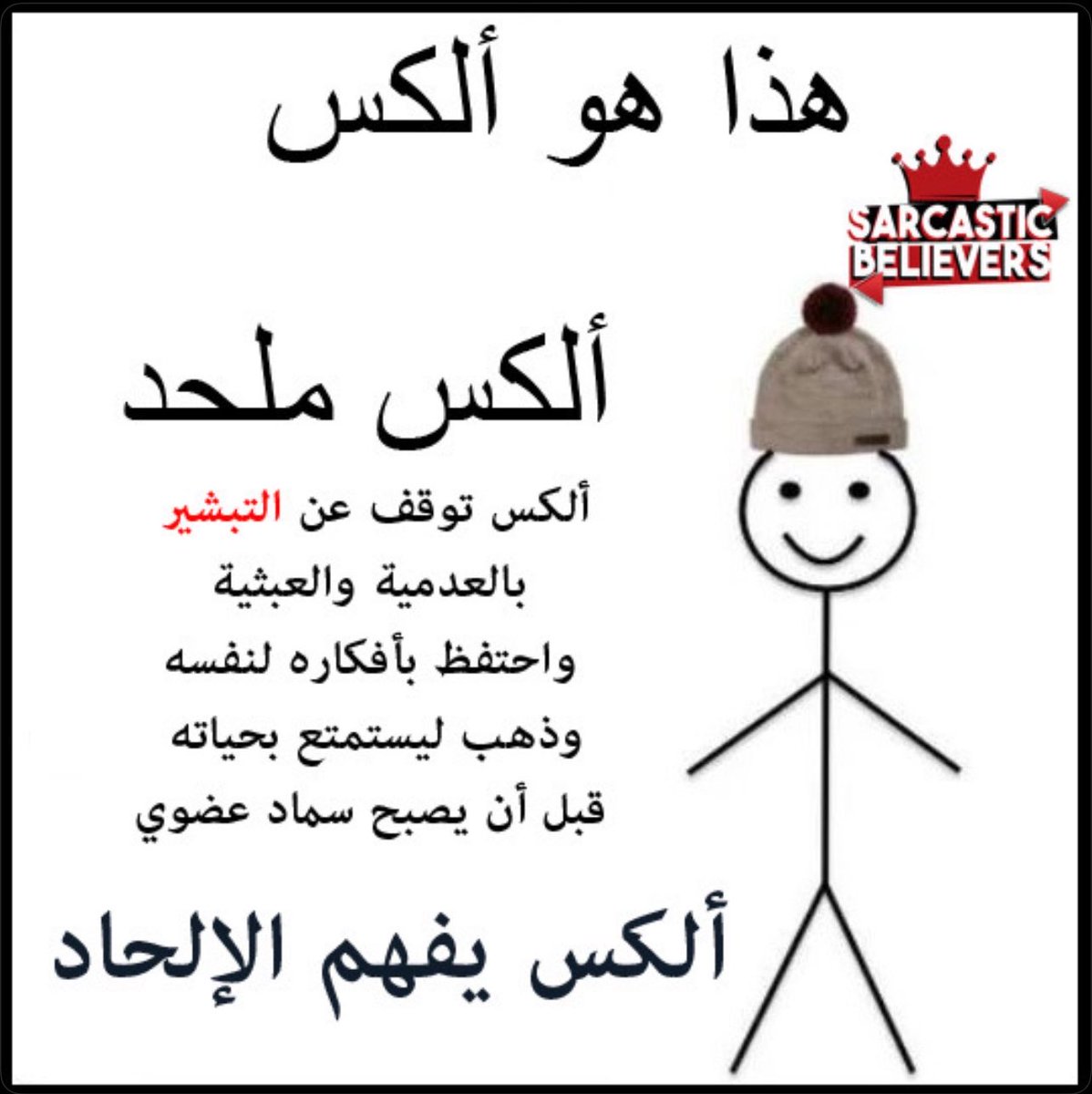
@blak_9o بعيداً عن كل كلاوات الملاحدة وأخوانهم من ربوبيين ولا أدريين ولا إكتراثيين وعلمانيين وكل المسميات الأخرى التي يختبؤن خلفها، فقط إسألهم عن نشأة الخلق وإسمع نظرياتهم واشبع ضحك
@blak_9o الإلحاد: الإعتقاد بأن سابقاً كان هناك لا شئ. ولا شئ حدث لهذا اللا شئ ثم بصورة سحرية (وبدون سبب) حدث إنفجار وخلق كل شئ في كل مكان. ثم قامت مجموعة من هذه الأشياء المنفجرة بإعادة ترتيب ذاتها بصورة سحرية (بدون أي سبب) إلى أجسام تعيد خلق ذاتها، ثم تحولت لديناصورات"
ثم يسخر من دينك 🙄
@KhalilZenat2007@majedalkhalda رأيت للتو هذا المنشور وهذه اللفتة الجميلة جداً من المسؤولين. الحمد لله أنهم ردوا على الأنجاس بهذه الطريقة الرائعة
الله يحفظكم ويحفظ سوريا الغالية من كل من يريدون شراً لكم
الشاب نسيم ابو العباس
شخص خلوق ومحترم وصاحب قلب طيب ، ذهب من الحسكة الى دمشق ليتلقى العلاج ونشر صورته وهو بالقرب من السيف الدمشقي فانتهالت عليه التعليقات السلبية من العنصريين
(وزارة الإعلام السورية نشرت ترحيباً له على شاشة ساحة الأمويين في #دمشق)