This was not ruled intentional grounding on Bryce Young because Waller was ruled in the area.
If by in the area they mean in the same stadium then they are correct because there was no one close to that ball
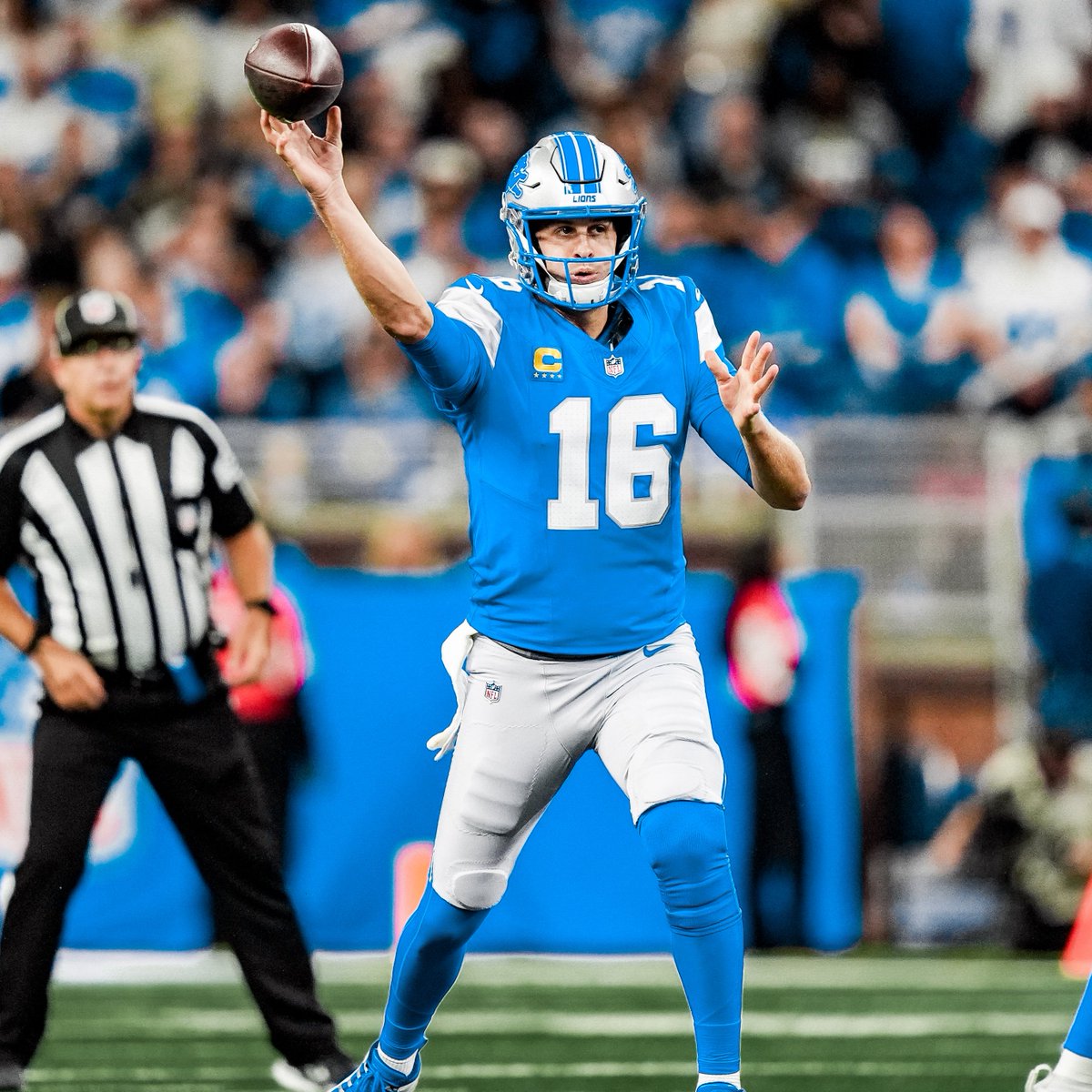
The only QBs in @NFL history to throw for 800 yards & 8 TDs, no INTs & complete 70% of their passes thru the first 3 games of any season:
1. @Lions QB Jared Goff (2026)
2. K. Cousins (2021)
3. P. Mahomes (2019)
4. D. Brees (2018)
5. T. Brady (2015)
6. P. Manning (2013)
Jahmyr Gibbs joins an exclusive club scoring his 50th TD in his 50th career game
50 TD in First 50 games
✔️Jahmyr Gibbs
✔️Jim Brown
✔️Marcus Allen
✔️Chuck Foreman
✔️Steve Van Buren
✔️Larry Johnson
BREAKING: The Tenth Circuit has GRANTED the NCAA’s stay request in Wisne v. NCAA.
Judge Sweeney’s nationwide injunction is now stayed pending appeal, meaning qualifying Class of 2022 athletes lose its federal fifth-season protection for now.
Between this & the Lakers owner selling, I think we’re witnessing the end of the traditional sports owner.
For decades the model was become a billionaire, buy a team, keep it in the family for generations. That model is becoming mathematically impossible.
When franchises are worth $10B-$15B+, the pool of individuals who can actually afford to buy them becomes very small. And being “worth” $10 billion doesn’t mean you have $10 billion sitting around.
So what happens when sports franchises eventually become $20B, $30B or $50B assets? The next generation of owners won’t primarily be wealthy families.
It’ll be corporations, private equity and eventually more institutional and sovereign wealth. And that will fundamentally change sports as we know it.
A traditional owner could view a team as a legacy asset, accept down years, spend irrationally to win and pass the franchise to their children. They might overpay a coach, eat a bad contract, build an expensive facility, keep ticket prices lower than the market would bear or tolerate mediocre financial returns because winning a championship is personally valuable to them. The team is partly an investment, but it’s also their trophy, identity and legacy. Institutional capital views it as solely an investment.
Winning matters primarily to the extent that winning increases the value of the asset. That means return on capital, media rights, real estate, entertainment districts, global expansion, sponsorships and eventually an exit becomes very important.
Professional sports will become more valuable than ever but will also become much less connected to the ordinary fan.